

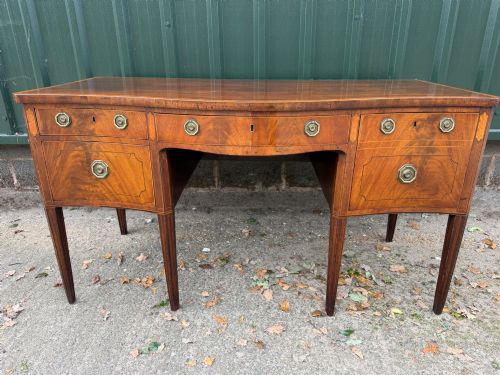
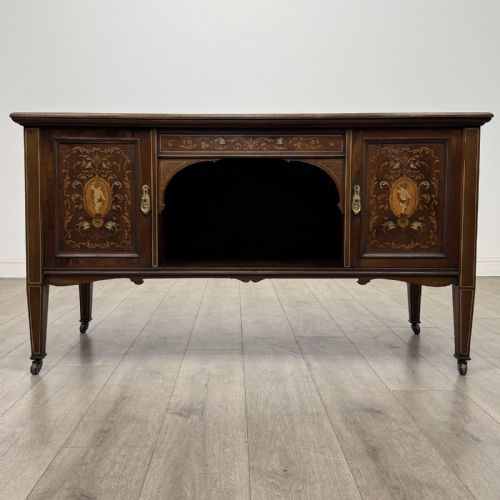
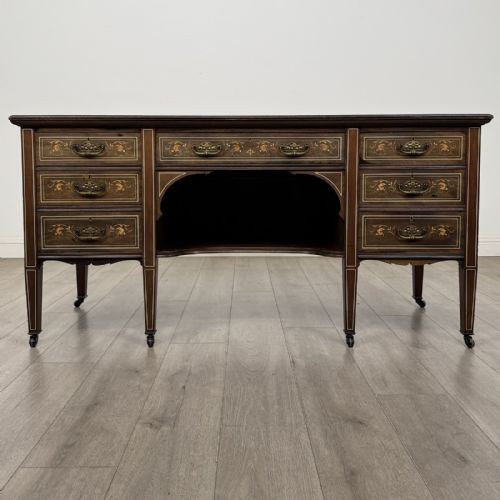
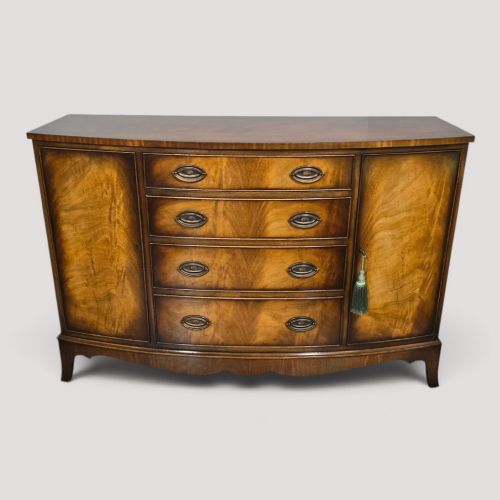

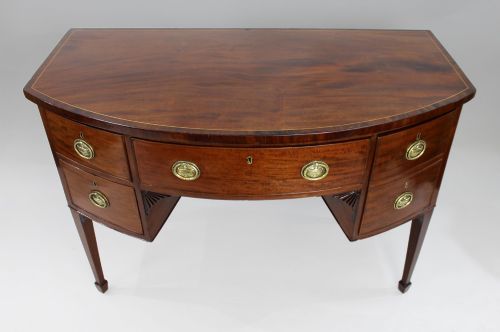
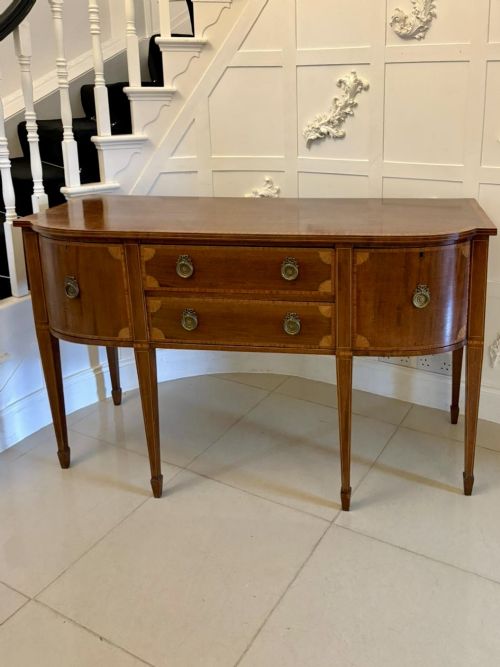
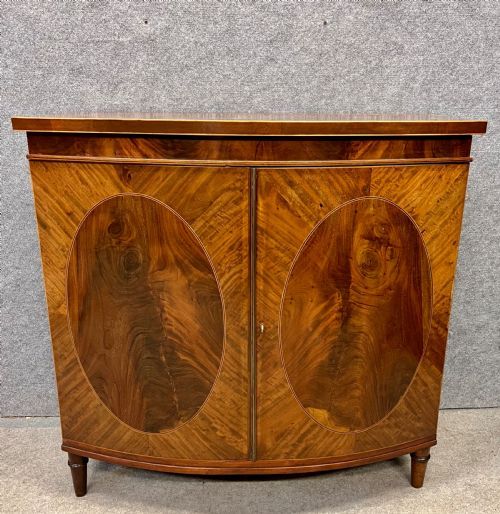
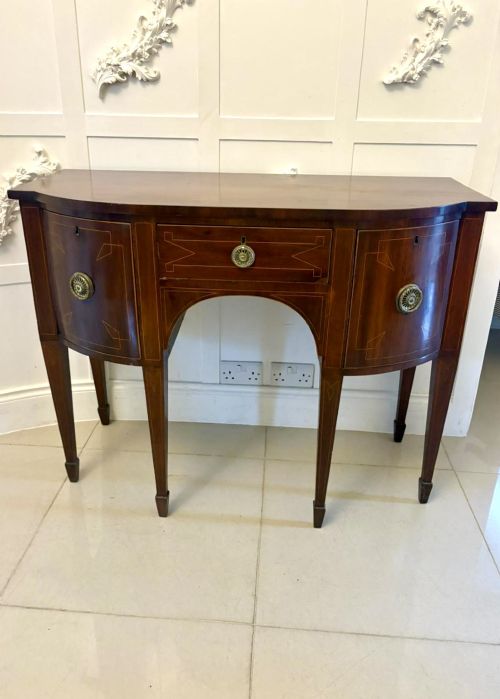
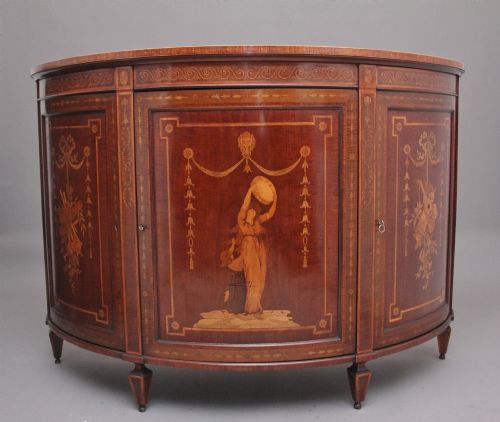
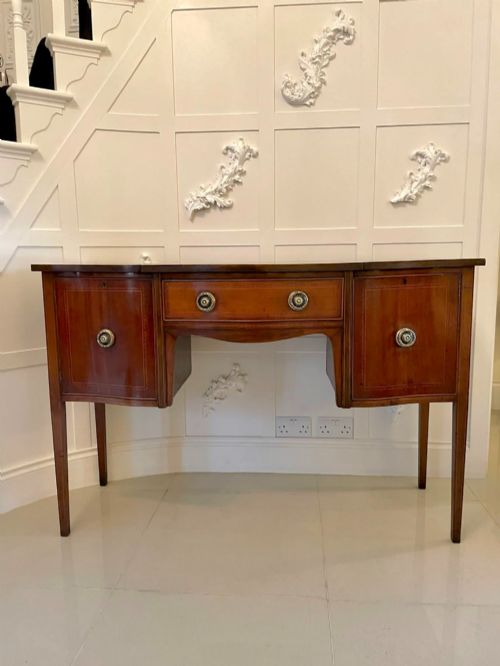
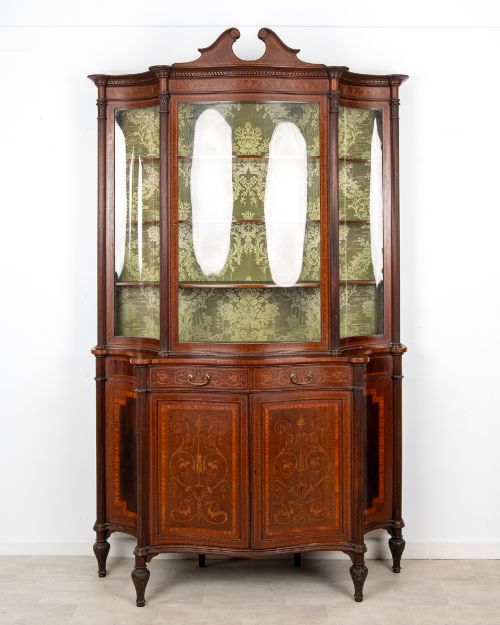
Sheraton Mahogany Sideboard
When you search for a sheraton mahogany sideboard, you are looking for a dining room piece defined by crisp geometry, fine veneers, and delicate contrasting stringing.
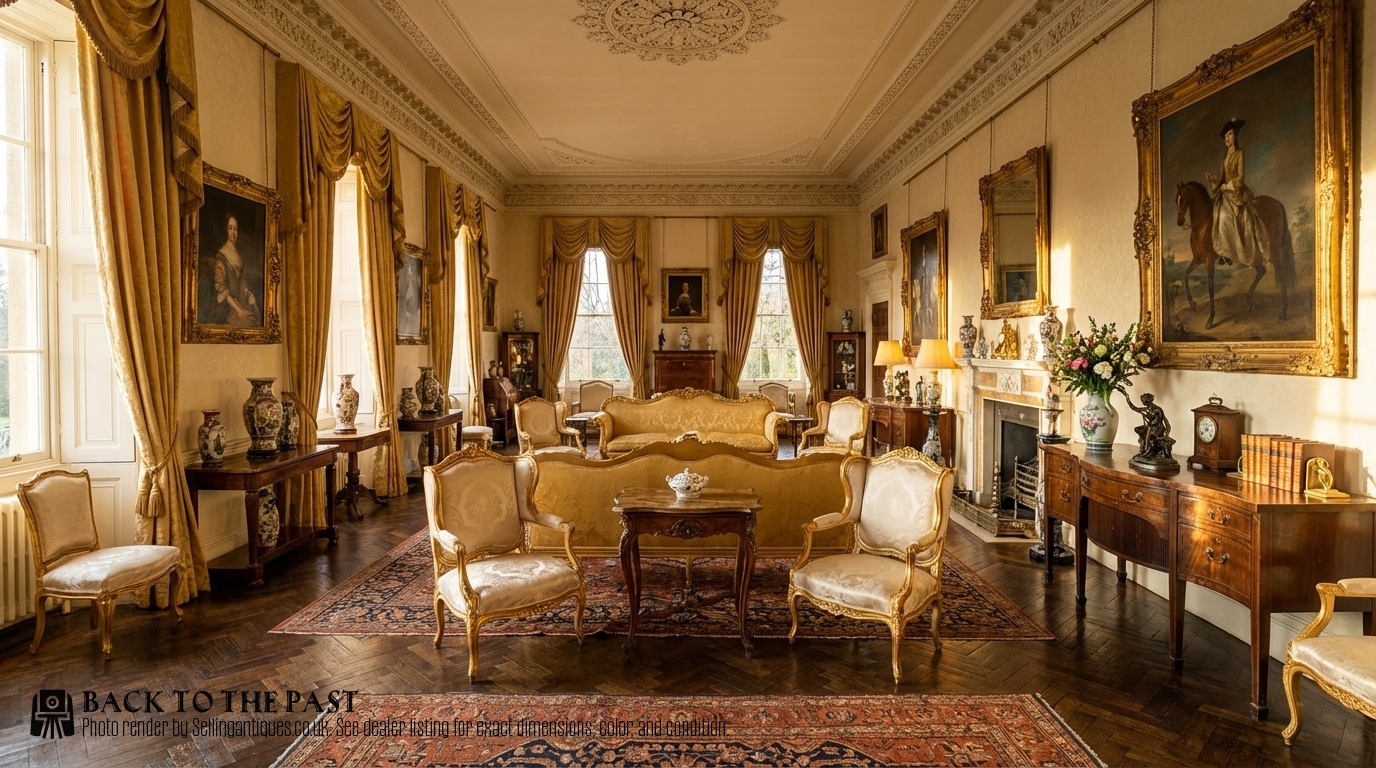
Sheraton Mahogany Sideboard
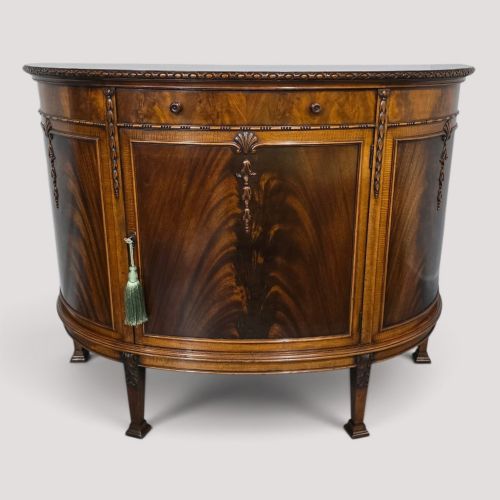
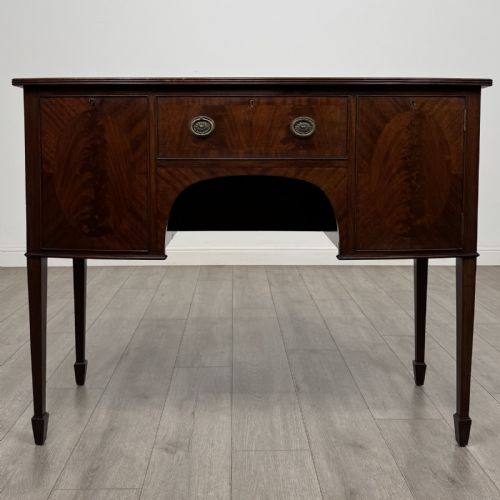
A sheraton mahogany sideboard is a dining room server designed with straight, bow-front, serpentine, or demi-lune shapes that reflect the neoclassical taste of the late eighteenth and early nineteenth centuries. The listings show these forms continuing into the Edwardian era through revival pieces that borrow the lighter proportions and disciplined geometry of the Georgian originals.
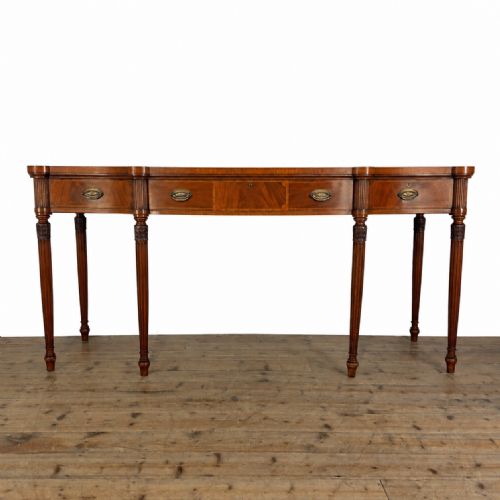
Most examples encountered here are constructed as long low servers or pedestals fitted with drawers and cupboards, though the archive and current listings also record related forms such as serving tables, breakfronts, and occasional demi-lune cabinets. These pieces function as both display surfaces and storage units for dining silver and linen.
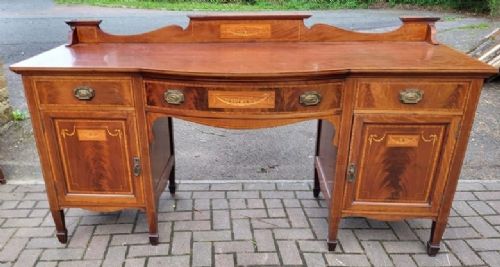
The periods represented span from the original George III workshops of the 1700s and 1800s to later nineteenth-century interpretations and twentieth-century Sheraton Revival revivals. Buyers meet everything from compact eighteenth-century serpentine servers to large Edwardian inlaid buffet cabinets.
Materials and Technique
The primary timber across these pieces is mahogany, often selected for figured grain, flame patterns, or linear warmth. Workshops paired this dark wood with lighter contrasting timbers such as satinwood, boxwood, and ebony to create geometric stringing, crossbanding, and marquetry details.
Inlay and marquetry form the decorative vocabulary, utilising dyed woods and botanical motifs rather than heavy relief carving. Brass hardware, including original ring pulls and backplates, punctuates the drawer fronts alongside occasional glazed panels or mirror glass in related cabinet pieces.
Sheraton Mahogany Sideboard Retail Price Guide 2026
Typical asking prices for sheraton mahogany sideboard among the pieces listed under this phrase on Sellingantiques today, from the lower quarter to the upper quarter. They describe what is for sale here now, not the wider market.
Some Edwardian makers built demi-lune cabinets so narrow they could hug a dining room wall without tripping the butler.
Evaluating Quality
Quality rests on the selection of timber and the precision of the cabinetwork rather than sheer size. A superior piece displays carefully matched flame or figured mahogany across the entire front, ensuring the grain flows logically from drawer to drawer.
The refinement of the inlay dictates the upper tier of the range, where crisp boxwood stringing and hand-cut satinwood fans demonstrate exceptional joinery. Lesser examples rely on printed or stamped decoration rather than individual hand-laid veneers.
Hewetsons London·Edwards and Roberts·Warings
The Sheraton Mahogany Sideboard Glossary
- Bow-front
- A convex curved front profile that softens the rigid corners of a traditional rectangular cabinet. This shape appears frequently in both George III originals and Edwardian revivals.
- Serpentine
- A rhythmic front edge that curves outward in the centre and inward toward the ends, or vice versa. It demands high skill from the cabinetmaker to fit the drawers accurately.
- Demi-lune
- A half-moon shape designed to sit flush against a dining room wall as a serving table or cabinet. These pieces often feature satinwood painted decoration or delicate crossbanding.
- Crossbanding
- A border of veneer laid around the perimeter of a drawer front or tabletop so that the grain runs perpendicular to the central panel. This technique frames the primary mahogany surface.
- Stringing
- A thin, narrow line of contrasting light or dark wood inlaid into grooves on the furniture surface. It defines the geometric panels characteristic of the neoclassical style.
Sheraton Mahogany Sideboard: Frequently Asked Questions
How do I tell an original Georgian piece from a revival?
Original pieces from the Georgian period show eighteenth-century construction methods, including hand-cut dovetails, dry timbers, and signs of age in the secondary woods used inside the drawers.
Revival pieces from the Edwardian era often use standardised machine-cut elements, heavier internal framing, and brighter, less oxidised mahogany finishes.
What is the difference between a sideboard and a serving table?
A sideboard incorporates built-in storage through enclosed cupboards and multiple drawers designed to hold cutlery and dining room accessories.
A serving table offers an open frame with a flat top surface intended strictly for presenting food and dishes during meals.
How should I care for mahogany furniture?
Keep these items away from direct sunlight and heat sources to prevent the mahogany veneers and delicate satinwood inlay from drying out or lifting.
Apply a traditional beeswax polish occasionally to nourish the wood and maintain a soft, natural sheen without using modern silicone sprays.
Where were these pieces used in the home?
These servers stood primarily in the dining room, functioning as a practical staging area for serving dishes and storing silver service during large meals.
Today, they adapt easily to living rooms and hallways as display surfaces or storage cabinets due to their shallow depth.