





Sheraton Inlaid Drop Leaf
Sheraton inlaid drop leaf tables are adaptable folding furniture pieces defined by crisp geometric stringing, sought after for bringing understated refinement to compact spaces.
Sheraton Inlaid Drop Leaf
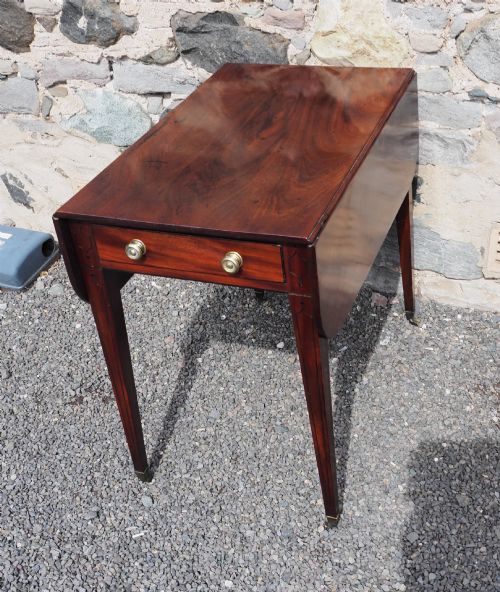
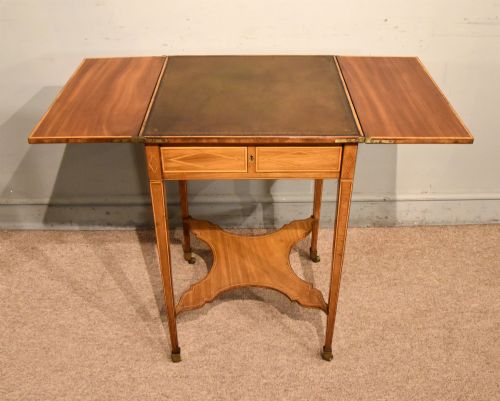
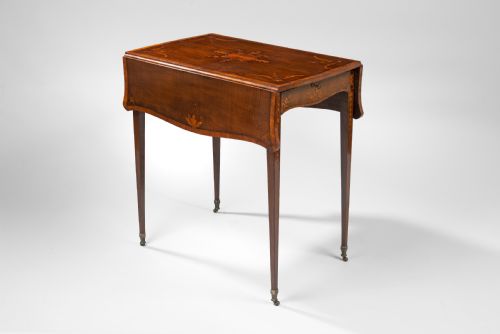
A sheraton inlaid drop leaf selection predominantly consists of Pembroke tables, alongside occasional, writing, sewing, and side forms featuring folding leaves supported by hinged rule joints or swing brackets. These pieces emerge chiefly from Georgian, George III, and Regency eras, characterised by light proportions designed for parlour and drawing room use.
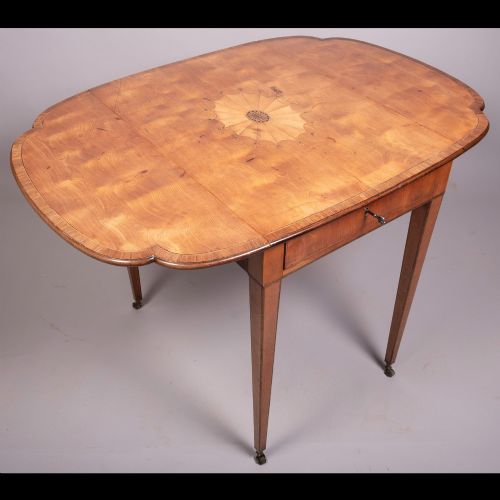
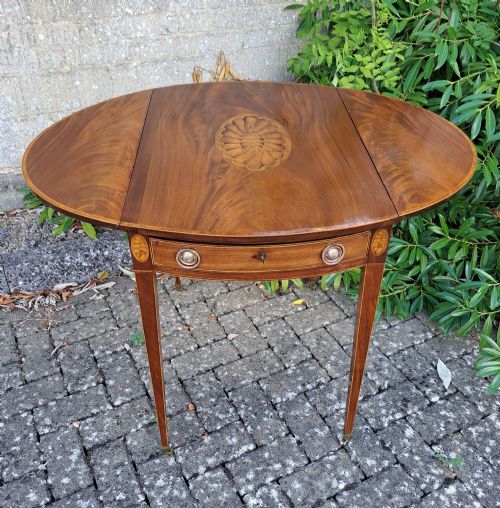
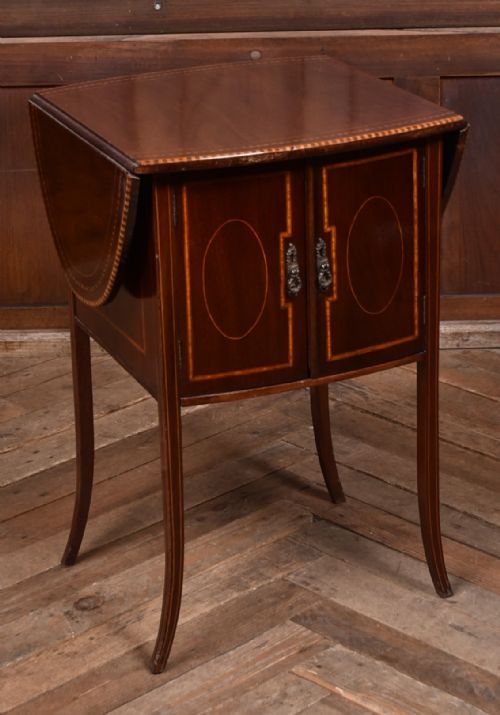
The physical evidence spans rectangular and oval tops resting on tapering spade feet or slender legs, often incorporating functional drawers or writing surfaces. Later Edwardian interpretations and Sheraton Revival pieces emulate these eighteenth-century hallmarks using mahogany, satinwood, and rosewood veneers.
Tables in this category adapt easily to modern interiors as compact lamp or side surfaces while retaining the architectural stringing and crossbanding typical of late eighteenth and nineteenth-century cabinet work.
Materials and construction
Cabinet makers constructed these tables using solid mahogany, rosewood, and kingwood as primary timbers, frequently applying fine satinwood and harewood veneers to the top surfaces. The underlying framework relies on traditional joinery techniques, securing folding leaves with brass hinges and supporting flaps with swing brackets or wooden underframes.
Contrasting borders and geometric motifs incorporate delicate boxwood inlay and dark stringing lines, contrasting light and dark timbers to define panel edges and aprons. Tops often feature subtle banded borders and central medallions created through marquetry and veneering methods standard in late Georgian workshops.
Some sewing tables hide tiny partitioned compartments beneath their folding leaves, originally designed to keep ivory spools and pins from rolling away during tea.
Judging quality and proportion
Quality rests upon the crispness of the boxwood stringing and the selection of figured veneers, where finely grained mahogany or richly patterned satinwood elevates a simple occasional table. Superior examples display seamless grain matching across folding leaves and precise mitres at the corners of inlaid borders.
Structural harmony also dictates value, with finer pieces maintaining slender, well-proportioned legs and tight rule joints that allow the drop leaves to hang level when extended. Lesser versions may exhibit heavier timbers, clumsier leg profiles, or simpler painted decoration in place of genuine inlaid banding.
The Sheraton Inlaid Drop Leaf Glossary
- Pembroke table
- A small drop-leaf table with hinged flaps on either side, typically featuring a drawer and slender tapering legs.
- Rule joint
- A moulded joint connecting a table top to its drop leaf, designed to hide the hinge mechanism and provide flush support when opened.
- Stringing
- Thin lines of contrasting timber inlaid into grooves on the surface to create geometric borders and panels.
- Satinwood
- A lustrous, hard timber with a golden sheen, extensively utilised for veneers and decorativebanding in late eighteenth-century furniture.
- Crossbanding
- A strip of veneer laid around the border of a table top with the grain running perpendicular to the central panel.
Sheraton Inlaid Drop Leaf: Frequently Asked Questions
What is a sheraton inlaid drop leaf table?
These pieces are eighteenth and nineteenth-century folding tables featuring drop leaves, slender tapered legs, and decorative inlaid borders of contrasting timbers.
They were designed to provide flexible surface space in principal rooms without dominating the floor plan.
How were these tables used originally?
Georgian households utilised Pembroke and occasional tables for writing, needlework, breakfasting, or holding small lamps and tea apparatus.
The folding leaves allowed servants to easily stow the furniture against walls when extra floor space was required.
How do I spot a later copy?
Edwardian Sheraton Revival pieces often utilise machine-cut veneers, lighter secondary woods, and brighter internal hardware compared to Georgian originals.
Examining the construction of drawer linings and the oxidation of the timber helps distinguish nineteenth-century revivals from eighteenth-century work.
Can I use these tables daily?
These tables adapt well to modern living rooms and studies as compact side surfaces, lamp tables, or occasional desks.
Care should be taken to protect antique polished surfaces from moisture and direct heat sources during everyday use.