

Sheraton Inlaid Credenza
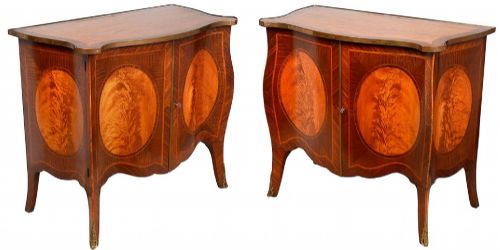
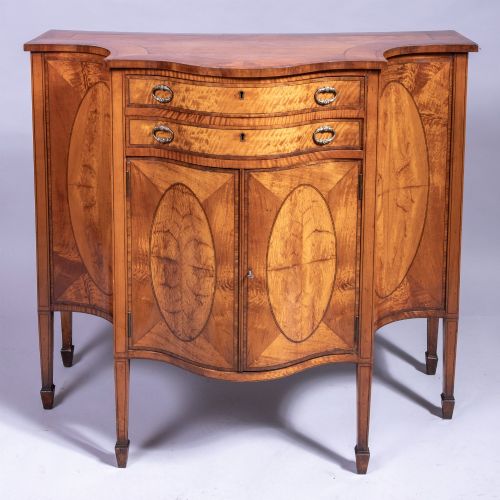
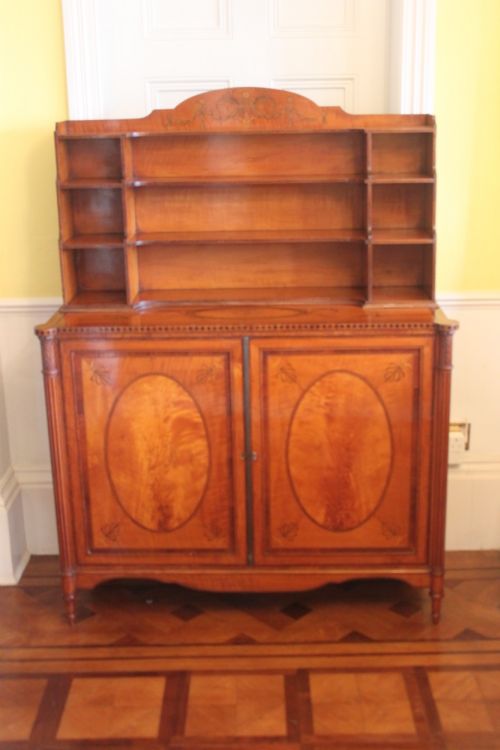
These sheraton inlaid credenza examples combine refined neoclassical lines with intricate timberwork, offering both elegant storage and striking period presence.
Sheraton Inlaid Credenza
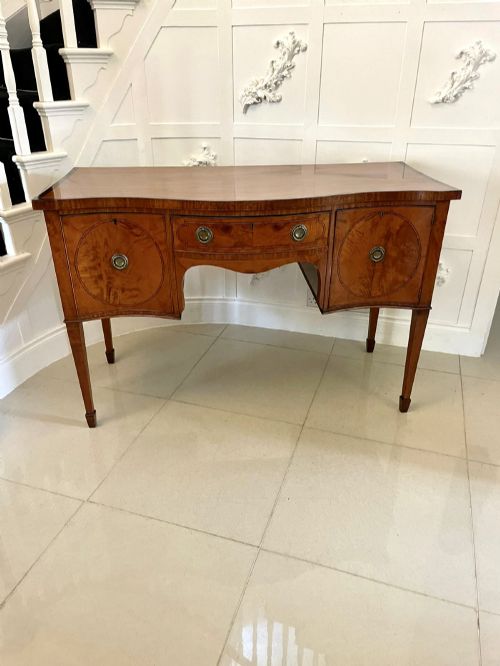
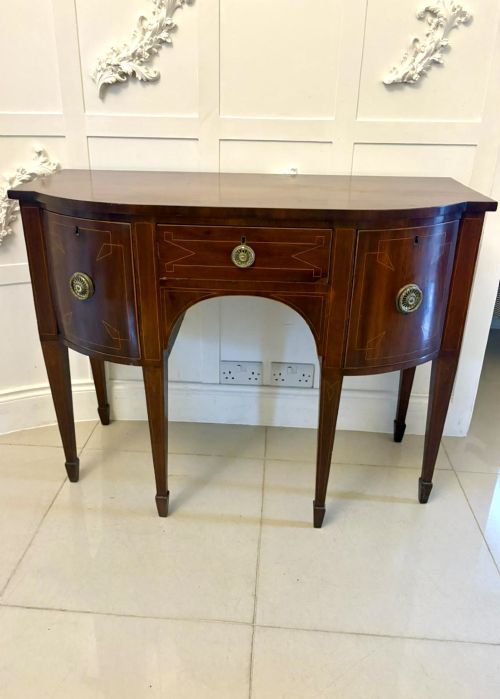
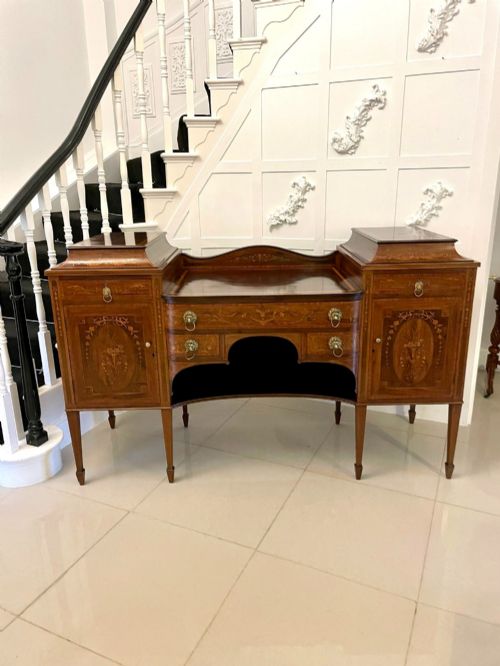
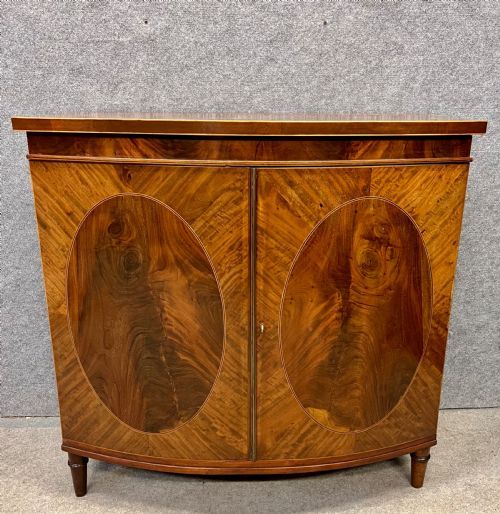
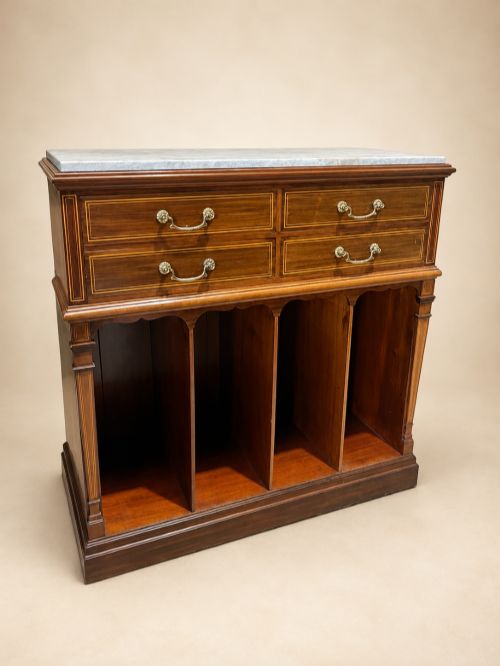
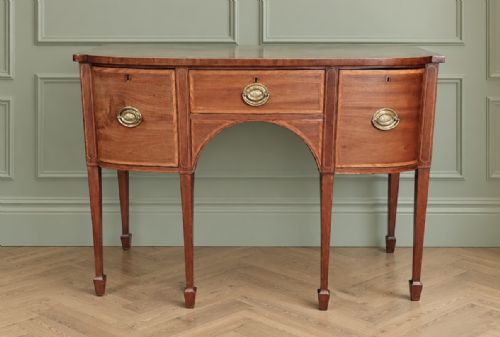
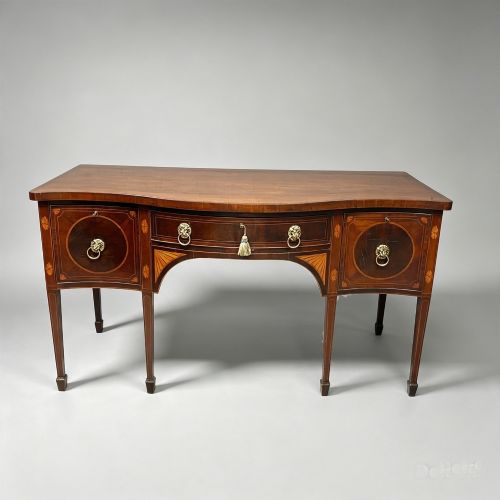
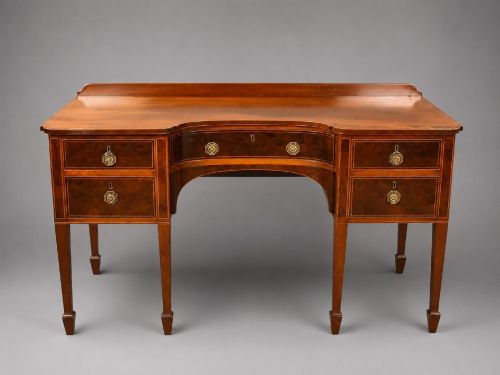
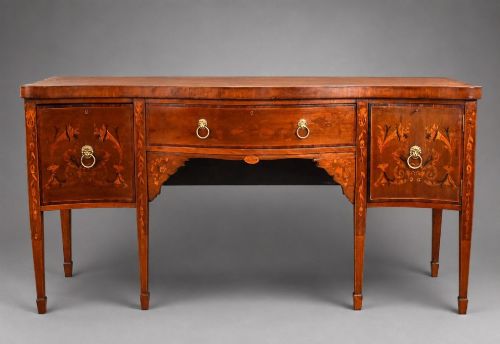
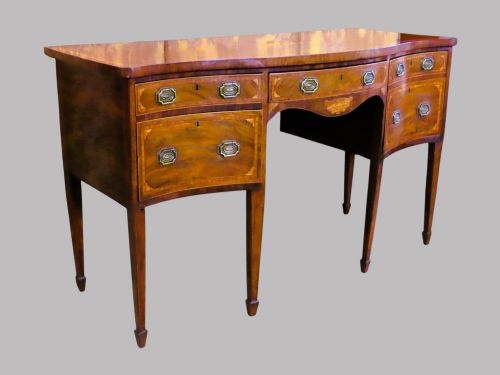
A sheraton inlaid credenza search brings up formal dining room and reception furniture spanning the Georgian, Victorian, and Edwardian eras. The selection comprises sideboards, side cabinets, commodes, and servers that adapt the light, graceful proportions associated with the late eighteenth century. Pieces range from genuine period pieces to later revival iterations produced around nineteen hundred.
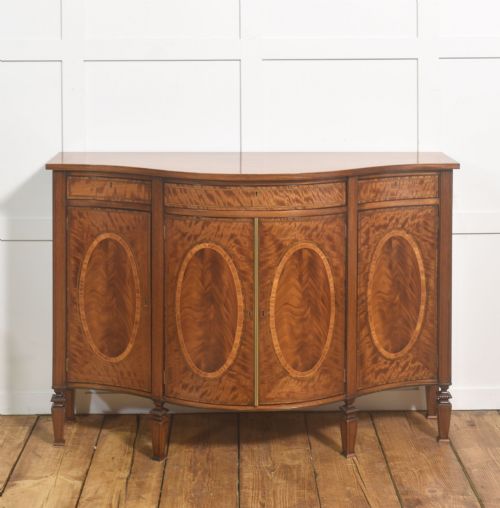
Buyers most frequently encounter Edwardian and late nineteenth century Sheraton Revival pieces executed in mahogany or satinwood. These items often feature serpentine or bow fronts, alongside demi-lune side cabinets and glazed display furniture. Georgian originals also appear, showcasing the restrained neoclassical geometry that defined the style's origin.
Materials and technique
Cabinet makers utilised choice hardwoods including figured mahogany, rosewood, and satinwood, frequently applying crossbanding to accentuate the borders. Drawer fronts and tabletops often display contrasting boxwood and wood inlay arranged in geometric or floral motifs.
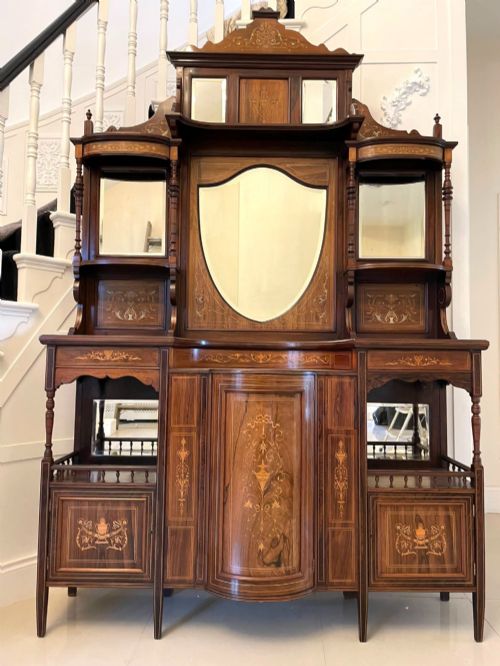
Marquetry techniques add pictorial or scrollwork decoration using dyed and natural veneers set flush into the primary timber. Brass hardware, including handles and escutcheons, provides functional and visual accents against the polished wood surfaces.
Object forms on this page include serpentine sideboards, demi-lune cabinets, and glazed display furniture.
Craftsmanship and distinction
The standard of a sheraton inlaid credenza rests upon the precision of the cabinet work and the complexity of the timber preparation. Superior examples display seamless veneer matching, finely executed marquetry without gaps, and substantial secondary timbers within the drawer carcasses.
Proportion and silhouette also define the upper tier, where serpentine curves and bow fronts are handled with architectural surety rather than clumsy bulk. Finer pieces demonstrate careful attention to the grain alignment across the entire facade, elevating a utilitarian storage item into a decorative centrepiece.
Hewetsons London·James Hicks
The Sheraton Inlaid Credenza Glossary
- Serpentine
- A front profile that curves outward at the ends and inward at the centre in a continuous, sinuous wave. This shape requires advanced woodworking skill to execute cleanly.
- Satinwood
- A lustrous, hard timber native to Ceylon and India with a golden-yellow sheen. It served as a primary surface wood or veneer for high-status neoclassical furniture.
- Marquetry
- The art of applying decorative pieces of veneer to a structure to form intricate floral or geometric designs. Craftsmen cut varied timbers together to achieve tonal contrast.
- Crossbanding
- A narrow strip of veneer laid around the border of a panel or drawer front with the grain running perpendicular to the centre. This frames the primary timber visually.
- Demi-lune
- A half-moon or semicircular shape applied to console tables and side cabinets designed to stand flat against a wall. The configuration suited smaller reception rooms.
Sheraton Inlaid Credenza: Frequently Asked Questions
How do I distinguish an original Georgian piece from a revival piece?
Georgian pieces generally display construction methods, timber ageing, and secondary woods consistent with the late eighteenth century, such as oak drawer linings. Revival pieces made around nineteen hundred often reveal twentieth century hardware screws or cleaner, factory-sawn internal surfaces.
Examining the underside and drawer interiors reveals the tool marks and wear patterns that separate an authentic period item from a later Edwardian interpretation.
Where should I place a credenza in a modern room?
These cabinets suit dining rooms, living spaces, or wide hallways where their shallow profiles leave floor space clear. Their finished backs and polished tops allow them to function as serving surfaces or display areas.
Keeping them away from direct sunlight protects delicate satinwood veneers and prevents the natural mahogany from fading unevenly over time.
How do I care for antique inlaid timber surfaces?
Maintenance requires regular dusting with a soft, dry cloth and occasional application of quality beeswax to nourish the polished finish. Avoid silicone-based sprays, which can penetrate porous historic finishes and damage delicate veneers.
Maintaining stable room humidity prevents the boxwood inlay and underlying veneers from lifting or shrinking away from the primary timber.
What is the difference between a sideboard and a credenza?
Traditional British sideboards primarily functioned as dining room serving tables equipped with drawers and cupboards for cutlery and linen. Credenzas and side cabinets often lean towards decorative display, featuring enclosed cabinet doors or glass panels for porcelain.
In modern usage, the terms frequently overlap, but eighteenth and nineteenth century cabinet makers maintained distinct forms based on their intended domestic rooms.