

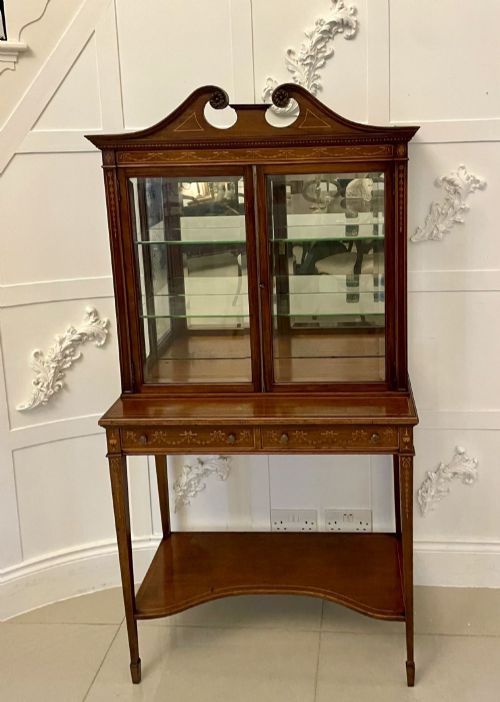
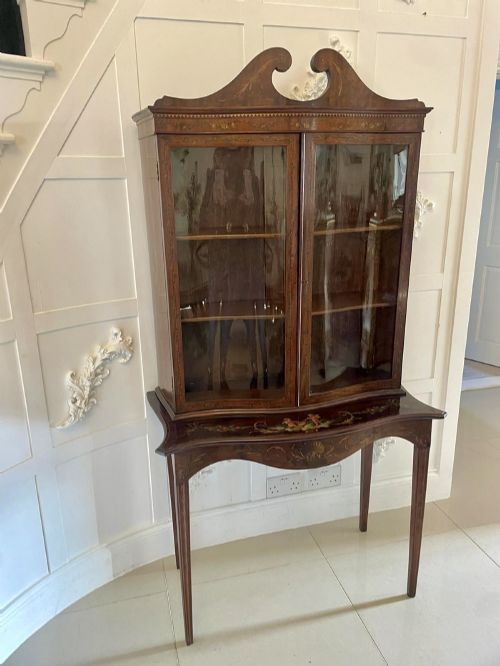
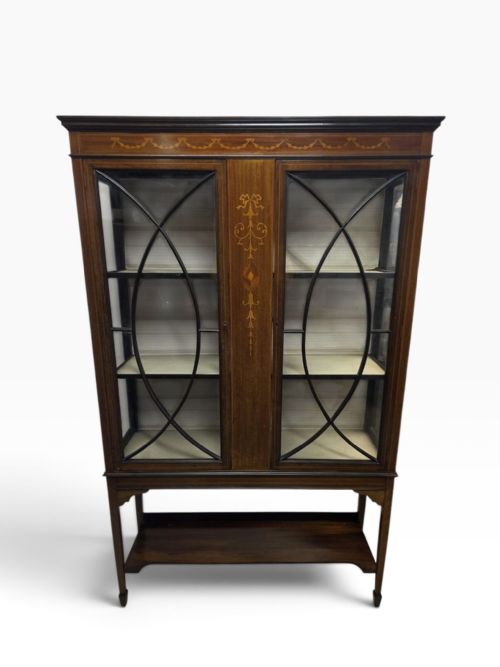
Sheraton China Cabinet
A sheraton china cabinet is a glass-fronted display piece designed to showcase porcelain, usually encountered in Edwardian and Victorian Sheraton Revival iterations.
Sheraton China Cabinet
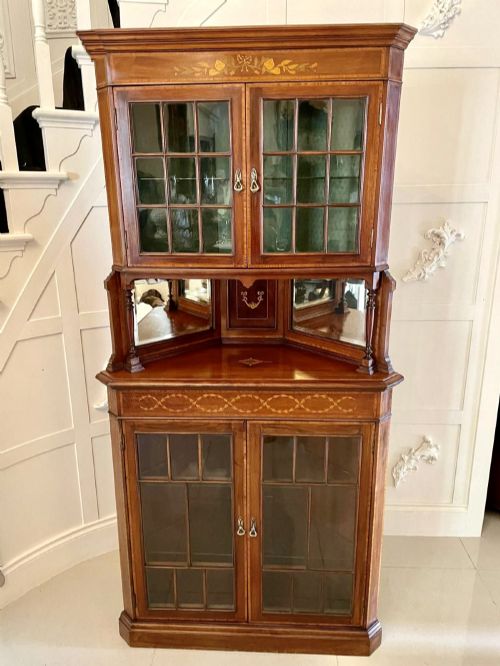
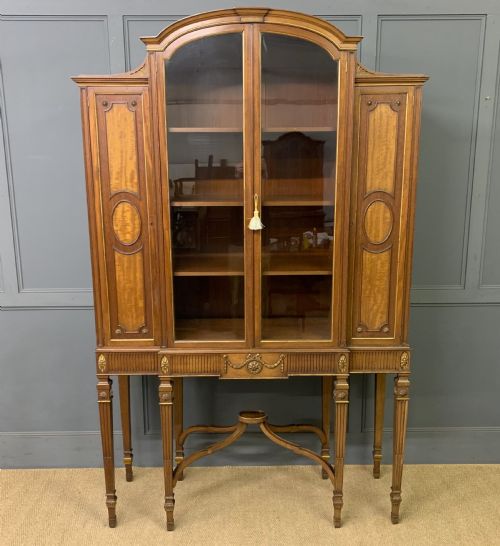
When searching for a sheraton china cabinet, buyers encounter display cabinets, corner cabinets, and bookcases spanning the Victorian, Edwardian, and early twentieth-century periods. These pieces serve primarily to exhibit china and fine objects behind glass doors while protecting them from dust.
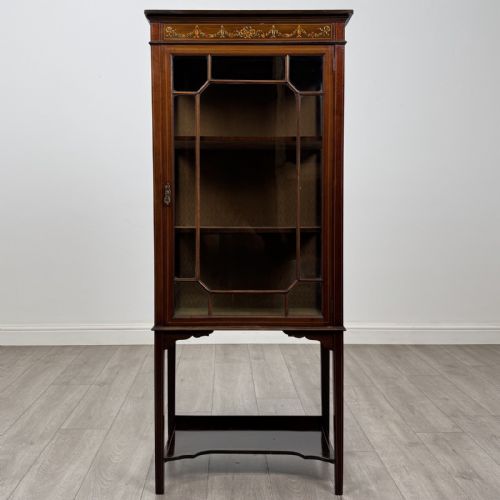
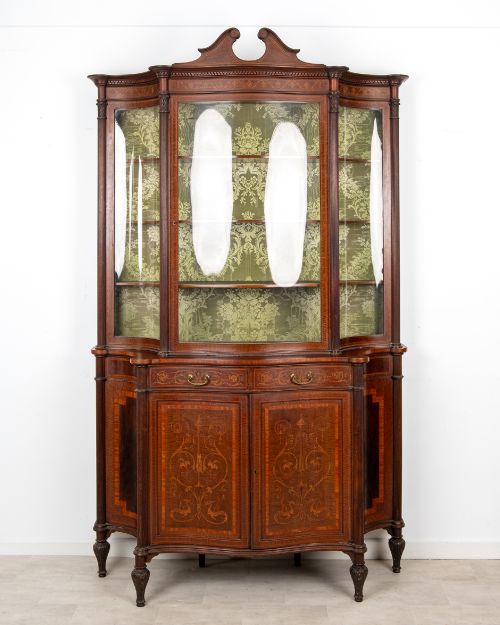
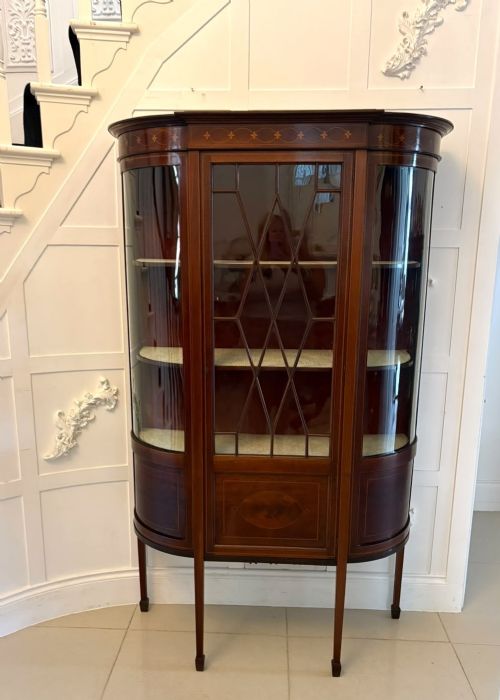
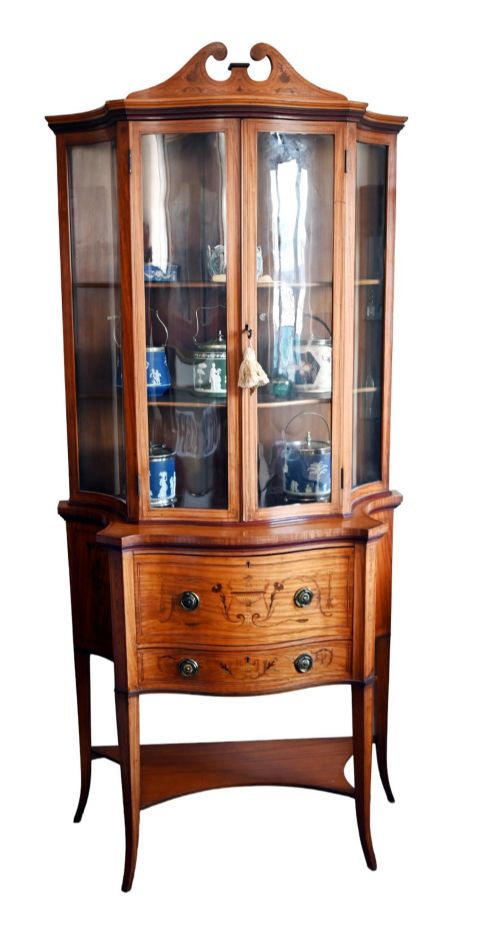
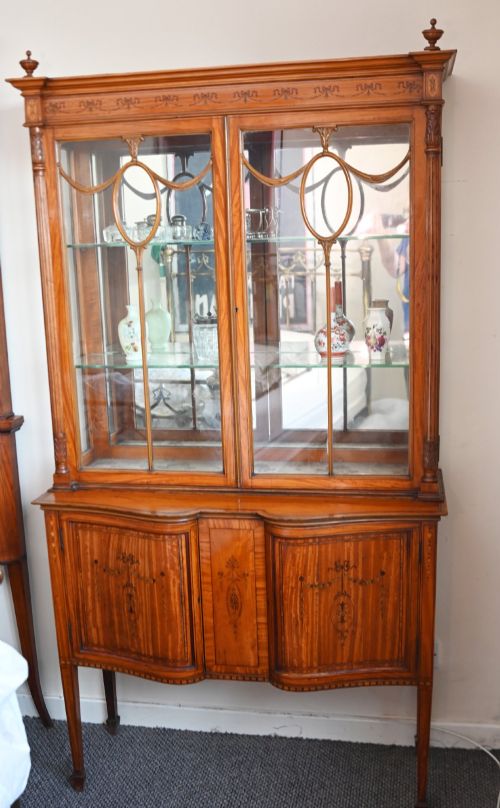
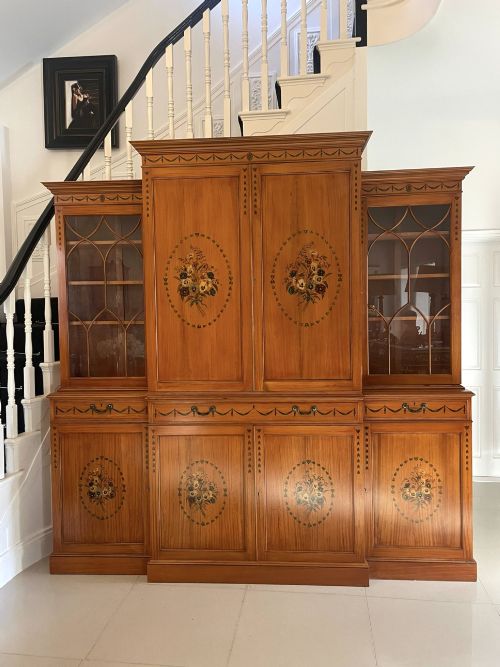
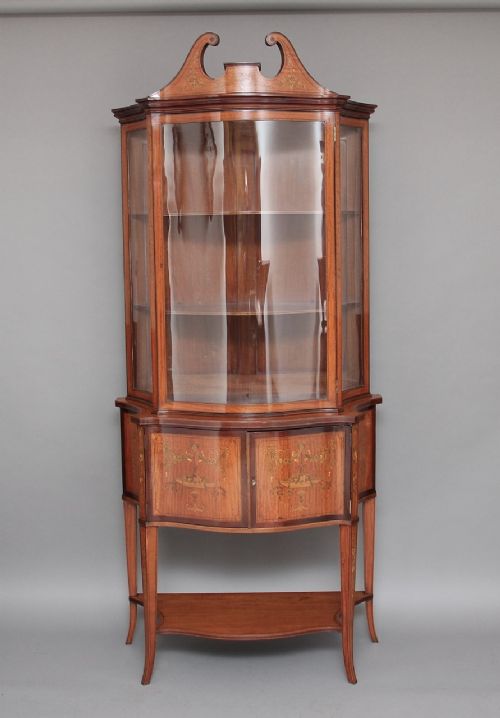
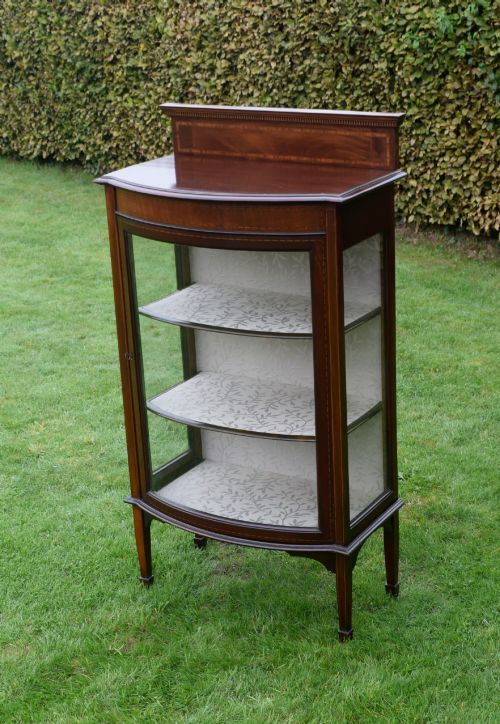
The most common version met on this page is the Edwardian or late Victorian Sheraton Revival mahogany display cabinet, frequently ornamented with satinwood inlay and delicate marquetry. These forms draw heavily on neoclassical design principles, featuring rectilinear or bow-front profiles.
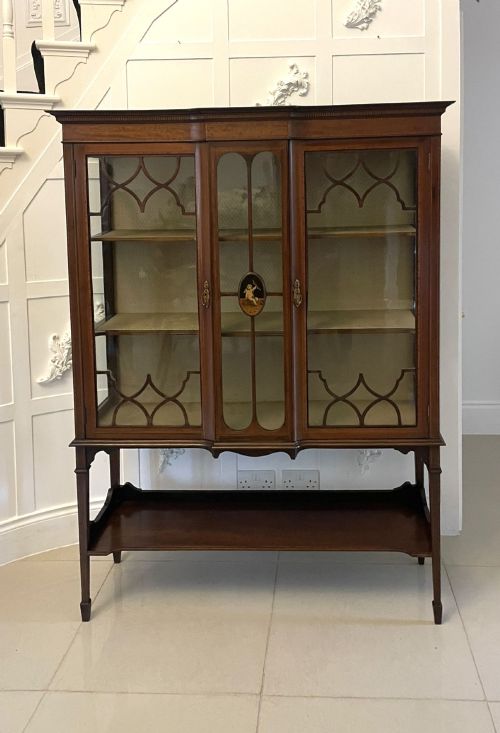
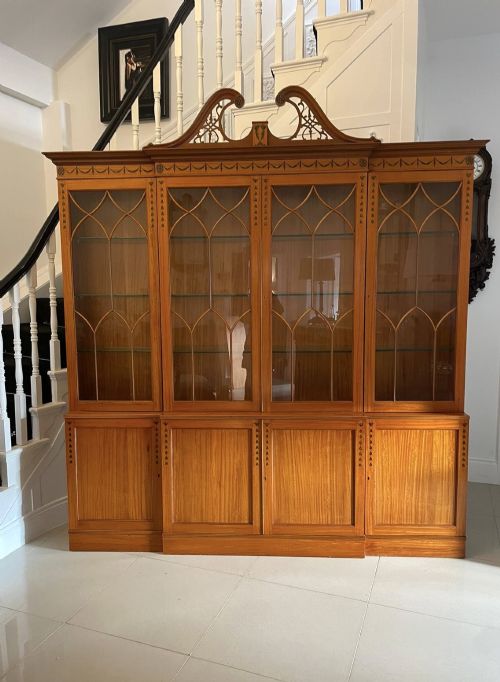
Makers such as Edwards & Roberts, Hampton & Sons, and Maple & Co. produced notable examples of these cabinets, often incorporating glazed doors with astragal bars and fitted interior shelving.
How they were made
Cabinetmakers constructed the carcase primarily in mahogany or satinwood, sometimes employing birds-eye maple or applying paint and original painted decoration directly to the timber. Satinwood inlay and contrasting stringing provide linear definition across the facade.
Glazing relies on glass held by timber framing, frequently utilising astragal bars in geometric patterns to divide the light. Brass hardware secures the doors, while internal lining often incorporates fabric or mirrored backing to reflect light through the displayed porcelain.
Some cabinets feature delicate bow-front doors so subtly curved they catch the drawing room light twice.
What varies in quality
The distinction between standard production and the finest work lies in the execution of the marquetry, the choice of veneer selection, and the crispness of the painted decoration. Elaborate breakfront forms and pieces bearing signature marquetry from known makers sit at the upper end of the scale.
Secondary elements such as the delicacy of the astragal glazing bars, the quality of the brass fittings, and the integrity of the timber framing determine the structural cohesion and visual refinement of each cabinet.
Edwards & Roberts·Hampton & Sons·Maple & Co.
The Sheraton China Cabinet Glossary
- Astragal glazing
- Glass doors divided by thin wooden strips into smaller panes. These bars create geometric patterns across the front of the display case.
- Bow front
- A convex, outwardly curved front section of a cabinet. This shaping softens the rectilinear profile of the piece.
- Breakfront
- A cabinet whose central section projects forward from the flanking wings. This architectural arrangement adds depth and formal presence.
- Marquetry
- Inlaid patterns formed from different coloured wood veneers fitted into a background panel. This technique creates pictorial or decorative motifs.
- Sheraton Revival
- A late nineteenth and early twentieth century design movement that reinterpreted the neoclassical furniture forms of Thomas Sheraton. Cabinets in this style utilise light timbers, classical motifs, and symmetrical inlay.
Sheraton China Cabinet: Frequently Asked Questions
What periods do these cabinets date from?
The pieces span from the late nineteenth century through the Edwardian era up to approximately 1930. Victorian and Edwardian examples predominate on the market.
Sheraton Revival interpretations form a significant portion of the inventory, bridging eighteenth-century classical design with later manufacturing methods.
How were these cabinets originally used?
Households utilised these pieces in drawing rooms and reception spaces to display imported porcelain, ceramics, and decorative glass collections. The glass doors kept dust away while permitting uninterrupted viewing.
Mirrored backs and fabric linings were frequently integrated to enhance the illumination of the items kept inside.
How do I distinguish corner cabinets from standard ones?
Corner cabinets are specifically engineered with angled backs designed to fit directly into the corner of a room, saving floor space while providing display capacity. Standard cabinets feature flat rectangular or breakfront backs intended to stand flush against a flat wall.
Both variants employ glazed doors, but their spatial footprint differs entirely.
What is the difference between mahogany and satinwood models?
Mahogany models utilise a dense, dark reddish-brown timber, often enriched with satinwood inlay or marquetry contrasting against the dark grain. Satinwood models feature a pale, golden-yellow timber that provides a lighter overall aesthetic.
Both timbers frequently receive painted decorations or fine stringing to accentuate the neoclassical design lines.