



Sheraton Breakfront Bookcase
A sheraton breakfront bookcase brings architectural presence and refined display space to a room, uniting disciplined joinery with exquisite decorative detail.
Sheraton Breakfront Bookcase
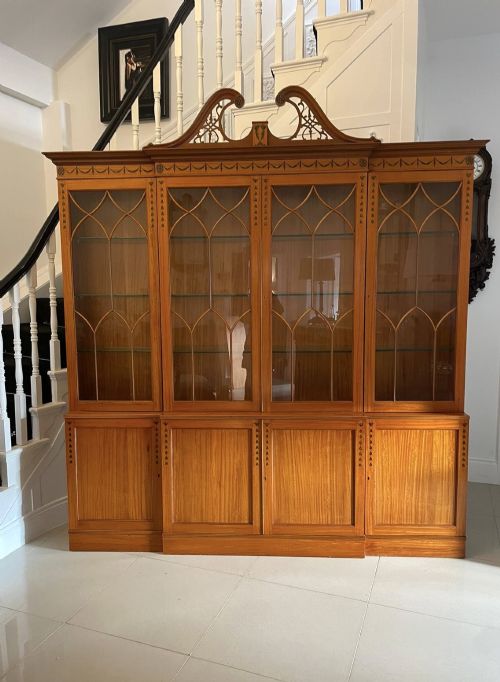
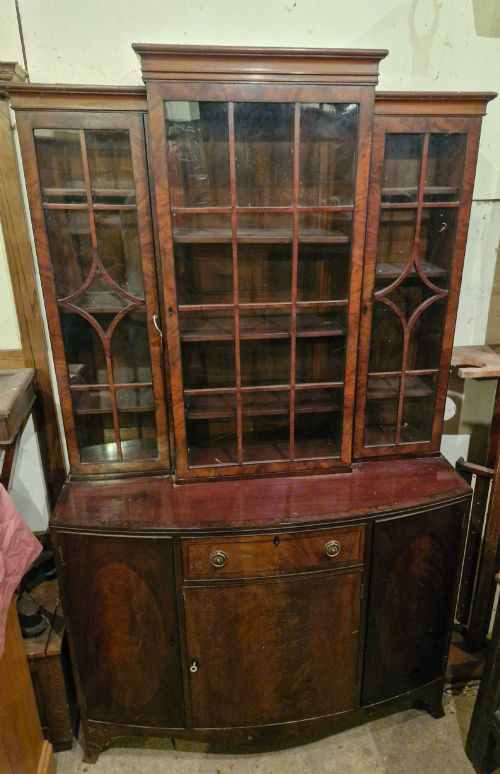
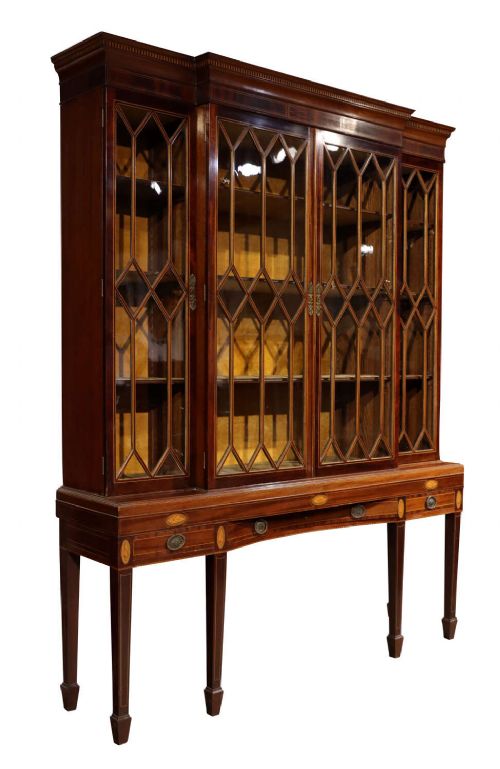
When you search for a sheraton breakfront bookcase, you are looking at large, architectural pieces of furniture characterised by a central section that projects forward from flanking wings. The examples you meet on this page span the George III period, the Regency era, and the later revivals of the nineteenth and early twentieth centuries.
Originating in the late eighteenth century and reimagined during Edwardian times and the decades either side, these bookcases reflect a continuous appreciation for classical proportions and light, elegant cabinetwork. Whether Georgian originals or later Sheraton Revival interpretations, they serve as substantial focal points in large rooms.
How they were made
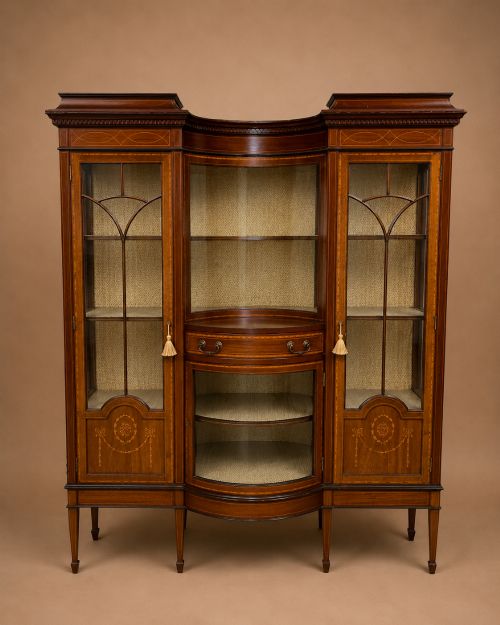
Cabinetmakers built these pieces using solid timbers such as mahogany and satinwood, frequently applying finely figured veneers and contrasting crossbanding to the breakfront surfaces. Wood inlay and marquetry create delicate floral, classical, or geometric motifs that trace the cornices, friezes, and door panels.
Glass is set into complex wooden frameworks known as astral glazing bars, dividing the doors into smaller geometric panes that provide clear visibility while maintaining structural rigidity. Brass hardware, including locks, hinges, and occasional fittings, secures the large doors and supports adjustable internal shelving.
Surfaces receive hand-applied finishes that highlight the natural grain and warmth of the wood, while pieces from later revival periods sometimes incorporate original painted decoration directly onto the satinwood panels.
Listings feature mahogany and satinwood across George III, Victorian, and Edwardian periods.
What varies in quality
The distinction between ordinary and exceptional examples rests upon the crispness of the inlay, the choice of timber figure, and the architectural harmony of the breakfront proportions. Master makers employed highly figured fiddleback or flame mahogany and meticulously selected satinwood, ensuring that the grain patterns flow logically across the expansive front elevation.
Structural refinement shows in the execution of the glazing bars, where slender, hand-carved wooden profiles replace thicker, heavier commercial alternatives. The integration of hand-painted decoration, finely chased brass fittings, and sophisticated internal cabinetry elevates certain revival and period pieces well above standard utility furniture.
Edwards and Roberts·Lamb and Co
The Sheraton Breakfront Bookcase Glossary
- Breakfront
- A cabinet design where the central section projects forward from the flanking sections, creating distinct architectural planes across the front. This technique breaks up the visual mass of large bookcases.
- Astral glazing
- A method of dividing glass doors into smaller panes using slender wooden bars arranged in geometric or Gothic patterns. These bars provide essential support while framing the contents behind.
- Satinwood
- A pale, lustrous hardwood native to Ceylon and India, prized for its golden sheen and smooth texture. It became a defining material for late eighteenth-century and revival pieces.
- Marquetry
- The art of forming decorative patterns by fitting together contrasting veneers of wood, shell, or ivory onto a solid substrate. It adds pictorial or abstract detail to cabinet doors and friezes.
- Crossbanding
- A narrow strip of veneer applied to the border of a panel, with the wood grain running perpendicular to the central veneer. This frames the primary timber and creates a neat visual boundary.
Sheraton Breakfront Bookcase: Frequently Asked Questions
How do I distinguish George III originals from Sheraton Revival pieces?
Original pieces from the Georgian era display the construction methods, timber maturity, and wear patterns consistent with the late eighteenth century, including hand-cut dovetails and native secondary woods. Revival pieces made around the Victorian or Edwardian periods often utilise machine-assisted precision and specific secondary timbers typical of later British workshops.
Examining the backboards, interior drawer construction, and locks usually clarifies whether a piece dates to the original period of design or its subsequent late nineteenth-century revival.
Are the shelves adjustable in these bookcases?
Many larger breakfront bookcases feature adjustable open bookshelves or enclosed shelved compartments behind the glazed doors, allowing for the storage of books of varying heights. Original rackwork or wooden support strips inside the carcass indicate whether adjustability was part of the initial design.
Careful inspection of the interior walls reveals the original peg holes or ratchets used to reposition the shelves without altering the historic fabric of the cabinet.
How should I care for satinwood and mahogany surfaces?
These polished wood surfaces respond best to stable indoor environments away from direct sunlight, which can fade delicate satinwood and alter the rich tones of mahogany. Regular dusting with a soft, dry cloth preserves the finish without requiring heavy polishes.
Applying microcrystalline wax periodically helps nourish the timber and protects the antique polish from atmospheric moisture changes.
Can these large bookcases be dismantled for transport?
Due to their substantial proportions, breakfront bookcases are typically constructed in sections, separating the upper display cabinet from the lower base cabinet, with detachable cornice and plinth elements. This modular construction allowed historical craftsmen to deliver large furniture through standard doorways.
Professional handlers should manage the disassembly and reassembly to protect the heavy glass doors, delicate glazing bars, and close-fitting joints.