
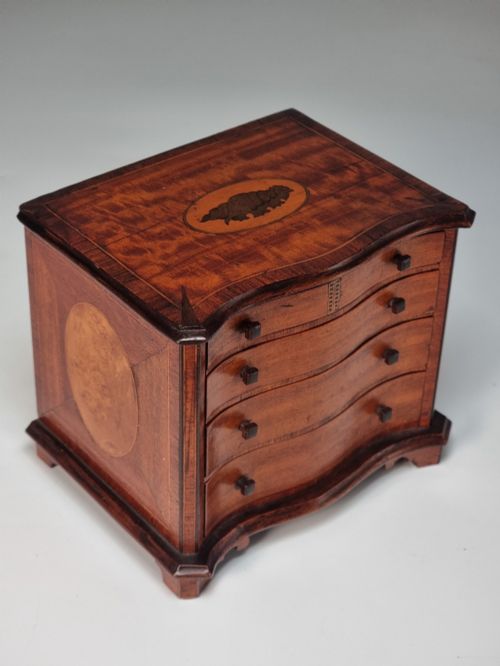
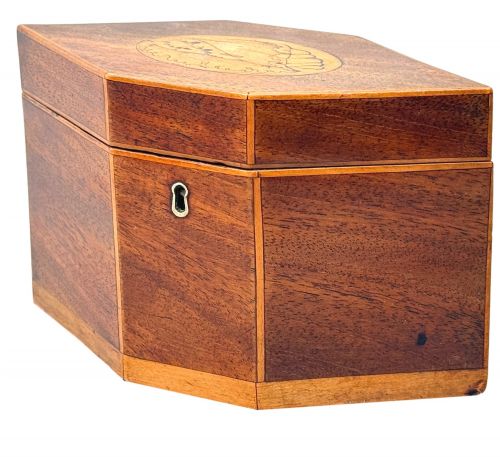


Shell Inlay Box
These pieces take the form of tea caddies, trinket cases and miniature chests, bringing organic lustre to a room through contrasting timber and marine shell.
Shell Inlay Box
A shell inlay box is a container embellished with mother of pearl, abalone, or conch shell motifs set flush into timber or tortoiseshell surfaces. Buyers searching this phrase look for small containers originating from the Georgian, Victorian, and Edwardian periods.
Tea caddies, jewellery cases, trinket boxes and miniature chests dominate the available forms. Mahogany and satinwood provide the most frequent timber backdrops for these marine ornaments.
Origins stretch from English workshops to French and Chinese export centres. Pieces range from simple tea canisters to elaborate stationary cabinets and desk boxes.
How they were made
Cabinetmakers cut shallow recesses into dense hardwoods such as mahogany, satinwood, and calamander to receive thin slices of shell. Natural shell segments were shaped by hand before being pressed and glued precisely into the wooden matrix.
Tortoiseshell examples often incorporate sterling silver pique inlay alongside shell elements, pinned and embedded directly into the translucent material. Interiors frequently feature bone, boxwood, and ebony stringing to divide compartments for tea, stamps, or rings.
A solitary decommissioned artillery shell found its way among the wooden tea caddies, refashioned through trench art into decorated metal.
What varies in quality
Quality separates along the precision of the joinery and the complexity of the marine motifs. Sharpness in the contrasting borders and the retention of every original shell section distinguish superior examples from simpler work.
The choice of primary timber governs the baseline standard, with figured satinwood and burr walnut demanding greater skill from the maker. Intact interior fittings, such as original ivory or abalone elements and functioning locks with keys, elevate a piece.
A. F. Lloyd, Bideford
The Shell Inlay Box Glossary
- Pique inlay
- A technique where tiny pins and strips of silver or gold are pressed into tortoiseshell to form geometric patterns. This method requires considerable heat and precision.
- Tea caddy
- A container designed originally to store loose tea leaves securely. These often contain multiple interior compartments and lids.
- Satinwood
- A lustrous hardwood native to Ceylon and India used extensively for fine furniture and decorative boxes. Its yellow tone provides a bright contrast to darker shell inlays.
- Stringing
- Thin lines of contrasting wood or bone inlaid into cabinet work to outline panels and edges. It frames the central shell motifs on many Georgian pieces.
Shell Inlay Box: Frequently Asked Questions
What were these boxes used for?
These boxes served practical domestic purposes, primarily storing valuable tea leaves, stamps, jewellery, and personal trinkets. Their compartmentalised interiors kept delicate items organised and secure.
Larger variants functioned as stationery cabinets, knife boxes, or work tables with fitted compartments for sewing implements.
How do I date a shell inlay box?
Dating relies on timber choice, construction methods, and the style of the shell motif. Georgian pieces often feature conch shell medallions set into mahogany or satinwood.
Later Victorian and Edwardian examples introduce sterling silver mounts, tortoiseshell panels, and alternative export styles from diverse global workshops.
Are the interiors usually original?
Many surviving pieces retain their original compartments, foil linings, or secondary wooden lids. Tea caddies frequently keep their interior canisters intact.
Replacements occur due to the fragile nature of internal bone, ivory, and fabric fittings over centuries of handling and use.
How do I care for antique tortoiseshell?
Tortoiseshell requires stable humidity and protection from direct sunlight to prevent warping and drying out. Gentle dusting with a dry microfibre cloth preserves the polished surface.
Harsh chemical cleaners or excessive moisture must be avoided to protect both the shell and the embedded silver pique work.