
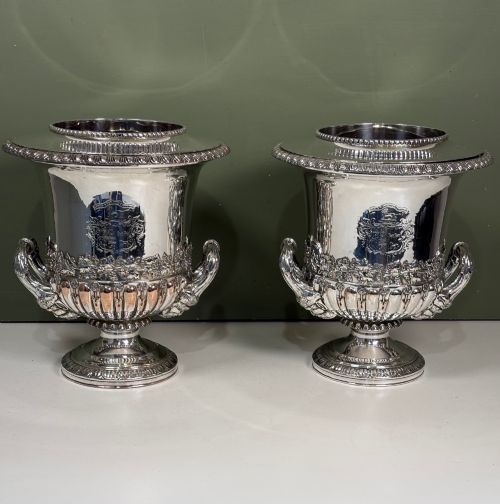


Sheffield Plated Wine Bucket
A sheffield plated wine bucket brings old dining tradition to the table, offering clever copper-and-silver construction for cooling bottles in style.
Sheffield Plated Wine Bucket
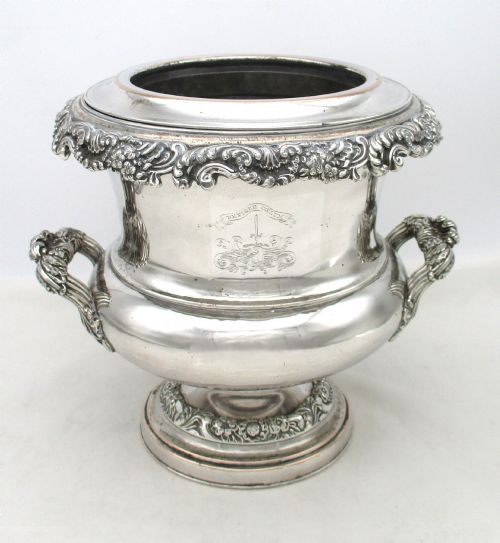
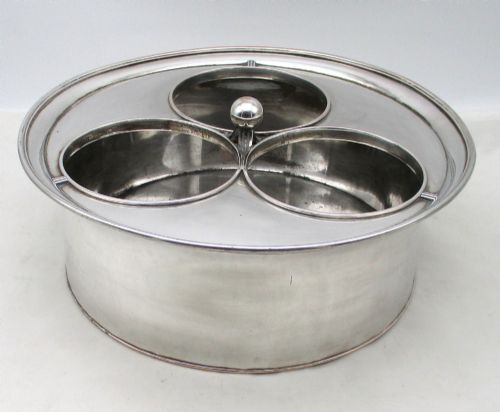
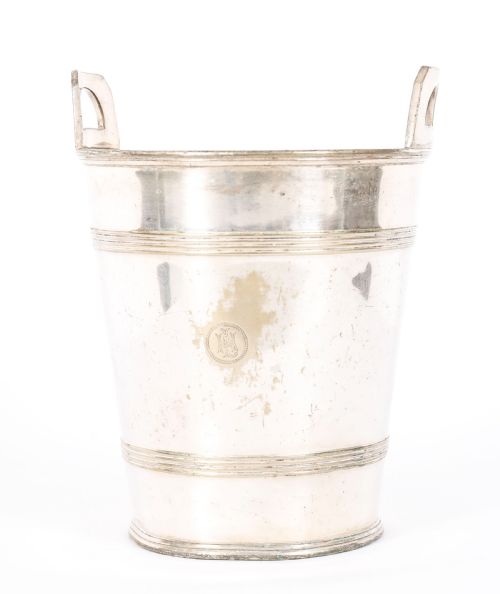
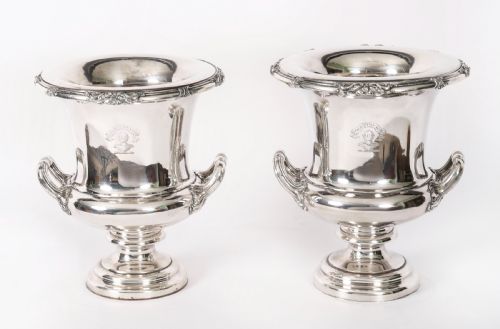
A sheffield plated wine bucket is a vessel designed to chill bottles at the dining table, taking forms such as the classical campana shape or multi-bottle holders. When you search for a sheffield plated wine bucket, you meet items spanning the Georgian, Regency, and Victorian eras, alongside later Art Deco examples.
Most pieces date from the nineteenth and late eighteenth centuries, created as single vessels or matching pairs. Makers employed styles ranging from restrained Georgian lines to elaborate Rococo Revival ornament and clean Art Deco geometry.
Materials and construction
These pieces rely on old Sheffield plate or later silver plate applied over a base metal core such as copper. The fusion method bonded a thin sheet of silver to a thicker copper ingot before rolling and shaping, allowing makers to achieve the look of solid silver at a different scale.
Craftsmen formed the bodies into distinct urn and campana profiles, frequently incorporating cast handles, applied crests, and engraved coats of arms. Metalwork techniques of the period balanced structural rigidity with decorative grace.
Evaluating quality and execution
Quality rests in the crispness of cast mounts and the integrity of the fused metal plates. Superior examples display sharp heraldic engraving and well-balanced proportions without heavy wear to the underlying copper.
Makers known for exceptional output, such as Matthew Boulton, distinguished their vessels through refined weight distribution and meticulous finishing of handles and rims. Simpler nineteenth-century production showed less intricate detailing on the body.
Hutton Sheffield·Matthew Boulton and Co
The Sheffield Plated Wine Bucket Glossary
- Old Sheffield Plate
- An early form of silver plating created by thermally fusing a sheet of silver to a copper ingot. This technique preceded modern electroplating methods.
- Campana
- A bell-shaped vessel profile popular during the Regency and Georgian periods. It provides wide proportions suited for cooling wine bottles.
- Coat of Arms
- Heraldic engraving applied to silver and plated items to signify family lineage. Such details often help trace the original ownership.
- Base Metal
- The underlying metal beneath the silver surface, typically copper in traditional Sheffield wares. It sometimes shows through where the top layer has thinned.
- Rococo Revival
- A nineteenth-century style drawing on eighteenth-century ornamentation. It employs flowing curves, scrolls, and natural motifs.
Sheffield Plated Wine Bucket: Frequently Asked Questions
What is a sheffield plated wine bucket?
A sheffield plated wine bucket is a vessel designed to hold ice and bottles at the table, utilising fused silver and copper layers.
These pieces emerged primarily in the Georgian and Regency periods to serve wealthy dining rooms.
How do I date a sheffield plated wine bucket?
Dating relies on stylistic clues like campana proportions, Rococo scrolls, or Art Deco geometry, alongside manufacturing methods.
Early examples often show fused silver edges where the copper core remains subtly visible upon close inspection.
How were these buckets used originally?
Hosts used them to chill wine and champagne during formal meals by packing the interior with ice.
Pairs were frequently placed at either end of the table or on sideboards for easy access.
How do I care for old sheffield plate?
Care requires gentle cleaning with non-abrasive silver cloths to preserve the thin silver layer over the copper.
Avoiding harsh chemical dips ensures the historical surface and any engraved crests remain intact.