


Sheffield Plate Serving Dish
These sheffield plate serving dish pieces bring genuine period weight to a dining table.
Sheffield Plate Serving Dish
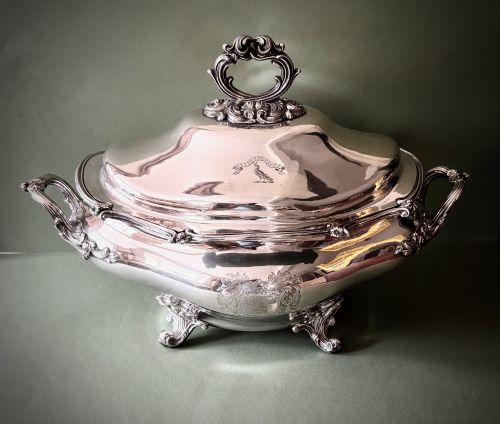
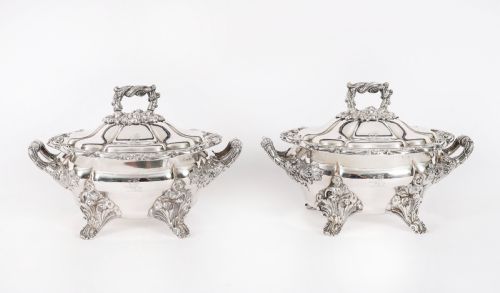
When you search for sheffield plate serving dish, you are looking at substantial silver-plated copper dining vessels from the late Georgian, Regency and Victorian eras. The core of what appears here consists of lidded tureens, warming dishes, meat domes and entree dishes designed for formal dining.
You are most likely to meet oval lidded sauce tureens and warming dishes dating from around eighteen hundred to eighteen twenty. These pieces combine heavy base metal frames with fused silver surfaces.
The objects span serveware forms including knife trays, game covers and dinner plates alongside standard serving dishes. Most examples carry the distinct markers of the nineteenth century rather than modern reproduction work.
How they were made
The material foundation rests on a thick sheet of copper fused with a thin layer of silver, often known as old sheffield plate. Makers worked these layered metal sheets by hand or via early rolling mills to form robust domestic vessels.
Details such as handles, feet and rims were frequently cast separately from base metal and soldered to the main body. Platers then applied silver wire edges, termed silver mounts, to hide the exposed copper seams at the borders.
Many pieces bear personal family crests, meaning someone's eighteenth-century dinner table politics are now your supper conversation.
What varies in quality
Quality separates by the proportion of original silver remaining on the copper core and the crispness of applied crests or cast mounts. Pieces that retain their heavy gauge metal without excessive base metal bleed show superior initial manufacture.
The integrity of handles, lids and warming bases determines the overall standard of a survivor. Matching pairs and complete three-piece sets command greater attention than isolated components.
Henry Wilkinson·Creswick·Matthew Boulton·Dan Holy
The Sheffield Plate Serving Dish Glossary
- Old Sheffield Plate
- A composite material made by fusing a sheet of silver to a copper ingot before rolling them into thin sheets together. This technique preceded modern electroplating.
- Base Metal
- The underlying metal, typically copper or brass, used as the structural foundation for old sheffield plate items. Over decades of polishing, this layer can show through the silver.
- Entree Dish
- A shallow serving vessel with a removable lid, typically used for side dishes or secondary courses at formal meals. Pairs of these dishes often fit onto specific warming bases.
- Meat Dome
- A large domed cover designed to keep roasted joints warm while resting on a meat tray or warming dish. These pieces frequently feature engraved family crests.
- Warming Dish
- A double-walled serving vessel designed to hold hot water beneath the main dish to keep food warm. Some examples include compartments for heated inserts.
Sheffield Plate Serving Dish: Frequently Asked Questions
What is old sheffield plate?
Old sheffield plate is an early form of silver plating created by fusing silver and copper together through heat and pressure. This differs fundamentally from later nineteenth-century electroplating methods.
The resulting composite sheet was then worked by hand into durable serving dishes, tureens and trays that retained their structure over centuries of heavy use.
How do I clean my serving dish?
Cleaning requires a gentle silver cream applied with a soft cloth and warm water. Avoid harsh abrasive dips that strip remaining silver from the underlying copper base.
Take special care around engraved crests and applied silver wire edges where vigorous rubbing can expose the base metal beneath.
How were warming dishes used?
Warming dishes served to keep food hot during extended formal dinners in unheated dining rooms. Hot water was poured into the base compartment beneath the main serving surface.
Some variants used heated metal inserts or hot water channels to maintain the temperature of meats and sauces throughout the meal.
How do I date these pieces?
Dating relies on maker marks, style periods such as Regency or Georgian, and the manufacturing technique visible on the edges. Old sheffield plate generally points to production before the introduction of electroplating around eighteen forty.
Examining the exposed copper seams on the edges often reveals whether the silver was fused as a plate or deposited electrically.