




Sheffield Plate Centrepiece
These sheffield plate centrepiece examples combine copper and silver through the fused plating method, bringing grand Georgian and Victorian presence to the dining table.
Sheffield Plate Centrepiece
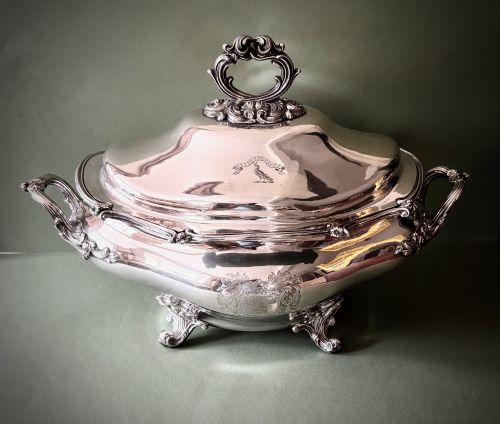
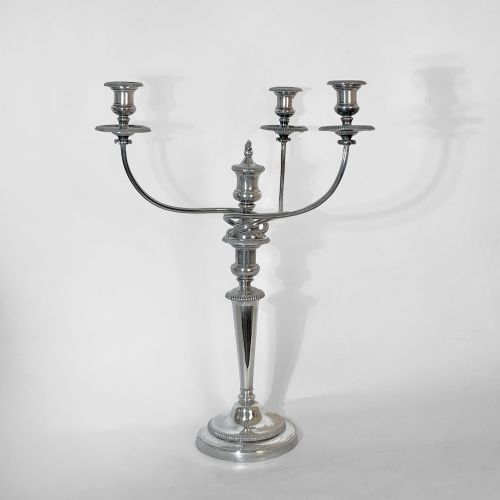
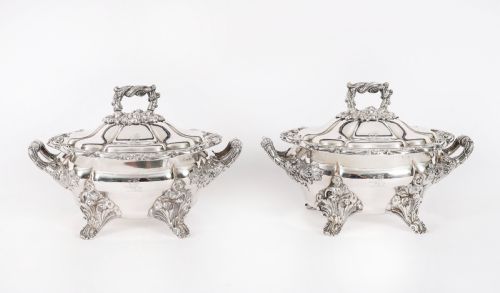
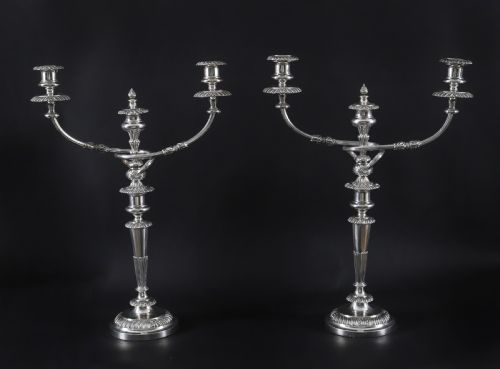
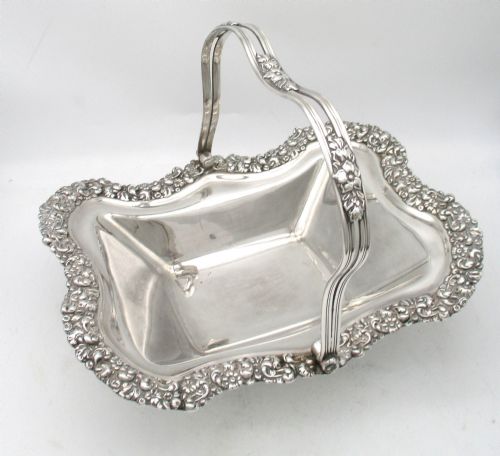
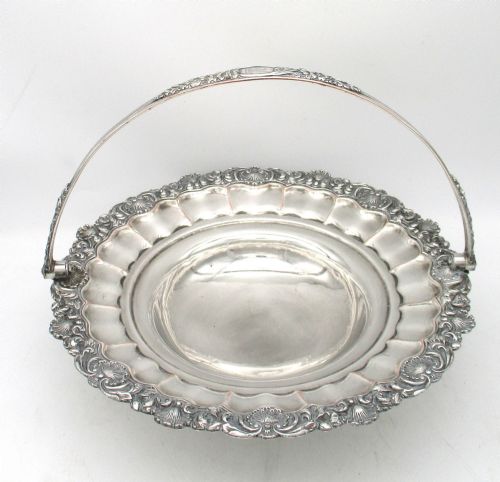
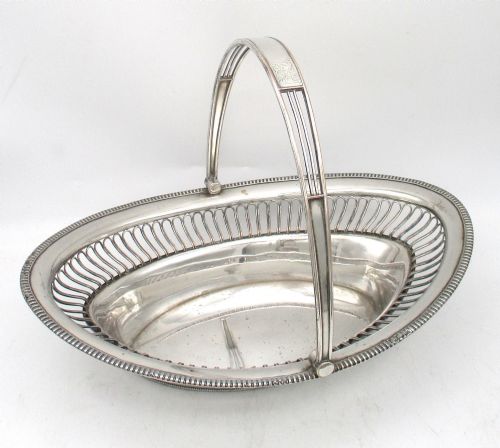
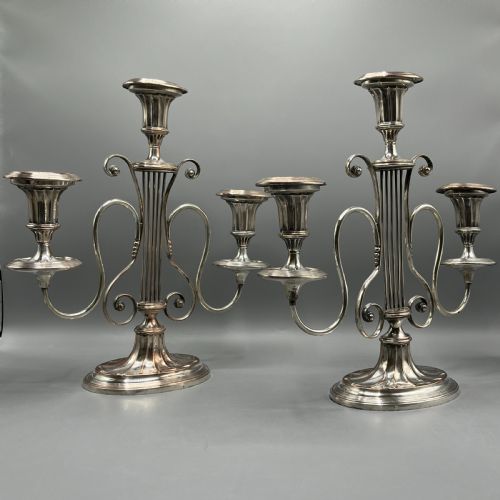
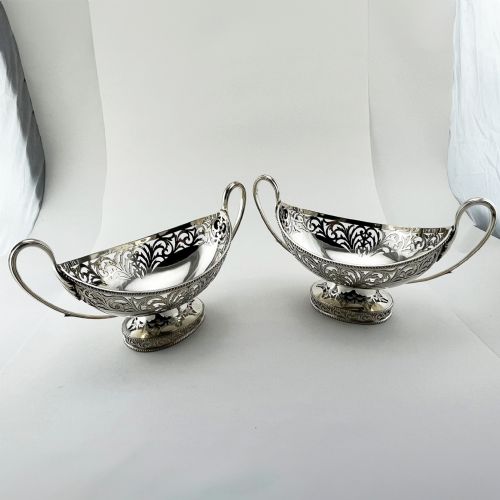
When looking for a sheffield plate centrepiece, buyers encounter substantial table pieces designed to anchor large dining arrangements from the eighteenth and nineteenth centuries. The selection most commonly includes multi-light candelabra, wirework baskets, sauce tureens, wine coolers, and tiered epergnes.
The forms span several distinct periods, with Georgian and Regency examples showing neoclassical restraint alongside later Victorian naturalism and Edwardian refinement. These objects served functional roles at formal dinners, holding fruit, sweets, wine, or illumination above the table.
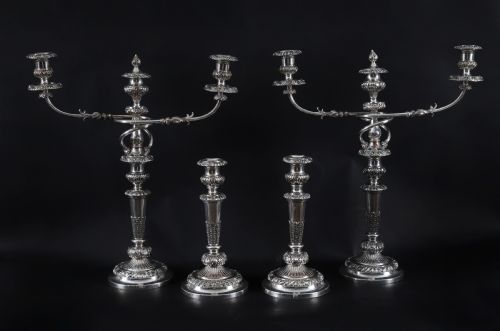
Originating predominantly from workshops in Sheffield, these pieces reflect the evolution of domestic dining over two centuries. Collectors find everything from simple wirework sweetmeat baskets to monumental four-piece candelabra suites.
How they were made
The material foundation relies on old sheffield plate, a process where a thin sheet of silver is fused to a thicker core of copper through heat and pressure. This technique leaves the characteristic copper edge visible on unshielded seams or wear points, revealing the layered metal underneath.
Makers shaped the fused metal through hammering, spinning, and soldering, often applying applied wirework, cast decorative mounts, and gold wash interiors for added richness. Structural elements such as lion paw feet, reeded handles, and campana wine cooler bodies were assembled from separately cast or formed components.
Object forms recorded here range from campana wine coolers and wirework sweetmeat baskets to massive multi-light candelabra suites.
What varies in quality
Quality rests in the crispness of the chased and cast ornamentation, from delicate lyre-shaped candelabra arms down to the fineness of wirework baskets. Pieces produced by recognised workshops show superior balance, heavier gauge metal, and more intricate detailing that withstands the passage of time.
The preservation of the original silver layer over the copper core dictates the integrity of a piece. Finer examples retain their silver evenly across high-relief decoration without excessive bleed-through from the underlying base metal.
Matthew Boulton·Thomas Bradbury·Mappin and Webb·Elkington·Blagden Hodgson And Co·Joseph Rodgers And Sons·James Deakin
The Sheffield Plate Centrepiece Glossary
- Old Sheffield Plate
- A material created by fusing silver to a copper ingot, developed in the eighteenth century before the invention of electroplating. This technique produces a warm, deep lustre distinct from later plated wares.
- Epergne
- A large table centrepiece featuring a central bowl or basket surrounded by smaller hanging baskets or arms for fruit, flowers, or sweets. These multi-tiered structures dominated formal dining tables during the Georgian period.
- Candelabra
- A branched candlestick holding multiple lights, often designed in matched pairs or suites to sit alongside centrepieces. They provide both illumination and architectural height to table settings.
- Campana
- A classical bell-shaped vessel form frequently utilised for wine coolers and ice pails. This silhouette derives from ancient Roman pottery and metalwork.
- Wirework Basket
- An openwork vessel constructed from interlaced or soldered wires of old sheffield plate. These delicate structures were typically used for serving bread, fruit, or sweetmeats.
Sheffield Plate Centrepiece: Frequently Asked Questions
How do I clean old sheffield plate?
Clean these surfaces gently using a non-abrasive silver cream and a soft cloth to preserve the thin silver layer over the copper base. Avoid vigorous rubbing, which can expose the underlying copper.
Regular dusting with a dry microfiber cloth prevents tarnish buildup without risking the soldered joints or applied decorative mounts.
Can I use these centrepieces for dining?
These pieces function well for modern entertaining, particularly wirework baskets for fruit or candelabra for ambient dining illumination. Care should be taken with acidic foods touching vulnerable interior surfaces.
Many examples feature original gold wash linings designed to protect the metal from corrosive contents like wine or fruit juices.
How do I date a sheffield plate piece?
Dating relies on stylistic clues such as Regency neoclassical lines, Georgian wirework, or Victorian naturalistic floral casting. Maker marks and the presence of fused copper edges rather than uniform electroplate provide further chronological context.
Early pieces often display a fused copper seam along the unplated edges, whereas later nineteenth-century items utilise base metals like nickel silver or standard EPNS.
What is the difference between old sheffield plate and silver plate?
Old sheffield plate involves mechanically fusing a sheet of silver to copper through heat, resulting in a sandwich of metals with visible copper edges on wear points. Standard silver plate or EPNS uses an electrical current to deposit a thin silver coating over a base metal like nickel brass.
This distinction affects the weight, appearance, and historical period of the object, with fused plate generally predating nineteenth-century electroplating methods.