


Silver Plate Epergne
A silver plate epergne brings height and structured floral display to a dining table.
Silver Plate Epergne
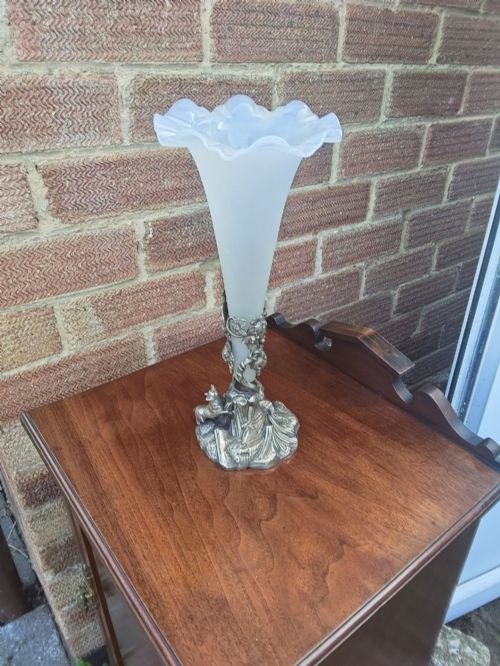
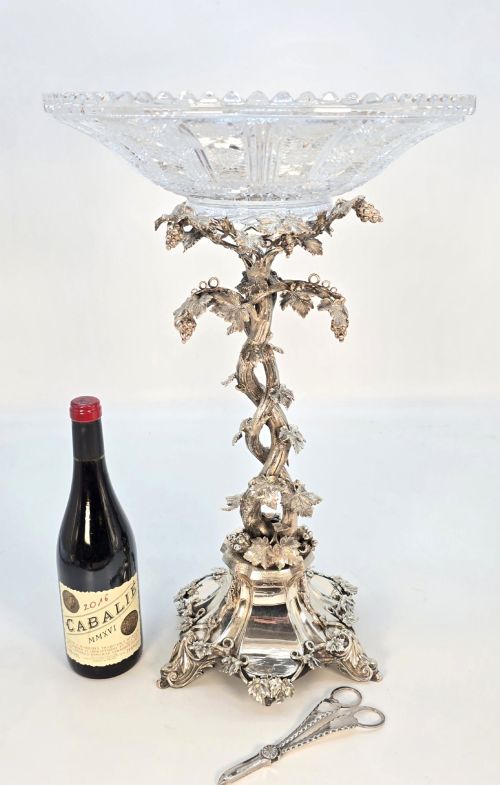
A silver plate epergne functions as a grand table centrepiece, combining a metal stand with multiple glass trumpets, vases or dishes for fruit and flowers. These multi-tiered vessels appear frequently in Victorian and Edwardian dining arrangements, where vertical table decoration demonstrated hospitality.
The surviving examples range from simple single-trumpet stands to complex five-branch constructions incorporating candelabra arms and removable plates. Pieces frequently feature botanical motifs, naturalistic stands, or figural supports such as palm trees and animals.
Victorian and Edwardian versions dominate the selection, spanning periods from the mid-nineteenth century through the early twentieth century. Buyers encounter both English silver plate on copper and EPNS frameworks holding coloured, opaline, cranberry or cut glass components.
How They Were Made
Maker workshops built the structural frames using silver plate, Old Sheffield plate, white metal or EPNS, often casting complex figural bases and tapering trumpet holders. These metal components provided a sturdy armature capable of supporting heavy glass inserts without tipping.
The glass elements - ranging from clear cut crystal to uranium glass, opaline and cranberry wares - were blown, moulded, etched or shaped into flutes and trumpets. Artisans secured these delicate vessels into the metal frames using fitted collars and rims.
Listings feature pieces spanning from the nineteenth century to the 1930s, utilising silver plate, cut glass, opaline glass and white metal.
What Varies in Quality
The distinction between standard and superior pieces rests on the complexity of the metal casting and the artistry of the glass inserts. Highly articulated figural bases, such as animal motifs or human figures, require advanced metallurgical skill compared to standard fluted columns.
The preservation of the original glass matching the metal base determines the integrity of the object. Sets retaining their original period trumpets or bowls without replacement glass represent the higher tier of surviving examples.
Fox & Grapes·Walker & Hall·Royal Worcester·James Deakin·James Dixon·Carles Henry Hattersley·George Wish·Daniel & Arter·Elkington
The Silver Plate Epergne Glossary
- EPNS
- Electroplated nickel silver. This technique formed the base metal foundation for many late nineteenth and twentieth century pieces.
- Old Sheffield plate
- A method of fusing a thin layer of silver to a copper base before rolling. This early process appears on eighteenth and early nineteenth century pieces.
- Cranberry glass
- A rich red-pink transparent glass created by adding gold chloride to the molten batch. It is frequently seen in Victorian trumpet inserts.
- Vaseline glass
- A transparent yellowish-green glass containing uranium dioxide. This material glows under ultraviolet light and was utilised for Edwardian and Victorian vases.
Silver Plate Epergne: Frequently Asked Questions
How were epergnes used?
These tiered vessels served as the focal point of formal dining tables during the nineteenth and early twentieth centuries. Hosts filled the central trumpets with cut flowers and the lower dishes with fruit or sweetmeats.
They also functioned as combination lighting and floral displays when fitted with removable candle arms. Their height allowed guests to converse underneath the arrangement across the table.
How do I clean the glass?
Remove all glass inserts from the silver plated frame before washing to prevent stress on the fitted rims. Use lukewarm water with mild soap and a soft cloth to protect the coloured or etched surfaces.
Avoid submerging antique metal bases in water, as moisture trapped in hollow castings can damage the internal structure. Polish the silver plate gently with a specialised cloth formulated for plated wares.
Can I replace missing glass?
Finding exact period replacements for broken trumpets requires patience because individual glass inserts were blown to fit specific metal collars. Collectors often search for replacement elements matching the exact diameter and colour of the original setup.
Many surviving pieces retain mismatched glass gathered over decades of use. Evaluating the collar fitting ensures any replacement insert sits securely in the frame.
How do I date an epergne?
Examine the style of the metalwork and the manufacturing technique to establish a broad chronological bracket. Old Sheffield plate and heavy cut glass typically point toward earlier nineteenth century production, while EPNS frameworks and opaline glass often suggest later Victorian or Edwardian periods.
Maker stamps and registry marks stamped into the silver plate provide definitive clues regarding the workshop of origin.