
Sheet Music Drawers
Sheet music drawers keep scores organised and tidy, taking the form of upright cabinets or low rack stands designed for domestic parlours.
Sheet Music Drawers
When you search for sheet music drawers, you encounter specialised storage furniture designed to hold paper scores, manuscripts, and periodicals in domestic interiors. These pieces span several distinct historical periods, including the Georgian, Regency, William IV, Victorian, and Edwardian eras, as well as the early twentieth century.
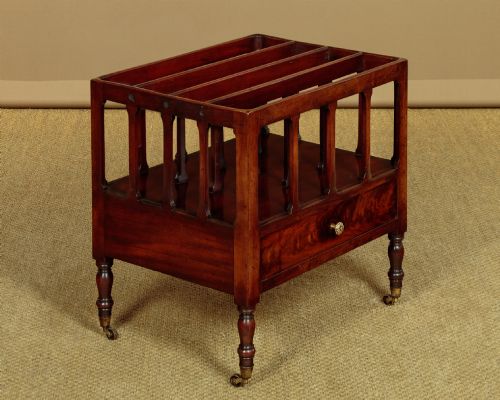
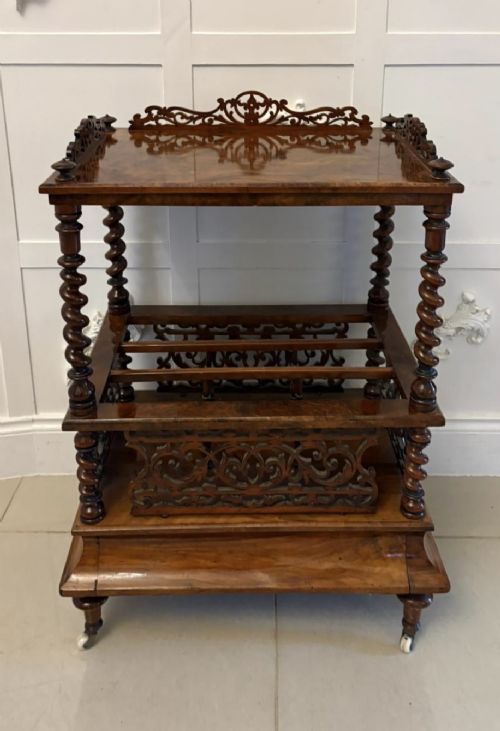
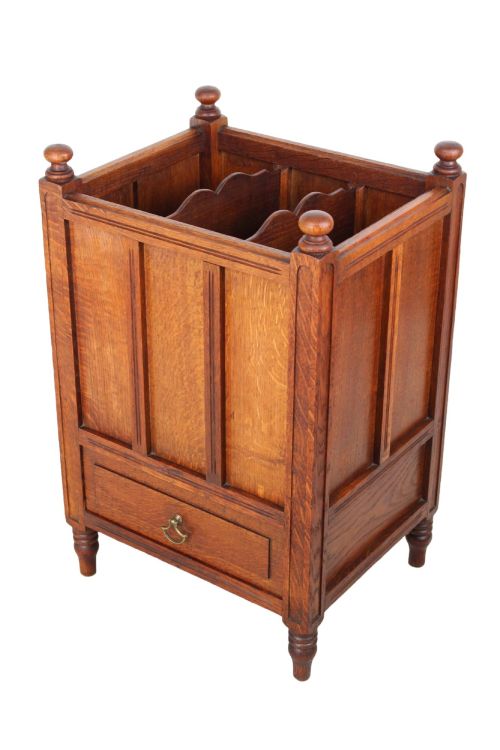
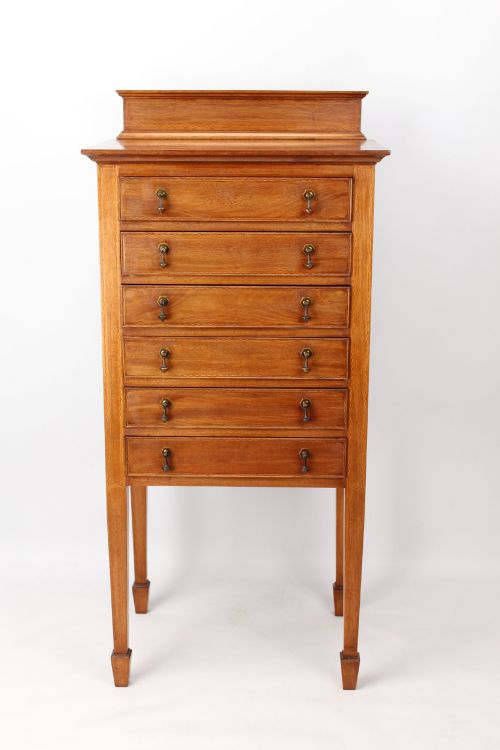
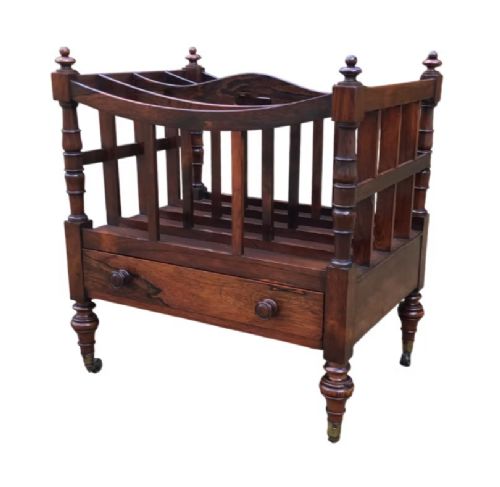
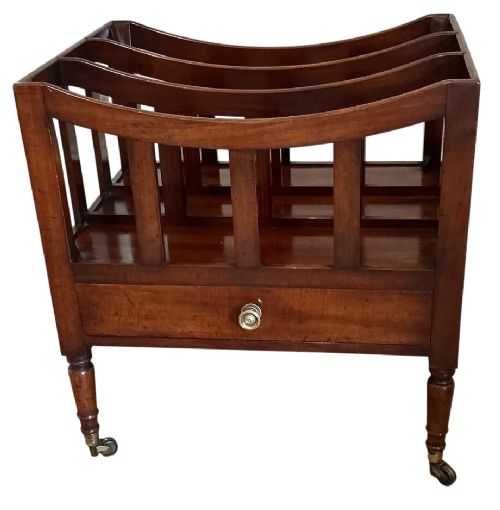
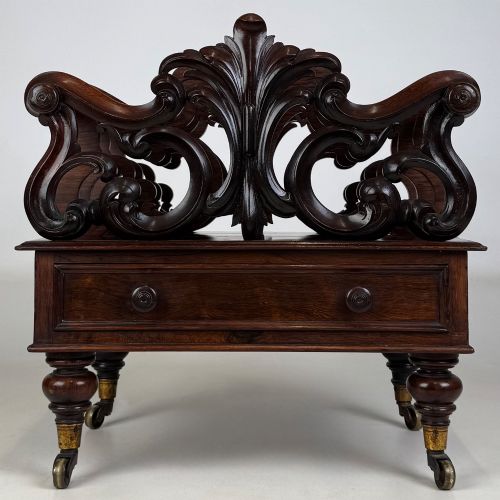
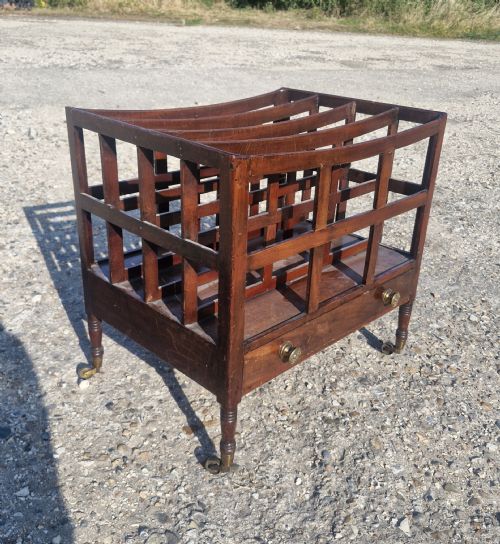
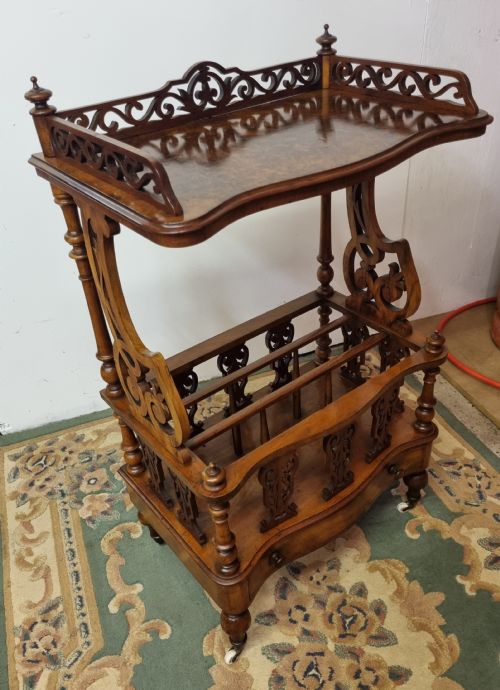
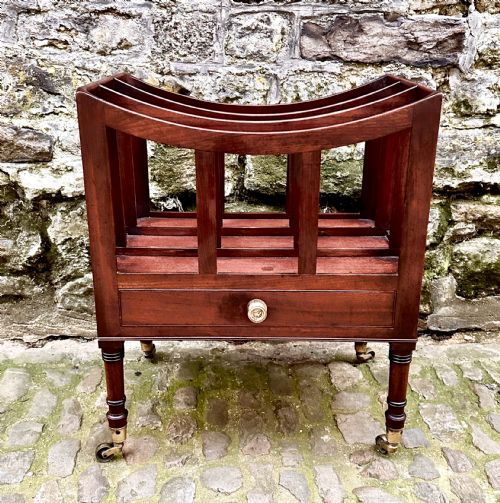
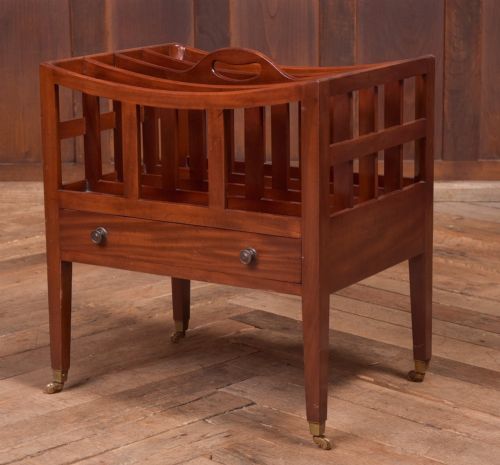
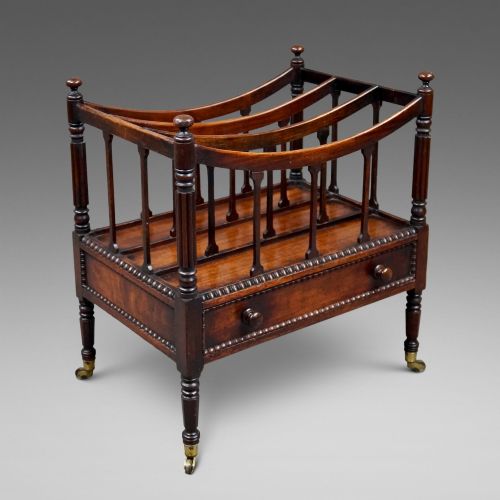
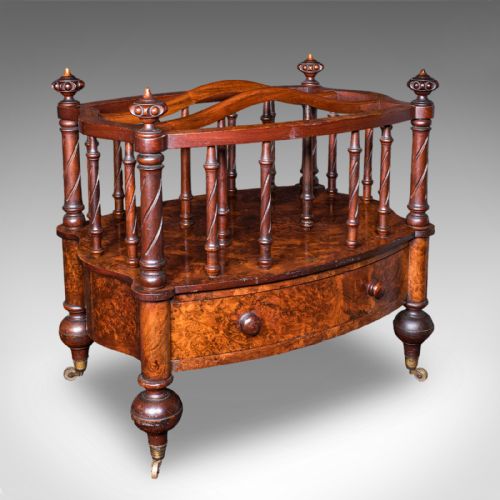
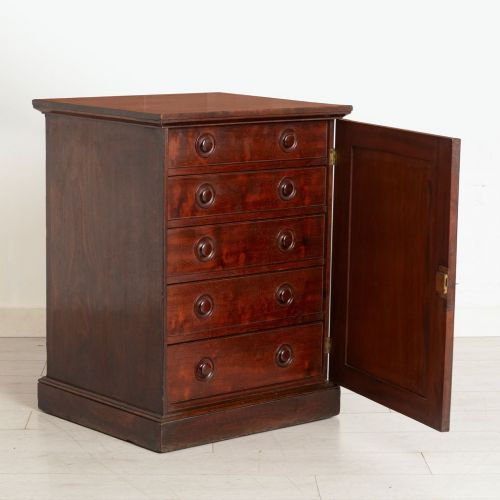
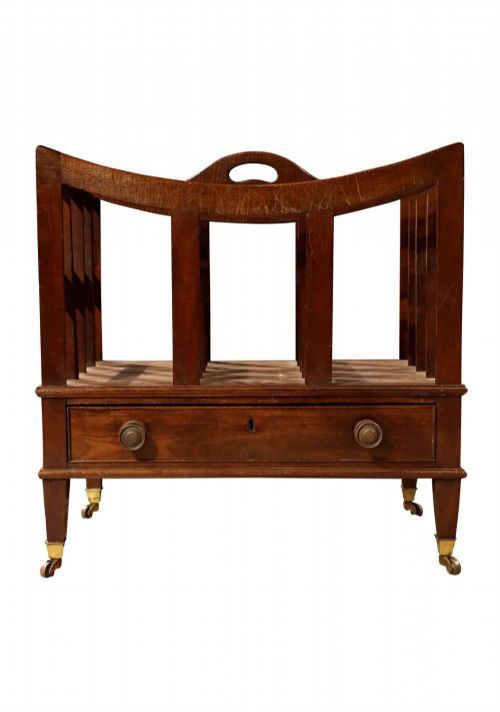
The forms you are most likely to meet on this page divide into two main types. The first is the music cabinet or chest with multiple drop-front or standard horizontal drawers, often dating from the Edwardian period. The second is the Canterbury or open rack stand, frequently found in Regency and Victorian designs featuring vertical partitions and sometimes incorporating a single lower drawer.
Originating in English workshops, these items utilise timber frames scaled for domestic parlours and music rooms. The listings show both freestanding multi-drawer chests built specifically for filing sheet music and open tiered stands that double as magazine racks.
Materials and construction
Cabinet makers constructed these pieces primarily using solid timbers and veneers of mahogany, rosewood, walnut, burr walnut, and oak. Finer examples utilise figured veneers and decorative inlay work, particularly on Edwardian music cabinets and Victorian drawer fronts.
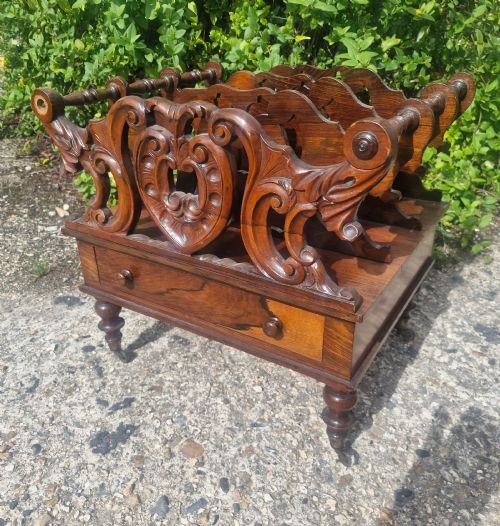
Some Regency canterburys feature carved Prince of Wales feathers, letting musicians display their patriotism right beside their sheet music.
Distinctions in quality
Quality in these pieces rests upon the selection of timber and the precision of the cabinetry. Cabinets with richly figured burr walnut or meticulously matched mahogany veneers sit at the higher end of the range, showing careful attention to grain alignment across multiple drawers.
Structural refinement also separates standard production from superior examples. Finely turned legs, robust brass castors, subtle inlay, and crisp carving indicate workshop skill, whereas simpler items rely on plain timber surfaces and utilitarian joints.
Edwards and Roberts·Fyne Ladye
The Sheet Music Drawers Glossary
- Canterbury
- A low, open-framed stand with vertical partitions designed to hold folios, sheet music, or newspapers, frequently fitted with a single drawer beneath.
- Drop-front drawer
- A drawer featuring a hinged front panel that lowers when pulled open, allowing easy access to stacked sheets of paper without bending them.
- Serpentine shape
- A curved furniture front characterised by a convex centre flanked by concave ends, adding visual movement to the piece.
- Inlay
- A decorative technique where contrasting woods or other materials are inserted into recessed cavities on the surface of the timber.
- Turned leg
- A pillar or support shaped on a lathe, varying from simple tapered cylinders to ornate reeded or spiralled profiles.
Sheet Music Drawers: Frequently Asked Questions
What is the difference between a music cabinet and a Canterbury?
A music cabinet is typically an enclosed vertical chest with multiple horizontal or drop-front drawers designed to keep sheet music flat and protected from dust.
A Canterbury is a lower, open-tiered rack featuring vertical divisions that hold scores upright, often sitting on castors with a single drawer at the base.
How do I date an Edwardian music cabinet?
Edwardian music cabinets usually date from roughly 1901 to 1910, often displaying characteristic inlaid mahogany decoration, satinwood banding, or subtle Art Nouveau influences.
They frequently feature four, five, or six drop-front drawers specifically sized for standard sheet music dimensions of the period.
Were these cabinets used only for music?
While originally manufactured to file manuscript paper and printed musical scores in domestic parlours, their compartmentalised drawers made them versatile for other paper goods.
Over time, owners have utilised them for magazines, newspapers, letters, and general stationery storage.
How can I tell a Regency piece from a Victorian one?
Regency pieces, dating from the early nineteenth century, tend to show restrained classical styling with boat-shaped frames, turned supports, and rosewood or mahogany timbers.
Victorian examples often employ denser burr walnut veneers, serpentine shaping, heavier carving, and more elaborate detailing.
Are the drawers on these cabinets standard size?
The drawers are constructed to accommodate historical sheet music and manuscript sizes, which are generally wider and shallower than modern standard paper formats.
Drop-front drawer designs specifically allow the front edge to fold down so musicians could slide scores in and out without bending the corners.