







Sheep Landscape Watercolour Painting
When you search for a sheep landscape watercolour painting, you are looking at pastoral British scenes executed on paper during the nineteenth and early twentieth centuries.
Sheep Landscape Watercolour Painting
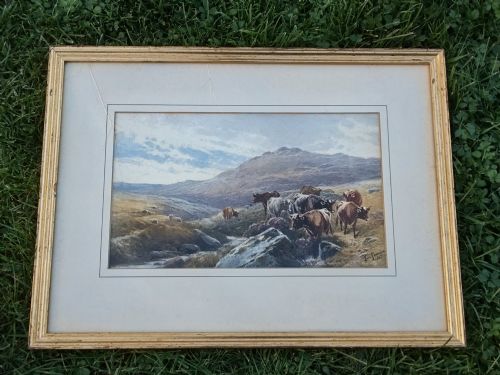
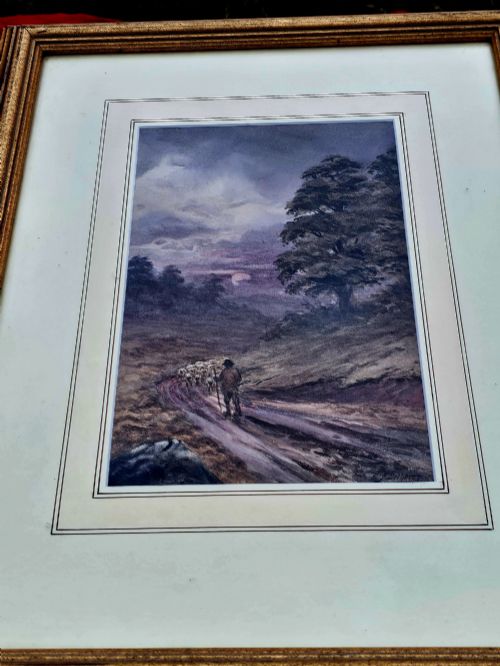
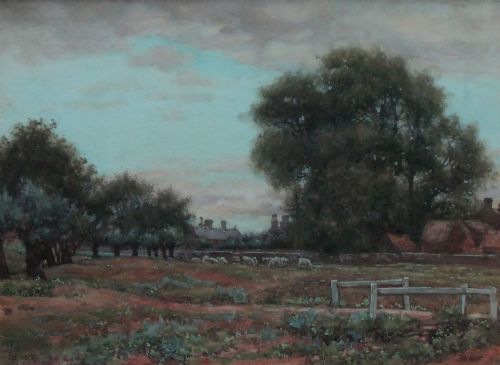
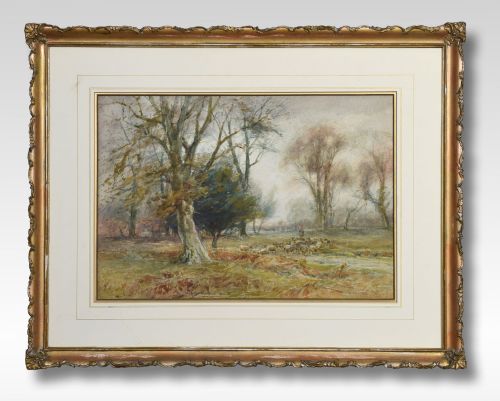
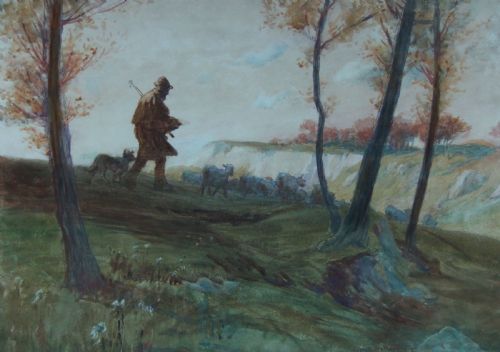
A sheep landscape watercolour painting captures rural British life, focusing on flocks, drovers, and pastoral countryside settings across moorlands, downs, and valleys. These works emerged strongly during the Victorian and Edwardian periods, reflecting a deep cultural interest in traditional agrarian scenery and rural idylls.
The pieces available on this page predominantly date from the nineteenth century up to the early decades of the twentieth century. They range from intimate depictions of sheep on local tracks to expansive Highland and moorland panoramas produced by regional British artists.
Framed watercolours on paper form the standard format for this genre, often protected by glass and accented with wooden frames. Buyers encounter both signed works by known Victorian and Edwardian painters and attributed or unsigned examples from the broader English School.
Materials and Technique
Artists painted these scenes using watercolour pigment suspended in water, applied directly onto absorbent paper supports. Some works utilise tinted or buff paper to create atmospheric depth, while others incorporate subtle touches of bodycolour or ink to define details in the fleece and landscape.
Framing materials typically combine traditional wood mouldings, occasionally finished with gold leaf or gilt, paired with protective glass to shield the delicate water-soluble pigments from moisture and light damage.
Sheep Landscape Watercolour Painting Retail Price Guide 2026
Typical asking prices for sheep landscape watercolour painting among the pieces listed under this phrase on Sellingantiques today, from the lower quarter to the upper quarter. They describe what is for sale here now, not the wider market.
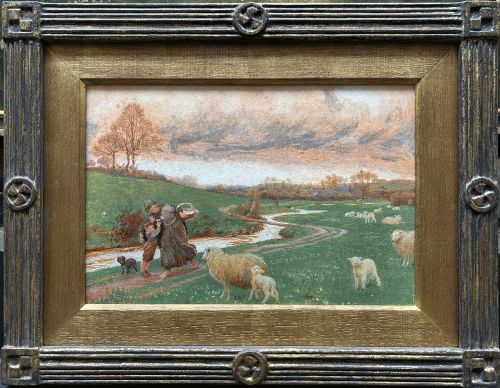
Several sheep manage to crowd into lanes and boggy estuaries, seemingly determined to test the artist's patience.
Assessing Quality and Execution
Quality in these watercolours rests upon the artist's handling of light, atmosphere, and the textural rendering of wool and landscape. Stronger examples display confident brushwork and a balanced composition that anchors the flock naturally within the wider terrain, rather than relying on stiff or formulaic placement.
The preservation of the paper support and the vibrancy of the pigment also influence the standing of a piece. Works that retain their original tonal contrast without excessive fading or discoloration demonstrate superior material survival from the period.
Cornelius Pearson·Henry Charles Fox·Charles James Adams·T. Sidney Cooper·David Cox
The Sheep Landscape Watercolour Painting Glossary
- Watercolour pigment
- Finely ground colour particles mixed with a water-soluble binder, applied in translucent washes on paper.
- Pastoral
- Relating to the countryside, country life, and agricultural scenes involving shepherds, flocks, and rustic landscapes.
- Gilt wood
- Wood framing finished with a thin layer of gold leaf or metallic gilt, common in Victorian presentation frames.
- English School
- A classification for artists working within British artistic traditions during a specific historical era.
- Buff paper
- A pale brownish-yellow paper stock utilised by artists to provide a neutral mid-tone background for highlights.
Sheep Landscape Watercolour Painting: Frequently Asked Questions
What periods do these watercolours come from?
The pieces span the nineteenth century and the early twentieth century, encompassing the Victorian and Edwardian eras. Artists worked across these decades recording rural changes and traditional farming landscapes.
Most items originate from British studios and regional painting schools active between the mid-nineteenth century and the nineteen-twenties.
How were these paintings originally displayed?
These works were framed behind glass within wooden mouldings to protect the fragile paper surface from dust and humidity. Many retain their period frames, which occasionally feature gilt detailing.
Contemporary presentation prioritized domestic wall display in parlours and drawing rooms across British country houses and town homes.
How do I care for an antique watercolour?
Protect the paper and pigments by hanging the painting away from direct sunlight and high moisture areas. UV-filtering glass helps prevent the watercolours from fading over time.
Keep the backing sealed and avoid placing the frame against damp exterior walls to ensure the paper support remains stable.
How can I tell different regional styles apart?
Regional characteristics often emerge through the topography and palette, such as the rolling downs of the south of England compared to rugged Scottish or Welsh highlands. Artists frequently inscribed locations on the mount or reverse of the paper.
Brushwork and handling of atmospheric weather effects also signal whether a piece belongs to the English School or specific provincial traditions.