

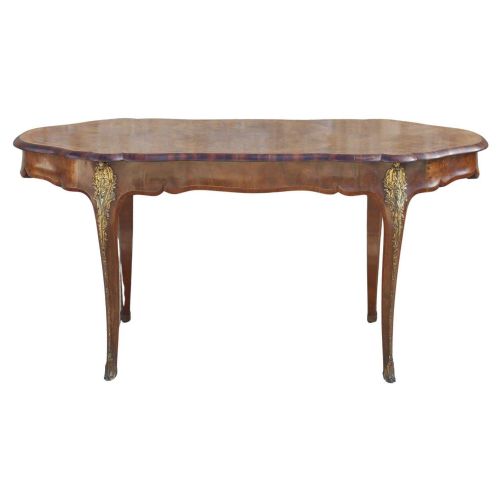


Shaped Walnut Desk
When you search for a shaped walnut desk, you are looking at curving timber forms designed for writing and display.
Shaped Walnut Desk
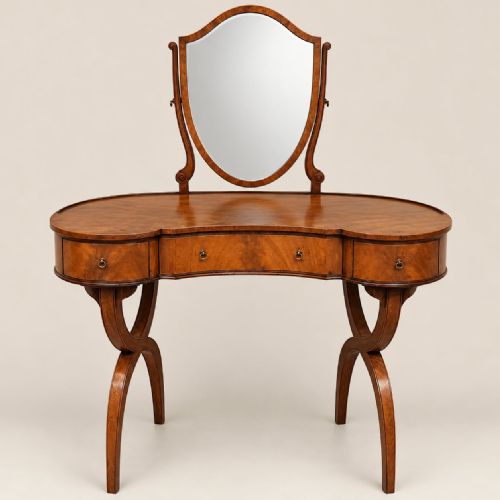
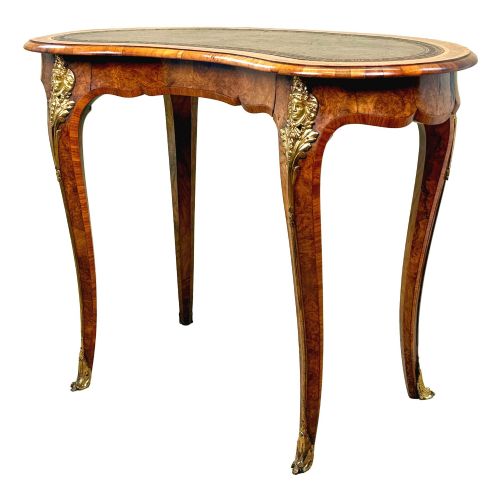
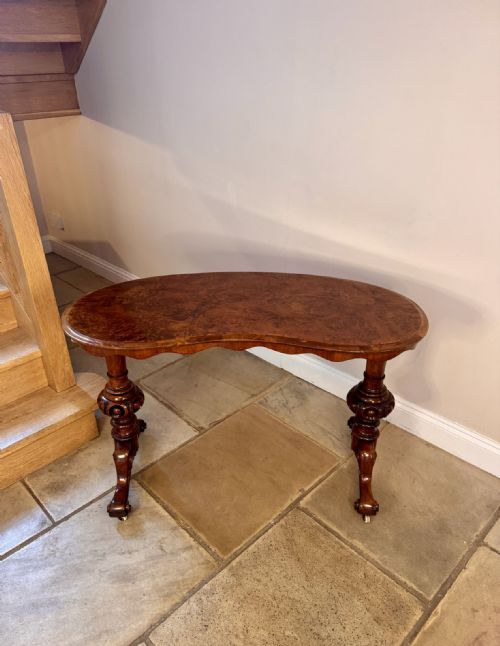
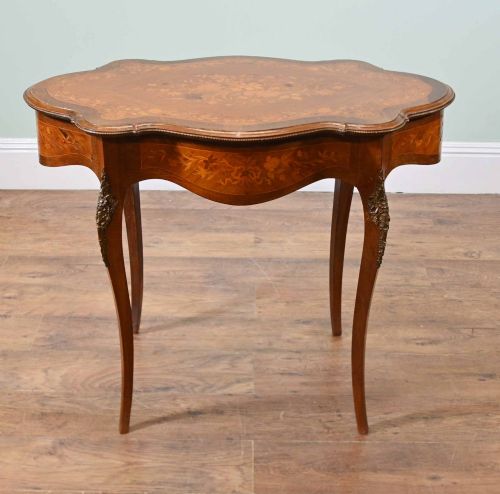
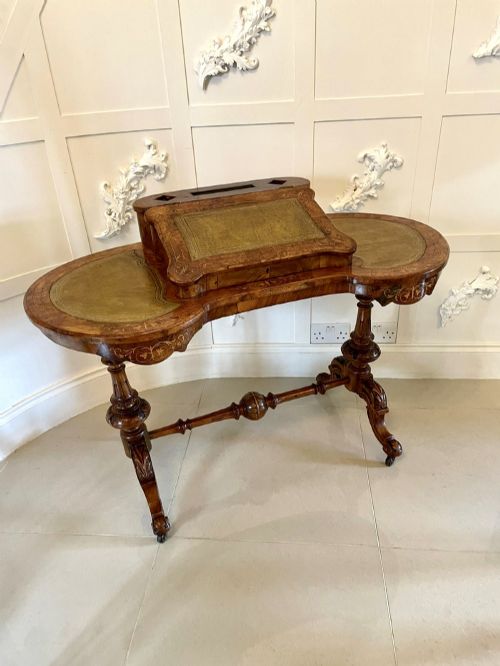
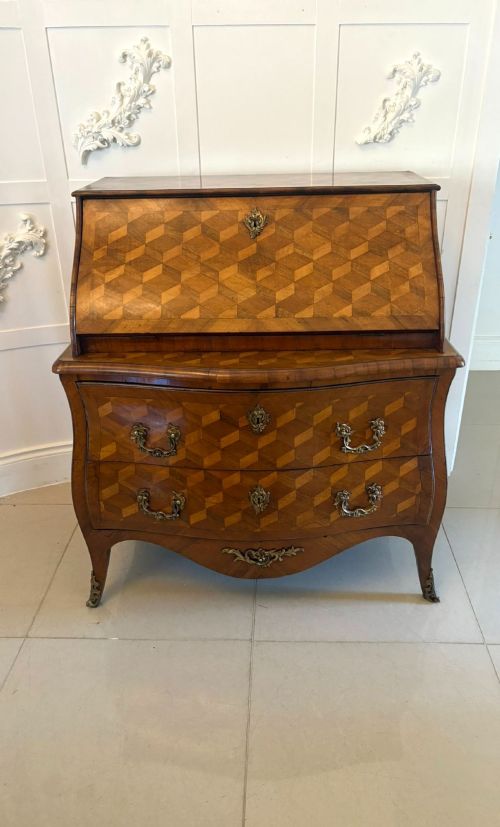
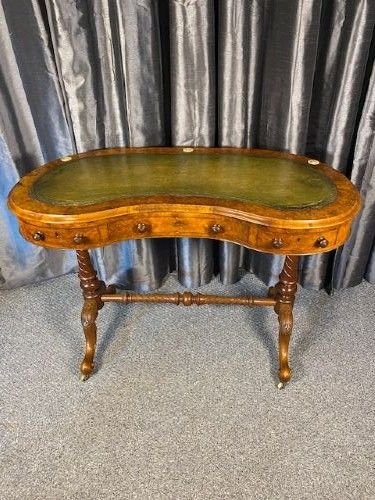
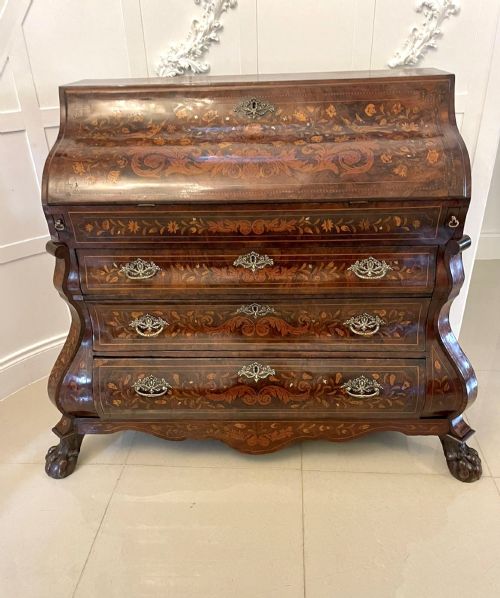
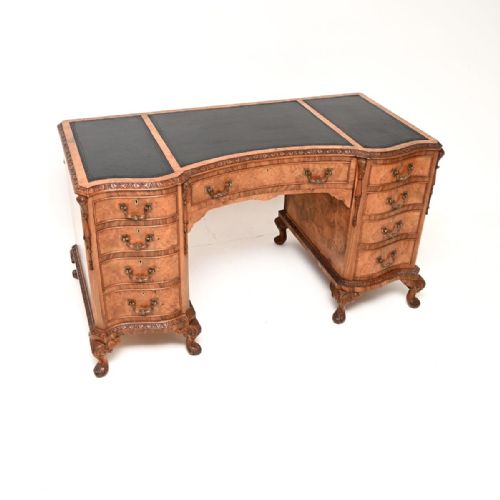
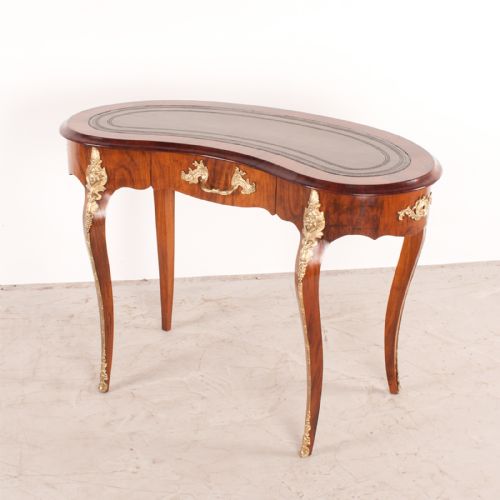
A shaped walnut desk brings distinctive curved outlines and rich timber grains into a study or drawing room. You will frequently find kidney-shaped and serpentine forms dominating this selection, alongside bombé bureaux and pedestal writing tables.
The pieces span from the eighteenth century through the Victorian era up to Art Deco designs, with Victorian kidney-shaped tables appearing most often. These tables range from modest ladies writing desks to larger freestanding library pieces.
Makers and cabinet-makers utilised the natural growth patterns of walnut to create flowing silhouettes for domestic writing spaces. These desks combine utility with decorative marquetry and brass or ormolu mounts.
Materials and construction
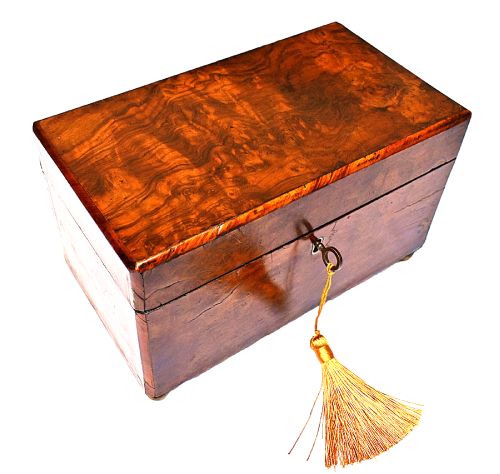
Cabinet-makers relied on burr walnut veneer applied over solid carcases of secondary timbers like oak or pine, selecting pieces for their complex grain patterns. Floral marquetry and parquetry inlays were often incorporated into the writing surfaces and drawer fronts.
Ormolu mounts, brass handles, and tooled leather inserts complete the construction of many Victorian and revival examples. Cabriole legs and serpentine aprons required precise woodworking techniques to achieve continuous curves without compromising structural stability.
Shaped Walnut Desk Retail Price Guide 2026
Typical asking prices for shaped walnut desk among the pieces listed under this phrase on Sellingantiques today, from the lower quarter to the upper quarter. They describe what is for sale here now, not the wider market.
Listings feature burr walnut, brass, leather, and ormolu across Victorian, Georgian, and Art Deco periods.
Separating the ordinary from the exceptional
The quality of a shaped walnut desk rests on the choice of burr veneer and the precision of the marquetry work. Uniformity of grain matching across curved drawers and serpentine edges distinguishes finer workshop output from simpler commercial production.
Proportion and the integration of ormolu mounts dictate visual success. Pieces that retain their original leather writing surfaces and well-fitted interior drawers command greater appreciation among collectors.
Gillows·Harry and Lou Epstein·Maurice Adams·Lenzkirch·Waring & Gillows
The Shaped Walnut Desk Glossary
- Burr walnut
- A figured timber obtained from the knot growths of walnut trees, showing swirling grain patterns. It is sliced into veneers for decorative cabinet fronts.
- Kidney-shaped
- A curved desk profile resembling a kidney bean, designed to wrap around the seated writer. This form is particularly common in Victorian writing tables.
- Marquetry
- The art of applying decorative pieces of wood veneer to a structure to form intricate floral or geometric designs. It often appears on eighteenth-century and Victorian surfaces.
- Serpentine
- A furniture front or edge that curves outward at the centre and inward at the sides in a continuous wave. It requires skilled shaping of solid timber or thick veneer.
- Ormolu
- Gilded bronze mounts and decorative trimmings applied to furniture corners, legs, and aprons. It provides contrast against dark walnut surfaces.
Shaped Walnut Desk: Frequently Asked Questions
How do I date a walnut desk?
Dating relies on combining the overall style, construction methods, and secondary timbers visible inside the drawers. Eighteenth-century examples often feature heavy bombé shapes and elaborate marquetry, while Victorian pieces lean towards kidney outlines and ormolu mounts.
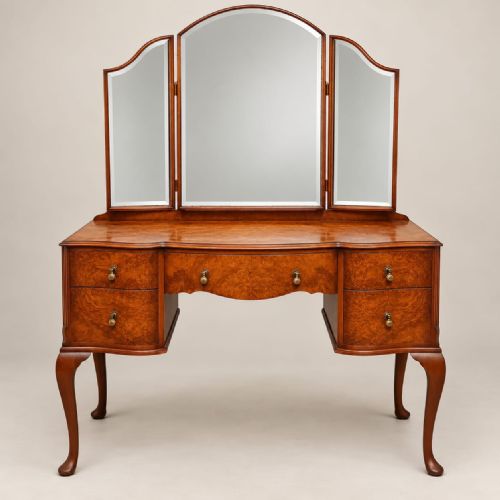
Twentieth-century Art Deco desks introduce smoother cloud-shaped profiles and simplified veneers without traditional revival ornamentation.
Where should I place a freestanding desk?
A freestanding desk is finished on the reverse side, allowing it to sit away from walls in the centre of a study or library. This placement showcases the grain of the burr walnut and any applied ormolu or marquetry detailing all the way around.
Ensure the room humidity remains stable to protect the walnut veneer and inset leather top from warping or cracking over time.
What is the difference between a bureau and a desk?
A bureau typically incorporates a sloping writing flap that folds down to reveal small pigeonholes and inner drawers. A standard desk offers a flat or leather-inset writing surface with drawers positioned beneath the top or within side pedestals.
Both forms utilise shaped walnut and marquetry, but the bureau conceals its storage behind a vertical fall-front.