




Shaped Top Wall Mirror
A shaped top wall mirror brings nineteenth-century presence to a room, offering arched lines and grand scale built to catch the light.
Shaped Top Wall Mirror
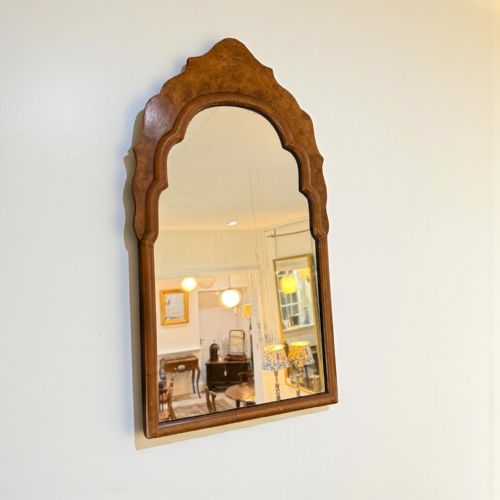
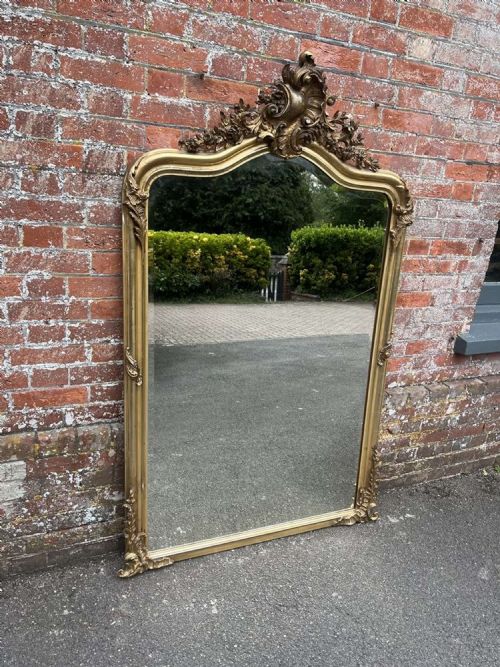
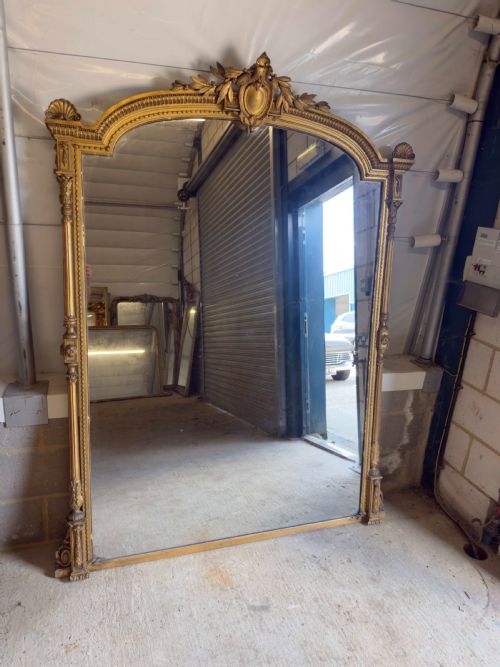
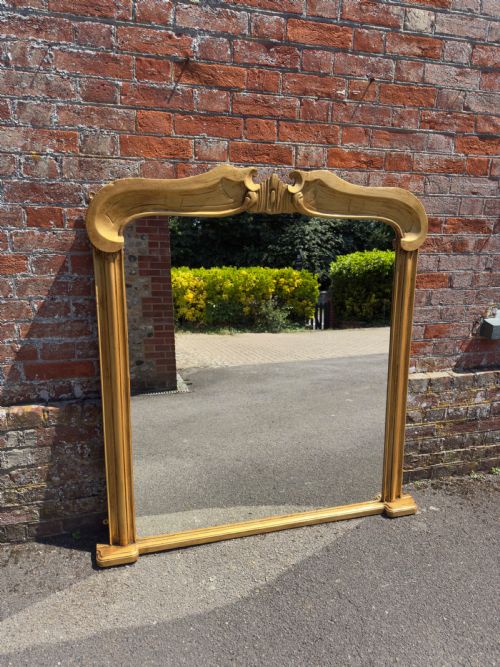
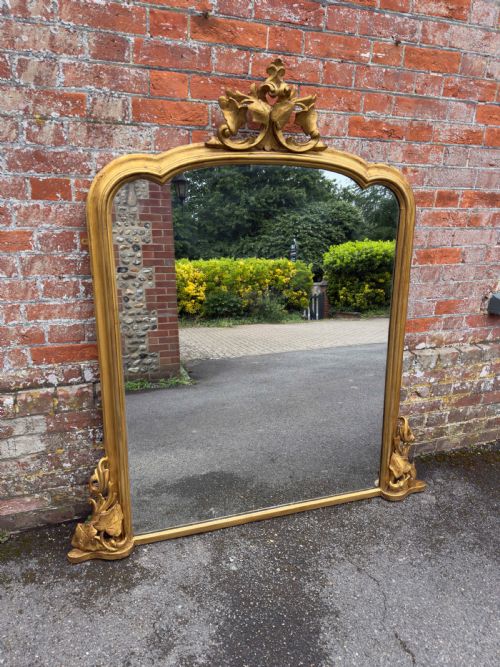
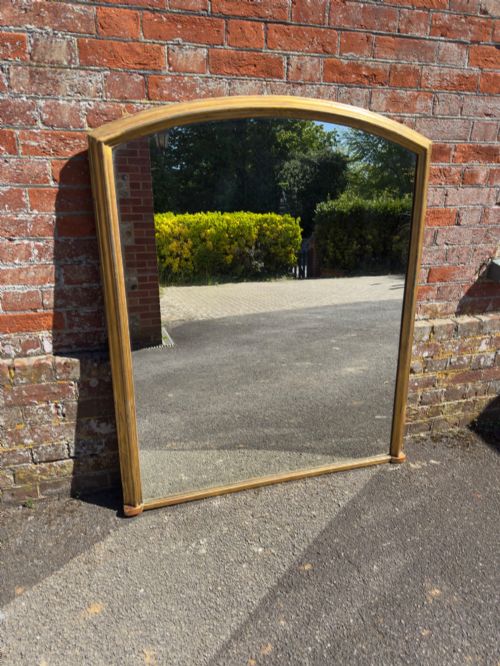
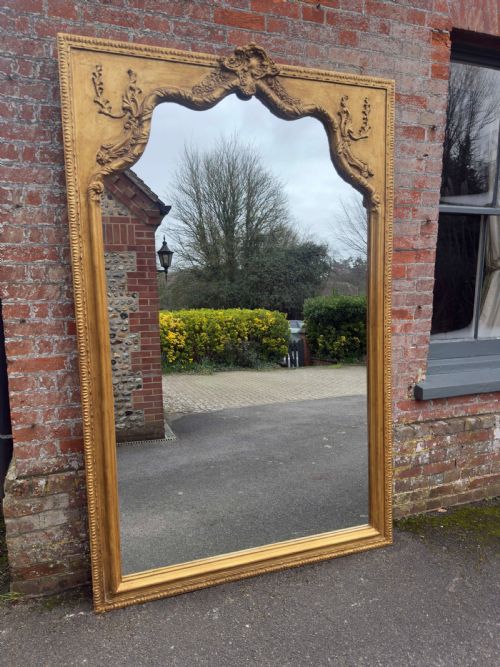
A shaped top wall mirror spans Victorian English overmantel designs and nineteenth-century French models, primarily recorded in large formats. These pieces use architectural silhouettes to anchor a room, combining substantial timber frames with ornate upper curves.
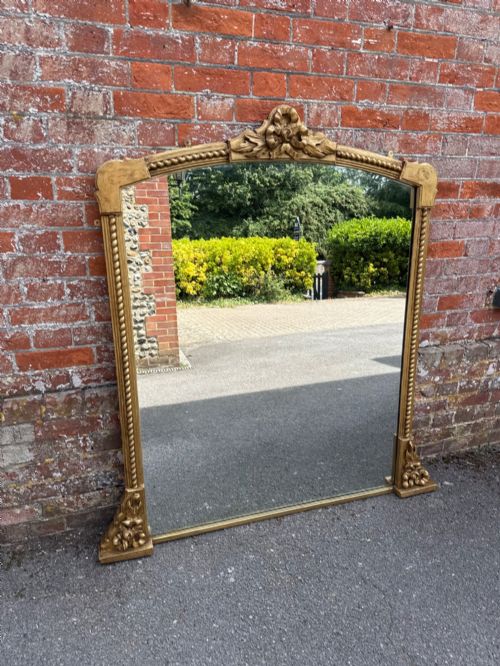
The version most commonly met on this page is the English or French overmantel mirror dating between 1860 and 1890. They combine carved wood and gesso frames, often finished in gilt or paint, designed to sit above a fireplace or span an expansive wall space.
Judging quality
The depth and crispness of the carved wood and gesso ornamentation dictate the tier of craftsmanship. Finer examples display sharp, undercut details in the foliage and framing, whereas lesser pieces rely on simpler moulded contours.
Original surface treatments separate standard items from superior works. Preservation of original gilt, untouched silvering, and uncompromised structural joins elevate the standing of a piece.
Listings span the period from 1860 to 1920, utilising materials such as gesso, giltwood, mahogany, and walnut.
The Shaped Top Wall Mirror Glossary
- Gesso
- A plaster mix applied to wood frames to provide a smooth base for carving and gilding. This material allows artisans to mould crisp ornamental details.
- Overmantel mirror
- A large glass designed specifically to hang above a mantelpiece. These frames often feature wider proportions to span the width of a fireplace.
- Giltwood
- Timber coated with gold leaf or metallic powder over a prepared base. It creates a luminous finish characteristic of formal nineteenth-century interiors.
- Ribbed framed
- A moulding style featuring parallel convex ridges running along the border. This linear pattern adds texture to the perimeter of the glass.
- Original gilt
- The initial gold leaf application remaining intact on the frame without modern regilding. Collectors value this surface for its authentic aged patina.
Shaped Top Wall Mirror: Frequently Asked Questions
Where should I hang a shaped top wall mirror?
These large mirrors suit placement above a living room fireplace or along an expansive hallway wall. Their height and curved silhouettes draw the eye upward and anchor large vertical spaces.
Ensure the wall construction supports substantial weight, as nineteenth-century wooden frames combined with thick glass require heavy-duty fixings.
How do I date a nineteenth-century mirror?
Examine the framing materials, construction methods, and backboards to determine age. Pieces from the 1860s and 1870s frequently employ heavy carved wood and gesso with specific Victorian or French revival motifs.
Later nineteenth-century examples may shift towards simpler mahogany or walnut frames without extensive gesso ornamentation.
What is the difference between an overmantel and a wall mirror?
Overmantel mirrors were traditionally manufactured to sit directly upon or hang immediately above a mantelpiece. Their proportions tend to be wide and substantial to balance the hearth below.
Standard wall mirrors follow varied dimensions and shapes, including tall vertical formats designed for general room placement.
How do I care for antique giltwood frames?
Dust the carved surfaces gently with a soft, dry brush to prevent accumulation in the recesses of the gesso. Avoid liquid cleaners and damp cloths, which can lift delicate gold leaf.
Keep the mirror away from direct sunlight and fluctuating humidity to protect the underlying timber and gesso from warping or cracking.