


Sevres Porcelain Plaque Table
A sevres porcelain plaque table brings together glazed ceramic panels and gilt bronze mounts in forms designed for nineteenth-century drawing rooms.
Sevres Porcelain Plaque Table
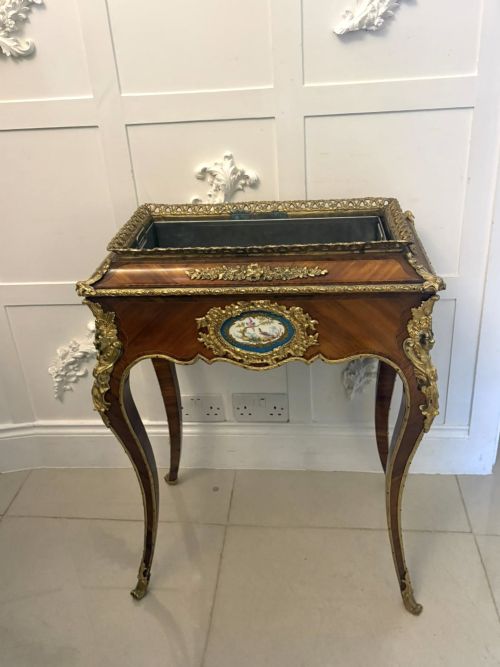
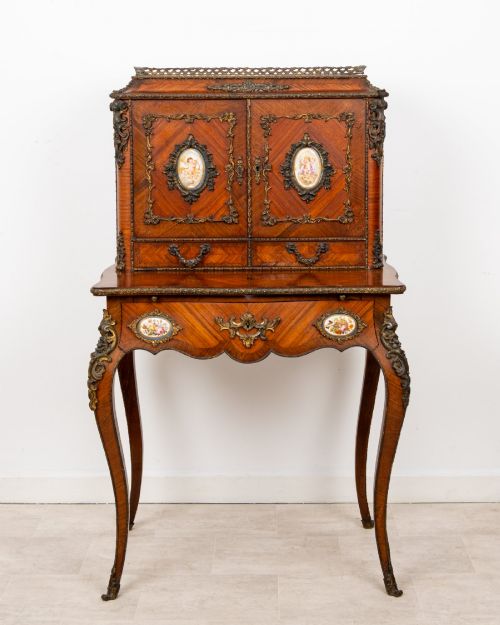
A sevres porcelain plaque table encompasses writing desks, occasional tables, jardiniere stands, and centre tables originating predominantly from nineteenth-century France. These pieces merge functional furniture forms with inset painted ceramic panels, often framed by elaborate gilt bronze or ormolu mounts. Buyers seeking this phrase encounter items aligned with Louis XV Revival, Louis XVI Style, and Napoleon III aesthetics.
The selection ranges from compact bonheur du jour desks and side tables to small credenza cabinets and jardiniere stands. Woods such as kingwood, rosewood, walnut, and satinwood provide the structural foundation for the porcelain plaques. These items reflect the historicism of the Victorian French revival period, reproducing eighteenth-century royal furniture designs for later bourgeois interiors.
How they were made
Cabinetmakers constructed the frames using hardwoods like kingwood and rosewood, frequently applied as veneers over denser carcases. Ormolu and gilt bronze mounts were cast, chased, and fire-gilded before being secured to the timber structure to protect edges and frame the ceramic inserts. Zinc and brass components sometimes reinforced internal frameworks or supported glass elements.
Porcelain plaques, painted with figures, landscapes, or floral motifs, were fired separately before integration into desks, tables, and cabinets. These plaques fit snugly into routed rebates within the wooden tops or door panels, held securely by the surrounding metal mounts. The combination of glazed ceramic, polished timber, and gilt metal required precision joinery to accommodate different materials.
Listings feature items dated across the nineteenth century, including specific years like 1850, 1860, 1870, 1880, 1890, and 1900.
What varies in quality
The refinement of the ormolu casting and the depth of its hand-chasing distinguish finer examples from standard production. Crisp detailing in the bronze mounts indicates skilled artisan work, whereas softer, shallower casting suggests mass production. The weight and thickness of the gilt bronze frame elements contribute significantly to the overall solidity of the piece.
The quality of the porcelain painting on the plaques determines artistic merit, with delicate brushwork and detailed compositions holding greater visual interest. The choice of underlying timber, such as figured kingwood or satinwood veneers, also establishes hierarchy within the range. Finally, the integration between the ceramic plaque, the wooden recess, and the metal mount reveals the original maker's standard of construction.
The Sevres Porcelain Plaque Table Glossary
- Ormolu
- Gilt bronze mounts used extensively on nineteenth-century French furniture. The technique involves applying a mercury and gold amalgam to cast bronze before heating.
- Kingwood
- A dense, heavy Brazilian timber with rich dark brown and violet stripes, utilised for high-end French veneer work. It provides a striking contrast against gilt bronze mounts.
- Bonheur du jour
- A small ladies writing desk featuring a raised superstructure with drawers, shelves, or a cabinet above a writing surface. These desks often incorporated porcelain plaques within the fall-front or writing flap.
- Jardiniere
- A decorative stand or container designed to hold plants or flowers, frequently mounted with porcelain plaques and ormolu. They appear as freestanding pedestals or table-top vessels in nineteenth-century interiors.
- Cartonnier
- A freestanding or desk-top cabinet fitted with compartments for storing papers, documents, or letters. Examples associated with this style incorporate decorative mounts and inset ceramic panels.
Sevres Porcelain Plaque Table: Frequently Asked Questions
What rooms suit a porcelain plaque table?
These tables function well as centrepieces in drawing rooms or studies where their decorative mounts and painted panels remain visible from multiple angles.
Smaller occasional tables and writing desks fit comfortably beside seating areas, serving as functional surfaces for lamps or correspondence.
How do I care for gilt bronze mounts?
Gilt bronze and ormolu require gentle dusting with a soft, dry cloth to prevent the accumulation of grit within the chased recesses.
Avoid using abrasive metal cleaners or chemical polishes, which can strip the thin layer of fire-gilding from the bronze surface.
How are nineteenth-century revival pieces distinguished?
Nineteenth-century French revival furniture employs construction methods, timber preparation, and machine-sawn veneers characteristic of the industrial era rather than the eighteenth century.
Examining the underside, drawer linings, and interior carcass timber reveals the secondary woods and construction techniques typical of the 1850 to 1900 period.
How should porcelain plaques be cleaned?
Glazed porcelain plaques tolerate careful wiping with a barely damp microfibre cloth to remove surface dust without disturbing the surrounding metal mounts.
Moisture must be kept away from wooden joints and unsealed edges around the plaque to prevent swelling or staining of the timber.