


Decorative Wooden Jardiniere
These decorative wooden jardiniere pieces bring natural greenery indoors with distinct period character, offering carved timber and metal mounts.
Decorative Wooden Jardiniere
A decorative wooden jardiniere serves as an indoor vessel for plants, combining functional planting space with ornamental joinery and metal fittings. Pieces matching this search phrase span centuries of domestic horticulture, incorporating freestanding stands and tabletop containers designed to display foliage within formal rooms and country houses alike.
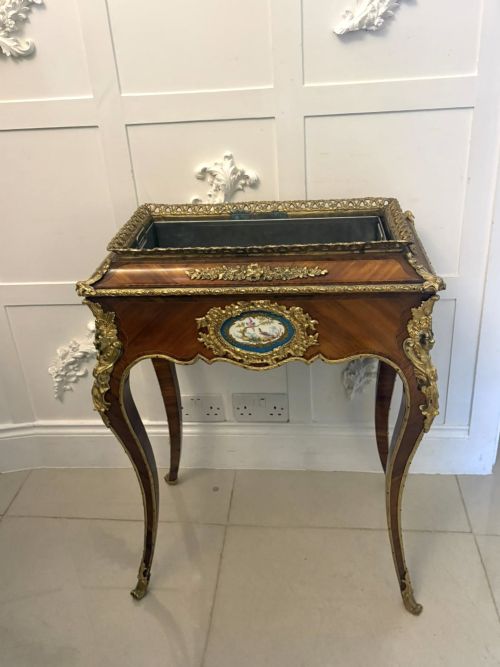
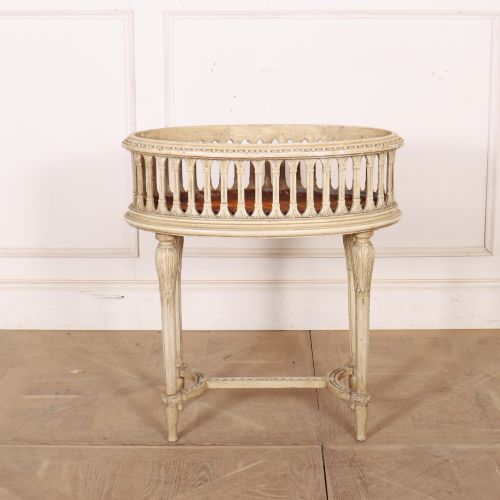
The selections available here range from compact coopered buckets to elaborate stands mounted with porcelain plaques and ormolu. Walnut, oak, and kingwood dominate the forms, frequently styled in revival aesthetics such as Louis XV and Italian Baroque alongside simpler English country designs.
Materials and construction methods
Cabinetmakers constructed these vessels using traditional timber techniques including coopered stave construction, carved solid hardwoods, and veneered carcasses. Selected woods such as burr walnut, mahogany, and oak provide durable bodies that often house interior metal or zinc liners designed to contain damp soil and water.
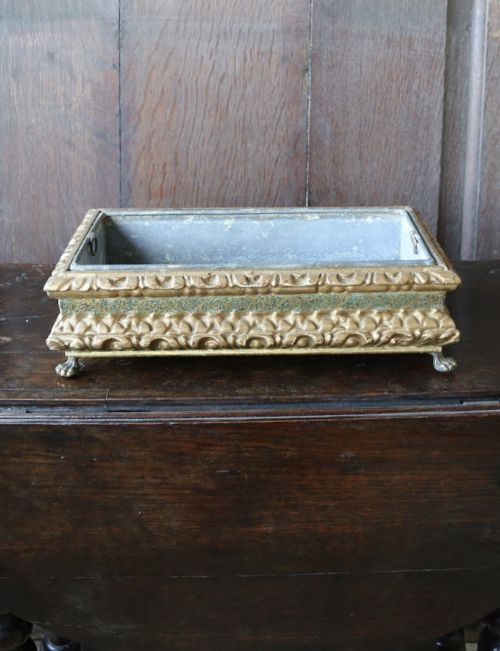
Decorative embellishments rely on cast brass and ormolu mounts, intricate gilt wood carving, and turned barley twist supports. These applied elements transform utilitarian plant holders into polished decorative furnishings suited to prominent interior spaces.
Listings feature pieces spanning from the 17th century through to the 1930s, showcasing walnut, oak, kingwood, and brass.
Factors of quality and design
Quality reveals itself in the precision of the timber selection, such as richly figured burr walnut veneers or tightly fitted coopered staves bound in brass. Superior examples exhibit crispness in carved details and substantial cast metal mounts that integrate harmoniously with the wooden structure.
The integrity of the interior lining and the survival of original surface finishes significantly influence a piece's standing. Refined proportions and restrained stylistic execution separate standard utilitarian vessels from highly decorative parlour showpieces.
The Decorative Wooden Jardiniere Glossary
- Coopered
- A method of construction using tapered wooden staves fitted together side by side and bound by metal hoops, traditionally used for buckets and casks.
- Ormolu
- Gilt bronze ornamentation applied to furniture and decorative objects, popular in French revival styles for adding metallic contrast to timber.
- Jardiniere
- A decorative pot or stand designed specifically for holding flowers or growing plants indoors.
- Barley twist
- A type of turning shaped like a spiral rope, frequently found on the legs and supports of 19th-century furniture and plant stands.
- Kingwood
- A dense, richly grained exotic timber often utilised in veneers for high-end cabinet work and decorative accents.
Decorative Wooden Jardiniere: Frequently Asked Questions
What is a decorative wooden jardiniere used for?
These vessels were originally designed to hold potted plants and floral displays inside the home, protecting surfaces while adding natural greenery to principal rooms. Many period versions also functioned as wine coolers or peat buckets.
Today, they serve similar decorative purposes, housing houseplants or standing empty as sculptural wooden objects within a room scheme.
How can I tell the period of a jardiniere?
Dating relies on examining the timber species, construction methods, and stylistic revival influences present in the design. For instance, French pieces often feature elaborate ormolu mounts and kingwood veneers, while English country versions utilise coopered oak or pine.
Hardware details and turned elements like barley twists also provide strong indicators of manufacturing eras ranging from the seventeenth to the twentieth century.
Are these planters waterproof?
Most antique wooden planters rely on removable metal, zinc, or brass liners to contain moisture and protect the surrounding timber structure. Over time, original liners may show wear or require replacement.
Checking the interior condition ensures that watering plants will not compromise the historical wooden staves or exterior veneers.