
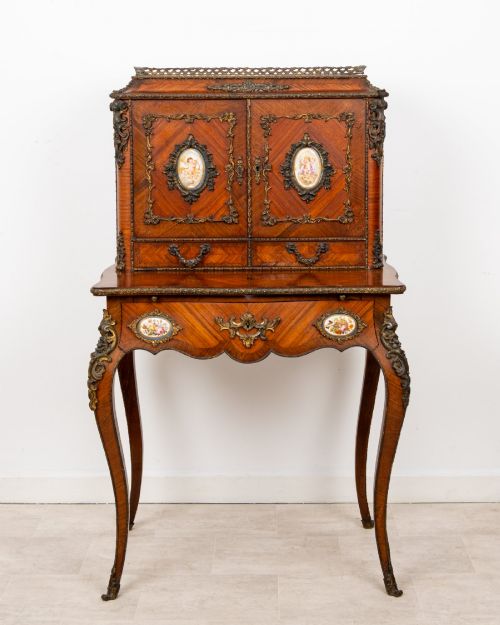


Sevres Porcelain Cabinet
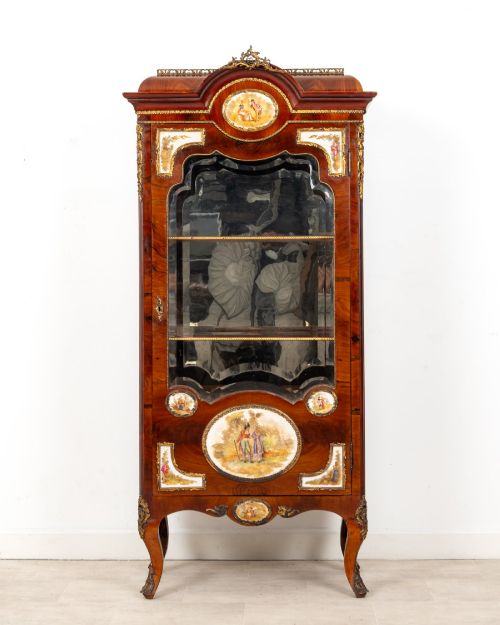
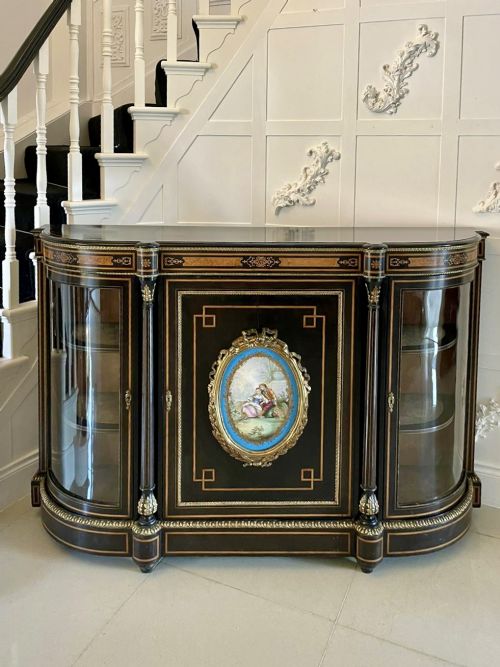
These sevres porcelain cabinet items combine fine ceramics and timber to display rich decorative scenes.
Sevres Porcelain Cabinet
A sevres porcelain cabinet search uncovers various display furniture and plates, spanning side cabinets, credenzas, and writing desks adorned with ceramic plaques. These pieces originate primarily from the nineteenth century, reflecting periods such as the Victorian era and the Louis XVI revival.
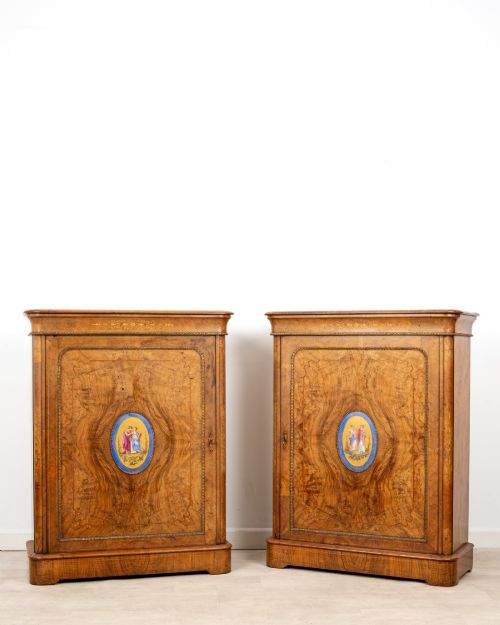
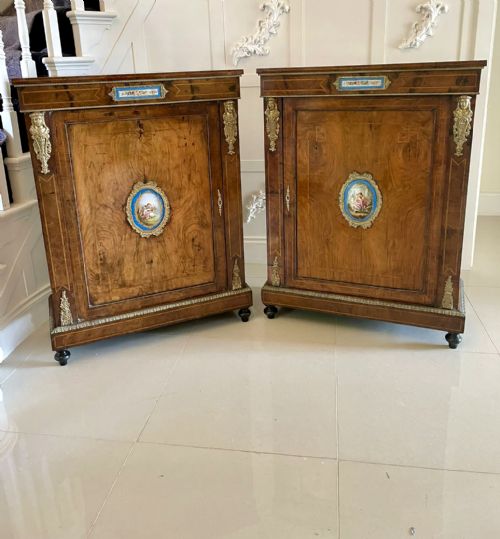
Buyers commonly encounter walnut, kingwood, and ebonised timber frameworks fitted with porcelain panels and ormolu mounts. The ceramic elements range from inset plaques on cabinet doors to individual cabinet plates and chargers.
Forms extend from large three-door credenzas down to compact bonheur du jour desks and small pier cabinets. Many items reflect French cabinet-making traditions adapted for nineteenth-century drawing rooms.
How they were made
Craftsmen built timber carcases from walnut, kingwood, and satinwood, frequently applying ebonised finishes or intricate marquetry. These wooden structures served as mounts for cast ormolu and gilded bronze frames.
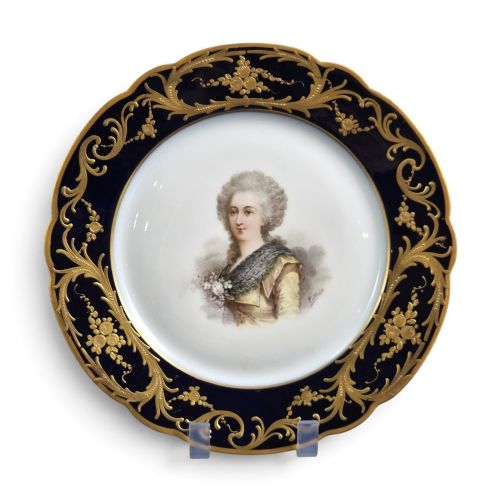
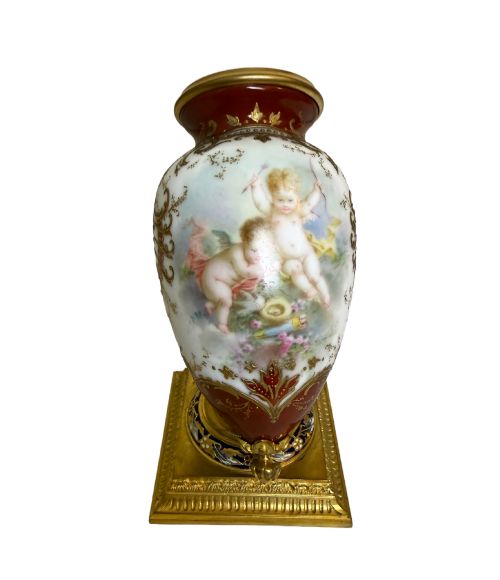
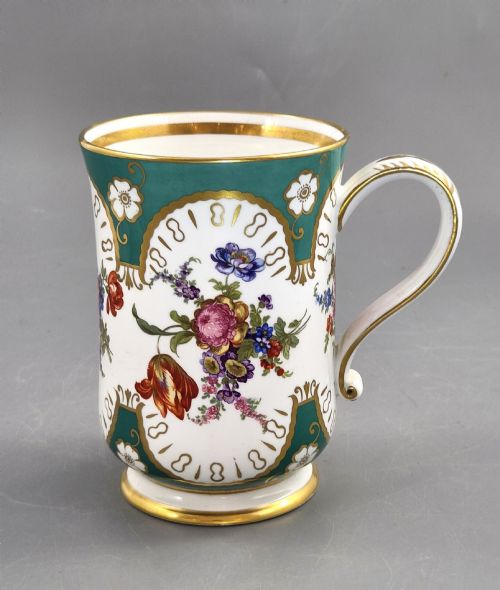
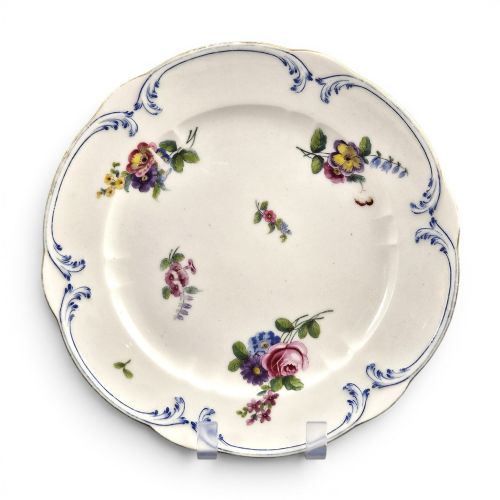
Porcelain plaques and plates feature hand-painted scenes, floral motifs, and cobalt grounds, sometimes produced in soft-paste porcelain. Gold leaf highlights frame these ceramic components before they are secured into the furniture mounts.
Medieval battle scenes and royal portraits gaze out from quiet nineteenth-century drawing room sideboards.
What varies in quality
Quality depends upon the fineness of the hand-painting on the porcelain plaques and the crispness of the surrounding ormolu mounts. Finer examples display detailed figural scenes and superior artistic handwork on the ceramic surface.
The choice and handling of timber carcasses also differentiate pieces, with figured burr walnut, kingwood veneers, and precise marquetry elevating the construction. Integrated design where the porcelain panels complement the timber framework rather than appearing as later additions marks the higher tier.
The Sevres Porcelain Cabinet Glossary
- Ormolu
- Gilded bronze mounts used extensively to decorate the edges, feet, and panels of nineteenth-century furniture. This technique adds metallic lustre to timber cabinets.
- Credenza
- A large sideboard or display cabinet designed for formal reception rooms. These pieces often feature glass doors or central cupboards inset with painted porcelain plaques.
- Bonheur du jour
- A small, light ladies writing desk featuring a cabinet or pigeonholes mounted on the upper surface. They frequently incorporate porcelain plaques and gilt metal mounts.
- Pier cabinet
- A tall, narrow cabinet designed to stand against the wall space between windows. They commonly house shelves behind glazed doors with porcelain panel decoration.
- Soft-paste porcelain
- An artificial ceramic body fired at lower temperatures than hard paste, creating a distinct glassy texture. Eighteenth-century pieces often utilise this composition.
Sevres Porcelain Cabinet: Frequently Asked Questions
What is a sevres porcelain cabinet?
It is a piece of display furniture, such as a credenza or pier cabinet, decorated with hand-painted ceramic plaques.
These items combine fine French cabinet-making with porcelain panels depicting portraits, landscapes, or historical scenes.
How were these cabinets used?
They functioned as display furniture in formal nineteenth-century drawing rooms to showcase wealth and taste.
Owners utilised the glass-fronted shelves and surface tops to exhibit fine objects, while writing desks provided a small workspace.
How do I date a piece?
Dating relies on timber types, revival styles, and construction methods characteristic of the nineteenth century.
Victorian and Napoleon III pieces often feature ebonised wood or burr walnut combined with gilt bronze mounts and porcelain panels.
Where should I place one?
These cabinets suit principal reception rooms where their timber finishes and painted ceramic plaques act as focal points.
They require stable indoor humidity away from direct sunlight to preserve the wood and the painted porcelain surfaces.