


Black Ormolu Cabinet
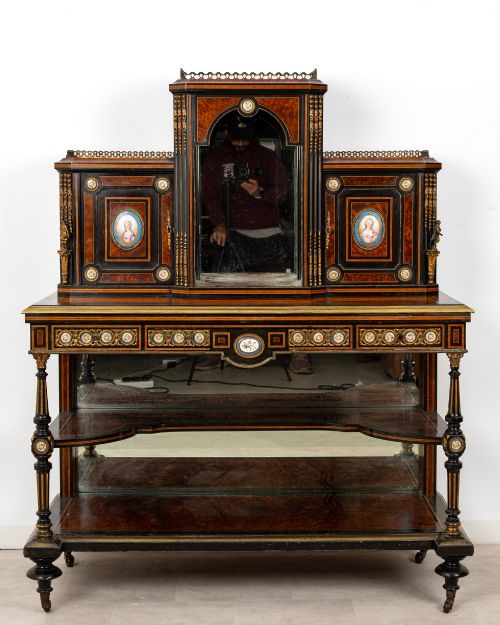
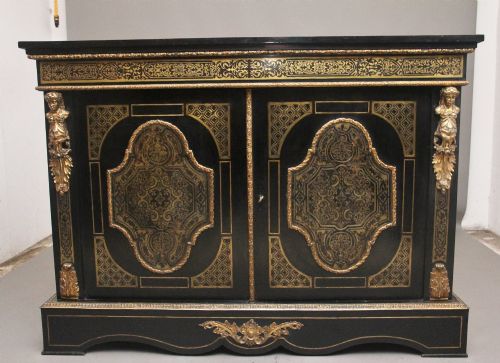
These pieces known as a black ormolu cabinet combine dark polished timber with bright cast metal mounts to create striking focal points for formal rooms.
Black Ormolu Cabinet
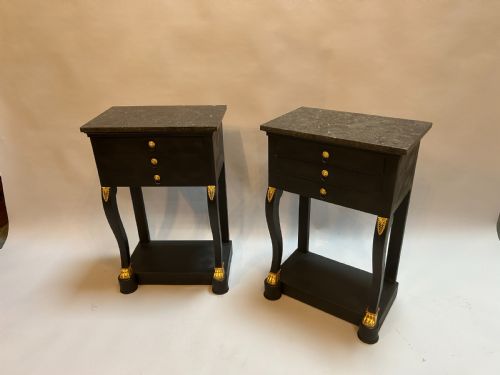
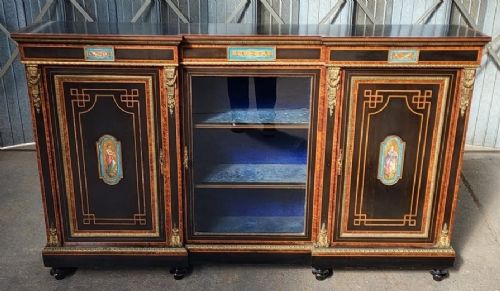
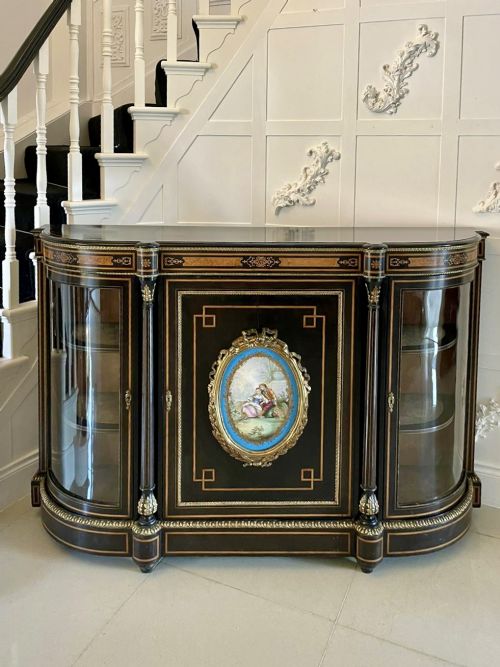
When searching for a black ormolu cabinet, you encounter dark-finished timber furniture adorned with gilt metal mounts, brass embellishments, and occasionally porcelain plaques. The pieces span Victorian and nineteenth-century eras, originating from British workshops and French makers influenced by Napoleon III, Empire, and Louis XVI revival styles.
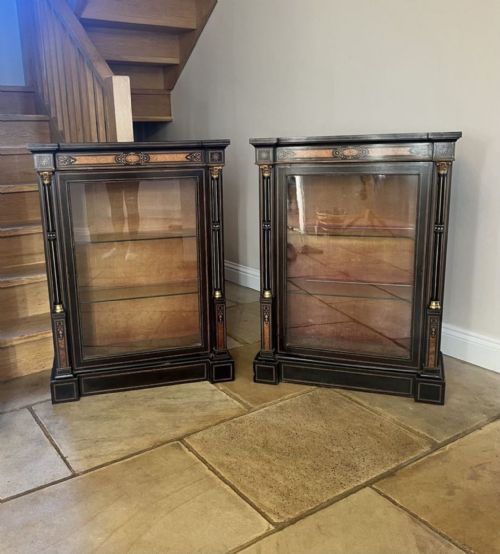
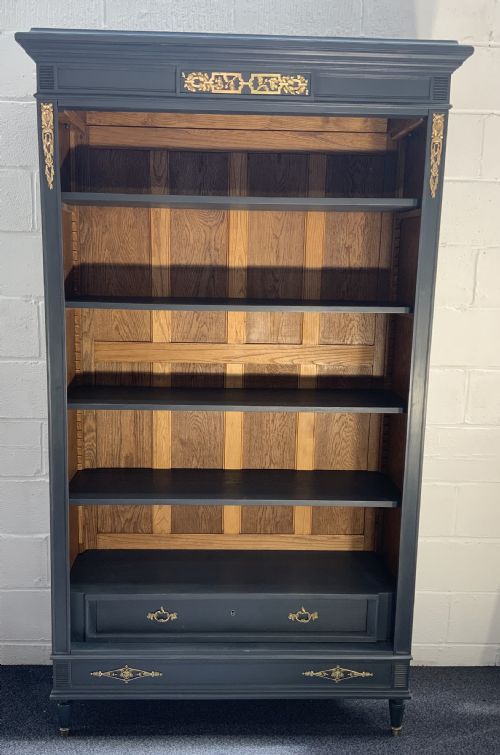
The forms vary widely from compact pier cabinets and glazed display furniture to substantial credenzas, sideboards, and bookcases with multiple doors. Many examples feature inlaid marquetry, tortoiseshell, or amboyna panels set against ebonised wood, creating strong visual contrast.
French pieces often showcase elaborate boullework or pietra dura panels, while English Victorian versions lean towards disciplined architectural lines combined with rich floral inlays. Side cabinets and credenzas dominate the selection, serving both display and storage purposes in period interiors.
Materials and construction
The dark finish is achieved by ebonising wood, a process of staining timber such as beech, fruitwood, or mahogany to imitate expensive ebony. This deep black surface provides a dark backdrop for contrasting veneers like amboyna, walnut, and tortoiseshell.
Ormolu and gilt bronze mounts are cast, chased, and fire-gilded before being fixed to corners, friezes, and door borders. Brass stringing, marquetry, and occasional pietra dura or Sevres style porcelain plaques are integrated directly into the timber framework.
Glass panels are fitted into glazed doors on display cabinets and bookcases, whilst marble tops appear on select credenzas and side cabinets to provide a durable and weighty upper surface.
Listings feature ebonised wood paired with ormolu, brass, porcelain, and marble across Victorian and nineteenth-century French styles.
Factors of quality
Quality rests heavily on the crispness of the cast ormolu mounts and the precision of the brass inlay work. Finer examples display sharp detailing in the metalwork and tight, flush joints in the marquetry veneers.
The choice of secondary woods and the depth of the ebonised finish separate standard production from superior craftsmanship. Substantial timber carcasses and carefully selected contrasting veneers like amboyna indicate higher workshop standards.
The Black Ormolu Cabinet Glossary
- Ebonised
- Wood treated with stain or polish to resemble solid ebony. This technique gained immense popularity during the Victorian and Napoleon III periods for furniture requiring a uniform black surface.
- Ormolu
- Gilt bronze ornamentation applied to furniture mounts. The technique involves coating copper alloy with a gold amalgam and heating it to drive off the mercury.
- Boulle
- An elaborate form of marquetry using brass and tortoiseshell inlaid in counterchange patterns. Named after the master cabinetmaker to Louis XIV, André-Charles Boulle.
- Credenza
- A low dining-room or drawing-room cabinet used for serving or display. Nineteenth-century versions frequently incorporate glazed central doors and bowed side cupboards.
- Pietra Dura
- The technique of inlaying cut and polished coloured stones into a stone base to form pictorial designs. These panels occasionally appear mounted centrally on cabinet doors.
- Pier Cabinet
- A narrow display cabinet designed to fit the wall space between windows. These pieces typically feature single glazed doors and substantial ormolu mounts.
Black Ormolu Cabinet: Frequently Asked Questions
Where should I place a black ormolu cabinet?
These cabinets work best against a plain wall where the dark ebonised wood and reflective metal mounts can catch the light without competing with patterned wallpaper.
They serve effectively in reception rooms or hallways as display surfaces for porcelain and small antiques.
How do I clean the ormolu mounts?
Dust the mounts gently with a soft, dry brush to remove surface particles without disturbing the surrounding ebonised wood.
Avoid abrasive metal polishes entirely, as they strip the original gilding from the bronze.
Are these cabinets purely decorative?
Whilst visually striking, pieces like credenzas and side cabinets offer functional interior shelving for storing dining accessories or books.
Glazed display variants protect fragile collections from dust while keeping them fully visible.
How do I distinguish French and English pieces?
French examples often lean towards Napoleon III or Empire revivals, featuring bolder boullework, elaborate cast ormolu, and Sevres style plaques.
English Victorian pieces tend to favour disciplined rectilinear forms combined with precise floral marquetry and amboyna banding.