




Sevres Mounted Furniture
Sevres mounted furniture combines fine cabinet woods with fired porcelain plaques and gleaming bronze mounts, offering grand decoration for sophisticated interiors.
Sevres Mounted Furniture
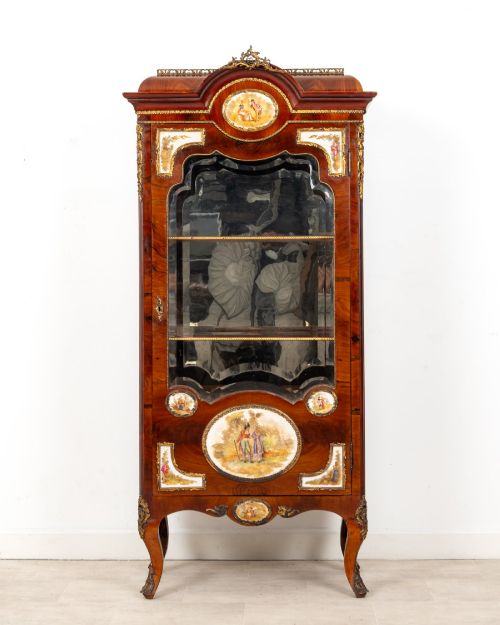
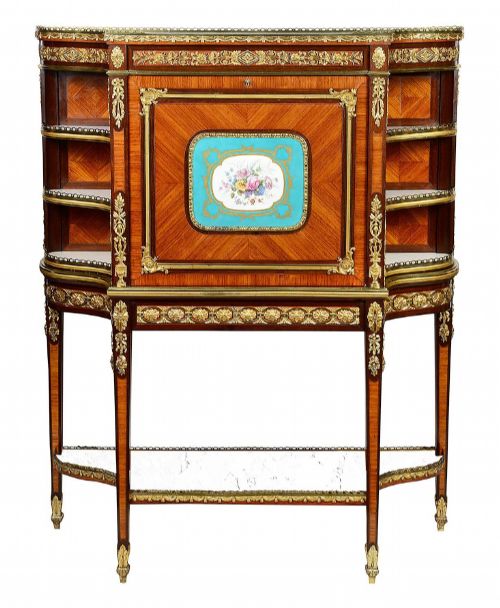
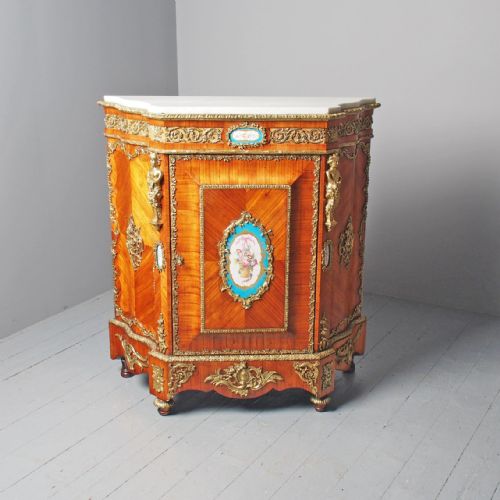
When you search for sevres mounted furniture, you find a selection of nineteenth-century pieces that integrate porcelain plaques into wooden carcases. The items appearing here span credenzas, display cabinets, writing desks, and side tables.
Most examples belong to revival movements, drawing inspiration from French styles like Louis XV and Louis XVI alongside Victorian tastes. These forms range from modest occasional tables to substantial three-door credenzas designed for formal reception rooms.
Materials and construction
Makers built these pieces using dense timber frameworks of walnut, kingwood, satinwood, and ebonised wood, frequently decorated with marquetry or intricate inlay. Into these wooden carcases, they set fired porcelain plaques, often painted with floral motifs or pastoral scenes.
Gilt bronze and ormolu mounts frame the porcelain panels and edge the structural lines, while marble tops frequently crown the upper surfaces. Brass details and glass panels complete the construction of cabinets and vitrines.
Sevres Mounted Furniture Retail Price Guide 2026
Typical asking prices for sevres mounted furniture among the pieces listed under this phrase on Sellingantiques today, from the lower quarter to the upper quarter. They describe what is for sale here now, not the wider market.
Listings feature woods including kingwood, satinwood, burr walnut, and rosewood combined with porcelain and ormolu.
Judging the standard
Quality rests on the crispness of the ormolu casting and the depth of the chasing on the bronze mounts. Better examples feature heavy, finely detailed metalwork rather than thin, light castings.
The standard of the hand-painted porcelain plaques also dictates the grade of the piece, alongside the precision of the cabinet work in woods such as kingwood and satinwood.
Blake, London·Town and Emanuel
The Sevres Mounted Furniture Glossary
- Ormolu
- Gilded bronze used for decorative mounts and framing on furniture. This technique involves applying a gold amalgam to a bronze base.
- Sevres
- A type of porcelain originating from the famous French factory, often incorporated as plaques into nineteenth-century furniture. These plaques feature hand-painted details.
- Credenza
- A large side cabinet used for storage and display, frequently fitted with glass doors and porcelain panels. Such pieces sit low against a wall.
- Marquetry
- Decorative veneer work arranged in pictorial patterns using different coloured woods. Craftsmen cut precise shapes to fit together across the surface.
- Bonheur de Jour
- A light lady's writing desk featuring a small set of drawers or a cabinet on top. These desks often incorporate porcelain plaques into the superstructure.
Sevres Mounted Furniture: Frequently Asked Questions
What periods do these pieces come from?
The items here largely date from the nineteenth century, with strong representation from the Victorian era and the decades around eighteen eighty and nineteen hundred. A few examples reference earlier eighteenth-century designs through revival styles.
Craftsmen of this later period revived eighteenth-century French aesthetics, producing cabinets and tables that emulated royal workshop standards using contemporary manufacturing techniques.
How were these cabinets used originally?
Grand homes utilised these mounted pieces in reception rooms and drawing rooms to display wealth and artistic taste. Credenzas and vitrines held porcelain, silver, and curiosities behind glass doors.
Smaller items like writing desks and work tables served practical functions in private sitting rooms while maintaining a decorative appearance suitable for visitors.
How do I care for marble and wood surfaces?
Keep wooden surfaces clean using a dry cloth and avoid excessive moisture or direct sunlight that can damage polished finishes and veneers. Marble tops require gentle wiping with a damp cloth to prevent staining.
Take care around ormolu mounts and porcelain plaques during cleaning, as aggressive polishes can strip the gilding or scratch the ceramic glaze.
How do I distinguish Louis XV and Louis XVI styles?
Louis XV style pieces display curved lines, cabriole legs, and asymmetrical rococo ornamentation. The overall feel is fluid and organic.
Louis XVI style furniture moves towards straight lines, symmetrical geometry, and classical motifs such as fluted columns and rectangular plaque placement.