



Gilt Bronze Vanity Table
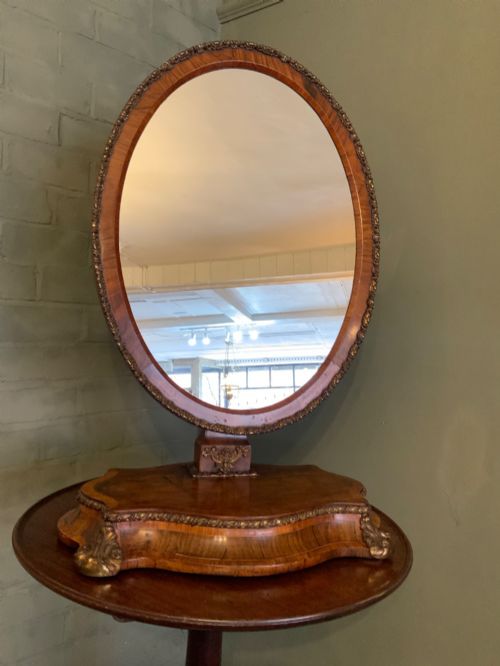
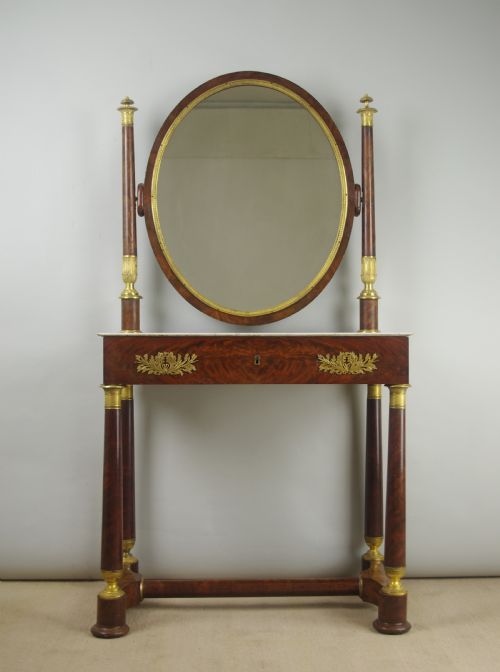
These gilt bronze vanity table pieces bring heavy metal mounts and polished glass together, offering an ornate dressing setup for a bedroom.
Gilt Bronze Vanity Table
When you search for a gilt bronze vanity table, you encounter a variety of dressing pieces and tabletop mirrors originating largely from the nineteenth century. The selection leans heavily toward French Empire, Napoleon III, and Rococo revival styles, featuring items designed for personal grooming and interior display. Table mirrors, dressing tables, and smaller vanity items dominate the forms available.
The objects span several decades from the early nineteenth century into the early twentieth, encompassing periods such as the Louis Philippe and Victorian eras. Alongside standalone dressing tables, the inventory includes table mirrors, pedestal mirrors, and vanity sets incorporating matching trays and hand mirrors. These pieces reflect the elaborate tastes of nineteenth-century domestic design, combining utility with decorative metalwork.
How they were made
Makers utilised cast bronze, ormolu, and gilt metal to build the structural mounts and frames that define these pieces. These metallic elements frequently accompany cabinet woods such as mahogany, walnut, tulipwood, and satinwood, often enhanced by marquetry inlay. Glass forms the central component of the mirrors, while enamel, champleve, marble, and Sevres porcelain provide colourful decorative accents.
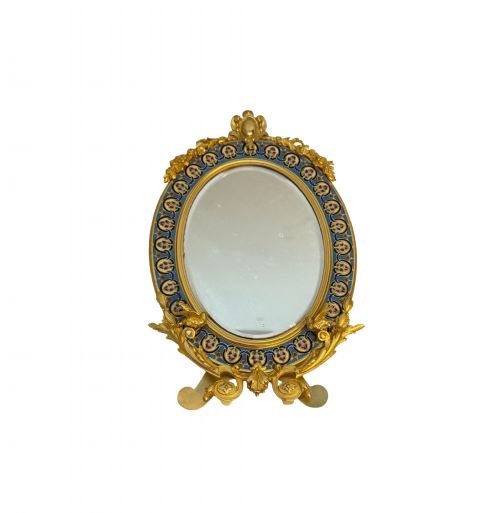
Techniques combined metal casting and fire-gilding with traditional cabinetmaking for the wooden chassis. Champleve enamel work and hand-painted Limoges porcelain plaques were integrated directly into the bronze frames. Adjustable stands and pivoted mountings allowed tabletop mirrors to tilt according to the user's preference.
Gilt Bronze Vanity Table Retail Price Guide 2026
Typical asking prices for gilt bronze vanity table among the pieces listed under this phrase on Sellingantiques today, from the lower quarter to the upper quarter. They describe what is for sale here now, not the wider market.
Listings span the nineteenth and early twentieth centuries, featuring materials like ormolu, champleve, mahogany, and marble.
What varies in quality
The refinement of the bronze casting and the crispness of the chasing set the standard for these objects. Superior pieces display deep, sharply defined ornamentation on the ormolu mounts, whereas lesser examples show softer, shallower detailing from worn moulds. The weight and thickness of the cast metal provide an immediate indication of the maker's investment in materials.
The integration of secondary materials like champleve enamel, hand-painted porcelain panels, and figured woods dictates the upper tier of the range. Master workshops employed meticulous joinery and high-grade fire gilding that retains its lustre over time. Simpler constructions rely on standard gilt metal and plain glass without supplementary enamel or porcelain inserts.
Thiebaut Freres·Maison Pretot Paris·Joseph Meissonnier·F.Bienvue
The Gilt Bronze Vanity Table Glossary
- Ormolu
- Gilded bronze produced by applying a mercury-gilding process to cast bronze. This technique creates a durable, warm metallic finish seen across nineteenth-century French mounts.
- Champleve
- An enamelling technique where troughs or cells are carved into the surface of the metal and filled with vitreous enamel before firing. It frequently decorates the frames of mirrors and small trays.
- Poudreuse
- A type of French vanity table featuring a hinged top that opens to reveal a mirror and compartments for cosmetics. They date predominantly to the eighteenth and nineteenth centuries.
- Napoleon III
- A nineteenth-century French design style characterised by eclectic revivals of past periods, particularly Louis XIV, XV, and XVI. It embraces heavy ornamentation and luxurious materials.
Gilt Bronze Vanity Table: Frequently Asked Questions
What is a gilt bronze vanity table?
A gilt bronze vanity table is a nineteenth-century dressing piece adorned with cast metal mounts, often paired with matching tabletop mirrors.
These items range from full-sized dressing tables to smaller writing desks and work tables featuring ormolu decoration.
How do I date a French vanity mirror?
Dating relies on stylistic markers from periods like the French Empire, Louis Philippe, and Napoleon III eras.
Examination of the bronze casting quality, wood species, and mirror glass bevelling helps narrow down the decade of production.
Were these tables used daily?
They served practical functions in nineteenth-century bedrooms and dressing rooms for personal grooming and cosmetic storage.
Many incorporated adjustable mirrors and compartments for perfumes, brushes, and small accessories.
What is champleve enamel?
Champleve is an enamel technique where cavities are dug into a bronze base and filled with coloured glass paste.
The piece is then fired to fuse the enamel, creating decorative patterns on mirror frames and pin trays.