


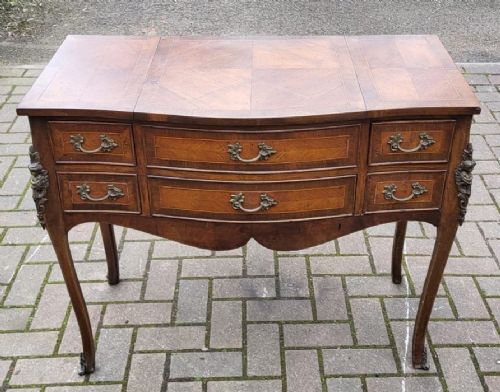


French Ormolu Vanity Table
A french ormolu vanity table brings nineteenth-century Continental grace into a room with gilt mountings and fine timber.
French Ormolu Vanity Table
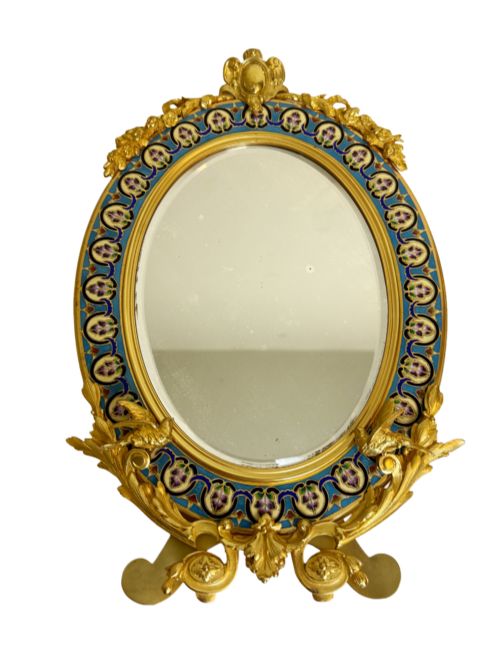
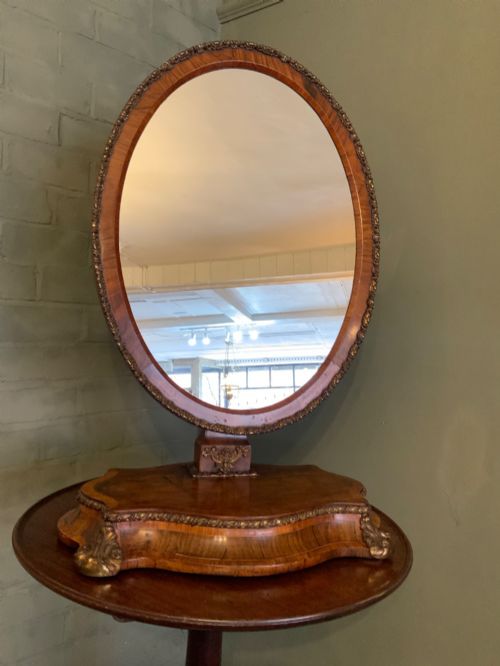
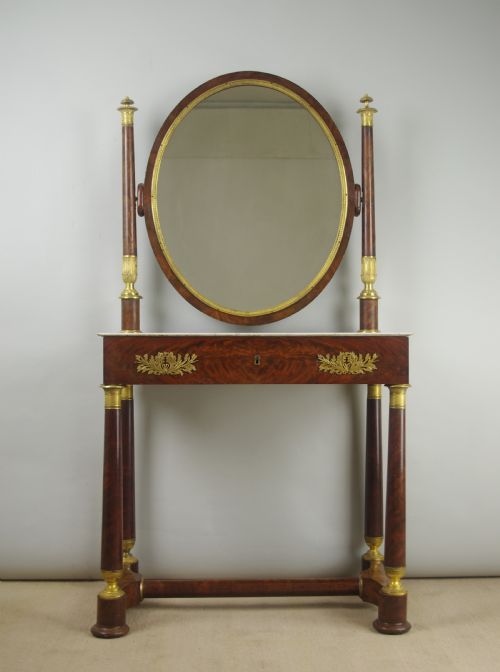
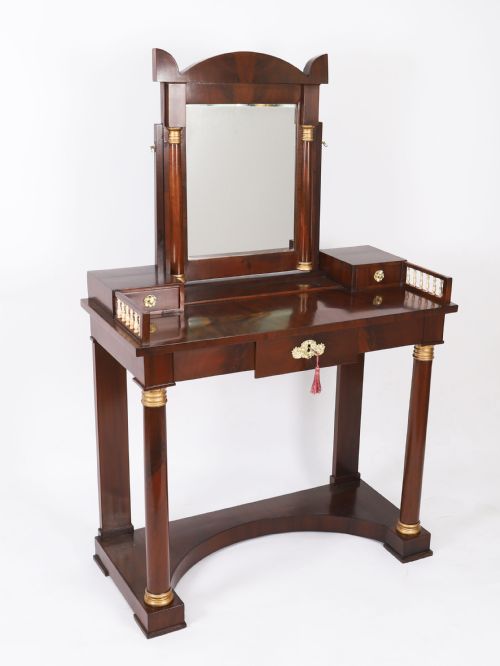
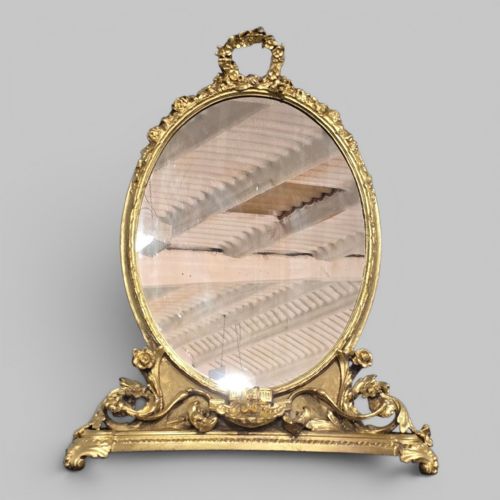
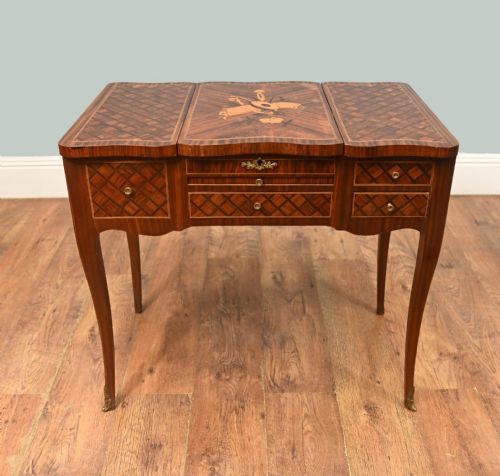
A french ormolu vanity table encompasses dressing tables, powder tables, and tabletop mirrors produced across the nineteenth century. The forms range from grand Empire mahogany dressing pieces to intimate Napoleon III work tables and marquetry poudreuses.
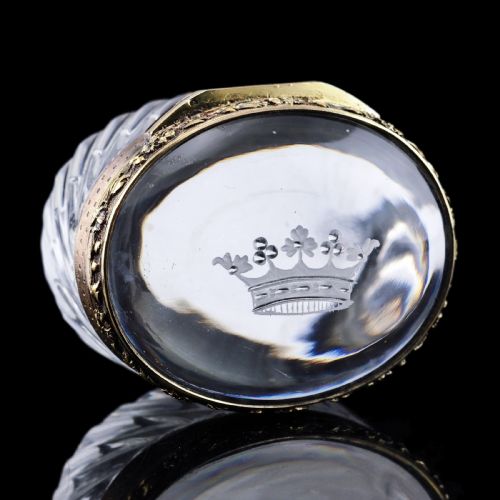
Buyers encounter walnut, mahogany, and kingwood structures enriched with gilt bronze mounts and integrated mirrors. Smaller accessories such as trinket boxes and hand mirrors also appear alongside the primary tables.
How they were made
Cabinetmakers constructed the foundational carcasses using dense hardwoods like mahogany and walnut, frequently applying intricate marquetry veneers in satinwood, tulipwood, and kingwood. Marble tops and crystal glass components provided durable, reflective working surfaces.
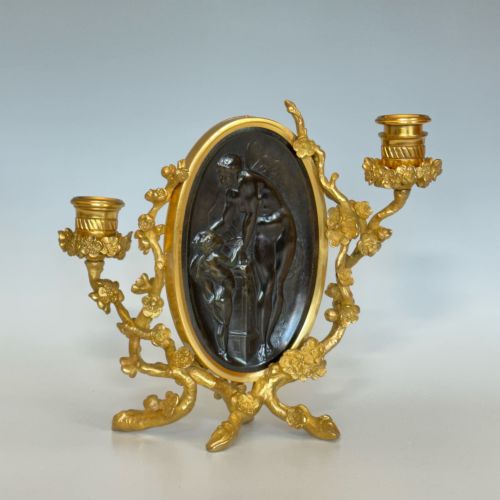
Gilt bronze and ormolu mounts were cast and chased separately before being applied to highlight structural lines and corners. Champleve enamel, Sevres porcelain, and Limoges panels frequently supplemented the metalwork as decorative insets.
Several pieces include concealed compartments designed for nineteenth-century cosmetics and secret letters.
What varies in quality
The refinement of the casting and chasing in the ormolu mounts distinguishes standard production from exceptional pieces. Crisp detailing in the bronze work indicates superior workshop execution.
Timber selection and the complexity of the marquetry inlay determine the baseline standard of the cabinetry. Cohesive integration of porcelain plaques or enamel work further elevates the standing of an individual piece.
Thiebaut Freres·Maison Pretot Paris·Joseph Meissonnier·F.Bienvue
The French Ormolu Vanity Table Glossary
- Ormolu
- Gilded bronze used widely for decorative mounts on nineteenth-century furniture and decorative objects. It provides a bright metallic finish that accentuates the contours of the timber pieces.
- Poudreuse
- A French dressing table or powder table featuring folding lids and internal compartments. These chambers originally held cosmetics and grooming implements.
- Bonheur du jour
- A small light desk featuring a set of drawers and compartments on the upper surface. This form gained popularity during the nineteenth century for personal correspondence and dressing.
- Champleve
- An enamelling technique where troughs are carved into the metal surface and filled with vitreous enamel. The resulting designs complement the surrounding ormolu mounts.
- Marquetry
- The art of applying pieces of veneer to a structure to form decorative patterns. Makers utilised varied timbers to create floral or geometric compositions.
French Ormolu Vanity Table: Frequently Asked Questions
How do I use a vanity table today?
These tables function effectively as dressing desks, hallway consoles, or writing surfaces in modern interiors. Their compact proportions allow them to fit into bedrooms and dressing rooms without dominating the space.
The integrated mirrors and surface drawers continue to provide practical utility for daily organisation.
How do I date a nineteenth-century dressing table?
Dating relies on stylistic shifts from the severe symmetry of the French Empire period to the elaborate curves of the Rococo Revival and Napoleon III eras. Construction methods, timber choices, and secondary woods also offer clues to the decade of manufacture.
Makers' signatures or stamps found on the bronze mounts or timber frames help confirm specific workshops.
What is the difference between ormolu and gilt bronze?
Ormolu and gilt bronze refer essentially to the same material process involving the application of gold amalgam to a bronze base. The term ormolu is traditionally used within French furniture studies.
Both finishes provide the characteristic golden lustre seen on nineteenth-century mounts and hardware.