





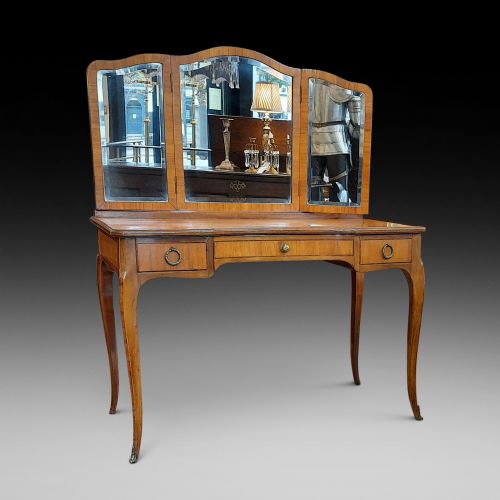
Rococo Vanity Desk
These rococo vanity desk pieces bring serpentine curves and intricate flourishes into a room, offering both a surface for writing and a place for morning reflection.
Rococo Vanity Desk
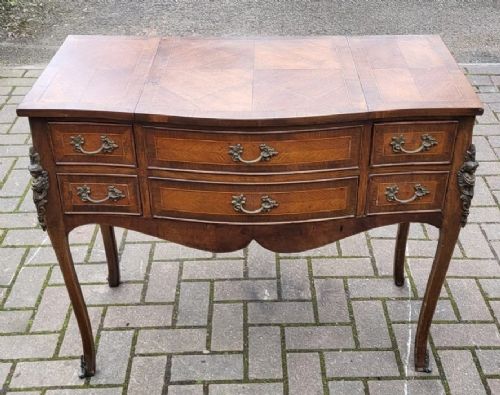
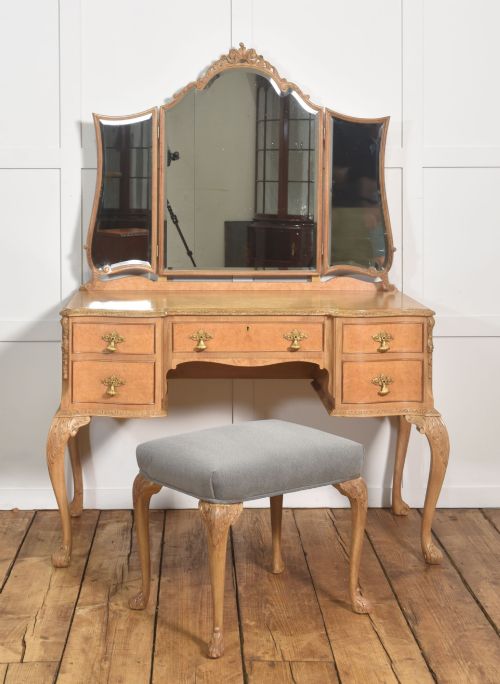
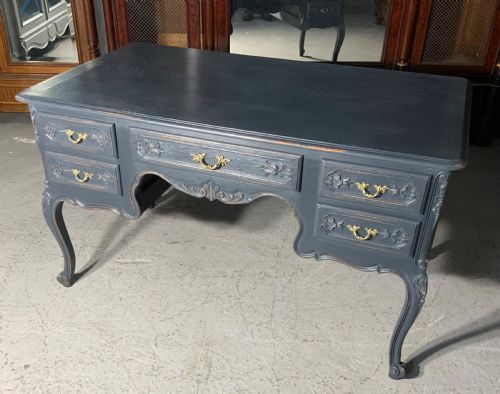
A rococo vanity desk unites the intimate daily rituals of dressing and letter writing within a single, highly decorative piece of furniture. When you search for a rococo vanity desk, you encounter forms that span dressing tables, writing tables, and accompanying mirrors from the eighteenth century up to the revival periods of the nineteenth and early twentieth centuries.
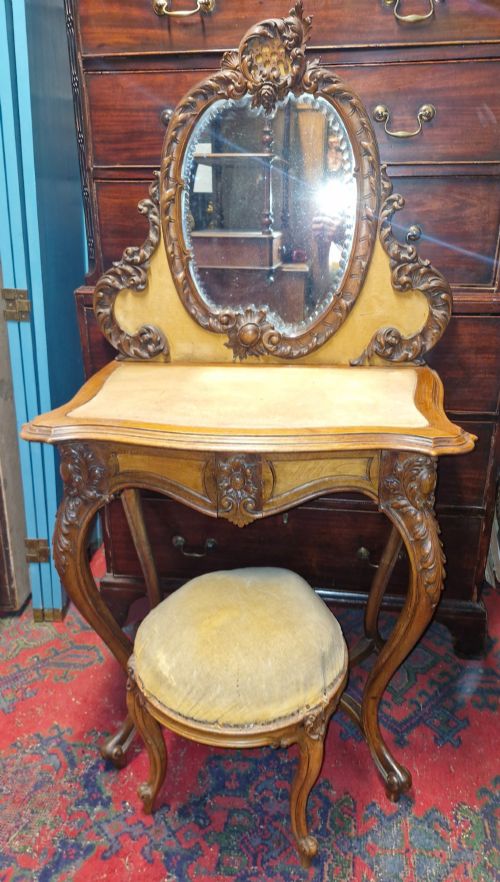
The selection here encompasses walnut, burr walnut, mahogany, and giltwood pieces alongside smaller tables and chairs in the French and Italian revival styles. Many examples incorporate shaped mirrors, carved woodwork, and mounted porcelain or ormolu details that reflect European design traditions of the mid-eighteenth century.
Earlier examples date back to the mid-eighteenth century, while revival pieces from the Victorian era and the early twentieth century reinterpret the characteristic asymmetric scrolls and cabriole supports. These later interpretations often utilise rich timbers like kingwood and rosewood while maintaining the lighter proportions associated with the style.
Materials and construction
Makers constructed these pieces using dense hardwoods such as walnut, mahogany, and oak, frequently applying burr walnut, kingwood, or rosewood veneers to create decorative grain patterns across the surfaces. Crossbanding and shaped mouldings define the borders of tabletops and drawer fronts, requiring precise woodworking techniques to follow the undulating contours.
Giltwood and gesso surfaces receive hand-applied layers of gold leaf or metallic paint over a prepared chalk ground, accentuating the carved scrollwork and asymmetrical motifs. Mounts cast in brass and ormolu, sometimes incorporating Sevres porcelain plaques, are secured to the corners, aprons, and mirror frames to add contrast and texture.
Rococo Vanity Desk Retail Price Guide 2026
Typical asking prices for rococo vanity desk among the pieces listed under this phrase on Sellingantiques today, from the lower quarter to the upper quarter. They describe what is for sale here now, not the wider market.
Some dressing tables hide triple mirrors and secret compartments, designed so a lady could check her hat angles from every possible angle before receiving callers.
Assessing quality
Quality reveals itself in the depth and crispness of the hand-carving, where superior examples display fluid, undercut foliage and scrolls rather than shallow, mechanical moulding. The selection of timber veneers also dictates the visual merit, with well-matched burr walnut or crossbanded rosewood showing considered grain placement across complex curved surfaces.
Structural integrity depends on the joinery within the cabriole legs and drawer construction, where traditional dovetailing and tight joints ensure the piece remains stable. Original hardware, well-fitted mirrors, and finely chased ormolu or brass mounts distinguish the finer atelier pieces from standard commercial production of the revival eras.
The Rococo Vanity Desk Glossary
- Cabriole leg
- A furniture leg that curves outward at the knee and tapers inward toward the ankle, ending in a pad, scroll, or hoof foot. This form derives from animal limbs and appears frequently on eighteenth-century and revival seating and tables.
- Ormolu
- Gilded bronze ornamentation applied to furniture mounts, clocks, and decorative objects. The technique involves treating brass or bronze with an amalgam of mercury and gold before heating.
- Crossbanding
- A strip of veneer running perpendicular to the grain of the main surface, often framing the perimeter of a tabletop or drawer front. It creates a neat visual border using contrasting wood grains.
- Giltwood
- Timber that has been coated with a thin layer of gold leaf over a prepared gesso base. It is commonly found on mirrors, console tables, and decorative chairs from the period.
- Bonheur du jour
- A small, light ladies' writing desk featuring a set of drawers or a cabinet on the upper surface. The form originated in France during the mid-eighteenth century.
- Gesso
- A paint mixture consisting of a binder mixed with chalk, gypsum, or pigment, applied to wood as a smooth base for gilding or painting. It allows craftsmen to carve intricate relief details before applying gold leaf.
Rococo Vanity Desk: Frequently Asked Questions
What is a rococo vanity desk used for?
These pieces served primarily for personal grooming, applying cosmetics, and writing letters in the private chambers of a home. The integration of mirrors and small drawers provided a functional station for morning routines.
Over time, many of these items transitioned into general reception rooms and boudoirs as decorative display surfaces or occasional writing desks.
How do I date a rococo piece?
Dating relies on examining the underlying construction timber, secondary woods used in drawer linings, and the style of the carving. Eighteenth-century originals show hand-sawn timber marks and period joinery methods.
Revival pieces from the Victorian era and the early twentieth century often utilise machine-sawn components and different secondary woods, even when successfully replicating earlier decorative motifs.
Are these desks suitable for daily writing?
Most vanity desks and writing tables offer enough surface area for modern correspondence, provided you use an appropriate chair that matches the lower desk height. The delicate cabriole legs and veneered surfaces require careful treatment to avoid scratches.
Placing a protective leather blotter or writing pad across the top helps preserve historical veneer finishes during regular use.
What distinguishes French rococo from Italian rococo?
French rococo design typically emphasises asymmetrical scrollwork, flowing floral carving, and lighter wood veneers such as kingwood and rosewood. The overall aesthetic prioritises playful elegance and curved lines.
Italian rococo pieces often feature bolder giltwood and gesso work, heavier proportions, and architectural elements integrated directly into the tables and mirrors.