
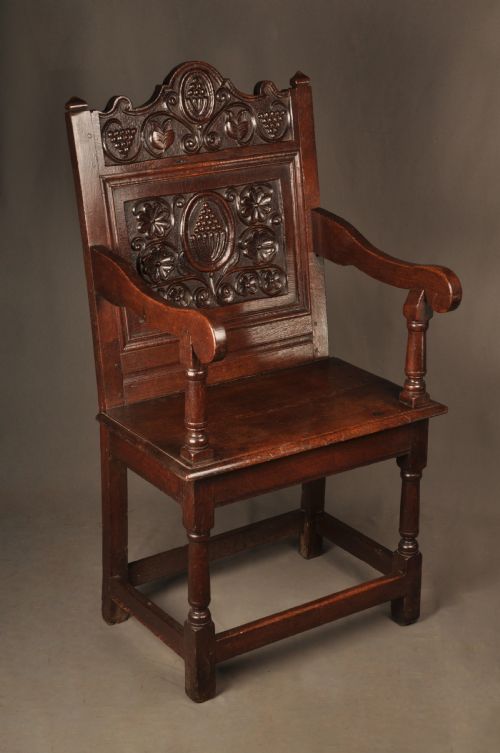
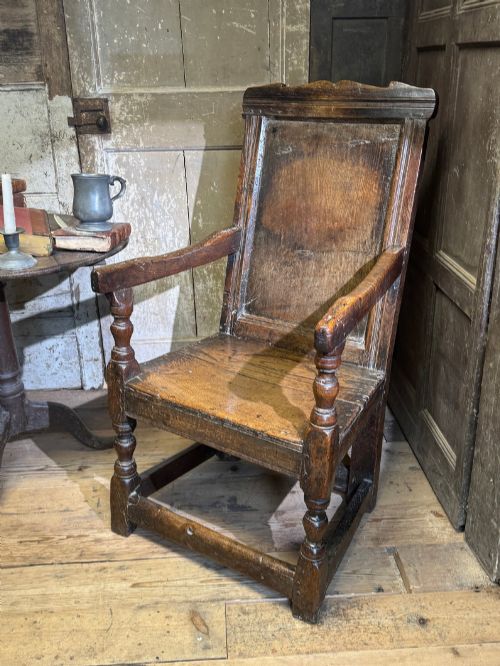

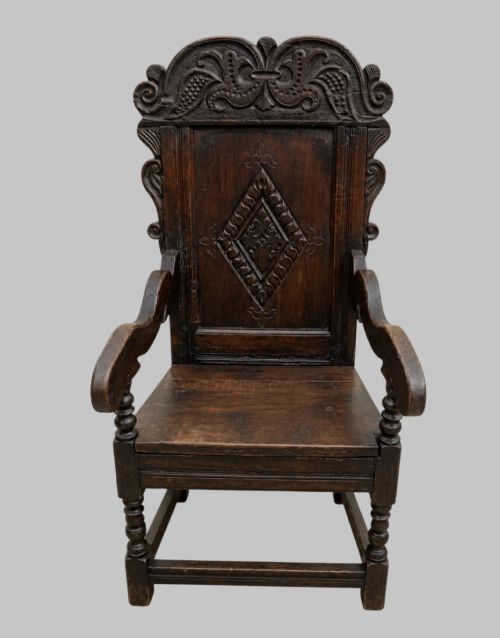


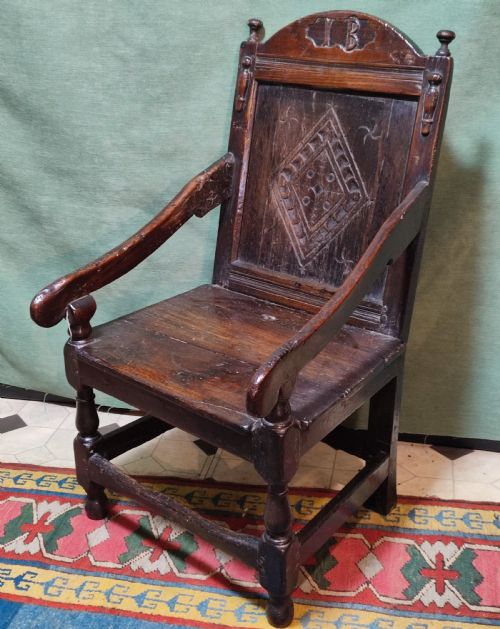
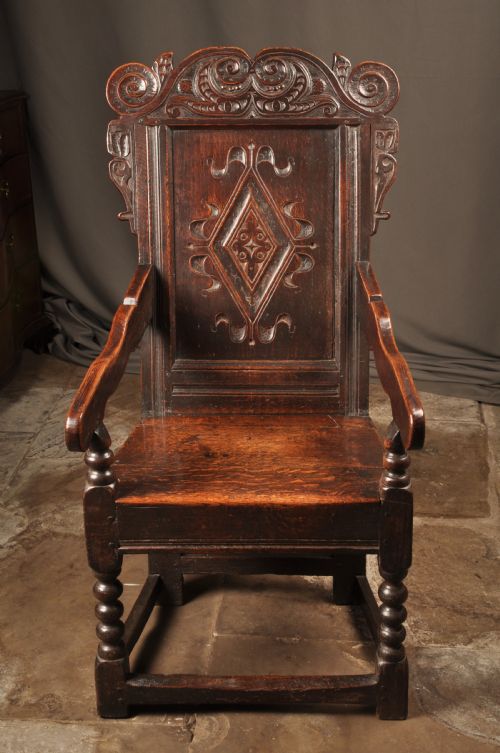


Seventeenth Century Oak Armchair
A seventeenth century oak armchair is a heavy, solid seat built for an important household member, combining regional design with timber that hardens with age.
Seventeenth Century Oak Armchair
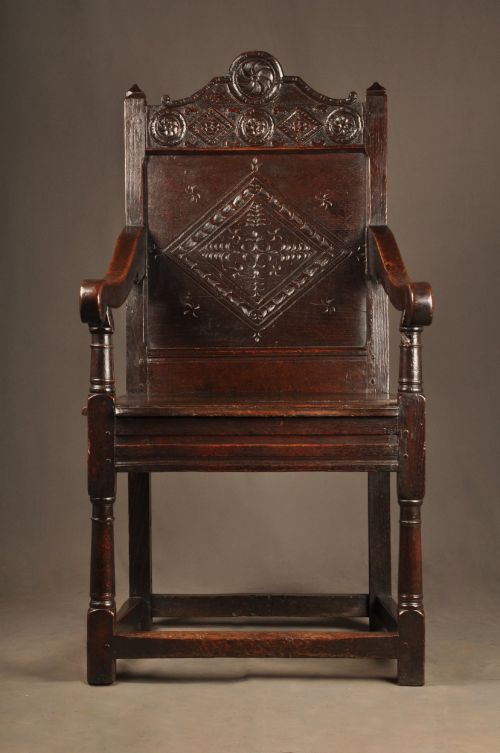
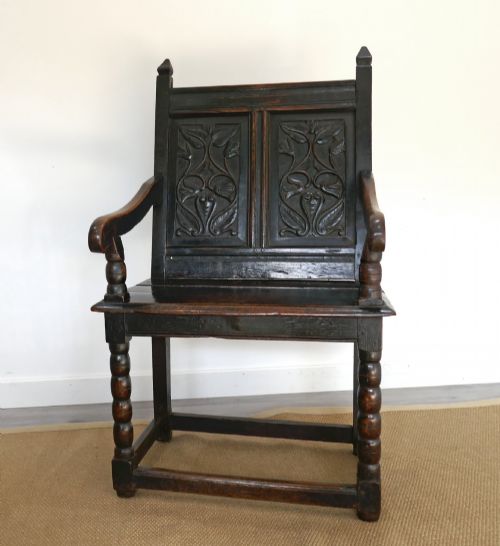
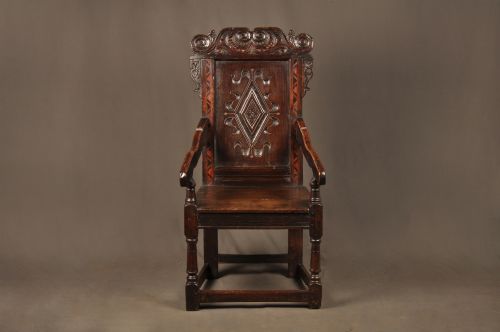
A seventeenth century oak armchair is a substantial seat built with panelled backs, sturdy armrests, and rigid frames designed to command a room. The items found here span authentic period pieces from regional workshops alongside later revivals from the nineteenth and twentieth centuries.
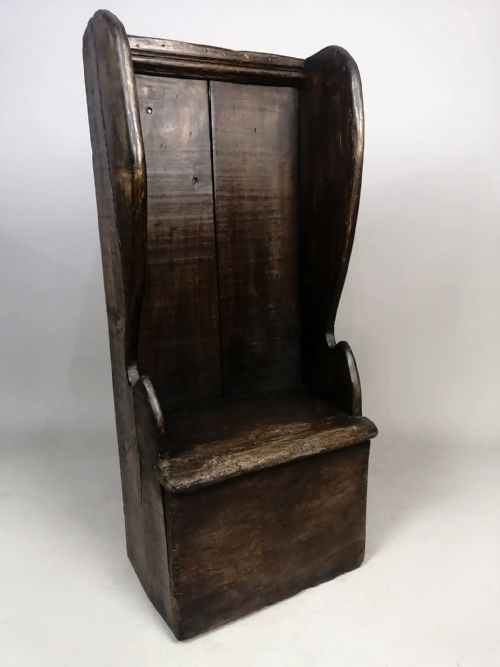
Regional variations dominate the selection, with Lancashire, Yorkshire, Wales, and the West Country each producing distinct carved backs and proportions. Buyers will frequently encounter wainscot forms, alongside occasional child variants, highchairs, and lambing chairs.
The materials reflect domestic resources of the period, relying primarily on solid oak supplemented by fruitwood and cane seating in specific provincial designs. Surviving examples carry the marks of heavy daily use, repairs, and centuries of polishing.
Materials and construction methods
Carpenters constructed these chairs using heavy solid oak timbers joined by tight mortise and tenon joints secured with wooden pegs. Boards were often cleft or quarter-sawn to expose the decorative medullary rays in the grain.
Carving was executed by hand using gouges and chisels directly onto the solid panels, creating geometric guilloche patterns, scrolling foliage, or arcaded backrests. Secondary timbers like fruitwood appear in specific provincial chairs and smaller seating forms.
Assessing quality and authenticity
Quality rests upon the amount of original timber retained in the frame, as many pieces underwent alterations, replacements, or marriage of parts over subsequent centuries. Seats, feet, and arm supports frequently show extensive timber replacement due to damp floors and heavy wear.
The crispness and depth of the hand carving distinguish superior regional workshops from plainer provincial output or later revival copies. Surface colour and depth of patination accumulated through generations of beeswax application separate honest unrestored surfaces from modern interventions.
The Seventeenth Century Oak Armchair Glossary
- Wainscot chair
- A heavy wooden armchair constructed with panelled backboards derived from wall panelling techniques. These sturdy seats formed the principal chair of the household.
- Joined oak
- Furniture constructed using interlocking mortise and tenon joints secured with wooden dowels rather than metal nails. This method defined seventeenth-century cabinet making.
- Fruitwood
- Dense timber gathered from fruit-bearing trees such as pear or apple, utilised by provincial makers for smaller chairs and regional variants. It offers a tight grain and distinct warm tone.
- Cromwellian
- A plain, austere style of English furniture dating to the mid-seventeenth century, prioritising turned supports and leather or canvas backs over elaborate carving.
- Patination
- The deep surface sheen and colour developed on wood through decades of handling, exposure to light, and polishing. It serves as a key indicator of age.
Seventeenth Century Oak Armchair: Frequently Asked Questions
How do I identify a genuine seventeenth-century chair?
Genuine period chairs display hand-cut joints secured with uneven wooden pegs, alongside natural wear patterns around the armrests and foot rails. The timber exhibits dry, dense grain with centuries of accumulated polish.
Revival pieces made in the nineteenth century often use machine-sawn components and cleaner, shallower carving. Examining the underside and peg construction reveals the true age of the frame.
Where were these chairs placed in historical homes?
These heavy armchairs stood by the hearth or at the head of the dining table to seat the master of the house or honoured guests. Their enclosed panelled backs protected occupants from draughts in cold stone rooms.
Smaller variants and child highchairs were built for nursery use or fireside nursing. Their robust frames kept them stable on uneven floors.
Why do regional styles look so different?
Makers relied on local timber supplies and traditions passed down through rural workshops in regions like Yorkshire, Lancashire, and Wales. Each area developed preferred motifs, such as specific crest rails or carved panel designs.
Transport limitations meant furniture remained tied to local forest resources and client tastes. This isolation created distinct regional identities across the surviving pieces.
How should I care for an oak armchair?
Keep the wood away from direct heat sources and sudden temperature shifts to prevent the old timber from splitting or warping. Feed the surface occasionally with traditional beeswax to maintain the finish.
Avoid modern liquid polishes containing silicones, which build up harmful residues on antique grain. Gentle dusting with a dry cloth is sufficient for daily maintenance.