


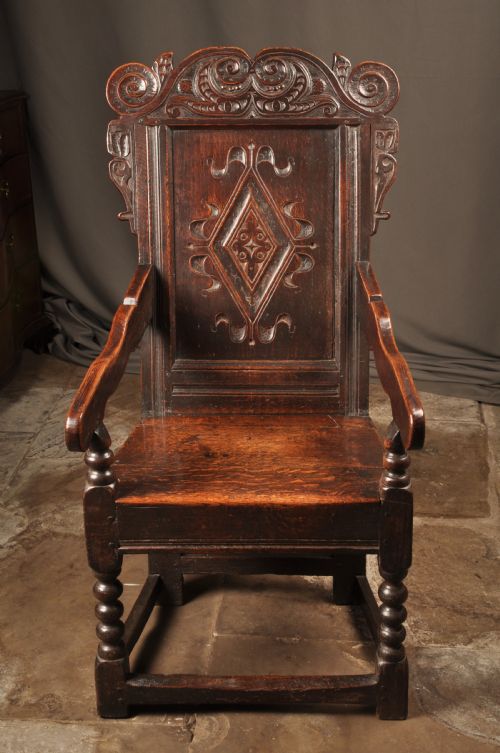


Dark Wood Wainscot Chair
A dark wood wainscot chair is a panelled timber seat offering sturdy architectural presence and rich period character.
Dark Wood Wainscot Chair
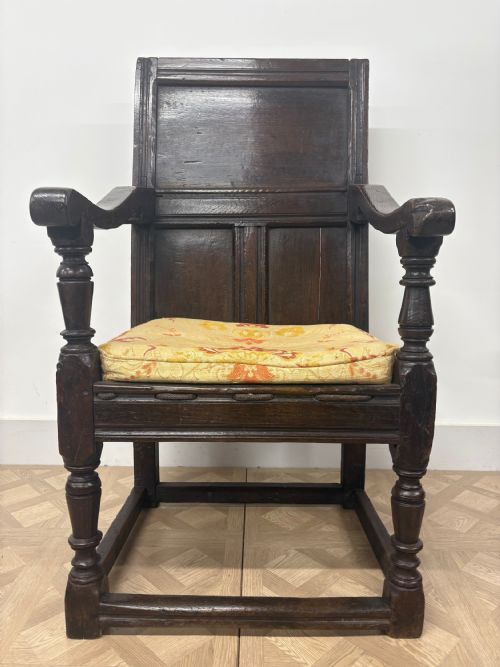
A dark wood wainscot chair provides a rigid wooden seat framed by panelled backs and sturdy armrests, built primarily for domestic life in early centuries. Buyers searching this phrase meet substantial timber seating spanning the seventeenth century through to later revival periods.
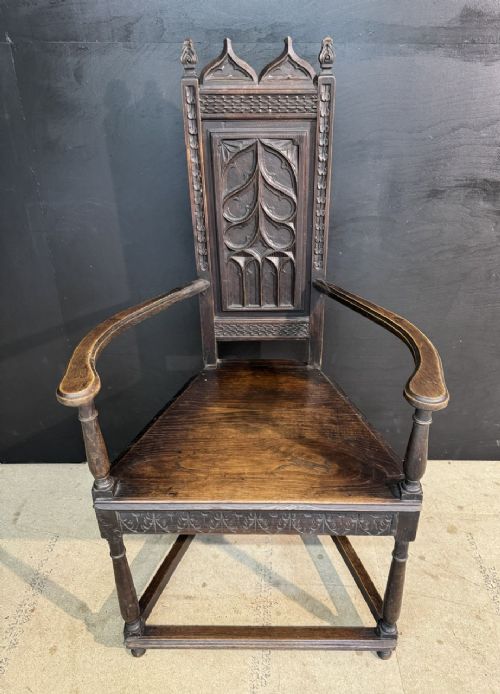
Original seventeenth century examples sit alongside nineteenth century and early twentieth century revivals executed in the Jacobean, Gothic, and Tudor manners. Regional forms also appear, including Welsh country pieces and Lancashire or Yorkshire variants.
How they were made
Makers constructed these chairs predominantly from solid oak, sometimes incorporating yew-wood panels for variation in the timber grain. Joinery relied on pegged mortise and tenon frames to support the heavy panelled backs and substantial armrests.
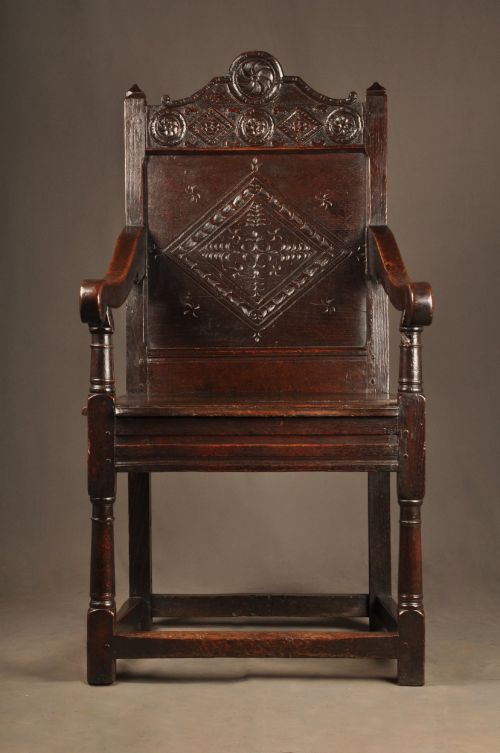
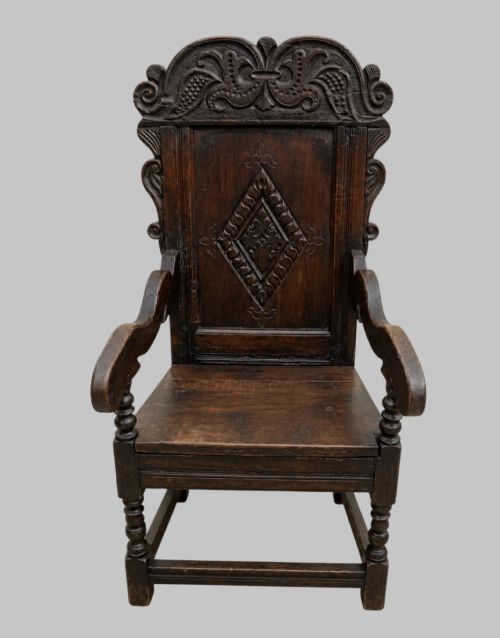
Decoration involved hand carving applied directly to the wooden boards, occasionally supplemented by leather upholstery secured with metal studs.
The listings span the seventeenth, eighteenth, and nineteenth centuries, alongside revival dates from eighteen-eighty, nineteen-hundred, and nineteen-thirty.
What varies in quality
Depth and crispness of the hand carving separate competent workshop output from exceptional regional pieces. The choice of timber also dictates quality, with dense mature oak and contrasting yew-wood panels commanding greater attention than plain commercial boards.
Structural integrity of the original joints and the proportion of replacement timber determine the historical weight of the piece. Period examples retain a genuine integration of parts that later revivals occasionally lack.
The Dark Wood Wainscot Chair Glossary
- Wainscot chair
- A wooden armchair featuring a panelled back, deriving its name from the fine grade of oak imported for panelling walls. These chairs represent early domestic seating before upholstered furniture became widespread.
- Jacobean
- A design style spanning the reign of James the First, characterised by heavy proportions, straight lines, and geometric carved decoration. Pieces in this manner display robust construction and dark timber finishes.
- Vernacular
- Furniture made by local craftsmen following regional traditions rather than metropolitan pattern books. These objects often employ native woods like oak and yew to suit local domestic needs.
- Mortise and tenon
- A joint formed by inserting a shaped projection into a corresponding cavity, secured with wooden pegs. This technique forms the structural skeleton of early panelled seating.
Dark Wood Wainscot Chair: Frequently Asked Questions
How do I spot a true seventeenth century piece?
Examine the construction methods, tool marks on the timber, and the natural wear patterns accumulated over centuries of use. Genuine early examples show hand-riven boards and pegged joinery that differ significantly from later machine work.
Compare the proportion and carving style against known regional archetypes from Lancashire, Yorkshire, or Wales. Period pieces possess an organic integration of structure that deliberate revival attempts struggle to replicate.
Where were these chairs used in a home?
Owners placed these heavy wooden seats at the head of a dining table or near a hearth to shield the occupant from cold drafts. Their solid panelled backs served as an effective windbreak in large, unheated rooms.
As domestic status symbols, they occupied prominent positions in the hall or parlour rather than casual living spaces. Only the head of the household or honoured guests sat in them.
Can I use a wainscot chair every day?
These robust wooden seats handle normal daily sitting provided the structural joints remain stable and secure. Adding a loose cushion provides comfort without compromising the historic timber surface.
Place them away from direct heat sources and rapid humidity changes to prevent the old oak from splitting. Regular care preserves both the joinery and the rich dark patina.
What is the difference between revival and period pieces?
Period pieces date from the original era of manufacture, carrying the authentic wear and construction quirks of seventeenth century workshops. Revival examples date from the Victorian or Edwardian eras when makers deliberately copied those earlier styles.
Both categories utilise solid oak and traditional joinery, but revival pieces reflect the aesthetic preferences and machine capabilities of the nineteenth century. Examining the timber shrinkage and surface oxidation helps clarify the age.