
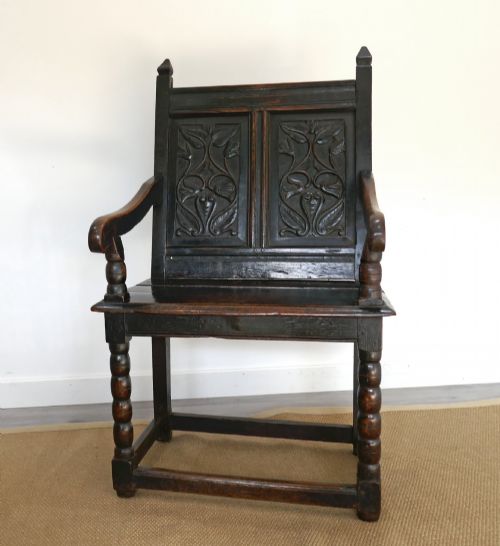
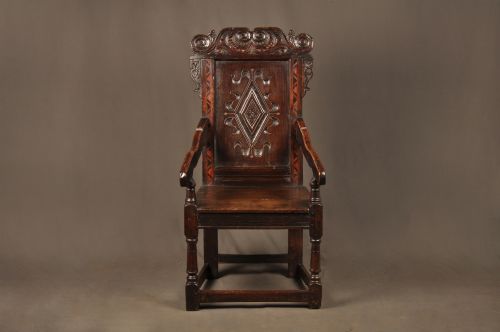
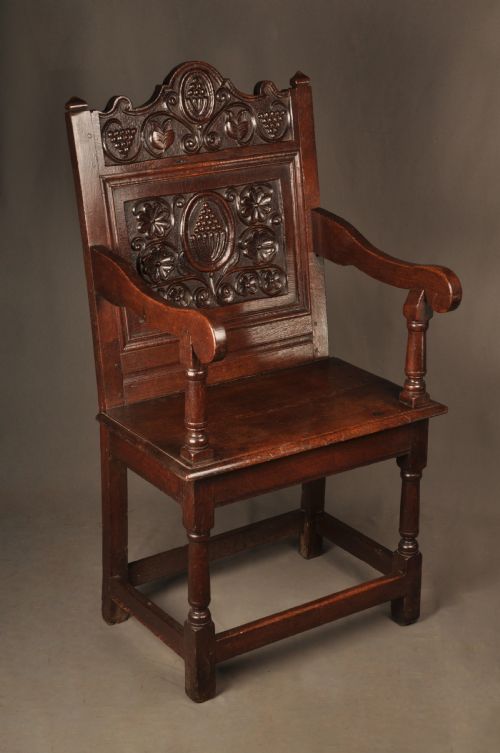
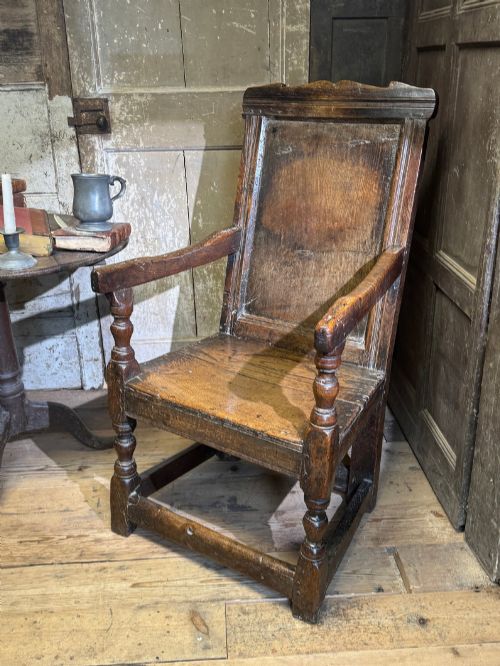

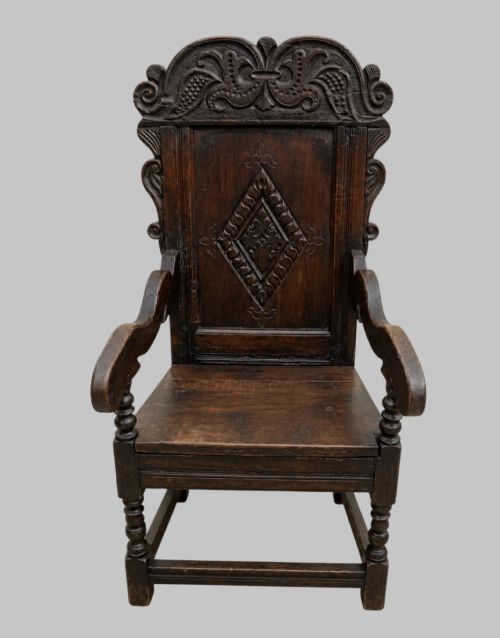


Seventeenth Century Carved Chair
A seventeenth century carved chair brings heavy timber, panelled construction and formal historic presence directly into a modern room.
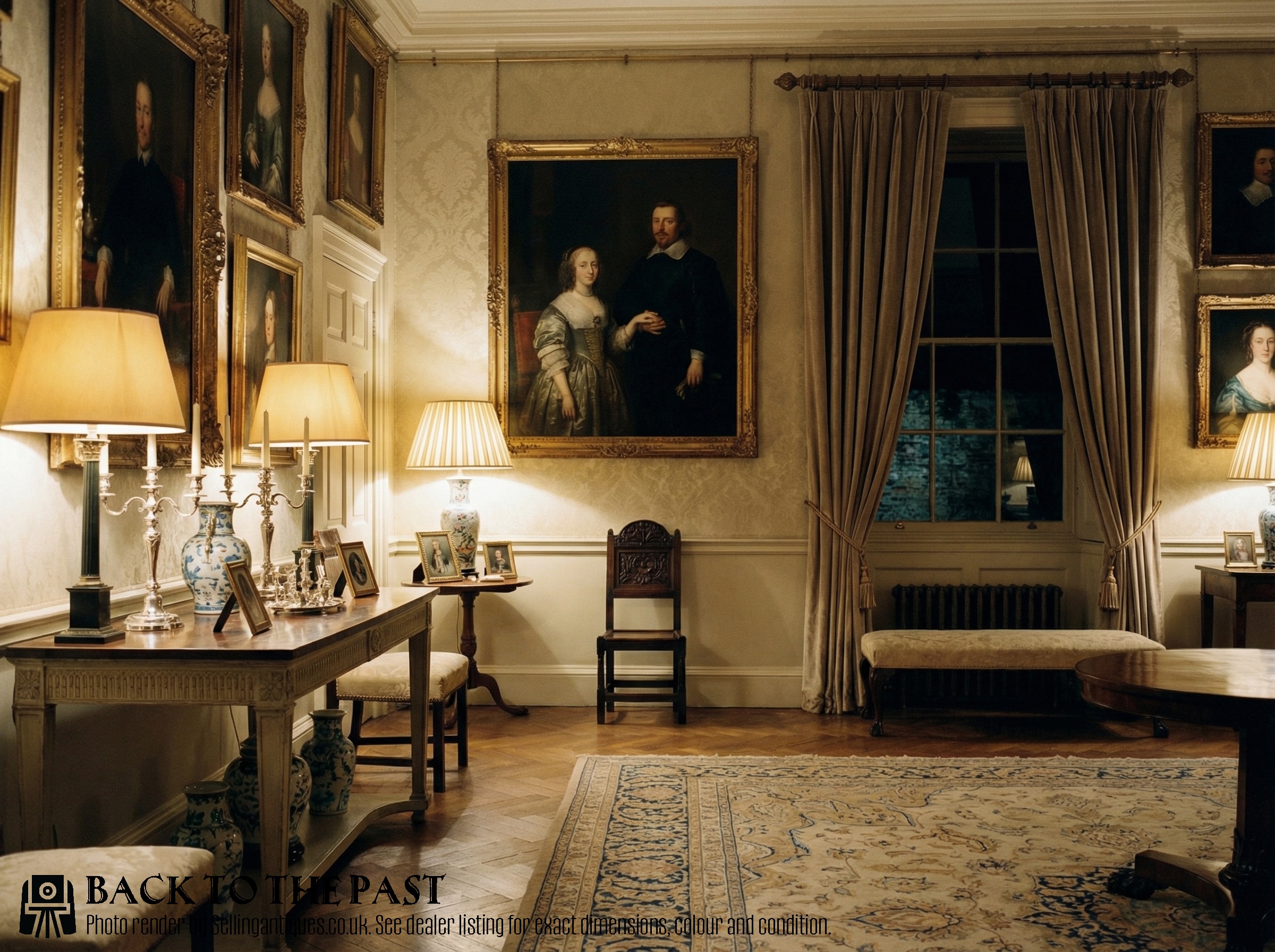
Seventeenth Century Carved Chair
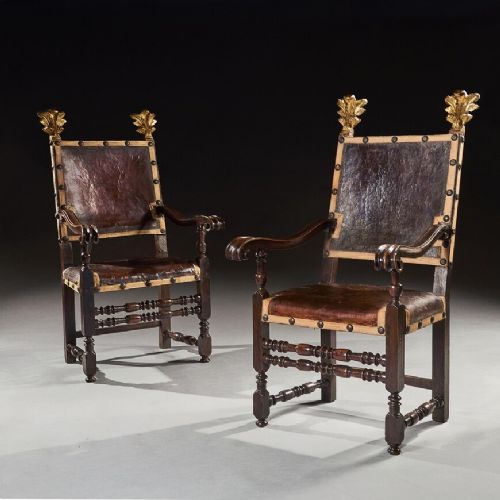
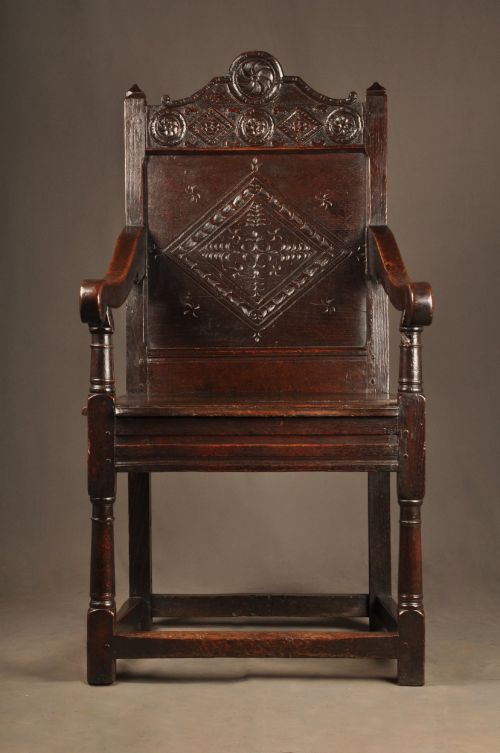
A seventeenth century carved chair encompasses sturdy joined items built primarily from oak, ranging from panel-backed wainscot armchairs to smaller backstools and side chairs. Regional English examples from Lancashire, Yorkshire, Wales and Cheshire appear alongside Italian Baroque parcel-gilt walnut armchairs and later revival pieces made in the nineteenth and early twentieth centuries.
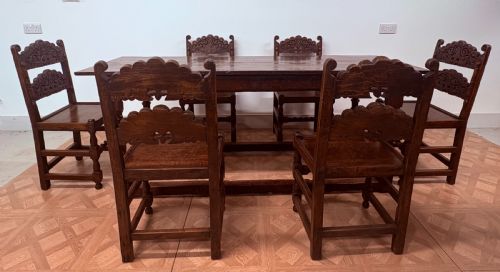
The buyer will most frequently encounter solid oak wainscot chairs and backstools originating from the seventeenth century or constructed in later revival periods such as the Jacobean and Tudor revivals. These seating forms often display carved decoration along the top rail and solid panel backs intended for domestic halls and parlours.
Materials and Construction
Makers utilised solid oak and walnut for the primary framework, employing mortise and tenon joinery secured with wooden pins rather than modern metal fasteners. Certain examples incorporate applied decorative elements, brass mounts, or carved details executed directly into the dense timber.
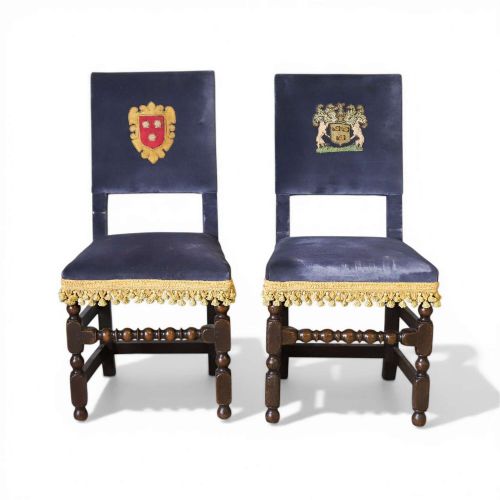
Upholstery materials seen on these chairs include leather, cane, and velvet, sometimes held in place with decorative brass nails. Surface finishes rely on traditional methods that develop deep patination and colour across the grain over centuries of handling.
Materials recorded across the inventory include solid oak, walnut, leather, cane, velvet, gold leaf, and brass.
Distinction in Craft
The depth, crispness and ambition of the carved ornament distinguish finer examples from simpler provincial work, particularly where regional motifs or heraldic crests appear. Relief carving on the crest rail and back panel requires skilled hand execution to maintain proportion and symmetry.
Structural integrity depends on the original tightness of the joinery and the extent of timber survival in weight-bearing legs and stretchers. Examples that retain their early surface patination and uncompromised structural joins hold greater aesthetic authority than those with heavy timber replacement.
Waring and Gillow
The Seventeenth Century Carved Chair Glossary
- Wainscot chair
- A heavy wooden armchair constructed with panelled backboards and solid timber arms, common in domestic interiors from the period. The term originally referred to imported high-grade oak boards used for panelling.
- Backstool
- An early form of chair without arms, serving as a precursor to the modern dining chair. These items typically feature a tall narrow back and a joined wooden seat.
- Joined oak
- Furniture constructed using interlocking mortise and tenon joints secured by wooden dowels. This technique replaced earlier board-construction methods and provided rigid structural strength.
- Cromwellian
- A utilitarian style of furniture associated with the mid-seventeenth century, characterised by straight lines and leather upholstery fixed with brass studs. Decoration during this period remains restrained compared to earlier Jacobean work.
Seventeenth Century Carved Chair: Frequently Asked Questions
How do I spot a later revival chair?
Later nineteenth and early twentieth century revival pieces often display machine-sawn timber marks, lighter wood tones, and looser joint construction compared to seventeenth-century originals. Examining the underside and the wear patterns around the footings reveals the true age of the timber.
Cabinetmakers working during the Jacobean revival periods copied earlier forms accurately, meaning surface patination and tool marks provide the most reliable guide to date.
What is the difference between a wainscot chair and a backstool?
A wainscot chair is an imposing armchair featuring solid wooden arms and a panelled back designed for the head of a household table. These substantial items occupy significant floor space and were symbols of status.
A backstool is simply an upholstered or panel-backed chair built without arms, functioning much like a modern side or dining chair. They allowed easier movement around crowded seventeenth-century rooms.
How were these chairs used originally?
These seating forms served primarily as prestige items for the master of the house or important guests in domestic halls, courtrooms, and parlours. Most household members would have sat on benches, settles, or simpler joint stools while wainscot chairs remained fixed in position.
Over time, dining sets and side chairs became more common as domestic spaces evolved away from the single high-status communal hall towards specialised rooms.
How do I care for antique oak furniture?
Maintain a stable indoor humidity and avoid placing solid oak furniture near direct heat sources or strong sunlight, which can dry out the historic timber. Gentle dusting with a dry cloth preserves the existing wax finish and natural surface patination.
Avoid modern liquid polishes or silicone sprays, as these substances penetrate the open grain of old oak and attract dust over time.