
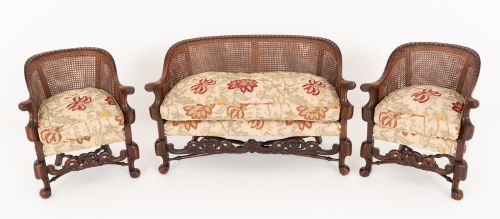


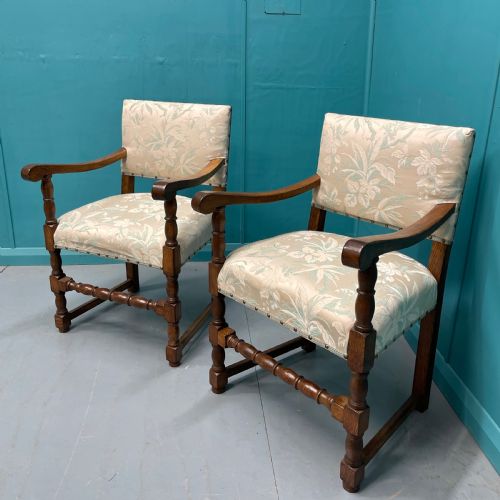


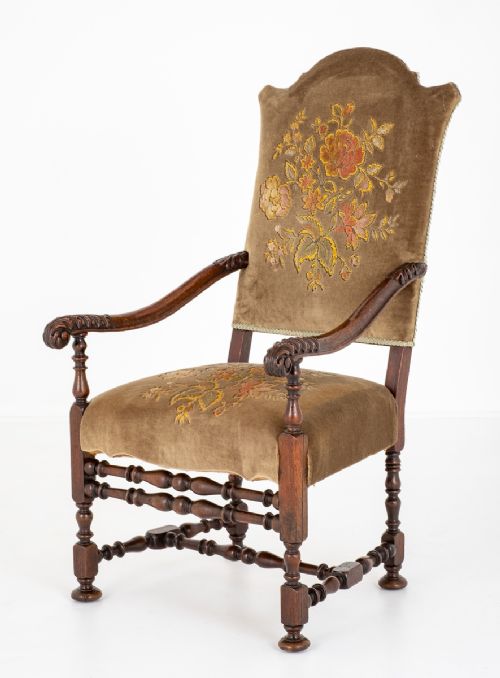

Floral Carved Oak Chair
A floral carved oak chair brings heavy timber and botanical relief together in a seat built to last centuries.
Floral Carved Oak Chair
A floral carved oak chair brings together sturdy timber construction and botanical ornamentation, ranging from seventeenth century vernacular pieces to nineteenth century revival designs. Buyers exploring this category encounter side chairs, hall chairs, and substantial armchairs bearing leaf and flower motifs carved directly into the wood.
The selections available span multiple eras, with Victorian Gothic revivals and early twentieth century English styles appearing frequently alongside seventeenth century origins. Forms vary from highback dining chairs and low spinning chairs to broad throne chairs and pairs of occasional armchairs.
Regional British craftsmanship emerges across the pieces, notably through Welsh spinning chairs and North Wales side chairs. These diverse seating options share a reliance on solid oak framing enriched by floral carving and occasional upholstery.
Materials and construction methods
Carpenters built these chairs primarily using solid oak, often pairing the dense timber with secondary woods or supporting frames with brass hardware. The structural framework relies on traditional joinery techniques suited to heavy wood.
Carvers applied chisel work directly to the oak panels and crest rails to produce floral rosettes, leaf patterns, and grotesque masks such as green men. Upholstery materials including tapestry fabric, velvet, and woven cane were later added to seats and backrests.
Listings span eight distinct eras, running from seventeenth century vernacular pieces through Victorian revivals up to interwar British production.
Assessing craftsmanship and condition
Quality in these chairs rests upon the crispness and depth of the timber carving, where deep relief work displays greater artisan skill than shallow stampings. The choice of oak grain and the integrity of the original joinery further distinguish finer examples.
Proportion and structural balance separate standard production items from master-carved regional pieces. The preservation of original upholstery fabrics or harmonious period replacements also influences the character of each seat.
The Floral Carved Oak Chair Glossary
- Jacobean Revival
- A nineteenth century style mimicking seventeenth century British furniture. It heavily utilises dark oak and deep geometric or floral carving.
- Green Man
- A sculptural motif representing a human face surrounded by or sprouting from foliage. It frequently peers from Victorian oak chair crests.
- Spinning Chair
- A low seat traditionally used by women for working at a spinning wheel. These pieces often feature narrow backrests heavily decorated with carved floral designs.
- Carolean Style
- A late seventeenth century aesthetic noted for rich ornamentation and scrolled woodwork. Chairs from this movement display elaborate crest rails and turned legs.
- Hall Chair
- A rigid wooden seat traditionally placed in a large entrance hallway. These pieces often lack upholstery and feature prominent carved heraldry or botanical motifs.
Floral Carved Oak Chair: Frequently Asked Questions
How do I date a carved oak chair?
Examine the tool marks, construction joints, and wood patination to determine the manufacturing period. Older seventeenth century pieces display hand-riven timber and pegged mortise and tenon joints, whereas Victorian revivals show nineteenth century machine assistance.
Compare the carving style and hardware against known historical periods. Stylistic revivals often blend Jacobean motifs with nineteenth century upholstery techniques, which helps separate original antiques from later copies.
Were these chairs used for dining?
Many oak chairs serve as dining seating, particularly highback sets and side chairs designed for formal tables. Their sturdy frames withstand regular daily use around a dining room table.
Other variants, such as low spinning chairs, armchairs, and hall chairs, served different domestic functions. Hall chairs remained in entranceways, while low chairs accommodated fireside tasks.
How do I care for antique oak?
Maintain antique oak by placing it away from direct heat sources and strong sunlight, which cause the timber to split and fade. Apply a quality beeswax periodically to nourish the dry wood.
Avoid using modern liquid polishes that leave silicone buildup on the antique surface. Gentle dusting with a dry, soft cloth preserves the natural grain and historic patination.
Can I reupholster a historic chair?
Upholstery on antique chairs is often replaced to restore structural support and match modern interiors. Traditional materials like horsehair and hessian can be retained during restoration to preserve authenticity.
Consult a restorer who understands period textiles such as tapestry fabric or velvet. Retaining original fabric scraps beneath new upholstery helps maintain the historical record of the piece.