




English Oak Open Armchair
An english oak open armchair brings centuries of sturdy British joinery straight into a modern room.
English Oak Open Armchair
When you search for an english oak open armchair, you find sturdy seating built from native British timber across several centuries. The selections span from early seventeenth-century wainscot forms through Victorian revivals and later vernacular pieces.
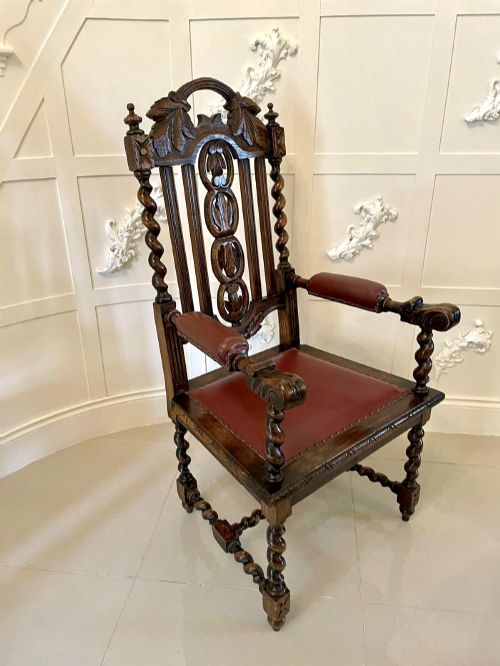
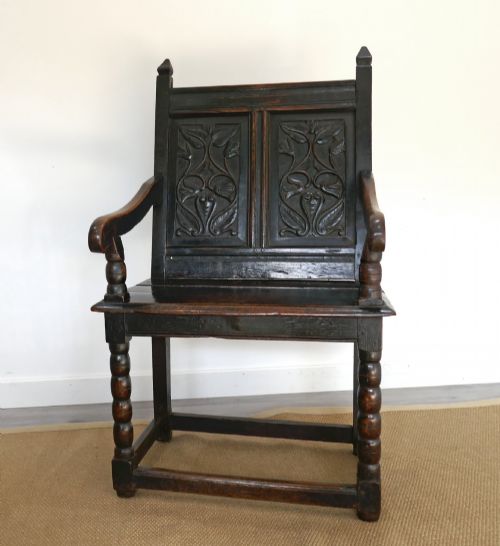
The pieces on this page lean heavily toward seventeenth-century wainscot chairs and nineteenth-century country revivals. You encounter heavy master chairs, spindlebacks, bobbin turns, and barley twist frames built for everyday utility.
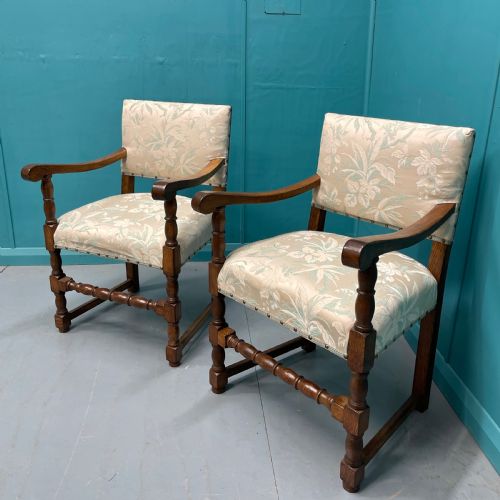
Most examples rely on solid oak construction, sometimes partnered with ash or elm for secondary woods. Upholstery appears in later items, using fabric or velvet secured with metal studs alongside cane seating.
How they were made
The construction relies on solid oak frames joined with traditional methods suited to heavy timbers. Turnings such as bobbin and barley twist shapes provide structural support alongside decorative detail.
Seating areas range from solid timber panels to woven cane inserts and upholstered pads covered in velvet or fabric. Metal studs frequently secure the edges of upholstered elements on Victorian and revival examples.
The listings on this page span three centuries of English chairmaking, moving from seventeenth-century wainscot forms through nineteenth-century revivals up to nineteen-twenty.
What varies in quality
Quality rests upon the proportion of original timber and the integrity of the structural joinery. Early seventeenth-century examples derive their standing from period authenticity and untouched surface patination.
Later nineteenth-century revivals depend on the crispness of the turnings and the depth of the carved details. The choice of secondary woods and the quality of the upholstery integration also distinguish finer specimens.
The English Oak Open Armchair Glossary
- Wainscot chair
- A heavy wooden armchair from the sixteenth or seventeenth century, constructed with panelled backs and solid oak seats. They take their name from wainscot oak imported for fine panelling.
- Bobbin turn
- A style of woodturning resembling a string of beads or bobbins, popular in seventeenth-century furniture frames. Craftsmen shaped these on a lathe to create rhythmic, decorative supports.
- Barley twist
- A spiral column resembling a twisted rope, commonly seen on seventeenth-century and Victorian revival furniture legs and stretchers. This technique requires precise hand-carving or lathe work.
- Vernacular furniture
- Everyday objects made by local craftsmen using regional materials and traditional local styles rather than high-fashion metropolitan designs. These pieces often incorporate mixed native woods like elm and ash.
English Oak Open Armchair: Frequently Asked Questions
What is a wainscot chair?
A wainscot chair is a heavy wooden armchair built primarily during the seventeenth century with panelled backs and solid timber seats. They represent some of the earliest seating forms found in domestic English interiors.
These pieces were substantial investments for households of the period, often serving as master seats near the hearth. Their rigid construction relies on pegged mortise and tenon joints rather than metal fixings.
How do I date an oak armchair?
Dating relies on examining the joinery methods, tool marks, and overall proportions relative to known stylistic periods. Seventeenth-century examples show hand-riven timber surfaces and pegged joints, whereas nineteenth-century revivals often display machine-sawn components.
Looking underneath and behind the piece reveals the true age of the timber and construction techniques. Changes in regional building fashions help narrow down the decade of manufacture.
Are these chairs comfortable?
Early oak armchairs were designed for upright posture rather than lounging, featuring rigid timber backs and seats. Later nineteenth-century revival models often incorporate upholstery, cushions, or cane work for added comfort.
Adding loose squab cushions helps soften the firm wooden seats of seventeenth-century wainscot chairs for modern daily use. The open arm design allows plenty of freedom of movement compared to enclosed winged styles.
Where were these chairs made?
These chairs originated across various English regions, with specific provincial styles developing in areas like Lancashire, Cheshire, and the West Country. Local carpenters used whatever native hardwoods were available nearby.
Regional vernacular traditions dictated the turning patterns and decorative carvings unique to each workshop. This geographic diversity gives British country furniture its distinct regional character.