


Carolean Panel Back Chairs
Carolean panel back chairs are sturdy seating survivors offering solid timber construction and early carved detail.
Carolean Panel Back Chairs
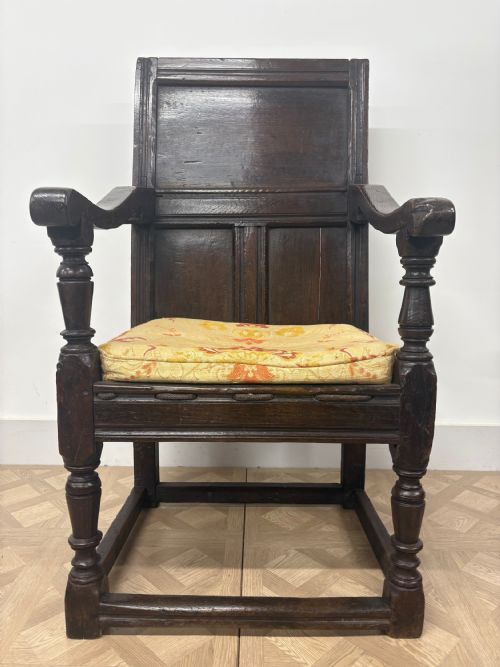
Carolean panel back chairs encompass sturdy timber seating forms like wainscot armchairs, side chairs, and settees built from solid oak and walnut. When searching for carolean panel back chairs, buyers encounter pieces spanning the seventeenth century alongside later revival interpretations from the nineteenth and twentieth centuries.
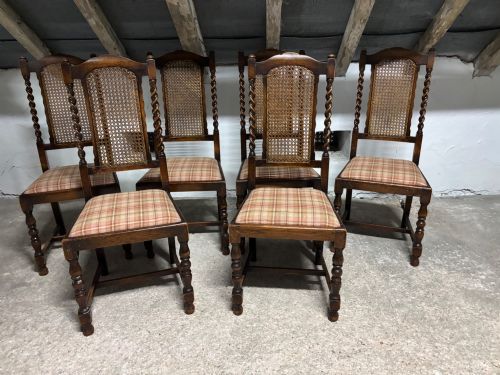
The selections on this page feature regional British variants such as Lancashire chairs and caned back dining chairs. These items range from armchairs to dining chairs and benches, reflecting both seventeenth-century origins and subsequent revival periods.
How they were made
Construction relies heavily on solid oak and walnut, fashioned into panel backs, wainscot frames, and caned seating sections. Makers utilised traditional joinery techniques to assemble heavy timber frames, often incorporating woven cane panels.
Surface treatment and structural shaping included carved wooden panels and upright supports. These methods produced robust frames designed for daily domestic utility across centuries.
Materials recorded across the available inventory include solid oak, walnut, cane, and fabric.
What varies in quality
The standard of craftsmanship shows in the depth and crispness of the carved panel details and the tightness of the timber joints. Early seventeenth-century examples display hand-worked joinery, whereas revival pieces from later centuries exhibit alternative mechanical standards.
Material selection dictates the overall presence, with dense solid oak contrasting against lighter walnut or integrated cane work. Preservation of original timber surfaces and structural integrity marks the distinction between ordinary items and finer survivals.
The Carolean Panel Back Chairs Glossary
- Wainscot chair
- A heavy wooden armchair characterised by a solid panelled back and wooden seat, typical of early joinery. These pieces often feature carved details on the upper crest.
- Lancashire chair
- A regional seventeenth-century chair type originating from the northwest of England. They are known for sturdy proportions and traditional framing methods.
- Carolean revival
- A nineteenth and twentieth century design movement that reinterpreted seventeenth-century court aesthetics. Makers during this phase produced pieces echoing earlier styles.
- Cane
- Woven rattan material utilised for chair back inserts and seats. It provides a lighter alternative to solid timber panels.
Carolean Panel Back Chairs: Frequently Asked Questions
What defines a carolean panel back chair?
These pieces are defined by solid timber construction, notably featuring wooden panelled backs within sturdy oak or walnut frames.
They reflect seventeenth-century domestic forms alongside later revival periods.
How do original seventeenth-century pieces differ from revivals?
Original seventeenth-century examples display period joinery techniques and authentic age-related wear on the timber surfaces.
Revival pieces, dating from the nineteenth and twentieth centuries, replicate these historic styles using manufacturing methods of their own era.
Where were these chairs used in a home?
Historically, wainscot armchairs and side chairs served primary reception and dining functions in substantial houses.
Today, they function well as accent seating in studies, hallways, or living rooms.
What materials appear in these listings?
The primary material is solid oak, supplemented by walnut, cane inserts, and occasional fabric elements.
Construction focuses on heavy timber framing rather than veneered surfaces.