


Lancashire Oak Chairs
Lancashire oak chairs bring sturdy regional craftsmanship into a room, offering honest vernacular seating built to last generations.
Lancashire Oak Chairs
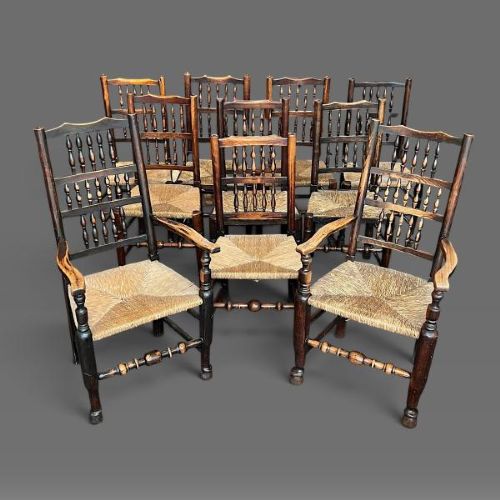
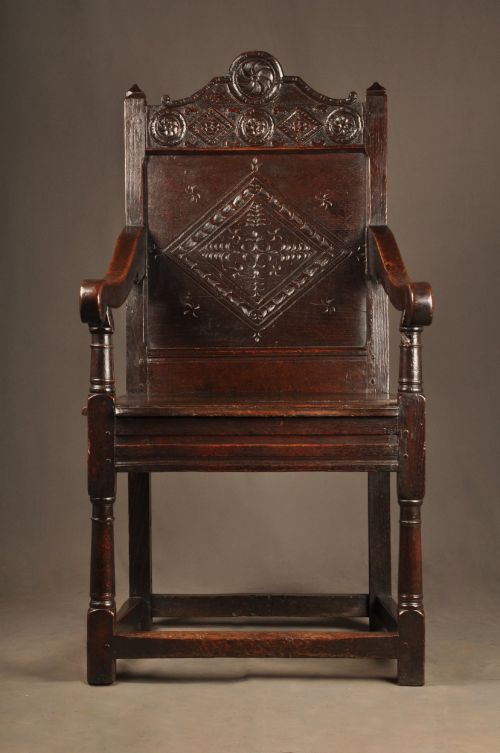
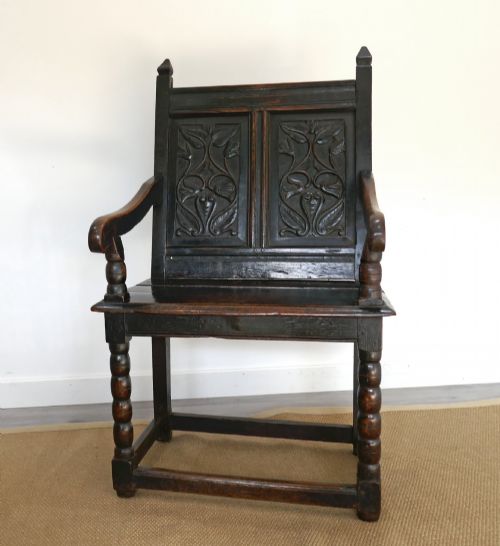
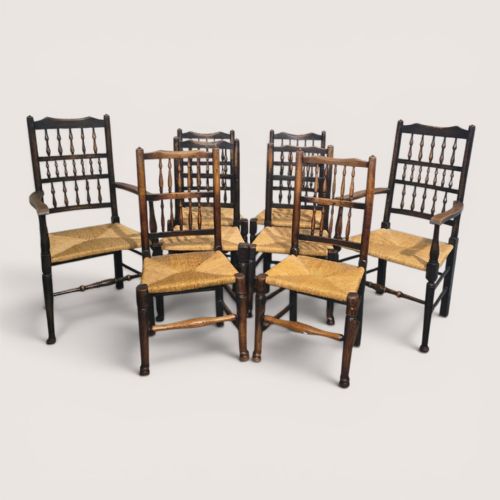
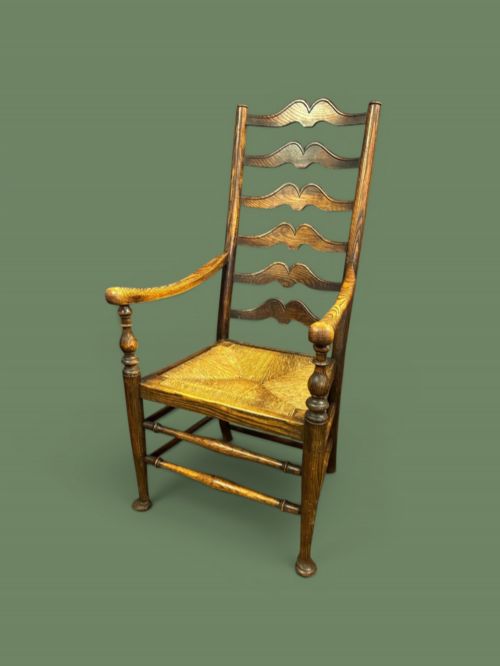
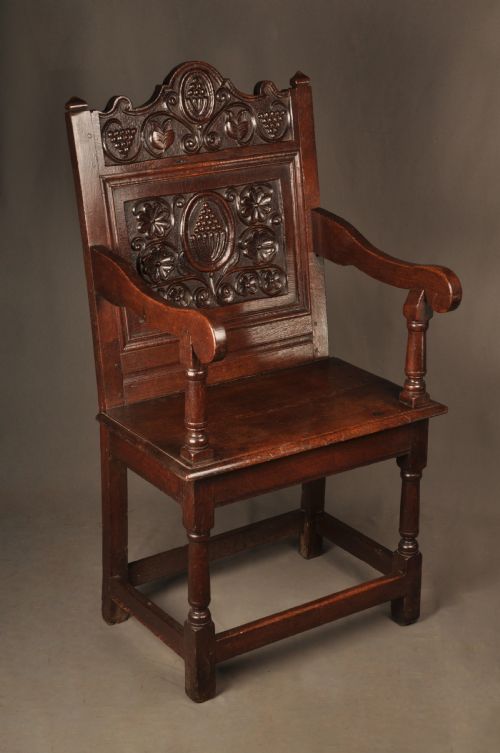
Lancashire oak chairs represent a distinct tradition of English country furniture, spanning robust seventeenth-century wainscot designs to later ladderback and spindleback forms. Buyers searching for lancashire oak chairs often encounter tall backs, rush or timber seats, and sturdy stretchers designed for daily domestic use.
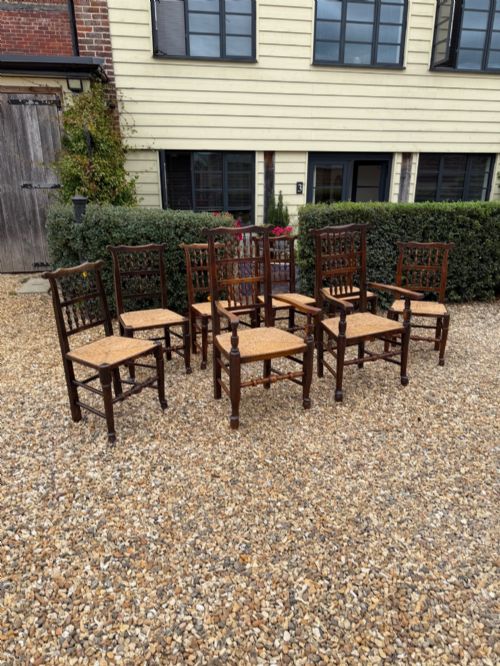
The pieces appearing on this page range from early solid wainscot armchairs to later sets of elm and ash dining chairs influenced by regional vernacular styles. Seventeenth-century examples rely heavily on heavy oak framing, while nineteenth- and twentieth-century interpretations often incorporate lighter woods like elm and ash alongside traditional rush seating.
How they were made
Makers constructed these chairs primarily using native timber, combining sturdy oak frames with lighter woods such as elm and ash for seats and spindles. Joinery relied on traditional pegged mortise and tenon joints to withstand heavy daily use in kitchens and dining rooms.
Seating areas frequently utilised woven rush supported by strong wooden rungs and double stretchers for added rigidity. Turned spindles and ladder backs were shaped using traditional lathes and hand tools, reflecting local workshop practices across the centuries.
Listings feature periods ranging from the seventeenth century through the Victorian era, utilising oak, elm, ash, and rush.
What varies in quality
Quality in these chairs rests upon the integrity of the timber and the retention of original structural components rather than surface finish alone. Early seventeenth-century pieces display superior joinery and denser heartwood, whereas later vernacular sets derive value from matching uniformity and original rush work.
The degree of historical wear, stability in the frame, and untouched surface patination separate standard regional examples from those of superior craftsmanship. Original joined elements and minimal replacement timber maintain the historical authenticity sought by collectors.
The Lancashire Oak Chairs Glossary
- Wainscot
- A heavy wooden armchair with a paneled back, common in seventeenth-century English interiors. These early forms provide substantial seating supported by solid timber construction.
- Rush seat
- A seating surface woven from dried marsh rushes wound around the chair frame. This traditional technique provides a resilient and comfortable seat found on many regional ladderbacks.
- Spindleback
- A chair back constructed with numerous turned vertical wooden rods. This design lightened the overall weight of the seating while maintaining structural strength.
- Ladderback
- A chair back featuring horizontal arched slats between the rear upright posts. Sets of these chairs often served large farmhouse dining tables.
- Stretcher
- A horizontal wooden brace connecting the legs of a chair to increase stability. Double stretchers frequently appear on robust regional seating to prevent leg wobble.
Lancashire Oak Chairs: Frequently Asked Questions
How do I care for rush seats?
Keep rush seating away from excessive moisture and direct heat sources to prevent the natural fibres from becoming brittle.
Regular gentle dusting helps maintain the material, while occasional light conditioning can preserve older woven surfaces.
Are these chairs suitable for daily dining?
Many of these sturdy vernacular designs remain fully functional for regular household dining and seating use.
Checking frame stability and joint tightness ensures the older timber can comfortably handle everyday weight.
How can I tell seventeenth-century chairs apart from later copies?
Early pieces display authentic tool marks, pegged joinery, and heavy oak patination developed through centuries of handling.
Later Victorian or Edwardian interpretations often use lighter secondary timbers and machine-turned elements rather than hand shaping.
What is a harlequin set?
A harlequin set consists of chairs that share similar regional styles, heights, or ladderback designs without being an identical matched group.
Such sets were commonly gathered over time in country homes to accommodate large dining tables.