
Seventeenth Century Dressers
Seventeenth century dressers and related early forms are heavy timber pieces built to anchor a room with straightforward storage and strong period character.
Seventeenth Century Dressers
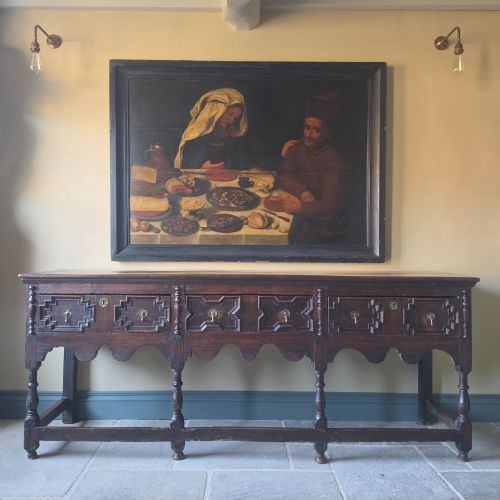
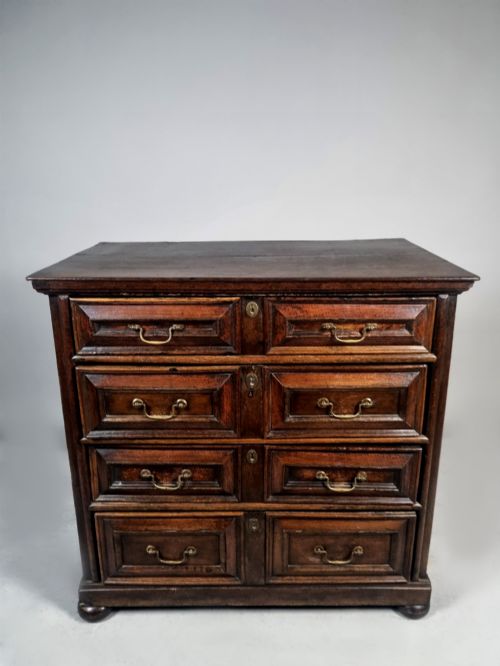
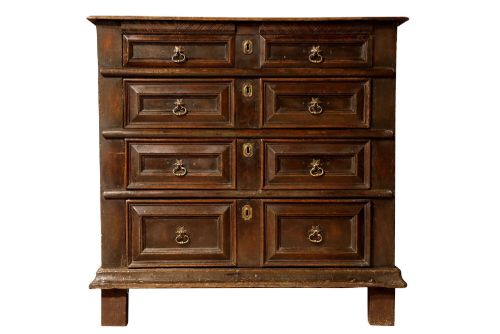
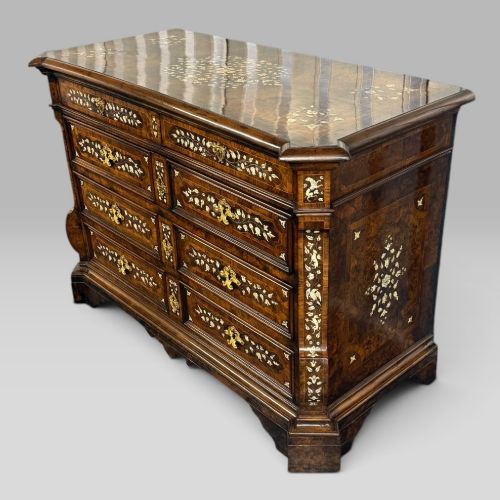
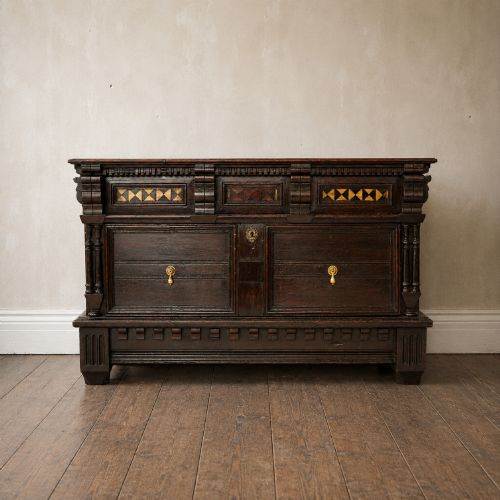
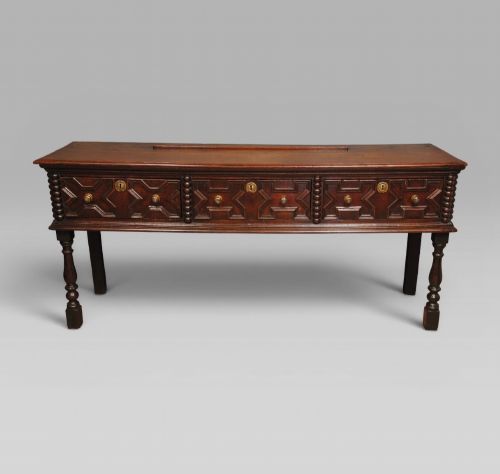
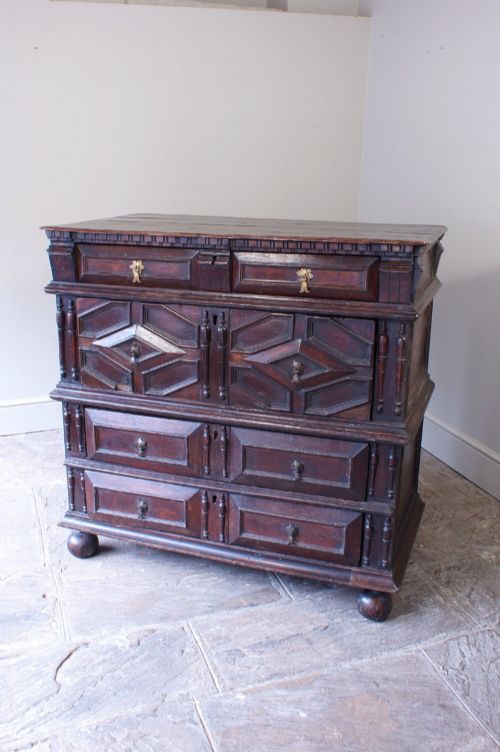
When you search for seventeenth century dressers, you encounter a selection spanning low dresser bases, serving dressers, and related oak chests of drawers bearing the hallmarks of the Jacobean, Charles II, and William and Mary periods. The pieces on this page lean heavily towards English oak furniture, alongside occasional continental items such as an Italian Baroque commode.
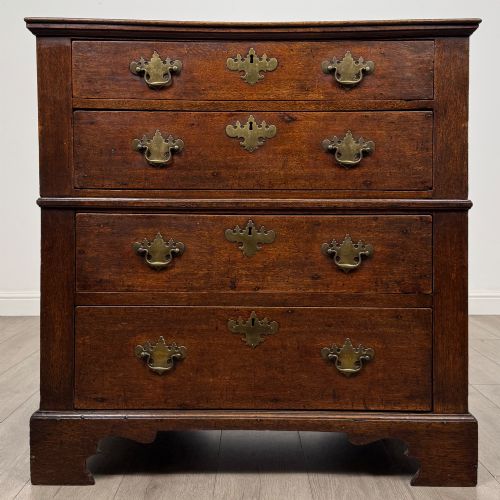
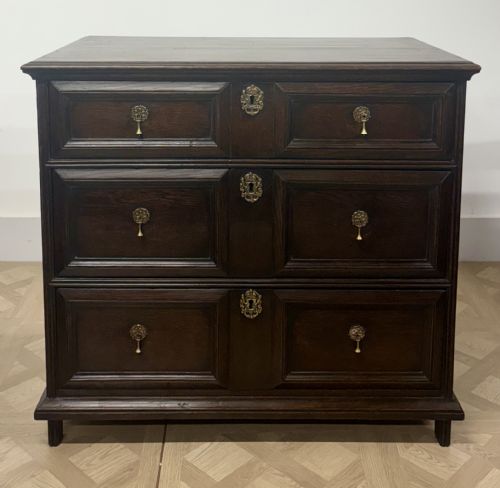
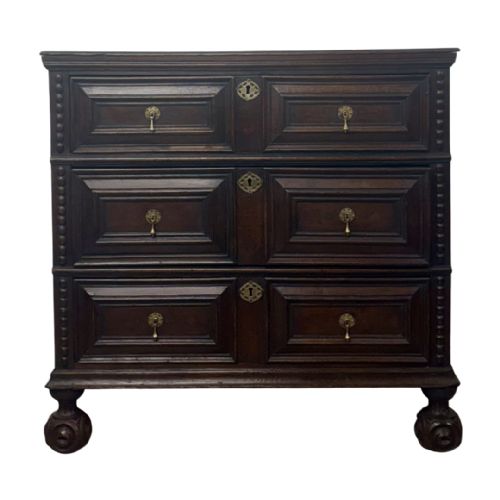
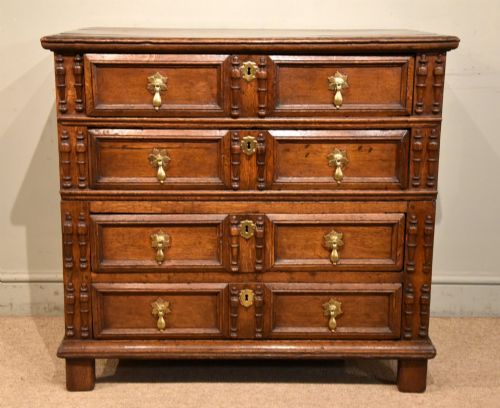
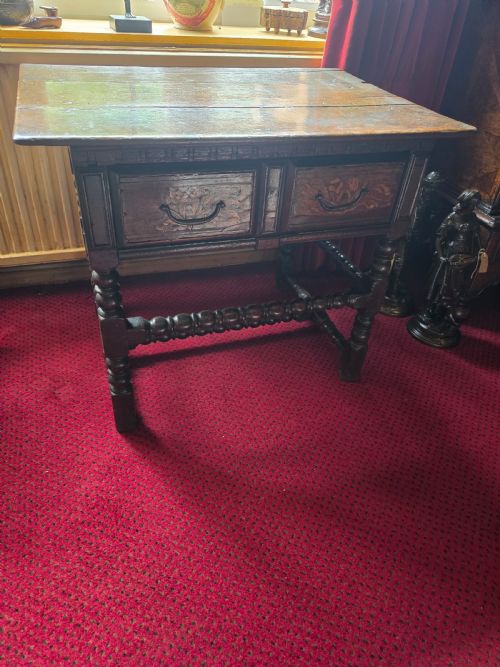
The form often presents as a low dresser base or two-part chest of drawers equipped with geometric mouldings or panelled drawer fronts. Side tables, servers, and court cupboards also appear, reflecting the domestic storage needs of the period.
How they were made
Cabinet makers relied primarily on solid oak, supplemented by fruitwood, walnut, and decorative elements like oyster veneers and wood or bone inlay. Construction involved heavy timber framing, pegged joints, and applied geometric mouldings to drawer fronts.
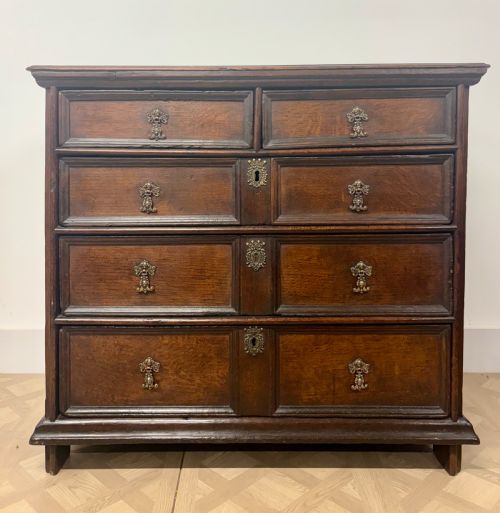
Hardware details included brass drop handles and plates fitted to original drawer configurations, while surfaces often displayed carved ornamentation or painted finishes.
Listings feature oak, walnut, fruitwood, and occasional bone inlay across pieces spanning the Jacobean to William and Mary eras.
What varies in quality
Quality rests on the integrity of the timber and the crispness of the geometric mouldings and carving. Pieces retaining their original brass hardware, uncompromised drawer linings, and genuine period surfaces sit firmly at the upper end of the range.
Later alterations, marriages of different sections, or replacement elements reduce the historical cohesion of the piece, distinguishing untouched examples from those rebuilt over subsequent centuries.
The Seventeenth Century Dressers Glossary
- Dresser base
- The lower portion of a traditional kitchen or dining room dresser, often functioning as a low sideboard with drawers and cupboards.
- Oyster veneer
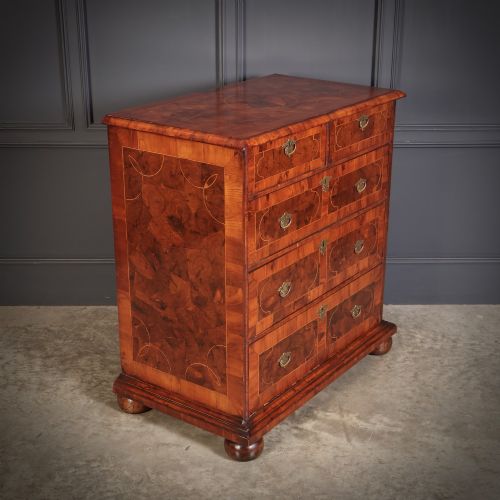
- Circular or oval slices cut across small branches of walnut or fruitwood, laid side by side to create an intricate oyster-shell pattern on drawer fronts.
- Geometric moulding
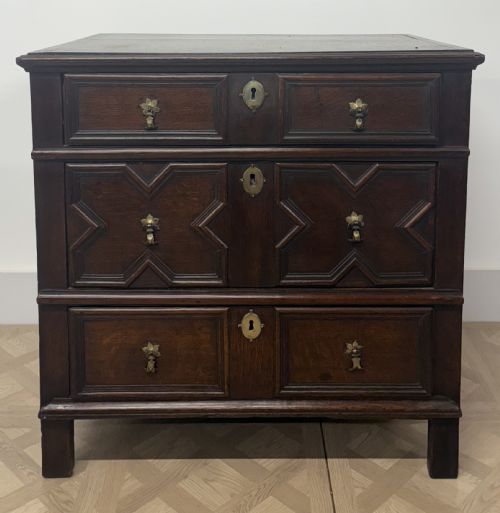
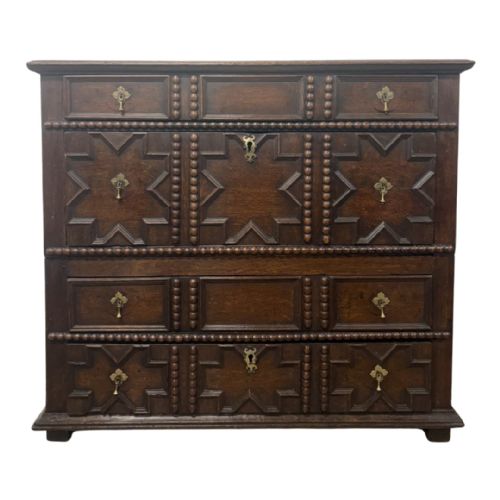
- Raised wooden mouldings arranged in rectangles, octagons, or intersecting geometric patterns on drawer fronts, typical of the Charles II period.
- Court cupboard
- A heavy timber storage cabinet with an enclosed upper section and recessed lower stage, common in seventeenth-century interiors.
- Jacobean
- The style of English furniture and architecture spanning the reign of James I, characterised by sturdy proportions and strapwork carving.
Seventeenth Century Dressers: Frequently Asked Questions
How do I identify a genuine seventeenth century piece?
Examine the construction methods, timber patination, and tool marks visible on the interior boards and drawer sides. Pegged joints and hand-riven oak indicate period manufacture rather than later revival work.
Compare the moulding profiles and hardware fixings against documented examples from the Jacobean and Charles II eras to confirm period authenticity.
What is the difference between a dresser base and a chest of drawers?
A dresser base typically sits lower and functions as a serving surface or sideboard, often featuring a configuration designed for daily domestic use in dining spaces.
A chest of drawers focuses strictly on vertical stacking of storage drawers, though seventeenth-century examples frequently share the same geometric mouldings and oak construction.
How should I care for historic oak furniture?
Keep timber pieces away from direct heat sources, radiators, and rapid humidity fluctuations to prevent the ancient oak from splitting or warping.
Apply a traditional beeswax polish sparingly and buff with a soft cloth to maintain the surface sheen without building up a heavy residue.
Did seventeenth-century makers use veneers?
Cabinet makers utilised walnut and fruitwood veneers, particularly oyster veneers cut across small branches, to create decorative patterned surfaces on drawer fronts during the later part of the century.
These delicate veneers were glued onto solid oak carcass foundations using early animal glues.