
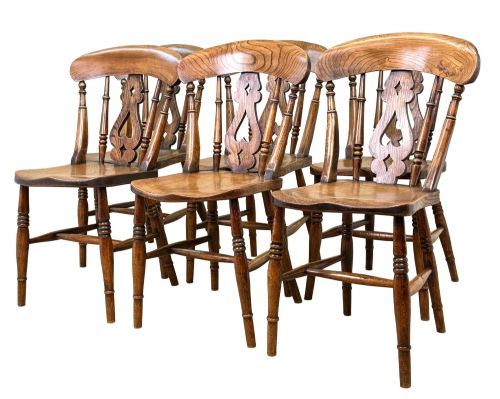
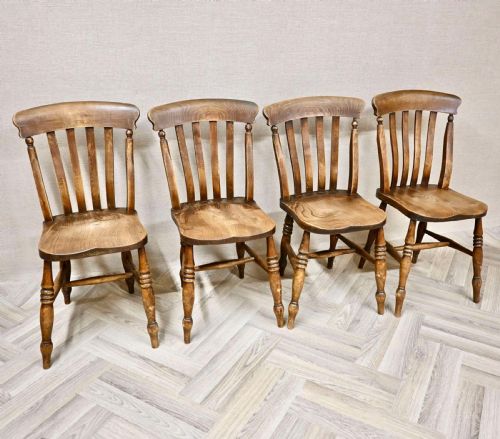
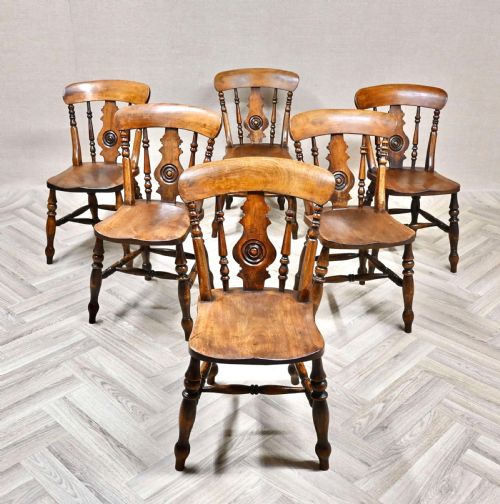

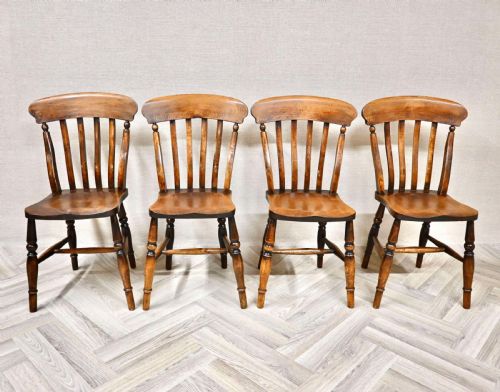
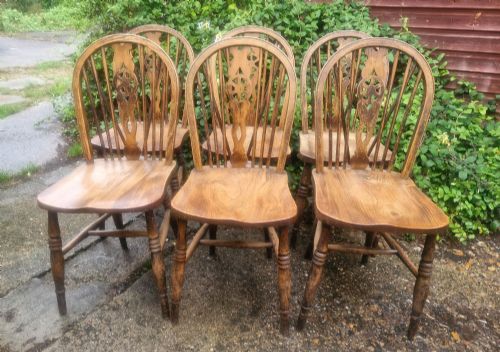
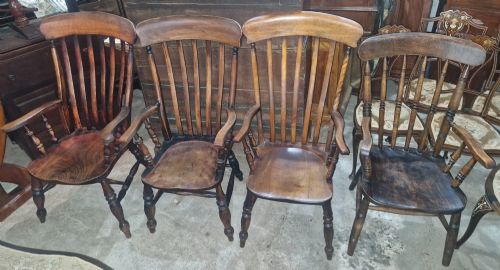
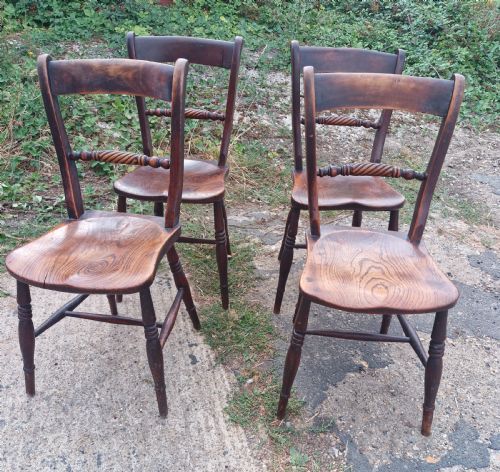
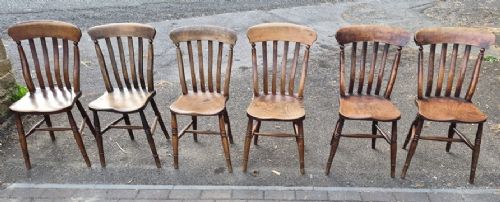
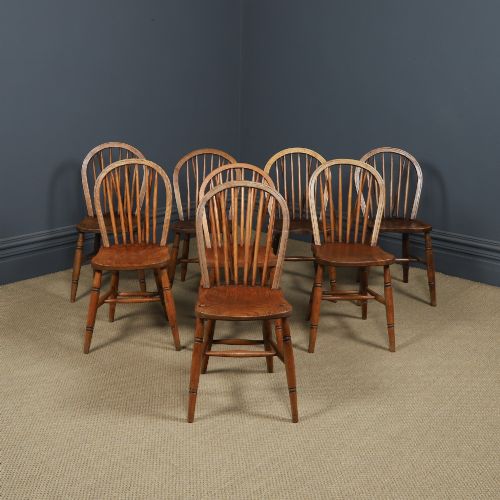
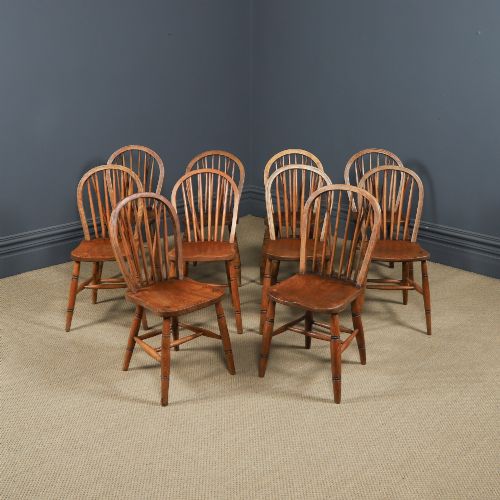
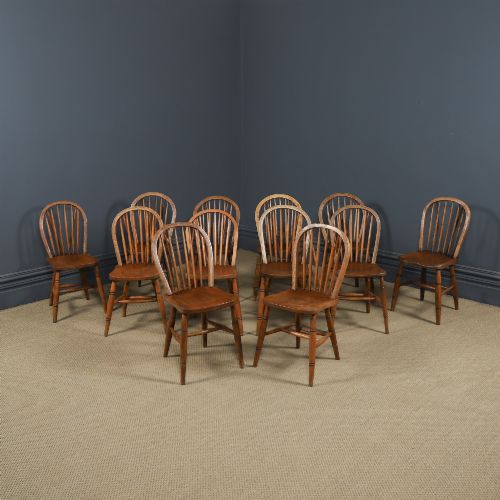
Set of Windsor Chairs
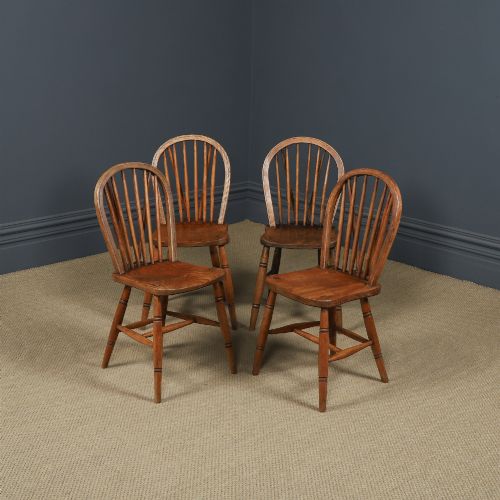
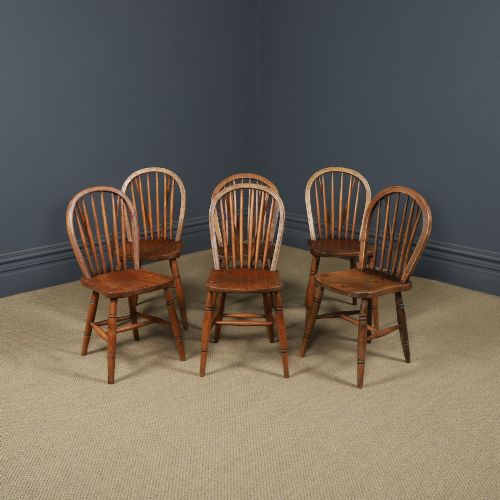
A set of windsor chairs brings enduring vernacular character to a dining space, combining sturdy timber construction with distinctive spindle backs.
Set of Windsor Chairs
A set of windsor chairs comprises multiple seating pieces united by a central wooden seat into which the legs, back spindles, and bow are separately joined. Buyers searching for a set of windsor chairs will encounter robust farmhouse and kitchen dining seating originating primarily from the nineteenth century, alongside Edwardian and early twentieth-century examples.
The regional styles vary from Thames Valley designs featuring yew and elm to general English country vernacular pieces utilising ash, beech, and fruitwood. These groupings commonly appear as matching sets or well-matched harlequin collections intended for everyday domestic use around a kitchen or dining table.
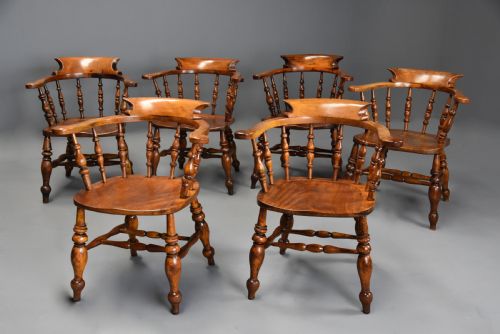
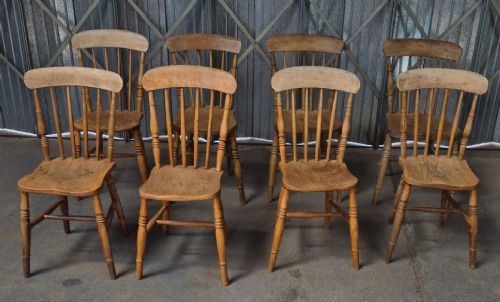
Individual pieces within a set frequently manifest specific back designs, including wheelbacks, lathbacks, hoop and stick backs, comb backs, and low backs. Armchair variations such as smokers bows and captain's chairs also feature regularly within larger dining configurations.
How They Were Made
Maker's utilised a combination of solid native timbers, pairing deeply sculpted solid elm seats with bent ash, beech, or oak for the bows and steam-bent components. Hardwoods like fruitwood and yew were selected for their grain and flexibility in regional workshops.
The traditional construction relied on wedged tenon joints where turned legs and back spindles were driven directly into bored holes within the thick wooden seat slab.
Set of Windsor Chairs Retail Price Guide 2026
Typical asking prices for set of windsor chairs among the pieces listed under this phrase on Sellingantiques today, from the lower quarter to the upper quarter. They describe what is for sale here now, not the wider market.
Some nineteenth-century examples preserve the owner's initials lightly carved beneath the seat, recording a quiet domestic history.
What Varies In Quality
The structural integrity of the individual joints and the uniformity of the timber selection govern the standard of a grouping, with matched sets commanding greater consistency than assembled harlequin groups. Richness of grain patination, particularly in yew and elm examples, distinguishes finer vernacular seating from simpler utility pieces.
The complexity of the back design and the depth of the saddle-shaped elm seat further indicate the level of craftsmanship invested by the regional maker.
The Set of Windsor Chairs Glossary
- Wheelback
- A Windsor chair back featuring a pierced wooden splat carved in the shape of a carriage wheel.
- Crinoline stretcher
- An arched under-tier stretcher connecting the legs of a chair to provide extra rigidity.
- Comb back
- A Windsor design where the vertical spindles extend up to a horizontal headrest resembling a hair comb.
- Smokers bow
- A low-backed Windsor armchair with a continuous curved arm rail supported by short spindles.
- Lathback
- A chair back constructed with flat vertical wooden slats or laths instead of cylindrical turned spindles.
Set of Windsor Chairs: Frequently Asked Questions
How do I care for antique wooden chairs?
Maintain the timber by applying natural beeswax occasionally to nourish the dry surface and preserve the historic patina. Avoid placing the seating near direct heat sources or rapid temperature shifts that can cause timber shrinkage and loosen the joints.
Keep the humidity in the room stable to protect the historic glue and wedged tenon construction. Regular dusting with a soft cloth prevents surface grit from dulling the polished hardwood finish.
Are these chairs comfortable for daily dining?
The saddle-shaped solid timber seats are ergonomically carved to distribute weight comfortably during long periods of sitting around a table. Their sturdy braced construction provides reliable support for everyday use in busy family kitchens.
Adding loose seat pads can increase comfort while keeping the original wooden frames fully visible. The generous proportions of nineteenth-century armchairs offer a particularly relaxed seating posture.
What is a harlequin dining set?
A harlequin set is a collection of chairs that share a common style, period, and material but display subtle individual variations in turning or back design. These groupings reflect how domestic seating was historically acquired and gathered over time rather than purchased in one factory batch.
Such sets offer a charming, organic look around a farmhouse table without sacrificing visual harmony. Each chair retains its own distinct character while contributing to the overall dining arrangement.
How can I tell the age of these chairs?
Dating relies on observing the tooling marks, timber species, assembly methods, and the wear patterns accumulated on the seat and foot rails over generations. Eighteenth-century and early nineteenth-century examples often feature more generous proportions and specific regional turning styles compared to later revival pieces.
Examining the underside of the solid elm seat reveals the hand-augered holes and wedge fixings characteristic of period craftsmanship. Maker's stamps or regional construction traits also help narrow down the manufacturing decade.