


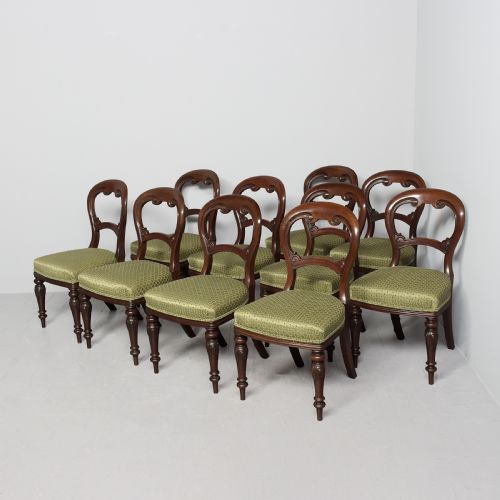
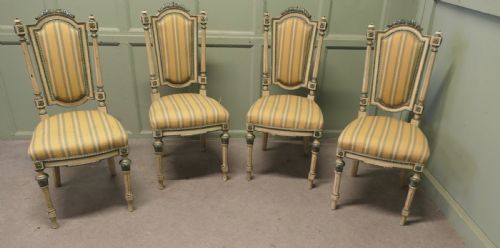
Set of Salon Chairs
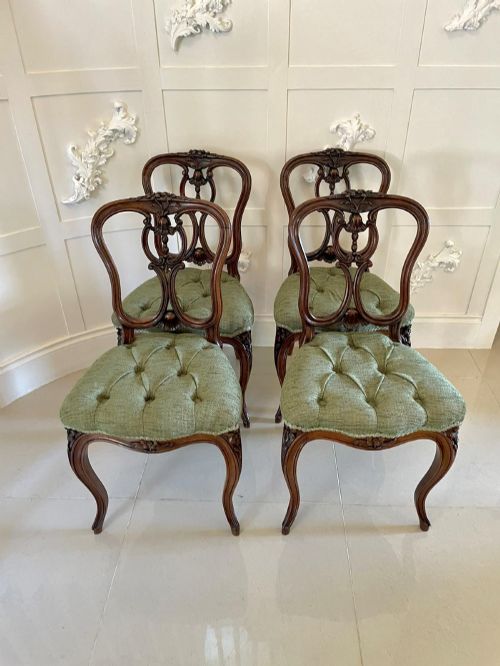
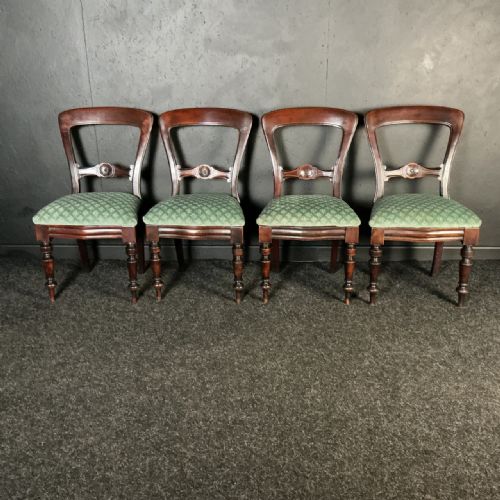
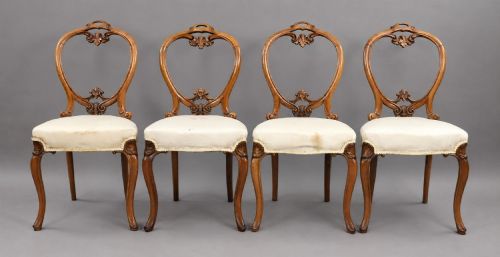
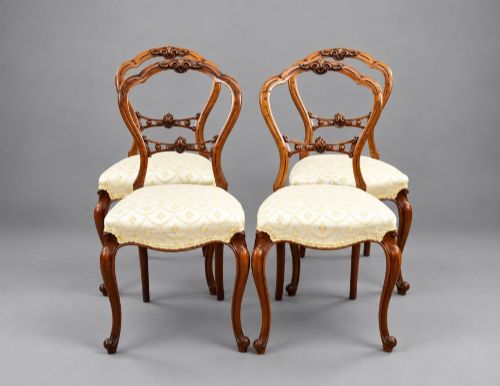
A set of salon chairs brings formal reception rooms of the nineteenth and early twentieth centuries into focus through matching seating.
Set of Salon Chairs
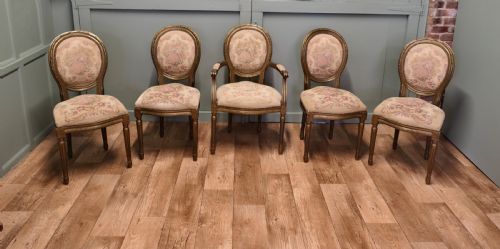
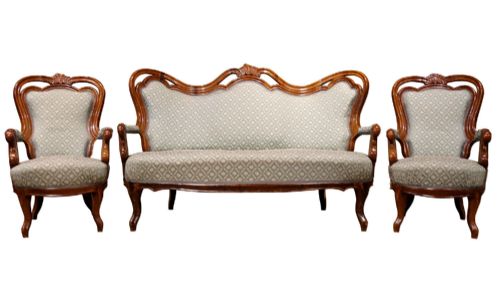
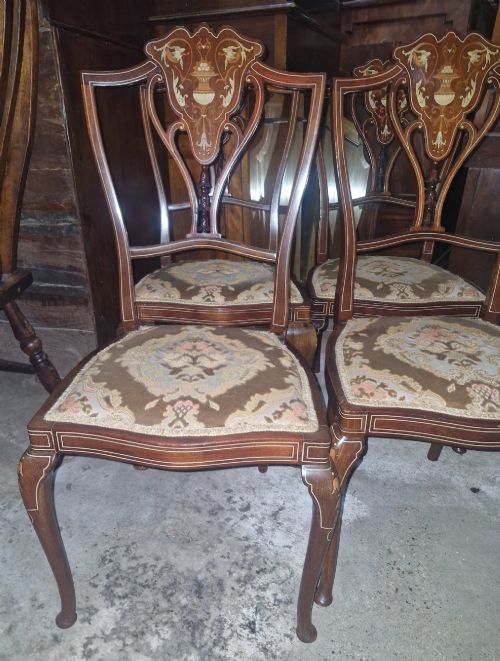
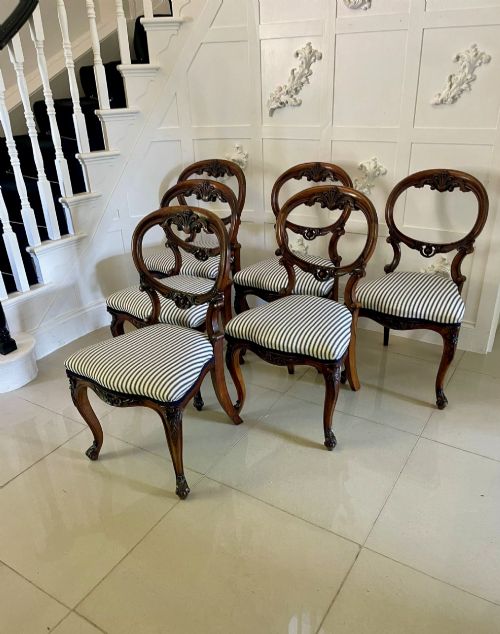
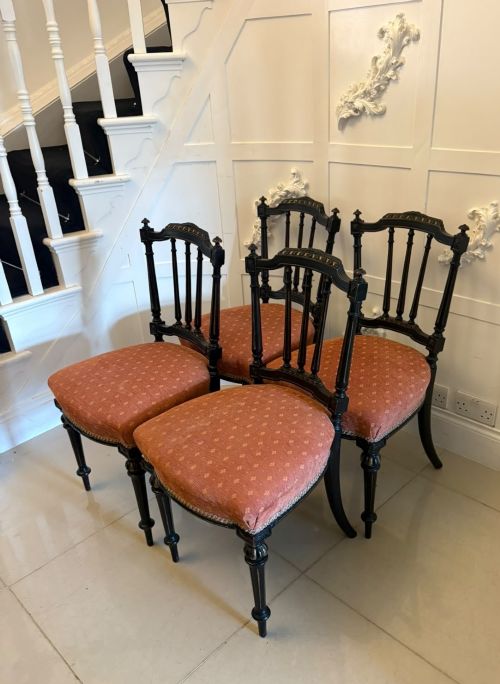
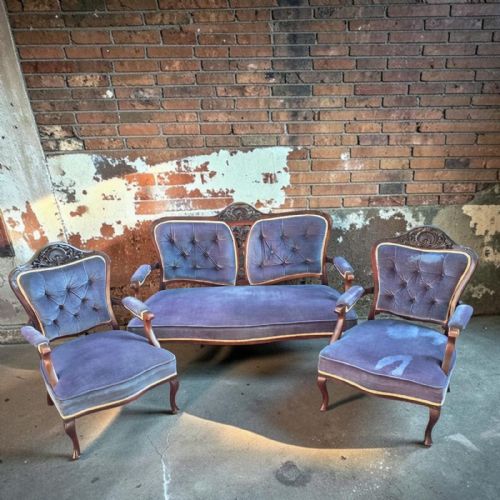
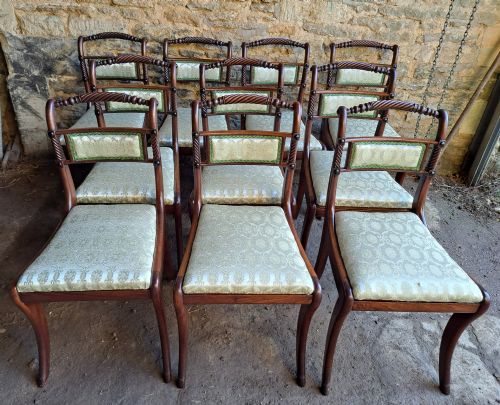
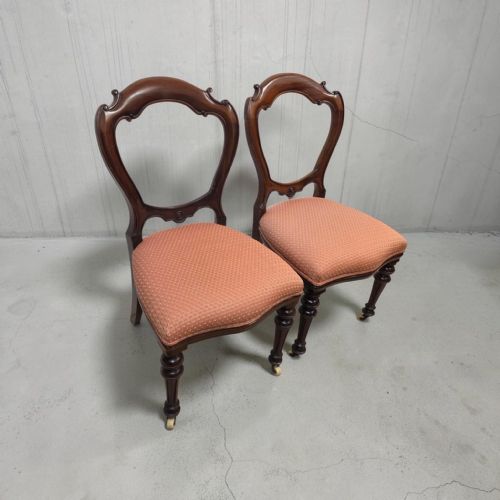
The most common versions met on this page include sets of four Victorian walnut balloon back chairs and Edwardian inlaid mahogany side chairs. Alongside individual sets, larger salon and parlour suites appear, incorporating sofas and armchairs sharing identical timbers and decorative motifs.
What varies in quality
The distinction between standard commercial seating and exhibition quality pieces lies in the crispness of the timber carving and the depth of the joinery. Finer sets display hand-carved ornamentation integrated directly into the structural grain rather than applied composition mouldings.
Materials dictate the upper tier of the range, where figured rosewood, finely matched walnut veneers, and original gilded surfaces elevate a suite. Consistency across every chair in the set, from matching wood grain to uniform upholstery profiles, marks superior manufacture.
Listings feature mahogany, walnut, rosewood, and oak frames spanning the Victorian and Edwardian eras.
The Set of Salon Chairs Glossary
- Balloon back
- A rounded, oval-shaped chair back resembling an inflated balloon, widely seen in mid-nineteenth-century Victorian walnut and mahogany seating. This form required skilled timber bending to achieve the continuous curved top rail.
- Bergère
- An enclosed armchair with upholstered sides and a low seat, typically featuring exposed wooden frames in walnut or giltwood. Originating in France, these chairs often incorporate cane work or tight fabric upholstery.
- Giltwood
- Timber coated with a thin layer of gold leaf or metallic gilt paint to simulate solid gold enrichment. This finish appeared frequently on French-influenced salon chairs and rococo revival frames.
- Marquetry
- Decorative patterns formed by fitting contrasting veneers into wooden surfaces. Craftspeople used various exotic woods to create floral or geometric motifs across chair backs and rails.
- Cabriole leg
- A furniture leg that curves outward at the knee and tapers inward toward the foot, mimicking animal limbs. This profile gained popularity during revival periods referencing eighteenth-century designs.
Set of Salon Chairs: Frequently Asked Questions
What is a salon chair?
A salon chair is a light, decorative seat designed for formal reception rooms rather than heavy daily dining use. These pieces prioritised aesthetic grace and social comfort during the Victorian and Edwardian eras.
They were typically arranged in conversation groups around a room, allowing hosts and guests to sit comfortably during gatherings.
How do I date a salon chair?
Dating relies on observing the prevailing timber choices, structural styles, and decorative techniques of the piece. Mid-nineteenth-century examples often feature walnut balloon backs, whereas Edwardian pieces frequently display inlaid mahogany and lighter frames.
Comparing the stylistic markers against known revival periods helps narrow the decade of manufacture.
Can I use salon chairs for dining?
Most salon chairs were built for drawing room gatherings rather than heavy dining table use. Their lighter frames and delicate carving mean they suit occasional seating or dressing rooms better.
Pairing them with a small card table or utilising them as bedroom chairs preserves their structural integrity over time.
What is the difference between a side chair and an armchair?
Side chairs lack armrests, making them compact enough to be tucked away or arranged in larger matching sets around a room. Armchairs provide structural arm supports and generally offer a wider, deeper seat for enhanced comfort.
Both forms often shared the same decorative motifs when issued together as part of a larger parlour suite.