


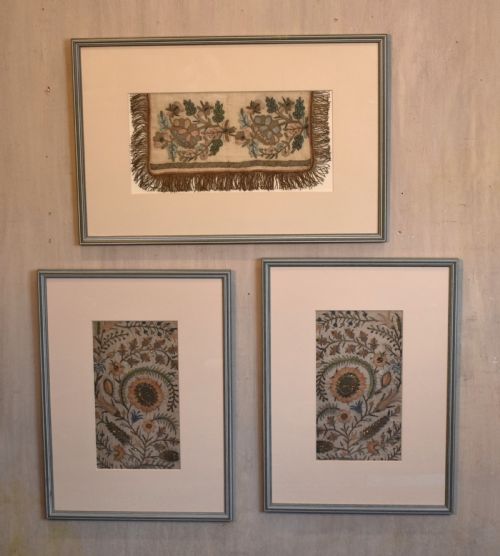


Set of Framed Botanicals
A set of framed botanicals brings natural history into a room through hand-coloured engravings, watercolours, and specimens housed in wood and glass.
Set of Framed Botanicals
A set of framed botanicals brings together groups of mounted prints, watercolours, and specimens united by their natural history subject matter. When searching for a set of framed botanicals, buyers encounter groupings that span the Georgian and Victorian periods, alongside regional works.
The configurations on this page include watercolours, gouache, engravings, and needleworks. Most examples date from the nineteenth century, framed in wood or gilt wood for wall display.
Subjects range from pure plant studies to ornithological engravings, butterfly prints, and shell studies. These wall art groupings reflect the scientific curiosity and decorative tastes of earlier centuries.
Materials and techniques
Paper forms the primary surface for these works, carrying hand-coloured engravings, pencil drawings, watercolours, and gouache. Artists and naturalists of the eighteenth and nineteenth centuries applied pigments by hand to printed outlines or painted directly onto the sheet.
Framing materials rely predominantly on wood and gilt wood to enclose the paper, textile art, or pith paintings beneath glass. This protective glazing preserves delicate watercolours, dried flora, and early needleworks from atmospheric damage over the centuries.
Object types span framed prints, wall art, botanical prints, and framed textile art across English, French, and Chinese export origins.
Assessing quality and execution
Quality in these works rests upon the precision of the original draughtsmanship and the delicacy of any hand-colouring applied to the engraving. Finer sets display crisp printed lines combined with subtle, stable watercolour pigments that retain their vibrancy without fading.
The integrity of the framing materials and the condition of the paper surface significantly influence the overall standard of a set. Well-preserved paper free from heavy foxing, paired with period wood or gilt wood frames, elevates the presentation of natural history studies.
Oliver Goldsmith·Pancrace Bessa·George Edwards·John Curtis·William Swainson
The Set of Framed Botanicals Glossary
- Engraving
- A printmaking technique where an image is incised into a metal plate to hold ink. These plates produced the sharp, detailed outlines found in many historical natural history illustrations.
- Gouache
- An opaque water-based paint containing a binding agent and pigment. It provides denser coverage than watercolour, allowing artists to add solid highlights to botanical studies.
- Pith painting
- Artwork created on thin sheets of vegetable pith, particularly associated with Chinese export art. The porous material absorbs watercolours to produce a velvety surface texture.
- Foxing
- Brown age spots that develop on older paper due to chemical reactions over time. The presence and density of these spots affect the visual clarity of prints and drawings.
- Needlework
- Decorative stitching executed with thread on a fabric ground. Framed examples from earlier centuries often depict floral or pastoral motifs.
Set of Framed Botanicals: Frequently Asked Questions
What periods do these pieces come from?
The listings on this page span the Georgian and Victorian eras, with the majority originating in the nineteenth century. Production dates stretch from the eighteenth century through to the mid-nineteenth century.
Specific groupings reflect the aesthetic and scientific interests of these periods, ranging from early needleworks to detailed natural history engravings.
How were these botanical sets originally displayed?
These works were produced as plates for bound volumes, scientific folios, or standalone art before being gathered and framed for wall display. Collectors and decorators mounted them behind glass in wood and gilt wood frames to protect the paper and textiles.
Today, they function as wall art that continues the historical tradition of displaying natural history specimens in domestic interiors.
What materials are used in the frames?
The framing materials recorded in the evidence consist primarily of wood and gilt wood. These frames enclose glass that protects the delicate paper, prints, watercolours, and textile art within.
Some sets feature oval frames or simple wooden mouldings suited to nineteenth-century domestic display.
Are all the pieces strictly botanical?
While botanical studies form a core component, the wider category encompasses related natural history subjects. The evidence includes ornithological engravings of birds, butterfly prints, sea shell engravings, and insect studies alongside plant illustrations.
Chinese pith paintings and early needleworks also appear within the broader selection of framed wall art.