
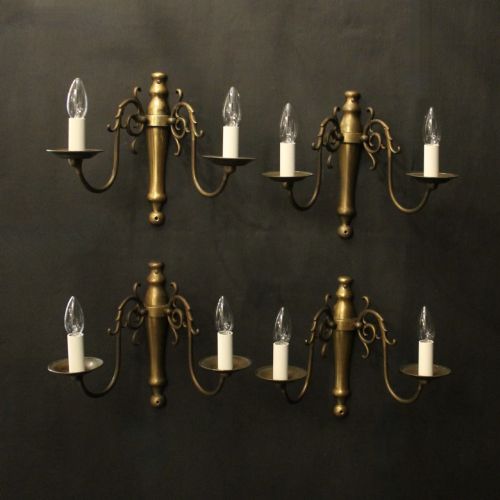
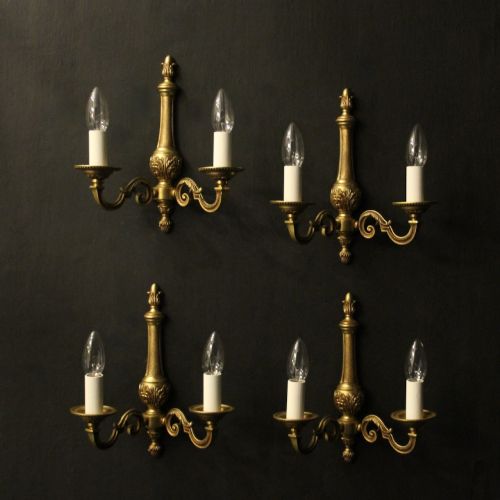
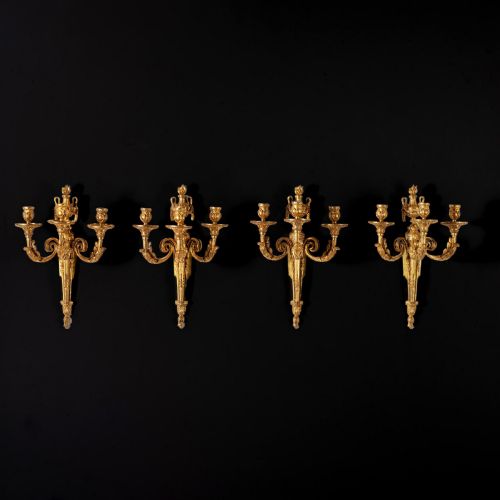
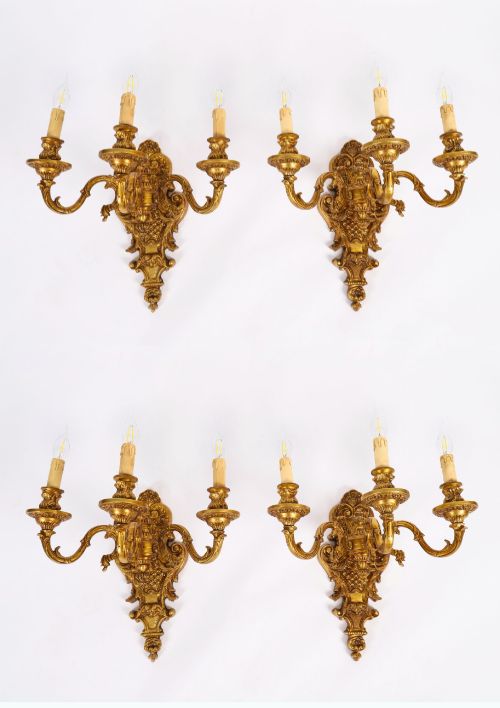
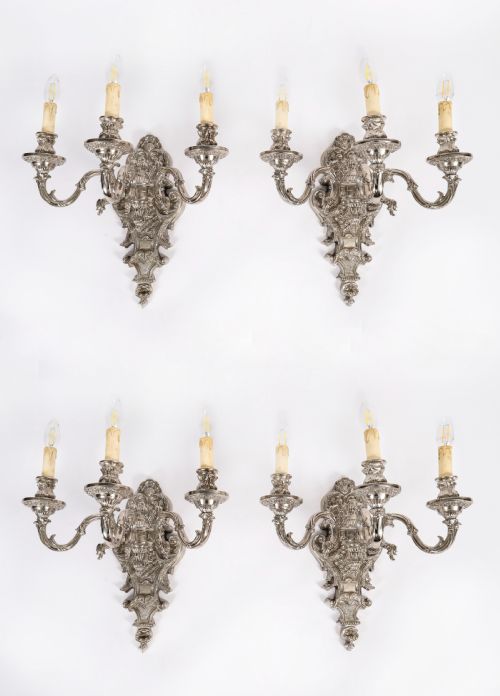
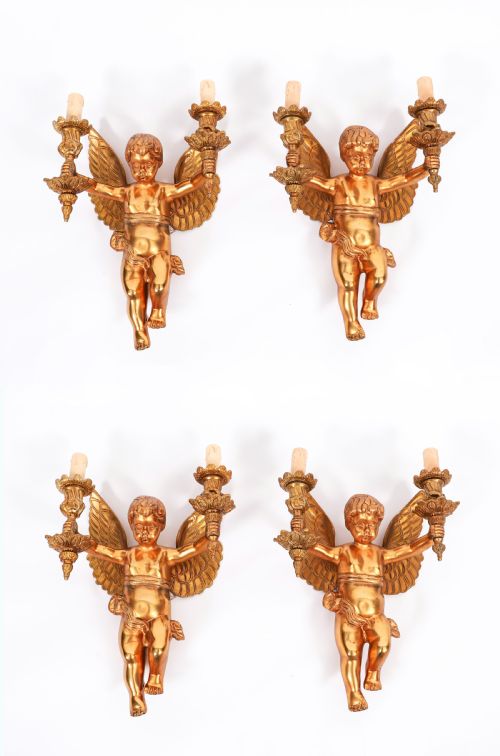


Set Four Wall Sconces
A set four wall sconces brings symmetrical illumination and period character to a room, offering matched sets that balance lighting across a space.
Set Four Wall Sconces
A set four wall sconces comprises matching groupings of period lighting fixtures designed to mount directly onto interior walls. Buyers searching this phrase typically encounter matching sets of four originating from the eighteenth, nineteenth, and early twentieth centuries.
The selections span English and continental workshops, ranging from simple brass twin-arm fixtures to elaborate multi-branched French ormolu designs. Forms include traditional wall lights, appliques, and specialised light fittings complete with shades.
Stylistic influences vary from classical Louis XV and French Rococo to geometric Art Deco and traditional English designs. Most surviving examples utilise multiple branches or arms to hold candles or electric conversions, arranged in balanced sets of four for uniform room placement.
Materials and construction methods
Metal forms the foundation of these pieces, predominantly cast in brass, bronze, and gilt metal. Artisans frequently applied fire gilt, ormolu, or silver plating to the metal surfaces to create decorative metallic sheens.
Cast bronze and brass elements were chased and detailed by hand, creating complex figural motifs such as cherubs and panther heads. Some nineteenth and twentieth-century examples incorporate carved wood or applied paint finishes alongside standard metalwork.
Listings feature brass, gilt bronze, ormolu, and silver plate across periods spanning the eighteenth through the twentieth centuries.
Factors determining quality
The richness and preservation of the original surface finishes, whether genuine ormolu, silver plating, or gilt bronze, separate superior examples from plainer commercial production. Heavier gauge metalwork and substantial multi-branch construction also indicate higher-tier manufacturing.
Faraday & Sons
The Set Four Wall Sconces Glossary
- Ormolu
- A gilded bronze technique used extensively in French decorative arts. The process involves applying a finely ground high-carat gold-mercury amalgam to a bronze base, which is then heated.
- Applique
- A wall-mounted lighting fixture or sconce designed to hold candles or electric lamps. The term frequently appears in descriptions of continental wall lights.
- Rococo
- An ornate design style characterised by asymmetry, scrollwork, and naturalistic plant motifs. This aesthetic dominated many eighteenth-century lighting designs and later nineteenth-century revivals.
- Gilt Bronze
- Bronze metal that has been coated with a thin layer of gold. It provides a durable and decorative surface finish resistant to tarnishing.
Set Four Wall Sconces: Frequently Asked Questions
How were wall sconces used historically?
Wall sconces provided ambient illumination in grand rooms by holding burning candles mounted securely at eye level. Reflective backplates were often positioned behind the flame to amplify the available light.
Over time, many of these fixtures were adapted to electricity while retaining their original decorative metal frames and branch configurations.
Are these sconces wired for modern electricity?
Many surviving sets have undergone conversion to electricity during the twentieth century to suit modern domestic requirements. Some examples still show their original candle-holders or early wiring components.
Buyers should inspect the internal wiring of each individual sconce to ensure compatibility with current electrical safety standards.
How do I distinguish Louis XV style from Art Deco?
Louis XV style sconces feature organic curves, asymmetrical scrollwork, cherubs, and floral motifs typical of eighteenth-century French design and its later revivals. They emphasise ornate detail and classical casting techniques.
Art Deco sconces from the 1930s favor clean geometric lines, stylized flame motifs, and streamlined metal forms that reflect twentieth-century industrial aesthetics.
How should I clean gilded metal sconces?
Gilded brass and ormolu require gentle dusting with a soft, dry cloth to remove surface particles. Abrasive cleaners and chemical polishes will strip the delicate gold layers.
Professional conservation may be necessary if deeper cleaning or structural repairs are required on antique metalwork.