




18th Century French Lighting
These pieces of 18th century french lighting bring authentic period illumination and ornamental presence to a room.
18th Century French Lighting
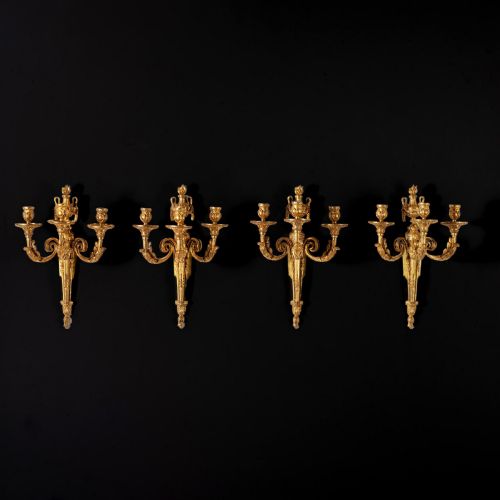
When you search for 18th century french lighting, you encounter wall lights, candelabra, candlesticks, and chambersticks designed to catch and reflect candlelight. These items originate across the eighteenth century and subsequent revival periods, spanning styles from Rococo and French Regence to Neoclassical.
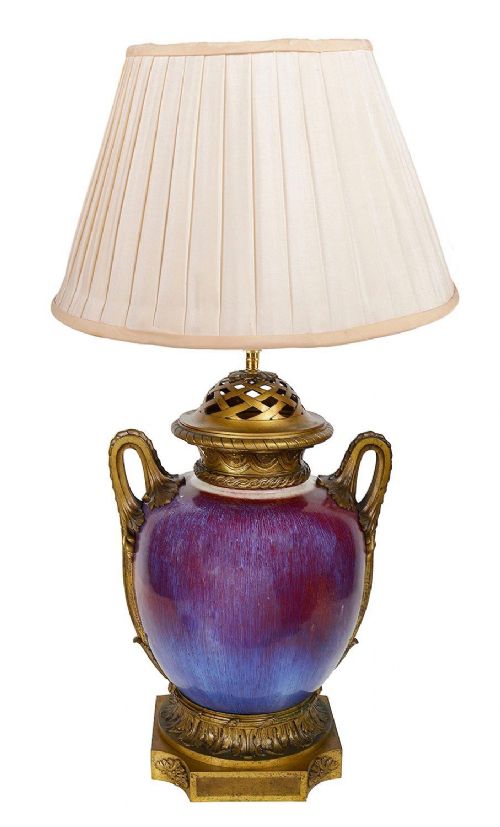
The most common forms on this page include multi-branch wall sconces and paired candlesticks in cast brass, ormolu, and gilt bronze. Alongside these metal fixtures, you find fitted porcelain and transformed lidded vase lamps that adapt earlier bodies for later illumination.
How they were made
Maker workshops utilised lost-wax and sand-casting methods to shape copper alloys into intricate mounts, which were then chased by hand to sharpen the leaf scrolls, floral motifs, and figural details. Ormolu and gilt bronze pieces received a thin application of gold amalgam, fired to achieve a durable, lustrous finish.
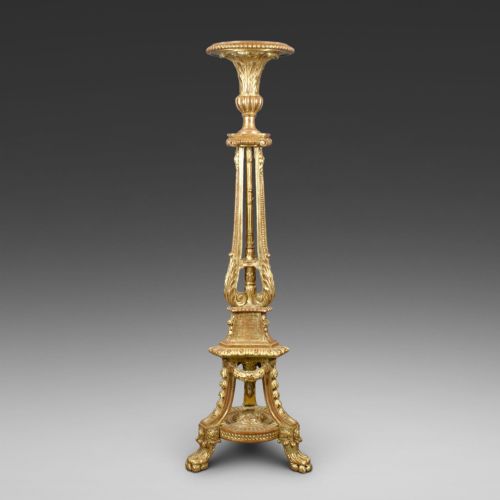
Carved wood items relied on seasoned timbers such as oak, chestnut, and softwoods coated in gesso before receiving layers of gold leaf or limed treatments. Porcelain components, such as Meissen figures, were often paired with custom metal sconces and cast ormolu bases.
Meissen musicians seated inside ormolu candelabra prove that eighteenth-century porcelain figures were entirely happy to moonlighting as lighting fixtures.
What varies in quality
The crispness of the chasing on ormolu and cast brass distinguishes finer mounts from softer, more generalized castings that lose definition in the foliage and figures. Superior pieces retain the original mercurial gilding or deep fire-gilt surfaces rather than later overpainting or chemical dipping.
In carved wood and giltwood items, the depth of the undercutting and the precision of the gesso preparation govern the visual impact. The integrity of the original joins, sconce pans, and structural armatures dictates whether an object preserves its authentic configuration.
The 18th Century French Lighting Glossary
- Ormolu
- Gilt bronze produced by applying a mercury and gold mixture to a bronze base and firing it until the mercury vaporised. This technique creates a rich, enduring metallic lustre characteristic of high-end eighteenth-century decorative metalwork.
- Rococo
- An asymmetrical design style marked by curved lines, C-scrolls, shell motifs, and organic naturalism. It dominated French decorative arts through the middle decades of the eighteenth century.
- Torchere
- A tall stand or pedestal designed to support a light fixture or candle. Eighteenth-century examples often employ carved and gilt wood.
- Chamberstick
- A low portable candlestick fitted with a shallow drip pan and a loop handle for carrying from room to room. Metal versions were robustly cast for daily utility.
18th Century French Lighting: Frequently Asked Questions
How do I clean ormolu wall lights?
Dust gently with a soft, dry brush to remove surface particles without disturbing the underlying metal.
Avoid using abrasive chemical polishes, as these can strip away remaining fire gilding and historic patination.
Can these candle holders take modern bulbs?
Many items designed for candles remain in their original mechanical state, while others have been adapted as table lamps.
Consult individual listings to see whether wiring has been integrated or if the piece retains its original candle sockets.
What is the difference between ormolu and brass?
Ormolu consists of a bronze substrate finished with a mercury-gilt surface that yields a warm, deep gold colour.
Cast brass is a copper and zinc alloy showing a homogenous golden metal tone throughout the body without applied gold leaf.
How do I date an 18th century wall light?
Examine the casting method, tool marks on the reverse, and the stylistic vocabulary of the mounts such as Regence or Rococo motifs.
Compare the construction of the backplates, screw threads, and branch joints against documented period examples.