
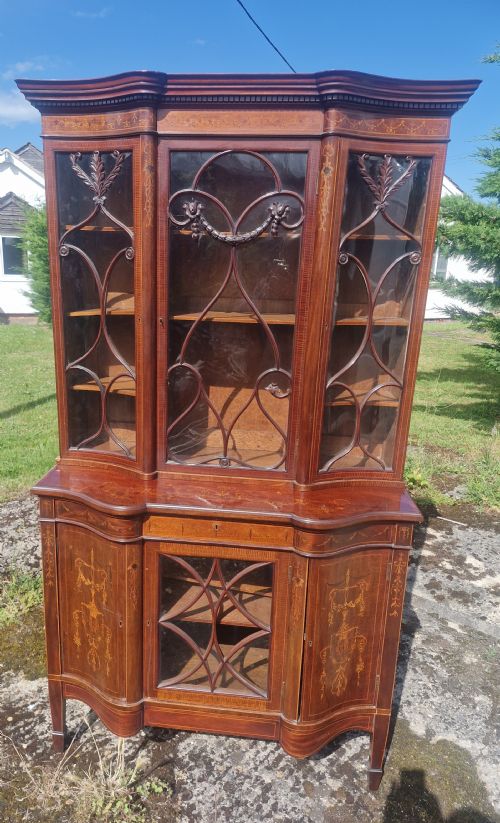


Serpentine Vitrine Cabinet
A serpentine vitrine cabinet brings together curving glass, rich kingwood or mahogany and gilt ormolu mounts to showcase precious objects.
Serpentine Vitrine Cabinet
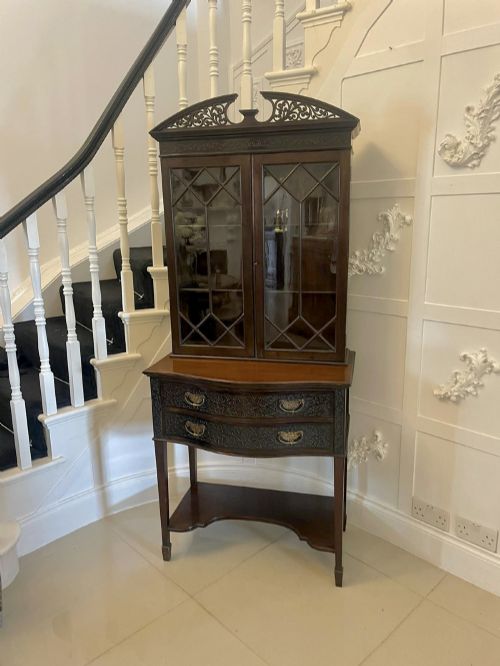
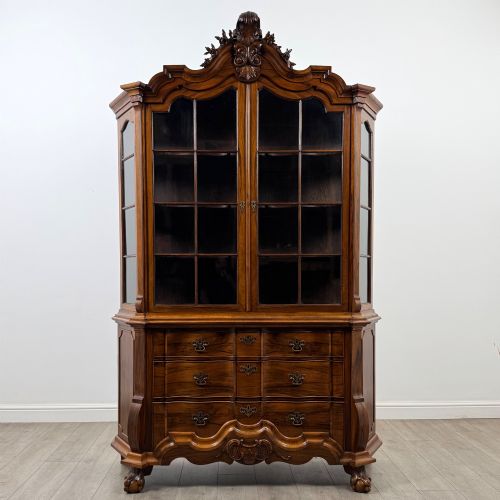
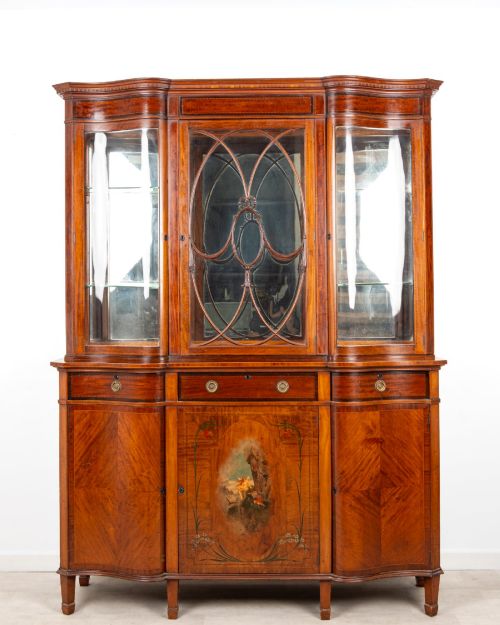
A serpentine vitrine cabinet is a display piece defined by its undulating, curving front and glazed panels designed to exhibit fine porcelain, silver and curiosities. You will most frequently encounter nineteenth-century French and Edwardian English examples finished in kingwood or mahogany.
The form developed during revival periods spanning the Victorian and Edwardian eras, drawing heavily on French Rococo and Louis styles. Makers utilised the curving serpentine profile to catch the light from multiple angles and soften the rectilinear geometry of traditional rooms.
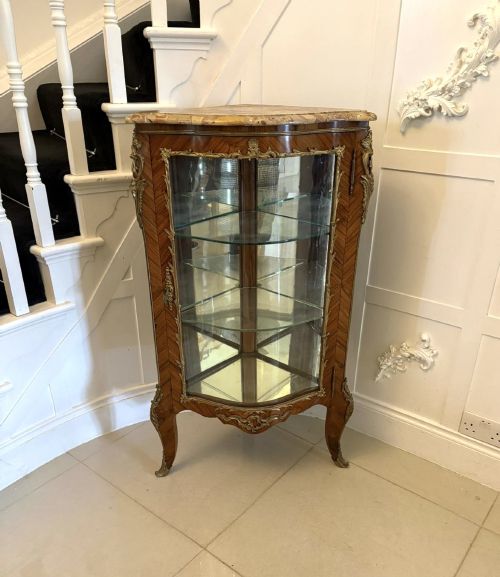
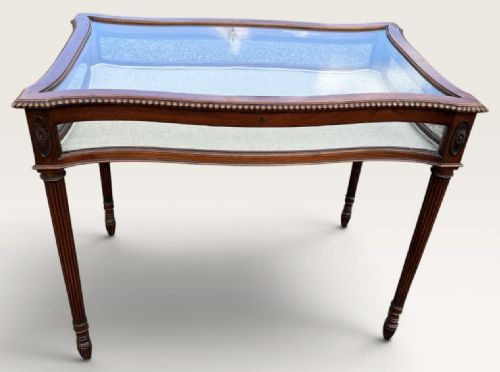
Pieces range from large freestanding double-height corner cupboards to smaller table-height bijouterie cases meant for tabletop display. The unifying characteristic remains the sinuous curve of the woodwork framing the glass vitrine section.
How they were made
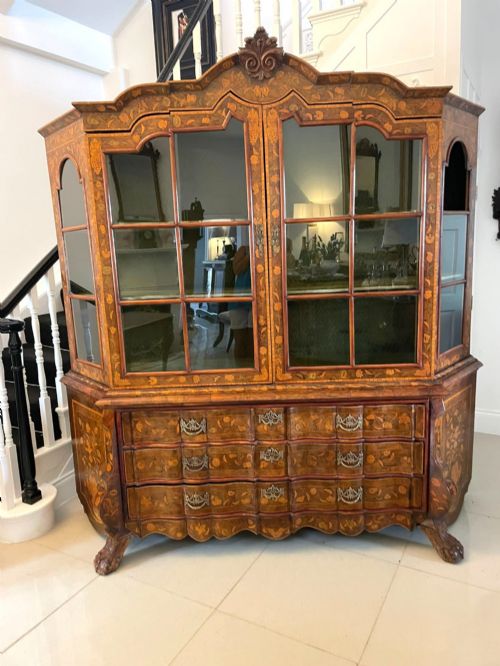
Cabinetmakers constructed these pieces using dense hardwoods like mahogany and kingwood over sturdy pine or oak carcases, applying delicate marquetry, parquetry and fruitwood inlay. The challenging serpentine curves required skilled steam-bending and precise shaping of timber before veneering.
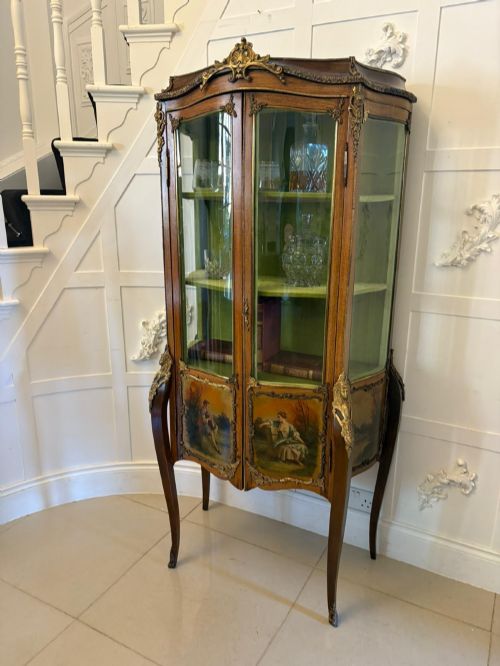
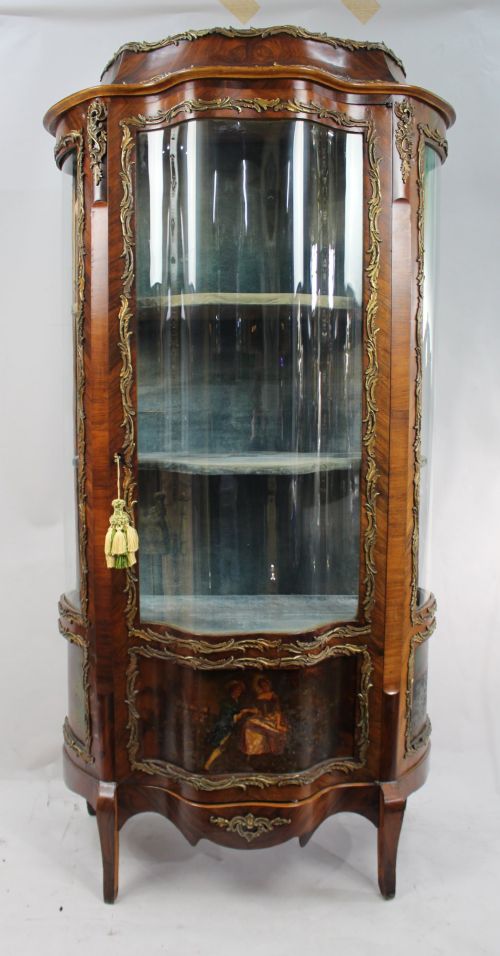
Glazed doors and side panels were fitted into rebated frames, often complemented by hand-painted Vernis Martin lower panels depicting pastoral scenes. Gilded cast bronze ormolu mounts were bolted to corners, feet and cornices to accentuate the flowing lines.
Interiors typically featured fabric-lined shelving and mirrored backs designed to reflect light through displayed objects. Marble tops frequently finished the upper surface on heavier French pieces, adding weight and contrasting texture to the polished wood.
Listings feature mahogany, kingwood, walnut and satinwood combined with glass, brass and ormolu across Victorian and Edwardian periods.
What varies in quality
Quality rests upon the crispness of the ormolu mounts, the complexity of the marquetry and the fluidity of the serpentine timber curves. Finer cabinets exhibit hand-chiseled bronze mounts and tightly fitted door frames that maintain their alignment over decades of changes in humidity.
The distinction between standard commercial output and exhibition pieces often appears in the choice of veneers and the execution of painted panels. Master makers utilised dense, figured kingwood and detailed floral inlay rather than painted substitutes, ensuring the surface retains depth and character.
Edwards and Roberts
The Serpentine Vitrine Cabinet Glossary
- Serpentine
- A shape featuring a convex centre flanked by concave curves, creating an undulating front line. This contour requires precise woodworking to execute cleanly across doors and cabinet frames.
- Vitrine
- A glazed display cabinet built specifically for showing porcelain, glassware and small valuables. The glass panels allow illumination from multiple sides.
- Ormolu
- Gilded bronze mounts cast and applied to furniture corners, feet and surrounds for decoration. The quality of the chasing defines the work of better makers.
- Marquetry
- The art of applying decorative veneer slices in patterns or pictorial designs onto a carcase. Craftsmen used various tinted woods and fruitwoods to achieve tonal contrast.
- Vernis Martin
- A type of simulated Japanese lacquer developed in France during the eighteenth century and revived later. It is used here on lower cabinet panels to render decorative scenes.
Serpentine Vitrine Cabinet: Frequently Asked Questions
What is a serpentine vitrine cabinet used for?
These cabinets were originally manufactured to exhibit porcelain, glassware, silver and small curated collections in drawing rooms and reception spaces. The glass panels and mirrored interiors allowed light to reach objects from multiple directions.
Today, they serve the same decorative purpose in domestic interiors while protecting delicate items from dust and handling.
How do I distinguish French and English examples?
French cabinets from the nineteenth century frequently employ kingwood veneers, heavy ormolu mounts, marble tops and painted Vernis Martin lower panels. They lean towards Louis XV and Louis XVI revival styles.
English Edwardian and late Victorian pieces more commonly feature mahogany, satinwood inlay and Sheraton or Chippendale revival motifs with subtler proportions.
How do I care for the wood and ormolu?
Keep the cabinet away from direct sunlight and steady temperature fluctuations to prevent the wood veneers from drying or lifting. Dust the carved and ormolu surfaces gently with a dry, soft brush.
Avoid commercial liquid polishes, which can build up on the delicate varnish or seep into the marquetry joints over time.
What does serpentine mean?
The term describes a front profile that curves outward in the middle and inward towards the edges, resembling the gentle motion of a snake. This shape adds visual movement to heavy timber furniture.
It required advanced carpentry skills to build doors and frames to this undulating specification without warping.