
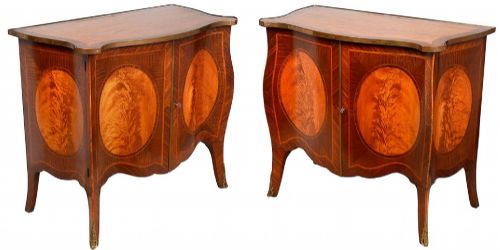
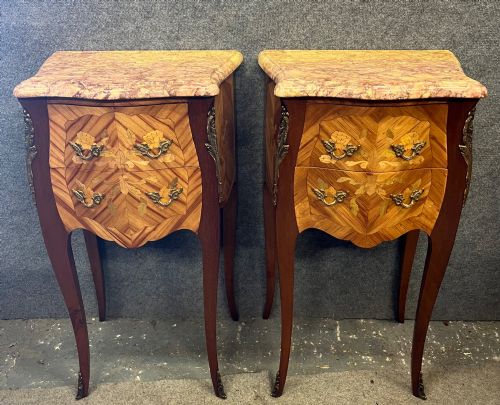
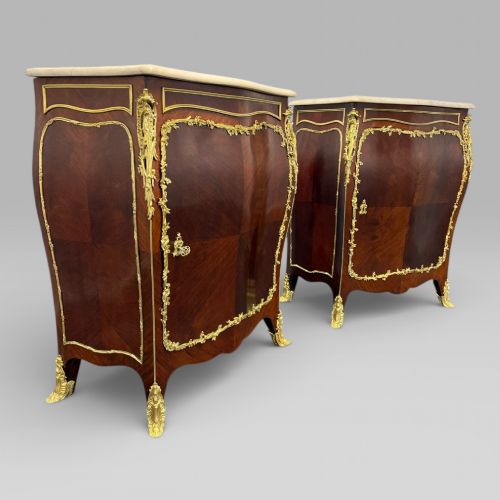
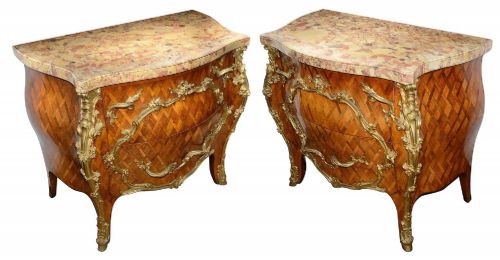
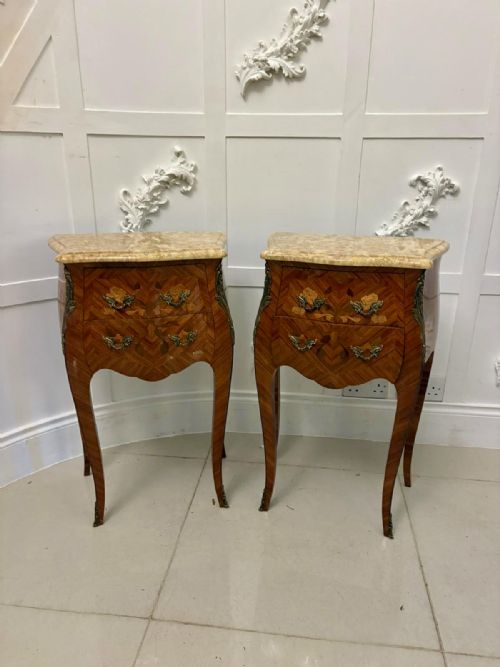


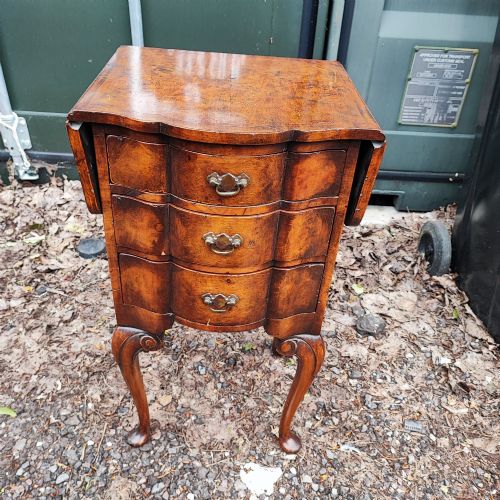


Serpentine Side Cabinet
A serpentine side cabinet brings a fluid, undulating silhouette to a room, offering elegant storage rooted in centuries of cabinet-making tradition.

Serpentine Side Cabinet
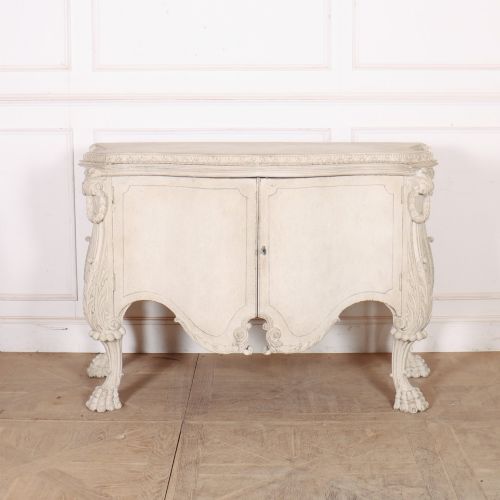
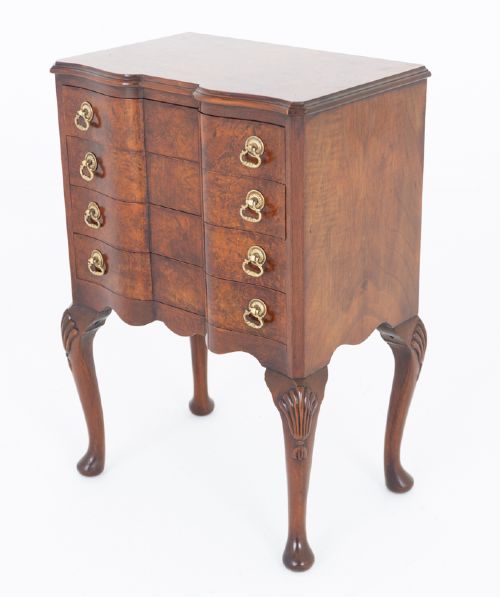
A serpentine side cabinet presents a distinctive sweeping front where the timber curves inward and outward, catching the light across multiple angles. These pieces emerge predominantly from Victorian workshops, Edwardian parlours, and Continental revival movements dating from the mid-nineteenth century onward.
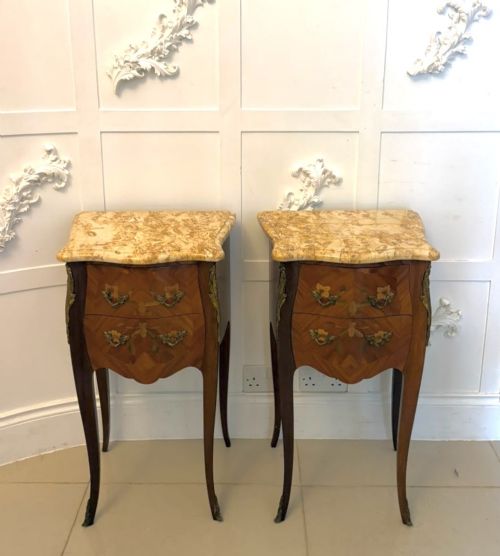
The form crosses paths with bedside chests, commodes, and compact credenzas, each sharing the characteristic undulating profile. Walnut, mahogany, and exotic veneers dominate the selection, frequently paired with inset marble surfaces or delicate marquetry detailing.
Materials and construction
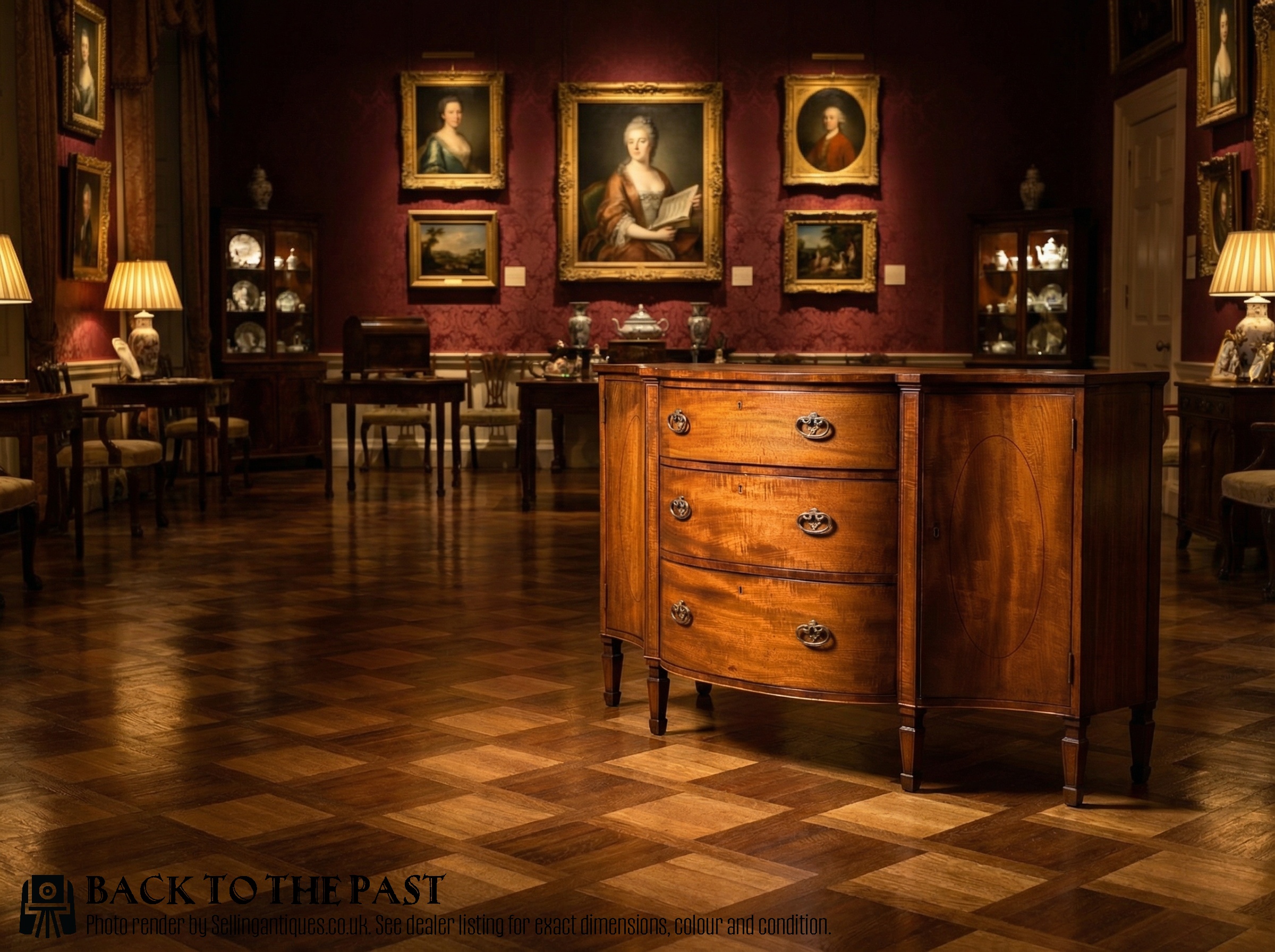
Cabinet-makers relied on dense carcases of mahogany or oak, layering fine veneers of burr walnut, kingwood, or satinwood across the curved surfaces. Achieving the undulating serpentine shape required careful shaping of solid timber frames and precise vacuum pressing of veneers.
Gilt bronze ormolu mounts, brass stringing, and hand-cut marquetry patterns embellished the best examples, while Italian scagliola or polished marble provided durable, contrasting table tops.
Serpentine Side Cabinet Retail Price Guide 2026
Typical asking prices for serpentine side cabinet among the pieces listed under this phrase on Sellingantiques today, from the lower quarter to the upper quarter. They describe what is for sale here now, not the wider market.
Some serpentine cabinets feature hidden side compartments once kept secret for storing jewellery or love letters.
Assessing craftsmanship
Quality rests in the fluidity of the curves and the crispness of the timber matching across the front doors and drawers. Superior examples maintain symmetry in their grain patterns and integrate cast ormolu mounts that fit flush against the wood.
Secondary timbers inside drawer linings, the tightness of dovetail joints, and the retention of original marble tops or key fittings separate standard production pieces from exhibition-grade commissions.
E Kahn·Krieger of Paris·Edwards and Roberts·Maple and Co
The Serpentine Side Cabinet Glossary
- Serpentine
- A curved furniture front shaped with a convex centre flanked by concave sides, resembling the undulating movement of a snake. This profile requires high skill to construct across drawers and doors.
- Marquetry
- Decorative patterns formed by fitting contrasting veneers into a prepared wood ground. Craftsmen utilise dyed woods, fruitwoods, and mother-of-pearl to build pictorial designs.
- Ormolu
- Gilded bronze mounts applied to furniture edges, feet, and corners for ornamental effect. The technique involves mercury gilding on cast brass or bronze bases.
- Scagliola
- A composite material made from selenite, glue, and pigments, embedded to imitate marble and other hard stones. Artisans polish the surface to achieve a stone-like finish.
- Commode
- A low decorative cabinet or chest of drawers designed for domestic rooms. The term frequently applies to French-influenced serpentine pieces from the nineteenth century.
Serpentine Side Cabinet: Frequently Asked Questions
Where should I place a serpentine side cabinet?
These cabinets suit hallways, drawing rooms, or bedrooms where the curved profile softens rigid architectural corners. Their shallow depth allows them to sit comfortably against walls without dominating the floor space.
Pair them with a simple mirror or table lamp to highlight the polished timber grain and reflective marble surfaces.
How do I care for antique veneer and marble?
Dust surfaces regularly with a soft, dry cloth and avoid commercial silicone polishes that build up a hazy residue. Feed walnut and mahogany veneers with traditional beeswax to maintain a natural lustre.
Keep marble tops protected from acidic spills like citrus juice or vinegar, which can etch the polished stone surface over time.
Are these cabinets practical for modern storage?
The interior configurations typically feature shallow shelves or single drawers suited for linens, glassware, or bedside essentials. The curved internal space requires careful measurement if you plan to store specific large items.
Most pieces retain working locks and original keys, offering secure enclosed storage for everyday belongings.
How can I tell a Victorian piece from an Edwardian revival?
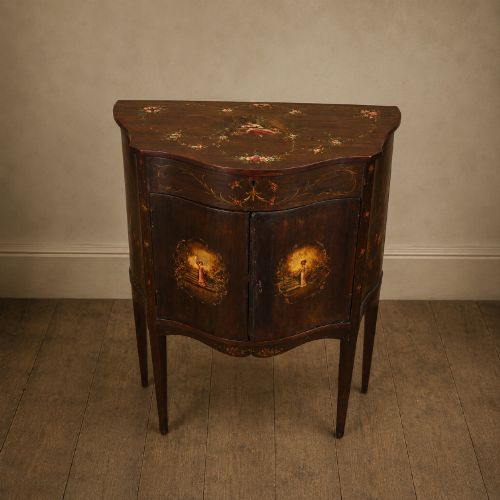
Victorian examples often display heavier proportions, darker mahogany or burr walnut timbers, and robust ormolu mounts. Edwardian revival pieces tend to feature lighter satinwood, finer marquetry, and painted neoclassical decorations.
Examining the secondary timbers inside the drawers and the style of the dovetail joints helps confirm the manufacturing era.