



Carved Rosewood Display Cupboard
A carved rosewood display cupboard brings rich grain and figured timber to a room, offering glazed shelving to showcase treasured objects.
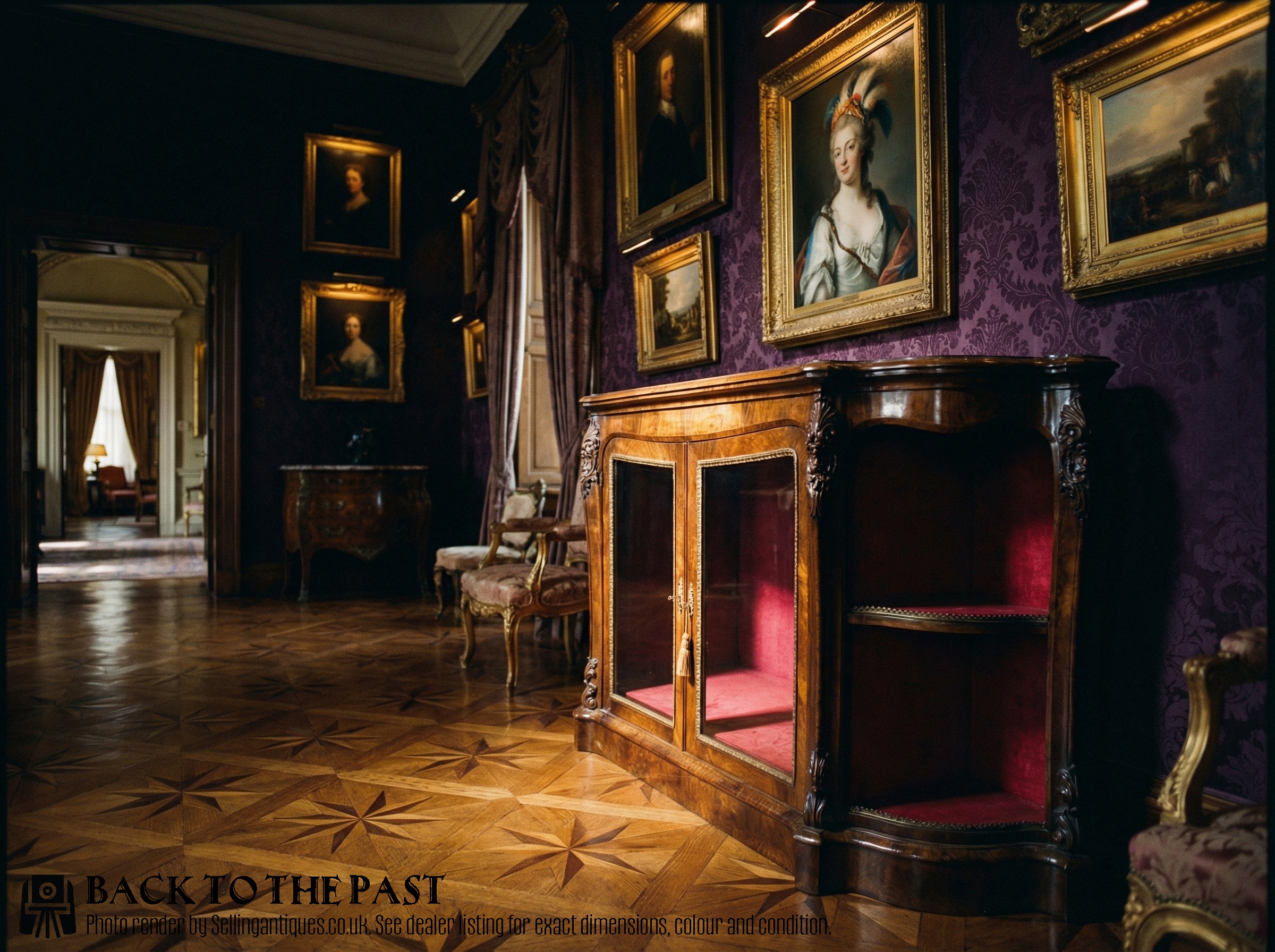
Carved Rosewood Display Cupboard
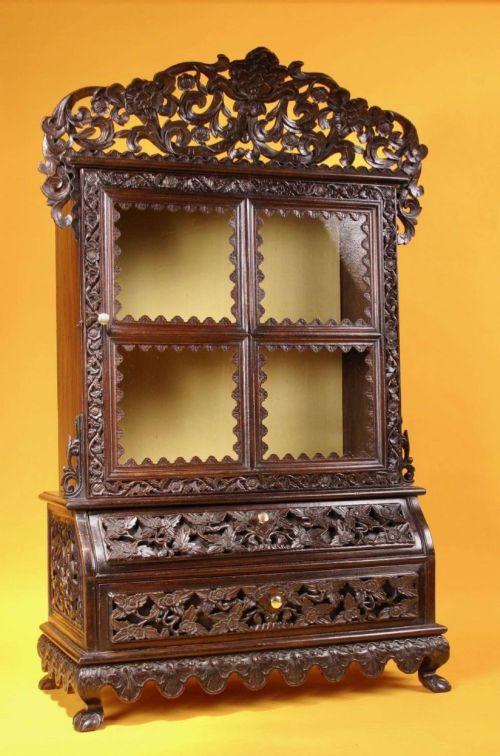
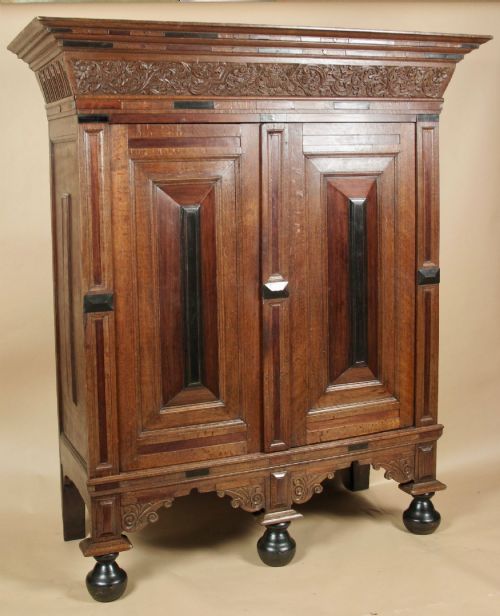
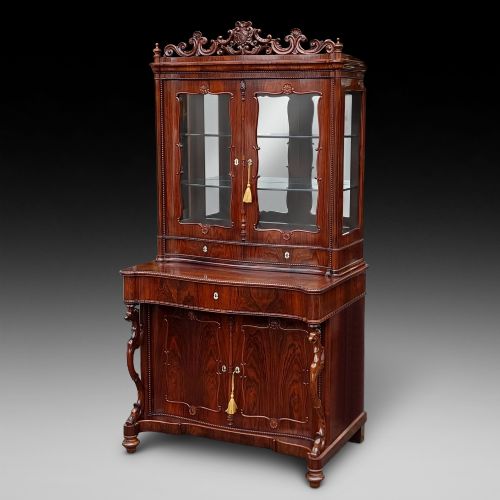
The selection ranges from early Victorian chiffoniers with four doors to continental cabinets executed in the Renaissance style. These forms function primarily to exhibit porcelain and glassware behind glass panels while offering enclosed storage beneath.
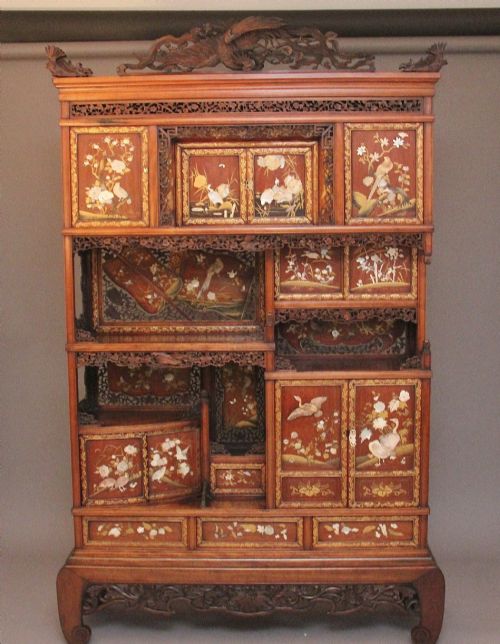
Origins vary across English workshops, continental European centres, and East Asian traditions, bringing together Dutch Baroque influences and Japanese Meiji aesthetics within a single timber vocabulary.
How they were made
Construction relies upon dense rosewood veneers and solid timbers laid over secondary woods such as oak, combined with brass mounts, glass panes, and occasionally mother-of-pearl inlay. Carved details define the structural framework, framing glazed doors and supporting upper cornices.
Cabinetmakers utilised traditional joinery to stabilise heavy hardwood sections, accommodating the natural movement of rosewood across changing climates. Surface finishes preserve the deep reddish-brown tones and dark grain patterns inherent to the timber.
Carved Rosewood Display Cupboard Retail Price Guide 2026
Typical asking prices for carved rosewood display cupboard among the pieces listed under this phrase on Sellingantiques today, from the lower quarter to the upper quarter. They describe what is for sale here now, not the wider market.
Listings feature rosewood alongside brass, glass, lacquer, and mother-of-pearl across the Victorian, Regency, and seventeenth-century periods.
What varies in quality
The calibre of a carved rosewood display cupboard rests on the crispness of its carved ornamentation and the symmetry of its rosewood grain configuration. Master cabinetmakers executed mouldings and figurative elements with precise depth, whereas lesser examples rely on shallower, repetitive mechanical cutting.
Integration of secondary materials such as original brass hardware, sound glass panes, and stable internal shelving elevates an example's integrity. The cohesion of the overall design, whether adhering to Renaissance Revival proportions or Japanese shodana asymmetry, dictates the success of the piece.
Sigmund Jaray Wien
The Carved Rosewood Display Cupboard Glossary
- Rosewood
- A dense, heavily figured timber valued for its deep colour and prominent dark grain. It takes a high polish and forms the primary surface of these cabinets.
- Shodana
- A traditional Japanese display cabinet featuring asymmetrical shelving and sliding doors. Examples from the Meiji period utilise intricate woodwork and exotic hardwoods.
- Chiffonier
- A low cabinet developed during the Regency and Victorian eras, typically combining enclosed lower cupboards with upper shelving or a raised back.
- Kussenkast
- A heavy Dutch cupboard type characterised by prominent cushion-moulded drawer fronts and panelled doors. These seventeenth-century forms often incorporate multiple hardwood species.
- Credenza
- A sideboard or cabinet form originating in continental Europe and adopted in Victorian interiors. It frequently incorporates glazed central doors flanked by curved side cabinets.
Carved Rosewood Display Cupboard: Frequently Asked Questions
How do I care for rosewood?
Keep timber cabinets away from direct sunlight and sudden temperature shifts to prevent veneer lifting or splitting.
Dust regularly with a dry cloth and apply occasional natural wax to nourish the dense grain without building up heavy residue.
Where were these cabinets placed?
Victorian and Regency examples traditionally occupied principal reception rooms, serving as focal points for displaying prized ceramics and glassware.
Smaller side cabinets and chiffoniers functioned in dining spaces or parlours to store linens and serve food from the top surface.
How do I date a rosewood cabinet?
Examine the construction of the interior carcase, drawer linings, and backboards for tool marks and timber choices characteristic of specific periods.
Stylistic markers such as Regency brass inlay, Victorian heavy glazing bars, or Meiji asymmetric shelving provide clear chronological boundaries.
What is Rio rosewood?
Rio rosewood refers to Dalbergia nigra, a prized Brazilian timber known for its intense purple-brown colouring and complex spider-web grain patterns.
Its use denotes earlier nineteenth-century production before stricter trade regulations and the depletion of primary forests restricted the material.