
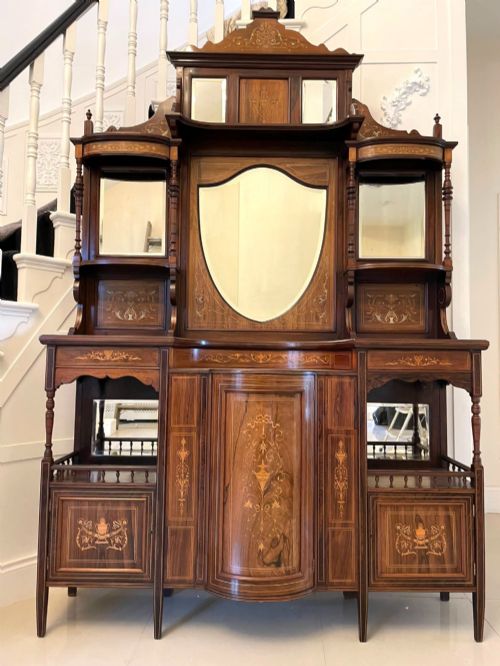
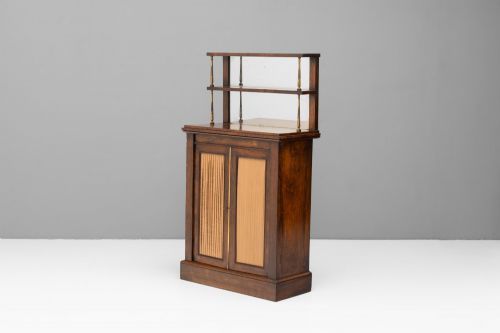


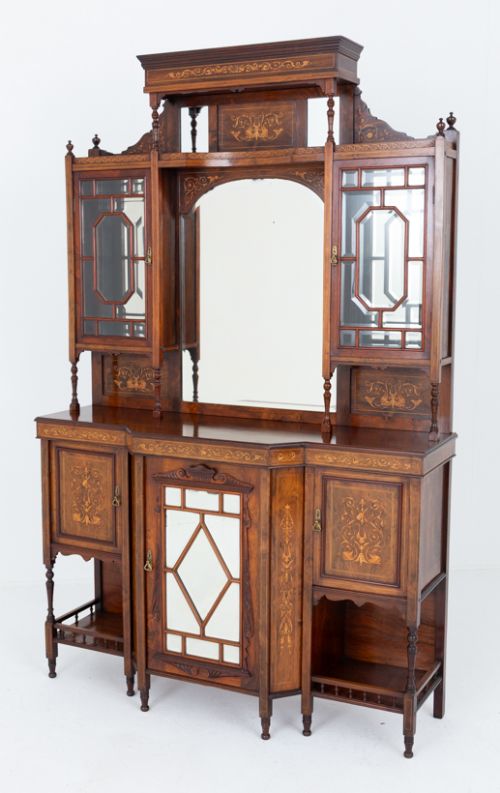


Rosewood Chiffonier Display Cabinet
These rosewood chiffonier display cabinet pieces combine rich timbers with practical shelving, offering collectors a refined display surface for interiors.
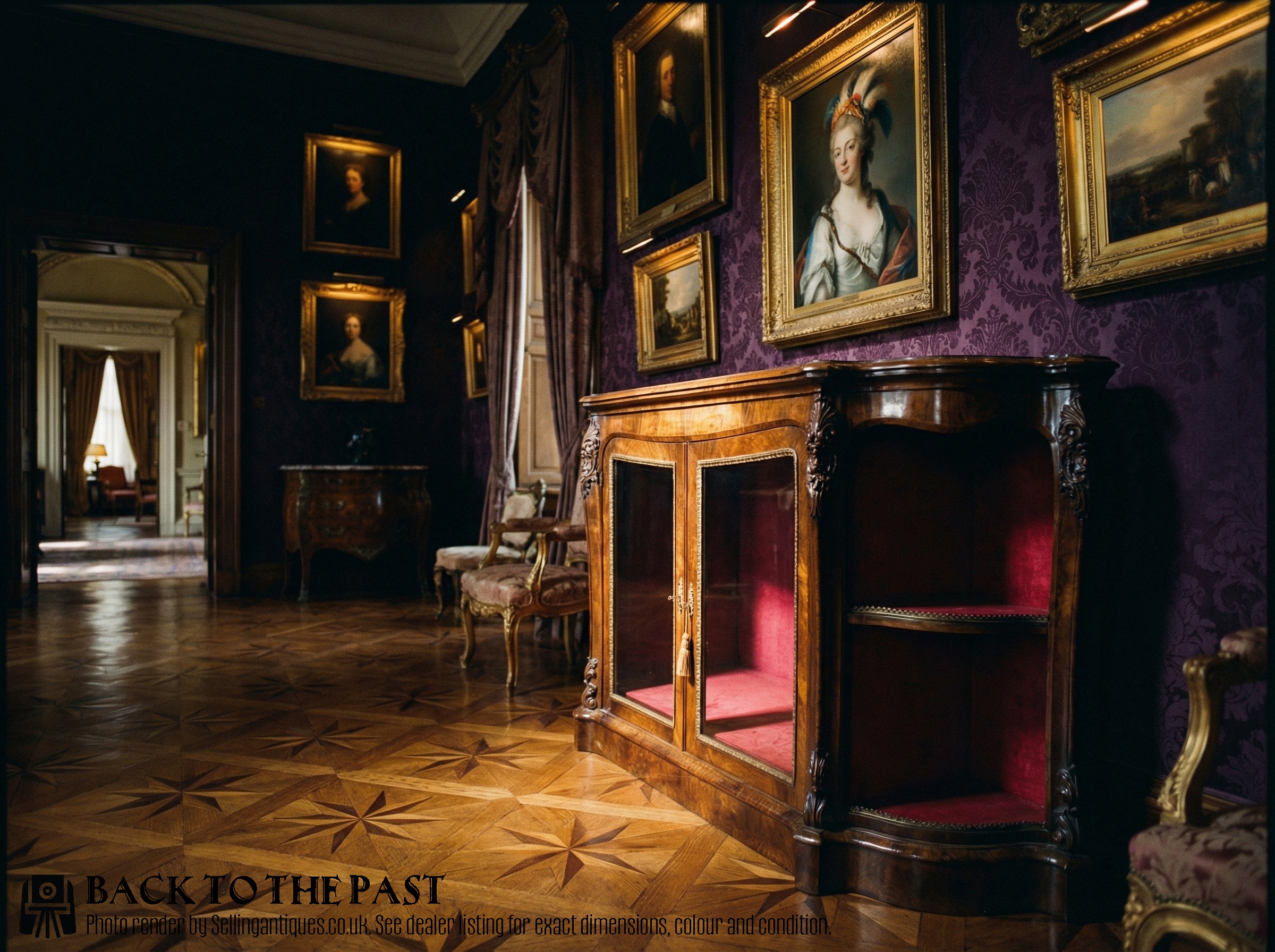
Rosewood Chiffonier Display Cabinet
A rosewood chiffonier display cabinet brings together the closed storage of a sideboard and the open or glazed display of a bookcase. Buyers encounter these pieces across nineteenth-century periods, spanning Regency elegance through to Late Victorian and Edwardian iterations.
The objects take diverse forms including side cabinets, open bookcases, credenzas and mirror-backed parlour cabinets. These versatile furniture types served primarily in the principal rooms of the house for storing books, porcelain and household articles.
Distinctions in Quality
The distinction between standard examples and the finest work lies in the precision of the inlay and the selection of the timber grain. Master cabinetmakers utilised tightly figured rosewood and executed complex marquetry or brass work with absolute uniformity.
Structural harmony also dictates value, where well-proportioned cornices, original glazed panels and balanced hardware separate exceptional pieces from heavier, less refined iterations.
Some nineteenth-century makers hid tiny velvet-lined compartments inside their cabinets for storing visiting cards and private notes.
Collinson and Lock·Howard and Sons·James Plunckett
The Rosewood Chiffonier Display Cabinet Glossary
- Chiffonier
- A low sideboard or cabinet, typically featuring enclosed shelving below and sometimes a raised superstructure.
- Marquetry
- Decorative veneer work forming pictorial or geometric patterns using various coloured woods.
- Credenza
- A sideboard or cabinet designed for dining rooms or parlours, often featuring glazed side cupboards.
- Palisander
- A dense, dark timber category frequently used interchangeably with rosewood in nineteenth-century cabinet making.
- Stringing
- Thin inlaid lines of contrasting timber used to outline panels and drawers on antique furniture.
Rosewood Chiffonier Display Cabinet: Frequently Asked Questions
How do I date a rosewood chiffonier?
Stylistic cues such as Regency brass inlay or Edwardian proportions help narrow the decade of manufacture. Looking at internal construction methods and secondary timbers confirms the period.
Earlier nineteenth-century pieces tend to feature simpler architectural lines, whilst later Victorian examples frequently incorporate extensive marquetry and mirrored backs.
Where should I place a chiffonier?
These cabinets suit principal reception rooms, hallways or dining spaces where display surface is required. Their shallow depth allows them to sit comfortably against walls without dominating the floor space.
Positioning them away from direct sunlight preserves the rich rosewood polish and prevents the timber from drying out over time.
Can I store books in these cabinets?
Open bookcase versions and glazed cabinets accommodate volumes securely. Adjustable shelving in many nineteenth-century models permits the arrangement of different book heights.
Heavier folios sit best on the lower wooden shelves, whilst lighter decorative bindings occupy the upper display areas.
What is the difference between a chiffonier and a credenza?
A chiffonier traditionally combines a low sideboard base with a small shelved superstructure or mirror. A credenza typically presents a more symmetrical, low profile often flanked by curved glazed cabinets.
Both forms utilise fine rosewood veneers, though credenzas frequently serve larger formal interiors.