

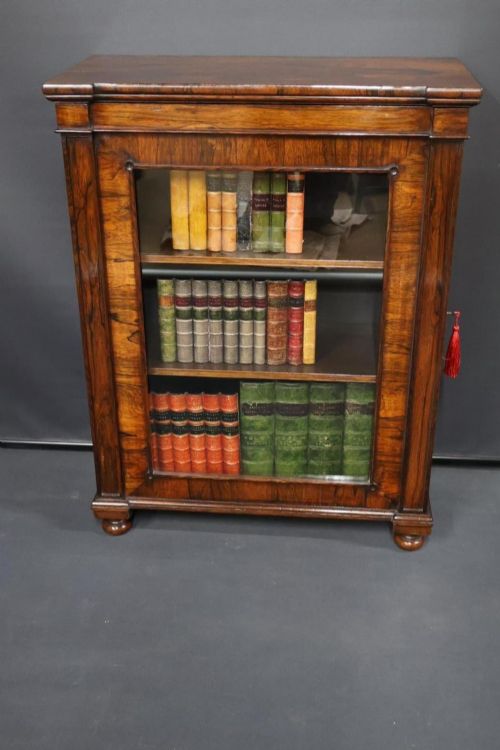


Rosewood Glazed Door Cabinet
A rosewood glazed door cabinet brings rich dark timber and clear display space into a room, uniting storage and exhibition.
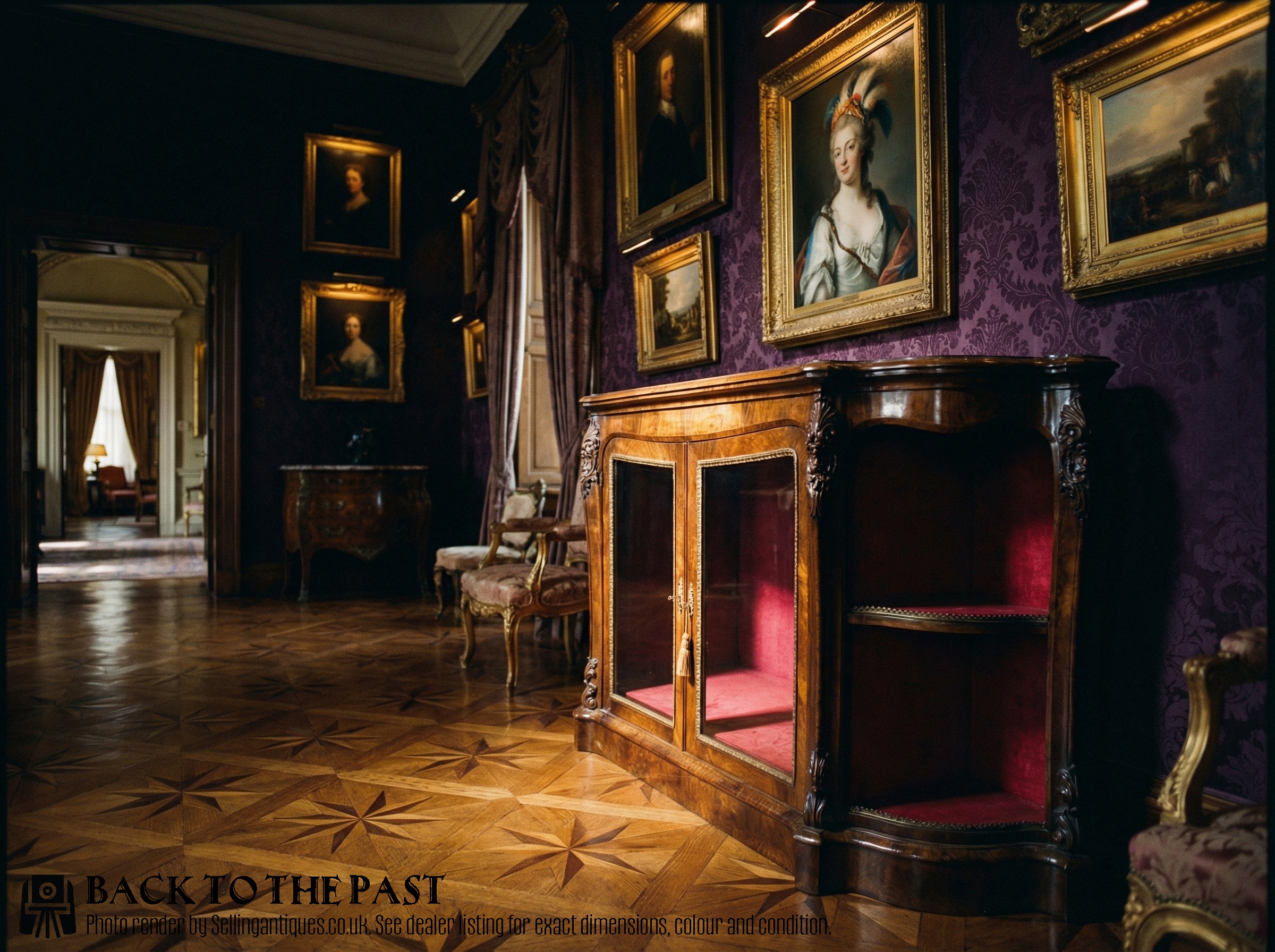
Rosewood Glazed Door Cabinet
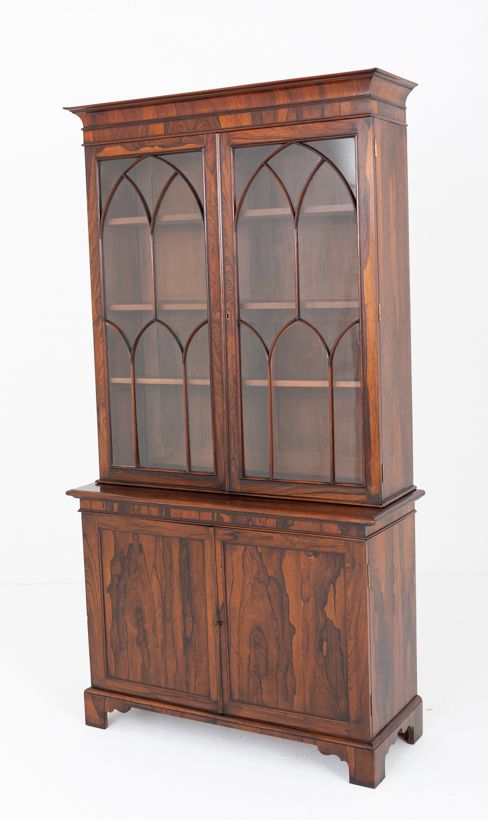
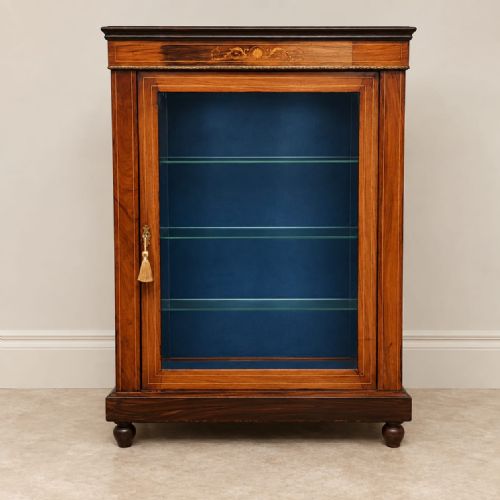
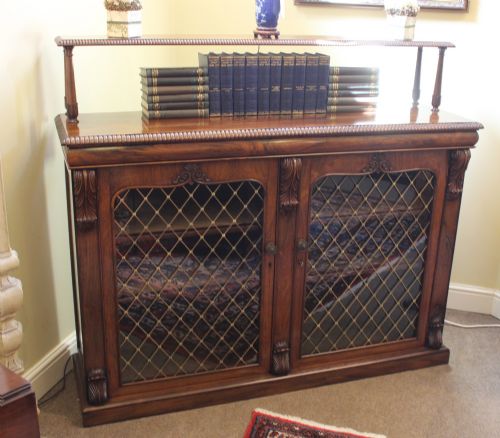
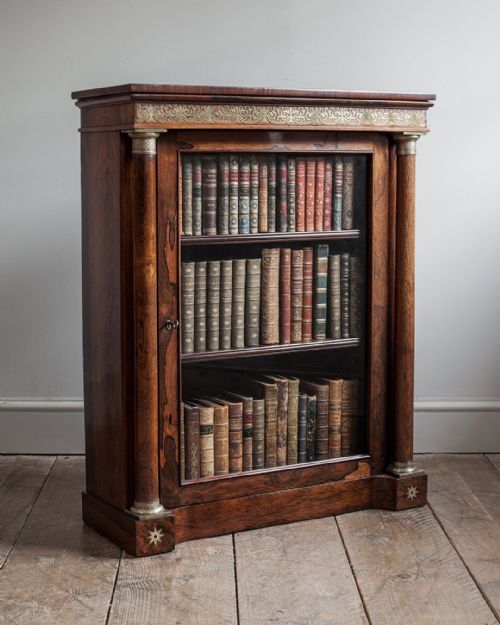
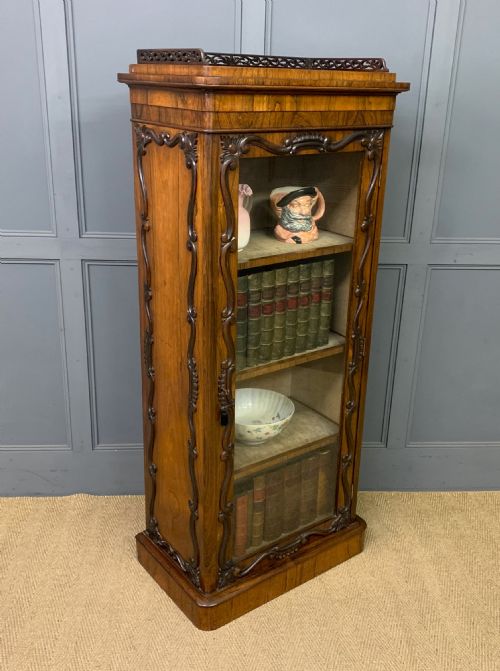
A rosewood glazed door cabinet is an item of furniture designed to house books, sheet music, or decorative objects behind transparent panes. The pieces gathered under this heading span the Georgian, Regency, William IV, and Victorian periods, alongside later Edwardian examples.
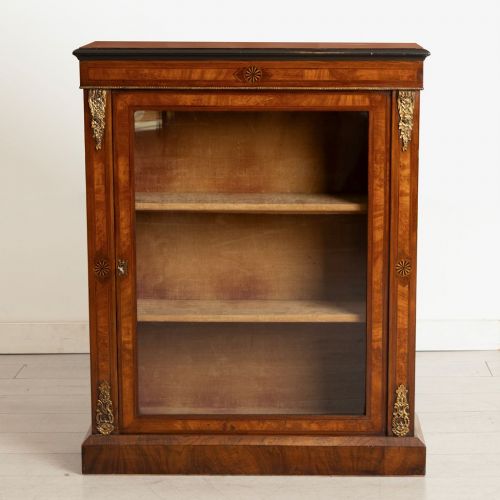
The most frequent form encountered on this page is the compact pier cabinet or the lower side cabinet, often fitted with a single glazed door and standing against a drawing room wall. Larger bookcase cabinets and credenzas also appear, extending the timber surface and display capacity.
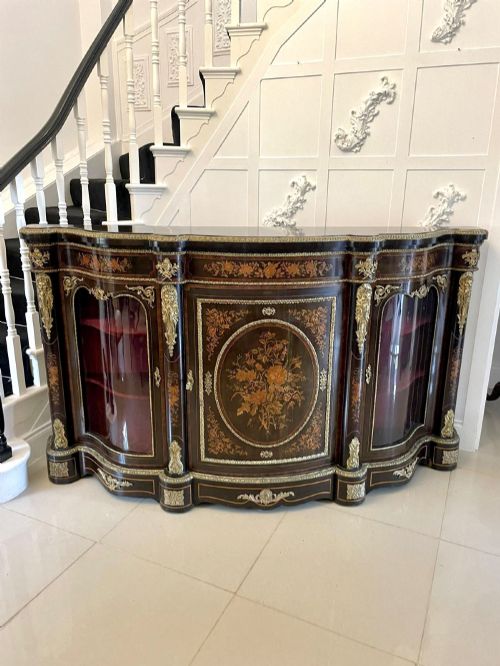
Origins stretch from English workshops to continental makers, utilising the deep figuring of rosewood across centuries of cabinet making. Buyers encounter diverse proportions, from low serpentine credenzas to tall bookcases with brass inlay.
Distinctions in quality
The standard of a rosewood glazed door cabinet rests upon the selection of the timber veneer and the precision of its grain matching across the doors. Finer examples display meticulous brass inlay, delicate floral marquetry, and cast ormolu mounts rather than plain timber surfaces.
Construction details such as the integration of barley twist columns, serpentine shaping, and original mirrored interiors separate standard production from superior pieces. The handling of secondary woods and the crispness of carved details reveal the workshop's capability.
Listings feature rosewood glazed door cabinets spanning the Georgian, Regency, Victorian, and Edwardian periods, utilising brass, ormolu, and glass.
James Winter
The Rosewood Glazed Door Cabinet Glossary
- Pier cabinet
- A low cabinet designed specifically to fit the wall space between windows. These pieces often feature a single glazed door and a flat top surface.
- Credenza
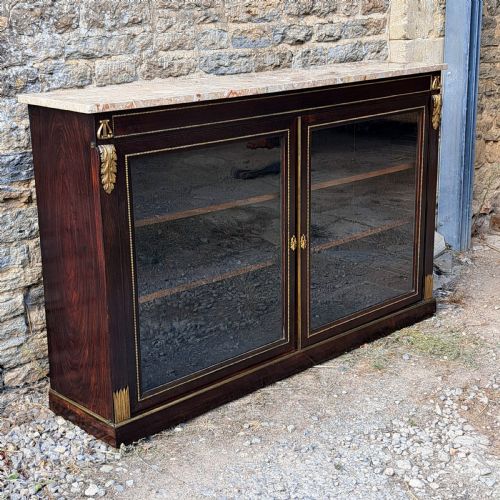
- A grand sideboard or cabinet used for display and storage, frequently featuring curved serpentine shaping and substantial ormolu mounts.
- Ormolu
- Gilded bronze ornamentation applied to furniture surfaces. It provides metallic contrast against dark rosewood veneers.
- Marquetry
- Decorative patterns formed by inserting thin pieces of coloured wood and other materials into a veneered surface. Floral motifs are common in Victorian work.
- Chiffonier
- A compact sideboard equipped with enclosed shelving below and sometimes a raised superstructure. It serves as versatile storage in smaller rooms.
Rosewood Glazed Door Cabinet: Frequently Asked Questions
Where should I place a pier cabinet?
A pier cabinet fits well against narrow wall spaces, particularly between tall windows or in smaller reception rooms where floor space is limited.
Its shallow depth allows it to display books or porcelain without dominating the room's circulation.
How do I care for rosewood veneer?
Protect rosewood furniture from direct sunlight and steady heat sources to prevent the natural oils in the timber from drying out. Dust the surface gently with a dry cloth and avoid harsh chemical polishes.
Maintaining a stable indoor humidity prevents the underlying wood and delicate veneers from warping or cracking over time.
What is the difference between a credenza and a side cabinet?
A credenza typically incorporates a serpentine or breakfront shape with central glass doors flanked by curved end cabinets, often decorated with ormolu. Side cabinets tend to follow simpler rectangular or square footprints with fewer decorative mounts.
Both forms provide enclosed storage and display, but credenzas generally represent a more formal aesthetic.
Can I adjust the shelves inside an antique cabinet?
Many nineteenth-century cabinets feature fixed wooden shelving or simple support battens rather than modern adjustable racks. You should check the internal construction if you plan to store books or objects of varying heights.
Altering historic interiors is generally discouraged to preserve the original fabric of the piece.