


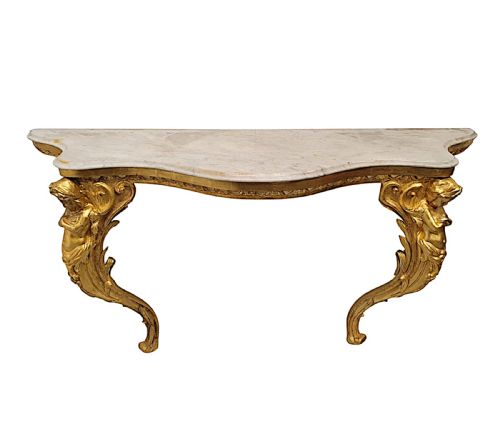
Serpentine Marble Hall Table
A serpentine marble hall table brings sculptural stone and fluid timber lines together into an entrance piece that anchors a grand hallway.
Serpentine Marble Hall Table
A serpentine marble hall table combines a distinctive curved stone surface with a robust wooden or iron base designed to stand against an entryway wall. These furnishings primarily take the form of console tables, centre tables, and side tables intended for grand domestic spaces.
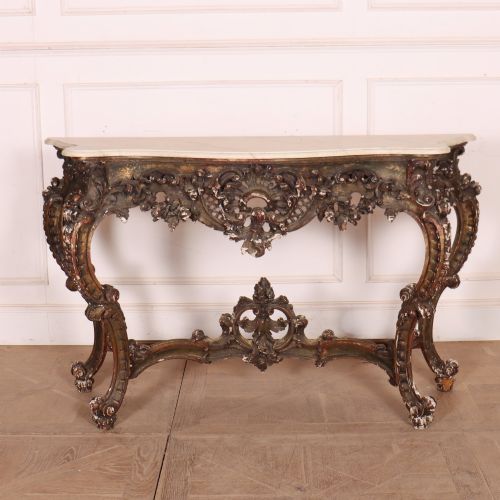
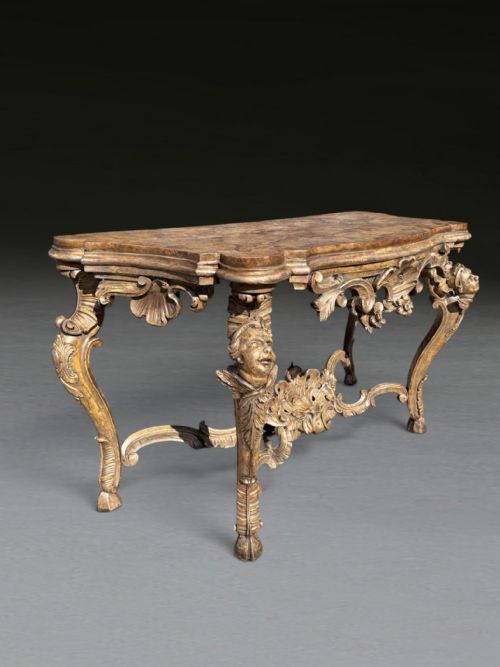
Most examples encountered on this page stem from the nineteenth century, alongside eighteenth-century works and later twentieth-century interpretations. The defining characteristic involves the undulating front edge of the marble slab, which pairs with stylistic influences ranging from French Rococo and Louis XVI to Italian Baroque.
Materials and construction methods
The construction relies on heavy stone tops cut to a serpentine profile, resting upon frames formed from walnut, oak, mahogany, or carved wood finished with gesso and paint. Many sophisticated examples feature elaborate giltwood frames embellished with hand-carved details.
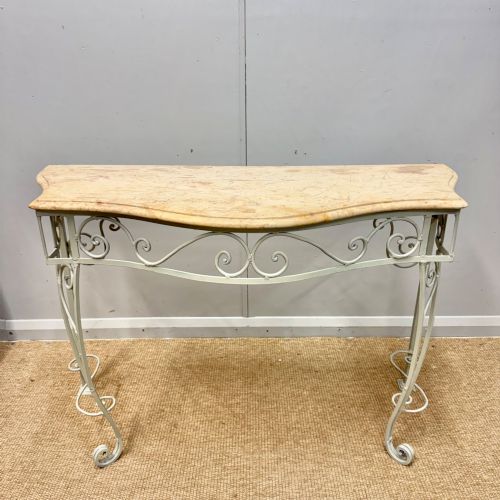
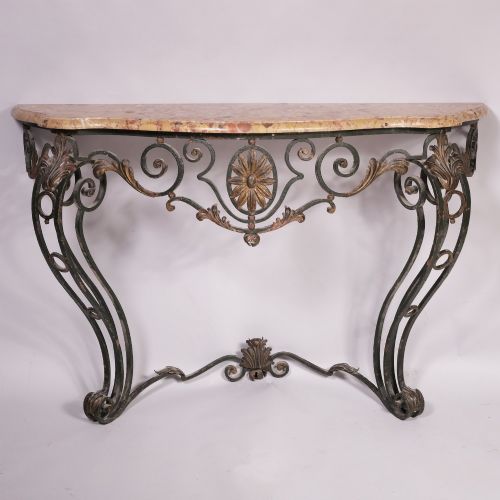
Earlier eighteenth-century and nineteenth-century pieces utilise traditional joinery to support the substantial weight of natural marble. Wrought iron frameworks also appear in later iterations, providing structural rigidity while maintaining a lighter visual profile.
Listings feature woods including walnut, oak, mahogany, and rosewood, paired with carved wood, gesso, paint, and wrought iron frameworks.
Assessing quality and craftsmanship
The distinction between tiers of quality rests heavily on the depth and crispness of the hand-carving upon the wooden or giltwood framework. Finer examples display deeply undercut foliage, scrolls, and moulding that reflect rigorous artisanal skill rather than mechanical repetition.
The figure and cut of the marble top, along with the integration between the stone slab and its supporting apron, further separate standard production from exceptional commissions. Cohesion of style, such as faithful adherence to Louis XVI proportions or robust Italian Baroque massing, dictates the standing of each piece.
The Serpentine Marble Hall Table Glossary
- Serpentine
- A shape featuring a concave central recess flanked by convex ends, creating a sinuous wave-like outline. This contour demands precise stonecutting and careful woodworking to match the frame to the top.
- Console table
- A wall-mounted or freestanding table designed to sit flat against a vertical surface, frequently featuring front legs while relying on wall brackets for support. These tables serve a primarily decorative and display function in corridors and reception rooms.
- Giltwood
- Timber that has been coated with a thin layer of gold leaf over a prepared gesso ground. It provides a brilliant metallic sheen characteristic of formal European furniture.
- Gesso
- A plaster-like mixture applied to wood surfaces as a smooth base for gilding or painting. It allows craftsmen to carve intricate relief details before applying gold leaf.
- Rococo Revival
- A nineteenth-century design movement that emulates the asymmetric curves, scrolling foliage, and shell motifs of the eighteenth-century Rococo period. It dominates many of the decorative console tables from this era.
Serpentine Marble Hall Table: Frequently Asked Questions
How do I style a hall table?
Position the piece flat against a primary wall in an entrance hall or reception room to create an immediate visual focal point. Allow the curved stone top to remain largely uncluttered to showcase the natural grain and serpentine silhouette.
Complement the surface with a single tall mirror or a balanced arrangement of decorative objects that do not obscure the carved details of the apron below.
Are these tables sturdy enough for daily use?
These furnishings were built to support heavy stone slabs, meaning the structural frames are inherently robust and designed to bear substantial weight. The primary considerations are stability on uneven floors and protecting the polished stone surface from heavy impacts.
Many heavier console variations incorporate wall fixings or rely on firm contact to ensure complete stability during everyday circulation.
How do I identify a nineteenth-century piece?
Nineteenth-century construction often reveals characteristic tool marks, dense native or imported timbers, and traditional hand-applied gesso beneath the gilding. Stylistic cues frequently draw heavily on earlier periods such as Louis XVI or Italian Baroque while retaining nineteenth-century proportions.
Examine the underside of the top and the joinery of the frame to observe period-appropriate manufacturing techniques and natural ageing of the materials.