
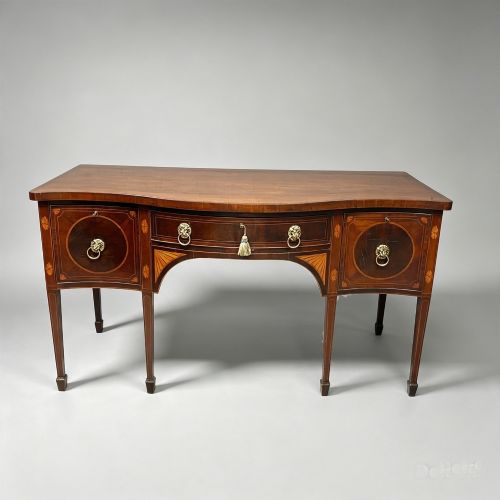
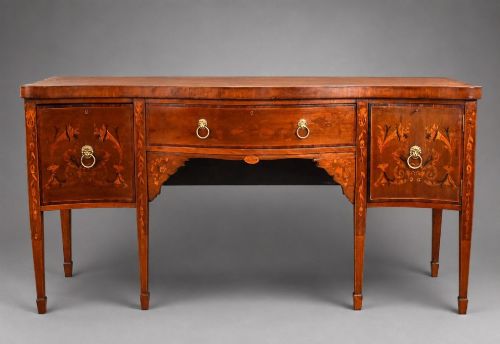
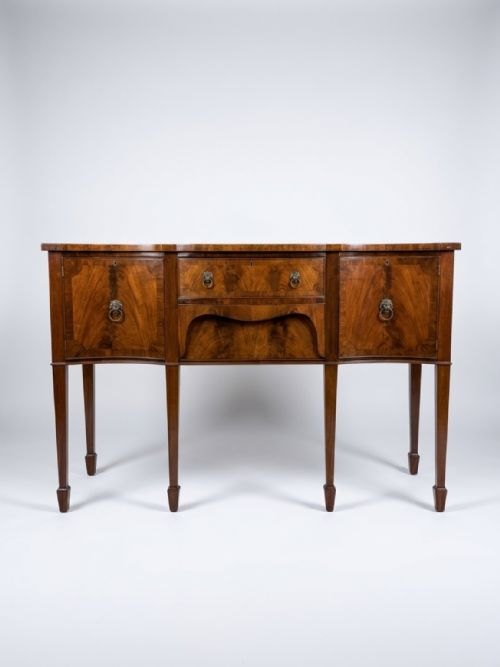
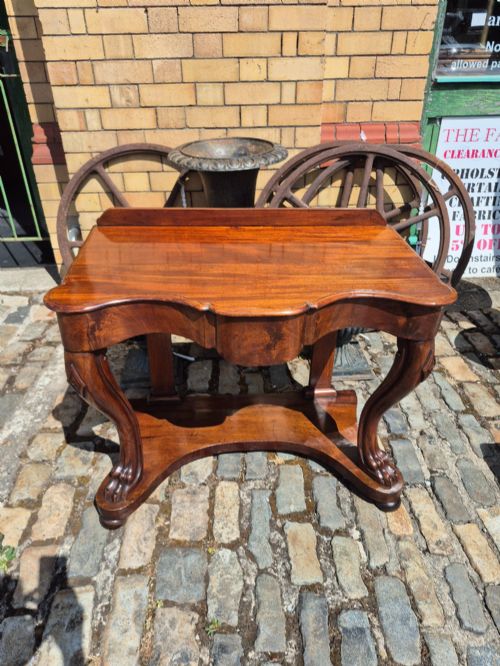
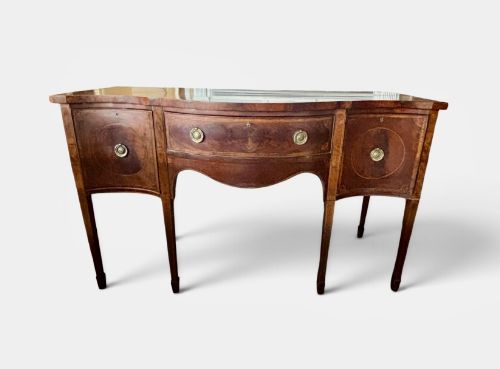
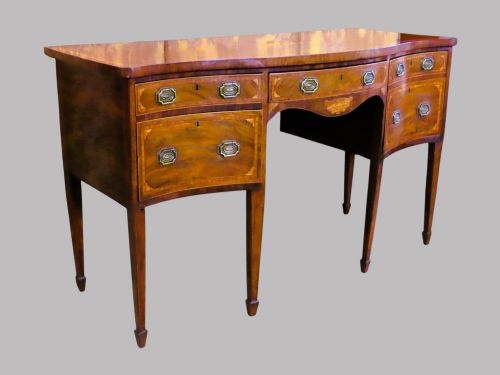
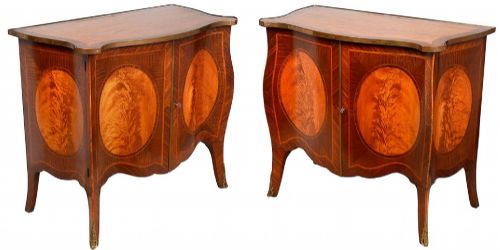
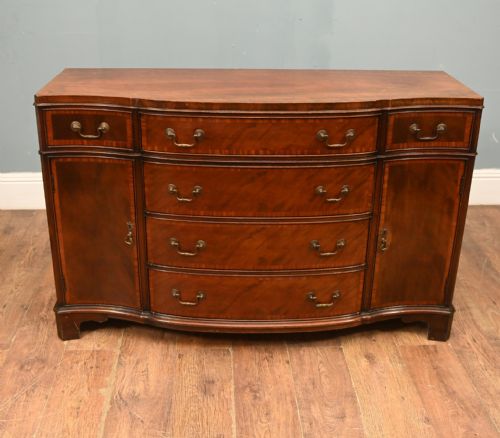




Serpentine Mahogany Credenza
A serpentine mahogany credenza brings fluid lines and rich timber into a room, offering both practical storage and striking presence.
Serpentine Mahogany Credenza
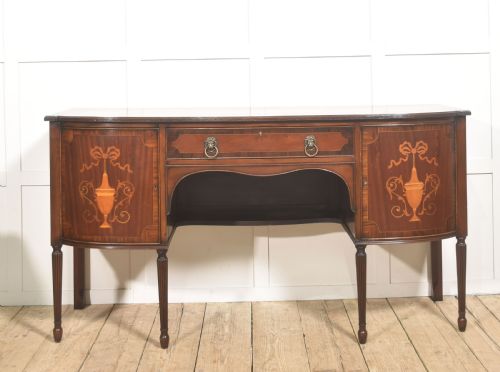
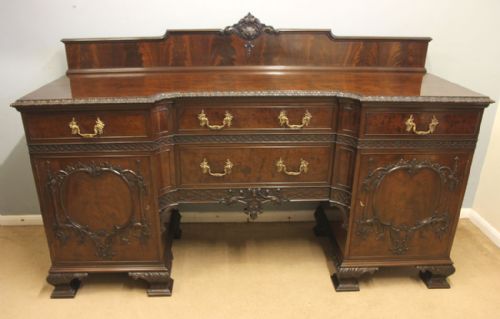
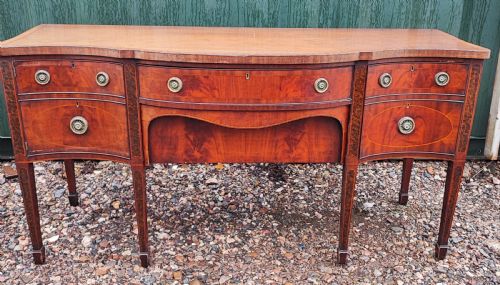
A serpentine mahogany credenza is a sophisticated form of dining room furniture defined by its undulating, curved front and rich timber construction. When searching for a serpentine mahogany credenza, buyers encounter pieces ranging from authentic Georgian and Regency origins to later Edwardian and Sheraton revival interpretations.
The selections span several periods, with 18th Century and George III examples appearing alongside 19th Century, Victorian, and 1920s revival items. Most pieces function primarily as sideboards, sideboards and buffets, or side cabinets, serving dining spaces and principal rooms with substantial surface area and internal capacity.
Makers and cabinetmakers across these eras utilised the undulating front to showcase the figure of the wood. Surviving examples demonstrate how cabinetmakers adapted the serpentine curve across sideboards, commodes, and side cabinets through successive centuries.
Materials and construction
Cabinetmakers built these pieces using solid and veneered mahogany, often selecting flame mahogany to accentuate the curved drawer fronts and doors. Timber preparation required skilled sawing and seasoning to ensure the wood held its shape along the complex serpentine contour.
Inlaid decoration frequently accompanies the primary timber, utilising contrasting woods such as satinwood and boxwood for delicate banding and stringing. Brass hardware, including handles and escutcheons, provides functional fastening and subtle metallic contrast against the dark brown mahogany surface.
Listings span from the Georgian and 18th Century through Regency, Victorian, Edwardian, and 1920s revival eras.
Evaluating quality and craftsmanship
Quality rests in the precision of the serpentine sweep and the selection of the timber grain. Finer pieces display continuous, book-matched flame mahogany veneers across the curving drawer fronts, ensuring the pattern flows naturally without interruption.
The integration of satinwood and boxwood inlay reveals the hand of a master craftsman through crisp, even lines and tight mitres. Furthermore, the substance of the secondary woods used in drawer construction and the weight of the brass mounts separate standard production from exceptional cabinet work.
The Serpentine Mahogany Credenza Glossary
- Serpentine
- A front contour that curves outward in the centre and inward toward the ends, resembling the shape of a snake. This profile requires advanced woodworking skill to construct accurately.
- Flame mahogany
- A highly figured wood veneer displaying distinct, flame-like patterns caused by the way the tree branch met the main trunk. Cabinetmakers prized this figure for its visual depth on prominent surfaces.
- Inlay
- A technique where pieces of contrasting timber, such as satinwood or boxwood, are inserted into recessed cavities in the primary wood to create decorative borders and motifs.
- Credenza
- A sideboard or cabinet used for serving food and displaying objects, often featuring cupboards and drawers. The form evolved across the Georgian, Victorian, and Edwardian periods.
- Sheraton Revival
- A late 19th and early 20th century style that reinterpreted the lighter, neoclassical designs of George Sheraton. These pieces often incorporate delicate satinwood inlay and refined proportions.
Serpentine Mahogany Credenza: Frequently Asked Questions
What is a serpentine mahogany credenza?
A serpentine mahogany credenza is a large storage furniture piece featuring a distinctive curving front and mahogany construction. These items typically serve in dining rooms and living spaces as sideboards or serving surfaces.
Cabinetmakers shaped the front with convex and concave curves to catch the light and display the grain of the timber. They evolved from 18th Century Georgian dining furniture through to later revival periods.
How do I date a mahogany credenza?
Dating relies on examining the construction methods, secondary timbers, and decorative styles present on the piece. Georgian and George III examples show period-specific joinery and hand-cut dovetails, while Edwardian and Sheraton revival items often feature lighter inlay work and distinct finishing techniques.
Hardware style and veneer thickness also provide reliable clues to the era of manufacture. Comparing the overall proportion against known period pieces helps confirm the date.
Where should I place a credenza?
These pieces suit dining rooms, grand hallways, and spacious living rooms where their length and curved profile can be fully appreciated. They provide a generous top surface for lamps or decorative objects, along with enclosed storage below.
Ensure the room has sufficient clearance for the doors and drawers to open fully. Positioning the piece away from direct sunlight protects the mahogany finish and inlaid details over time.
How do I care for mahogany furniture?
Maintenance involves dusting regularly with a soft, dry cloth and avoiding harsh chemical polishes or silicone sprays. Keeping the piece away from excessive heat sources and direct sunlight prevents the mahogany from drying out and the veneer from lifting.
Applying a traditional beeswax occasionally helps nourish the wood and maintain its natural lustre. Checking the humidity levels in the room also preserves the stability of the timber.