
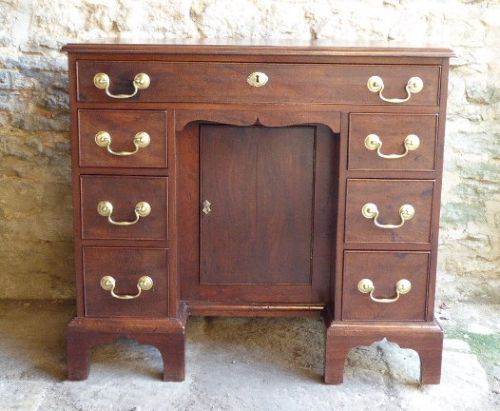
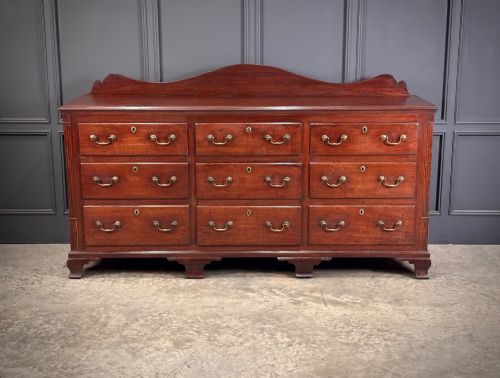
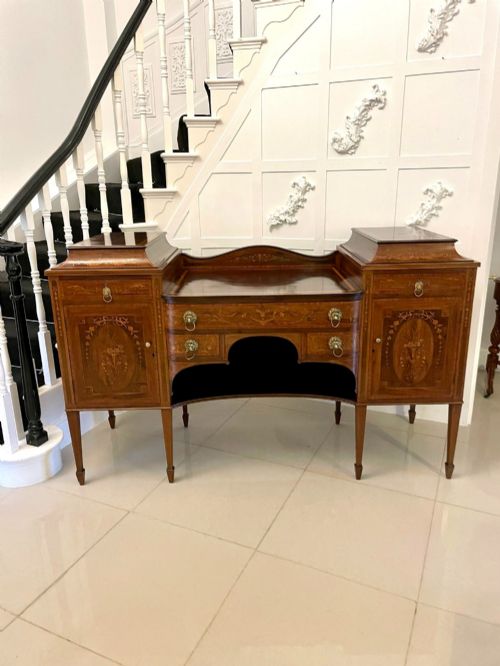
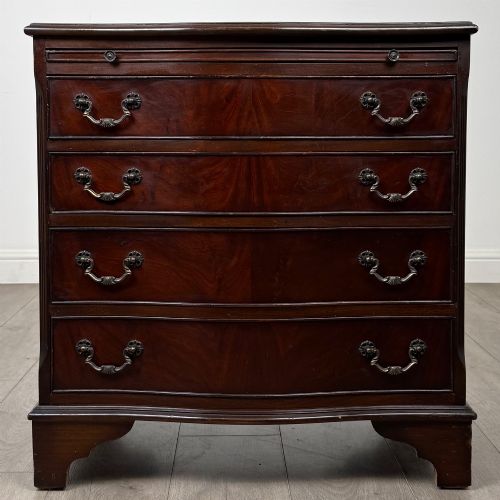


Mahogany Sideboard Brass Handles
These mahogany sideboard brass handles pieces bring substantial timber and warm metalwork together in dining rooms that need serious presence.
Mahogany Sideboard Brass Handles
A mahogany sideboard brass handles search brings up formal dining room furniture built across the Georgian, Regency, and Edwardian periods. These pieces serve primarily to store tableware, display silver, and assist in serving meals.
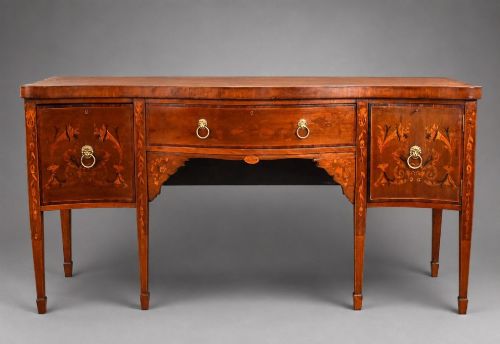
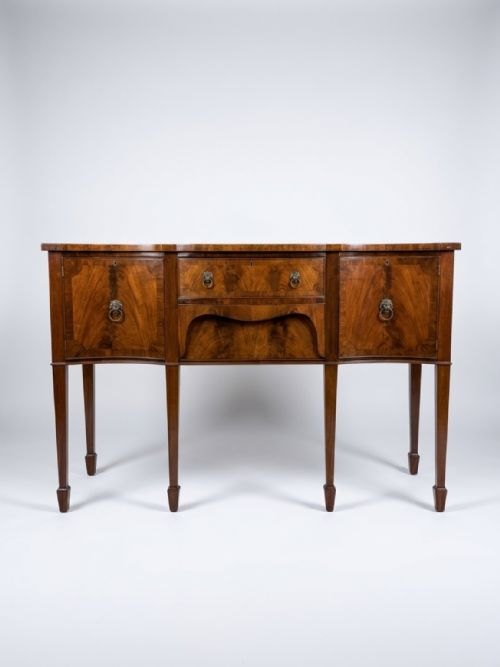
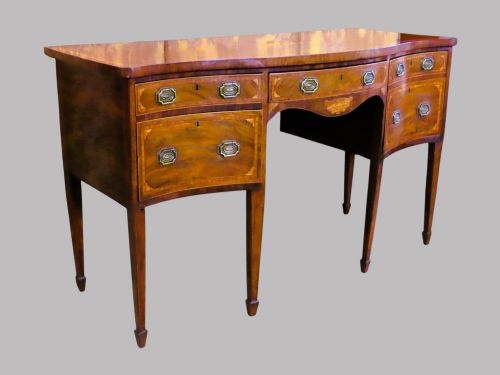
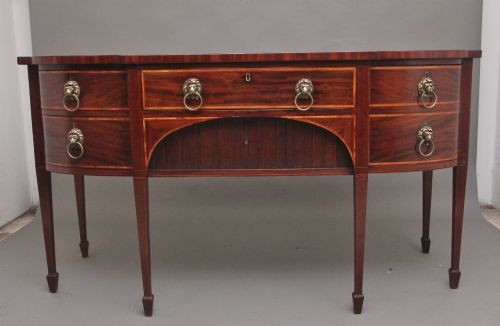
The versions most commonly met on this page take the form of bow front or serpentine credenzas and serving tables in solid timber and veneer. Makers shaped these bodies to sit against dining room walls, often adding matching brass ring pulls and backplates.
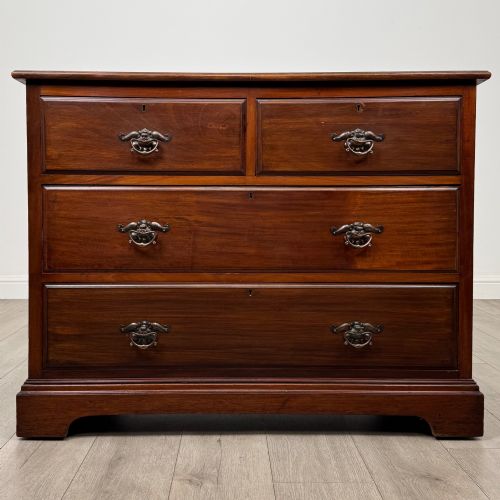
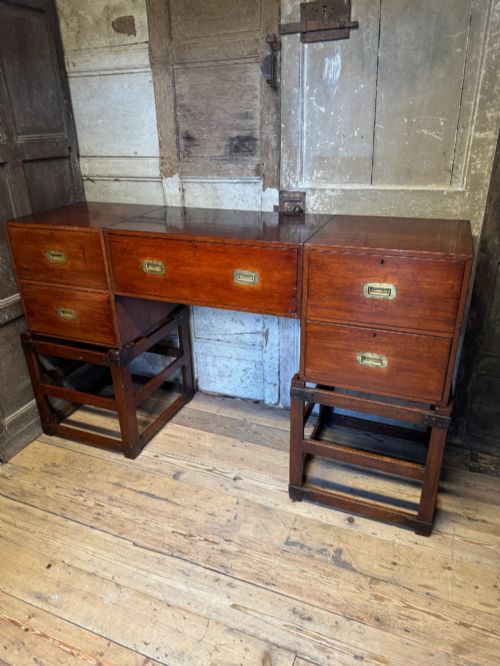
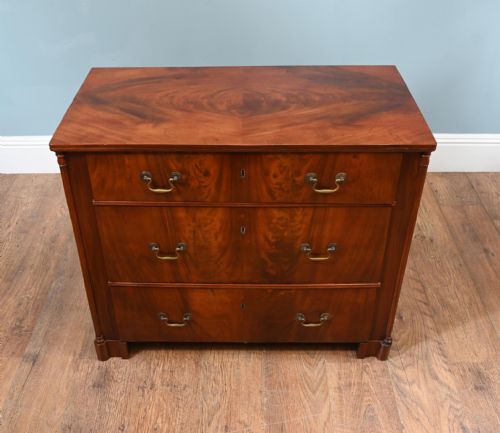
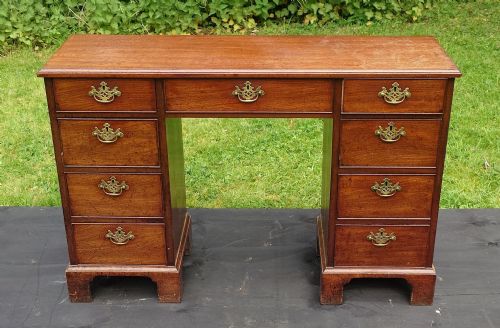
Alongside standard dining room service pieces, related forms like chests of drawers, serving trays, and low desks appear frequently in the listings. These share the same dense reddish timber and bright metal hardware typical of the era.
Materials and Technique
Cabinet makers built these frames using dense tropical timber, frequently selecting flame mahogany veneer for drawer fronts and cupboard doors to create swirling grain patterns. They reinforced structural elements with secondary woods and applied decorative stringing in boxwood and satinwood.
Brass fittings form an integral part of the construction, utilising cast drop handles, oval backplates, and occasionally gallery rails screwed directly into the top boards. These metal mounts provide operational grip and contrast sharply against the dark polished timber.
Listings feature items spanning the Georgian, Regency, and Edwardian periods, constructed in solid mahogany and flame veneer with brass hardware.
Gradations in Standard
Quality separates through the crispness of timber selection and the precision of decorative inlay work. Superior examples display symmetrical flame veneer patterns across every drawer front rather than plain stock timber.
Hardware integrity also dictates the grade of a piece, separating original cast brass mounts with deep patination from later replacements. The fluency of the serpentine curve or bow front contour shows the hand of a more accomplished workshop.
Hewetsons London·Collinson and Lock London·Gillows·H Mower and Stephenson
The Mahogany Sideboard Brass Handles Glossary
- Serpentine front
- A furniture front curved with a convex centre flanked by concave wings. This shape requires advanced woodworking skill to match the grain across undulating timber surfaces.
- Flame mahogany
- A veneer cut from the fork of the tree where the branch meets the trunk. It creates a distinctive rippled pattern resembling flickering fire.
- Bow front
- A convex, outwardly curved furniture face popular in late Georgian and Regency design. This profile softens the angles of a dining room while maximising internal storage depth.
- Stringing
- Thin lines of contrasting wood inlay used to outline drawers and borders. Makers typically utilised light boxwood or satinwood against dark mahogany.
- Campaign furniture
- Modular pieces designed for travel, featuring recessed brass handles and corner brackets to prevent damage during transport.
Mahogany Sideboard Brass Handles: Frequently Asked Questions
How do I date a mahogany sideboard?
Dating relies on observing structural characteristics, timber selection, and hardware styles across different eras. Georgian pieces often feature hand-cut dovetails and simpler carcase construction.
Later Edwardian revivals employ machine precision and often incorporate marquetry inlay work inspired by earlier Sheraton designs.
Are the brass handles usually original?
Many pieces retain their period brass drop handles or ring pulls, secured through original backplate holes. Replacement hardware occurs frequently because working mounts suffered heavy daily use.
Inspect the interior wood around the screw posts to see if older fixing holes remain patched or plugged.
How should I care for the timber?
Maintain mahogany surfaces by applying quality beeswax polish sparingly and buffing with a soft cloth. Avoid placing these items in direct sunlight or near heat sources to prevent veneer splitting.
Keep brass hardware clean using a dry cloth rather than harsh liquid cleaners that can stain the surrounding wood.
What is the difference between George III and Regency pieces?
George III furniture typically displays restrained classical proportions with straight or bow fronts and understated bracket feet. Cabinet makers favoured architectural dignity and fine mahogany grain.
Regency design introduces bolder architectural references, often incorporating brass gallery rails, animal paw feet, and richer veneer contrasts.