




Vintage Bowfront Buffet
A vintage bowfront buffet brings curving line and serious presence to a dining room, offering deep storage beneath a graceful silhouette.
Vintage Bowfront Buffet
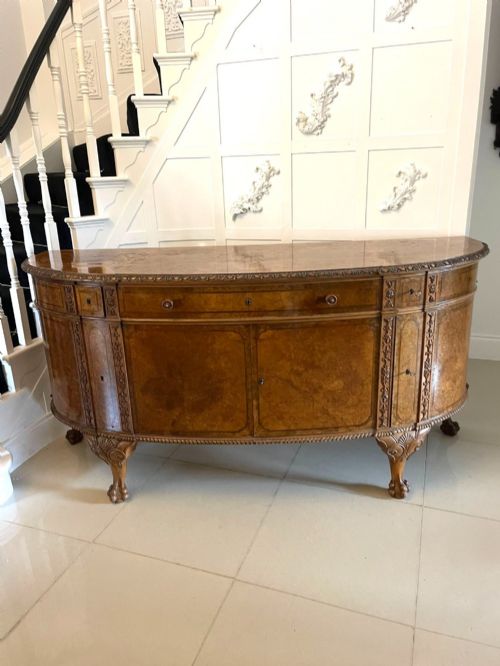
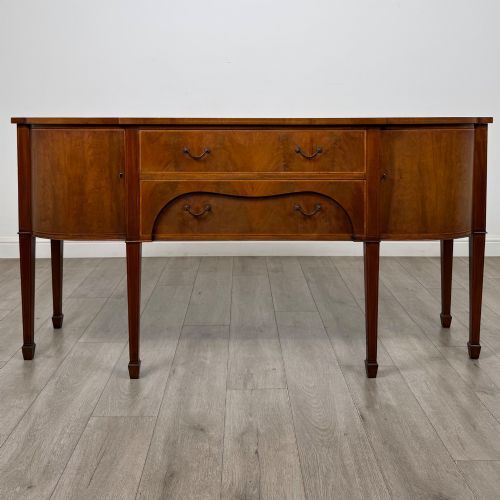
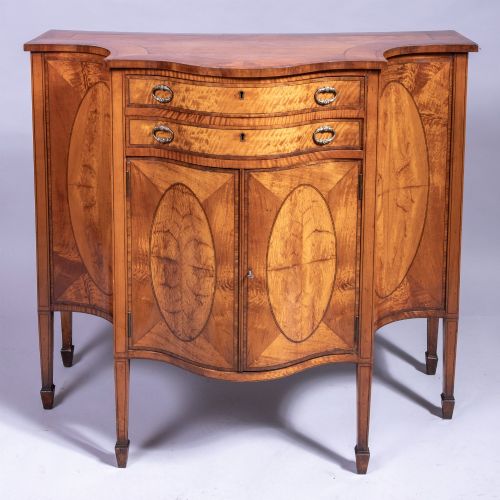
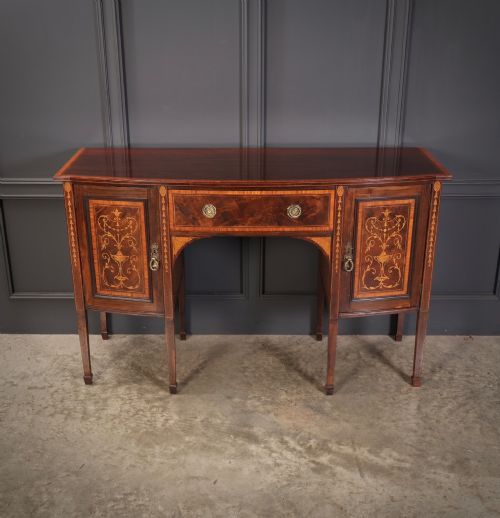
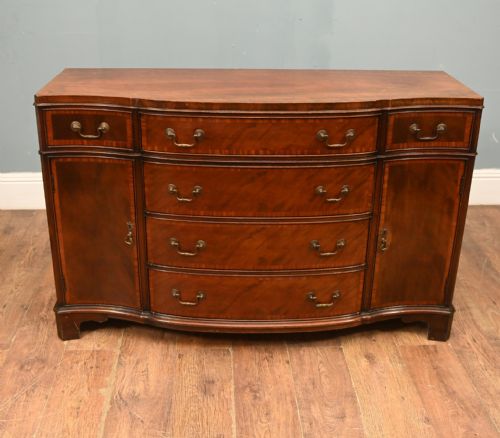
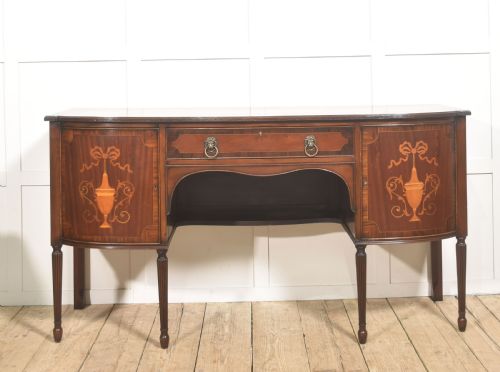
When you search for a vintage bowfront buffet, you encounter dining room storage furniture defined by a convex curved front that softens the room's geometry. The pieces gathered here span formal periods from the eighteenth century through the Edwardian era, with strong representation from the Georgian and Regency periods alongside later revival iterations.
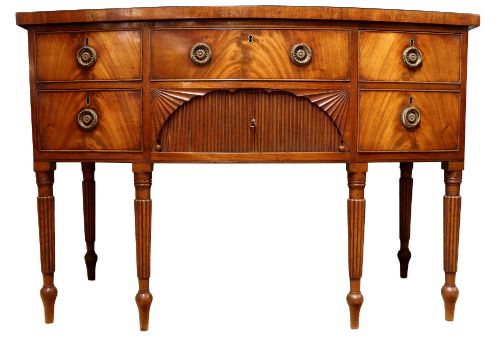
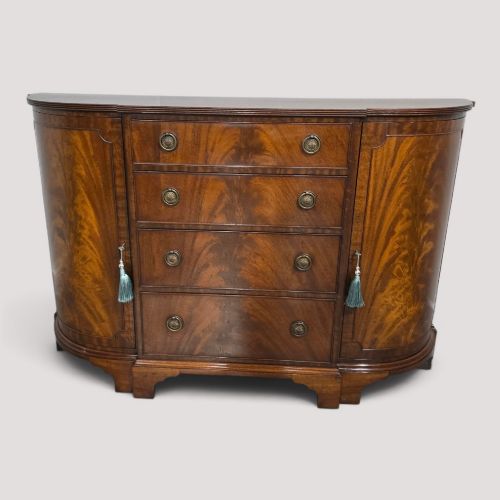
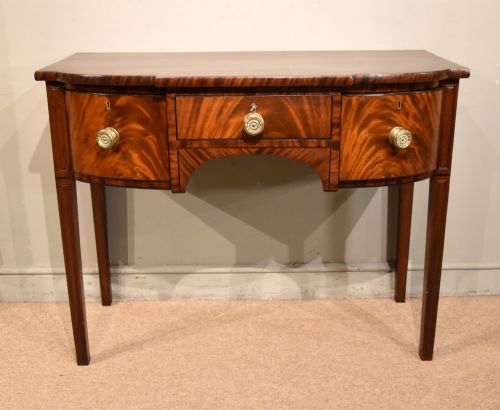
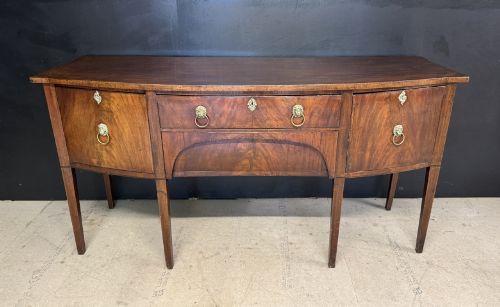
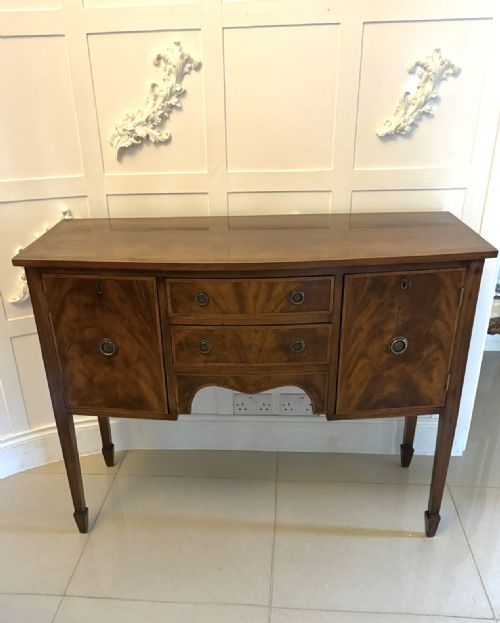
Most examples you meet on this page are constructed in mahogany, often featuring figured timber or flame mahogany veneer that accentuates the curved central sweep. Sideboards, serving tables and side cabinets share this vocabulary of form, fulfilling the traditional role of holding linen, silver and serving dishes.
Makers and designers from George Hepplewhite onwards shaped this tradition, leading into nineteenth-century adaptations and twentieth-century revival pieces that keep the classic proportions alive. You will find both authentic period antiques and finely executed revival pieces bearing the same attention to balanced joinery and decorative detail.
Distinguishing quality across the range
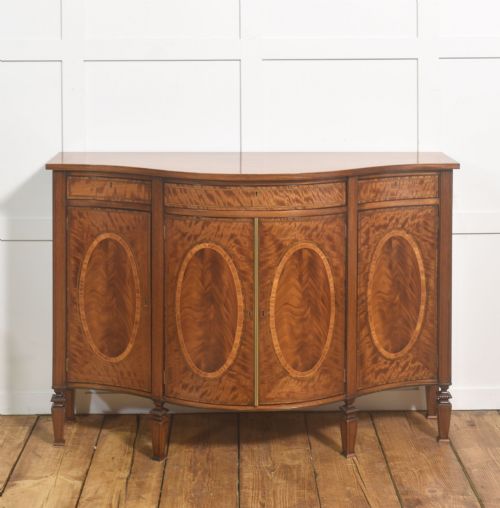
The distinction between ordinary and exceptional pieces rests in the selection of the timber veneers and the precision of the inlay work. Finer examples display symmetrical flame mahogany across the curved drawers and seamless transitions in the boxwood and satinwood stringing.
Proportion and execution of the legs also separate grades of work, from simple tapering spade feet to heavily carved cabriole or reeded supports. The crispness of carved details, such as bell husks or paterae, reveals the hand of a more accomplished workshop rather than mass production.
Listings span multiple eras from the eighteenth century through the nineteen-twenties, showcasing mahogany, satinwood and intricate boxwood inlay.
The Vintage Bowfront Buffet Glossary
- Bowfront
- A convex curved cabinet front that projects outward in the centre, softening the linear profile of a sideboard or serving table. This shape requires advanced cabinetmaking skill to ensure smooth operation of the curved drawers.
- Flame mahogany
- A veneer cut from the fork of a mahogany tree where the branches meet the trunk, creating a fiery, undulating pattern. Cabinet makers reserved this striking grain for the most prominent surfaces of formal furniture.
- Stringing
- Thin inlay lines of contrasting wood, such as boxwood or satinwood, set flush into the primary timber to outline drawers and panels. It defines the formal geometry typical of Sheraton and Regency design.
- Revival
- Furniture produced in a later era, such as the Edwardian period or the early twentieth century, that deliberately copies the style of Georgian or Regency masters. These pieces combine historic design inspiration with the manufacturing standards of their own time.
- Escutcheon
- A decorative and protective plate surrounding a keyhole on a cabinet door or drawer front. Brass escutcheons on these pieces often reflect the specific stylistic period of the manufacture.
Vintage Bowfront Buffet: Frequently Asked Questions
How do I care for a mahogany sideboard?
Keep the timber away from direct heat sources and strong sunlight to prevent the mahogany finish from fading and the veneer from lifting over time. Regular dusting with a soft, dry cloth and occasional application of traditional beeswax maintains the natural lustre of the wood.
Avoid placing damp items directly onto the surface without protective mats, as moisture can leave marks on antique polish. Gentle handling of original brass hardware ensures the fittings remain secure within the wood.
Where does a buffet go in a modern home?
These sideboards fit naturally into dining rooms and large kitchens where their deep proportions provide practical storage for tableware and linens. The flat top surface also serves as a convenient serving area during meals or a display space for lamps and ceramics.
Beyond the dining space, smaller bowfront cabinets work well in hallways or living rooms to anchor a wall and conceal clutter. Their curved shape helps to break up long corridors and narrow spaces by eliminating sharp corners.
Are these pieces suitable for everyday use?
Robust timber construction and deep drawers make these sideboards fully functional for storing heavy items like crockery and silver. The internal compartments accommodate modern dining accessories just as easily as they did eighteenth-century provisions.
Because antique finishes are sensitive to spills and heat, using coasters and runners protects the antique polish during daily use. Regular inspection of drawer runners ensures smooth operation without wearing down the historic wood.
How do I distinguish Georgian from revival pieces?
Georgian originals display construction methods, tool marks and timber ageing consistent with the eighteenth and early nineteenth centuries, often showing hand-cut dovetails and older secondary woods. Revival pieces made around nineteen hundred or nineteen twenty utilise period revival styles but feature more uniform machine preparation and modern internal fixings.
Examining the backboards, drawer linings and blockings often reveals the subtle clues of nineteenth or twentieth-century workshop practices. Comparing the patination of the wood surfaces also helps clarify the true age of the piece.