

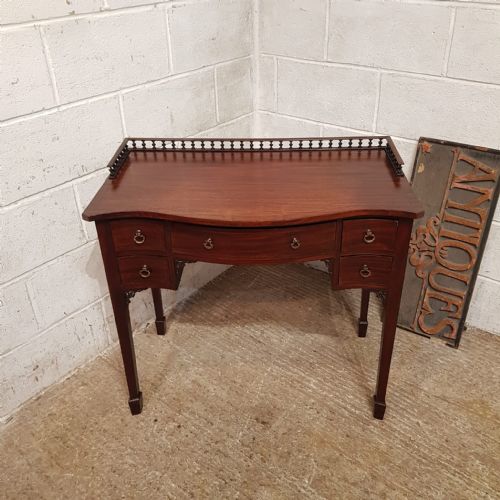
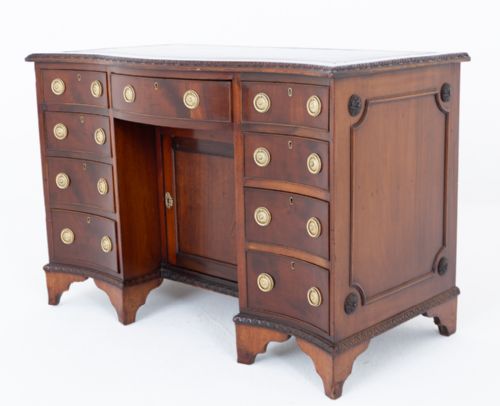
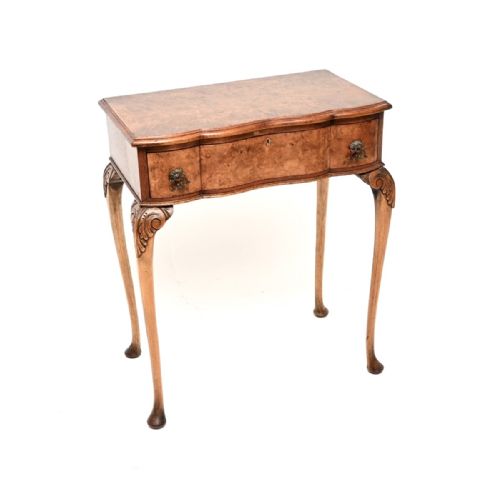

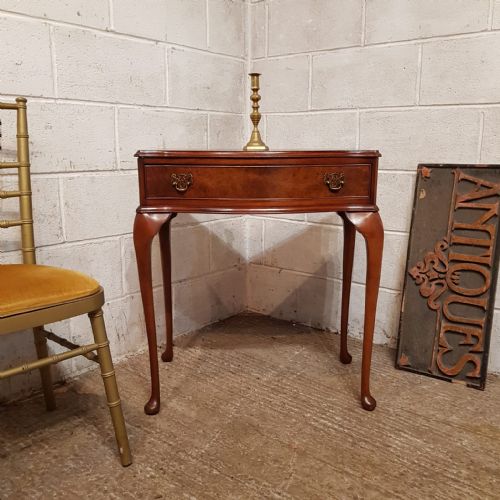


Serpentine Front Writing Table
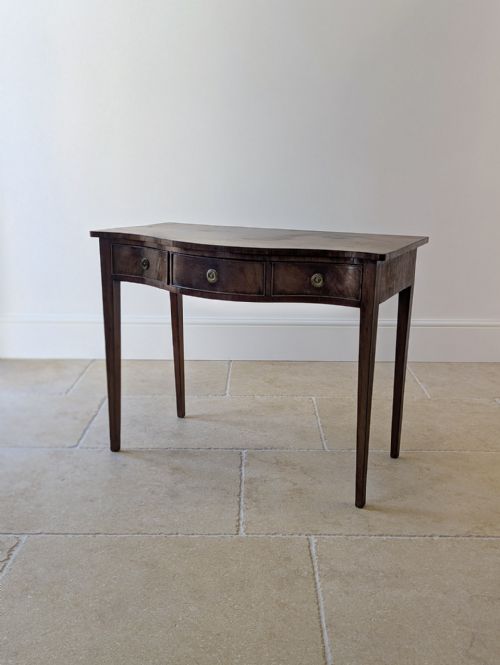
A serpentine front writing table brings an undulating, bowed silhouette to a room, offering a functional workspace with undeniable architectural presence.
Serpentine Front Writing Table
Makers and cabinet-makers utilised various woods to accentuate the curved outline, incorporating satinwood, kingwood, and leather writing inserts. The styles bridge formal antique utility and decorative display, serving equally as functional writing desks or elegant console tables in a hallway or study.
Construction materials and techniques
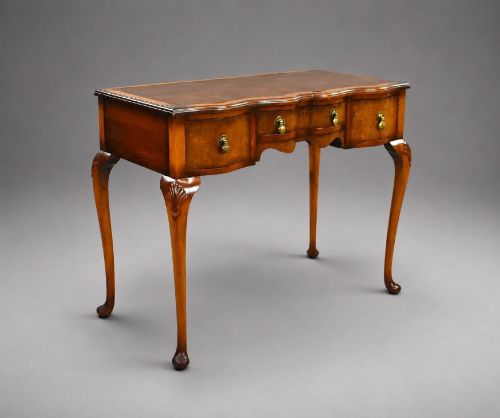
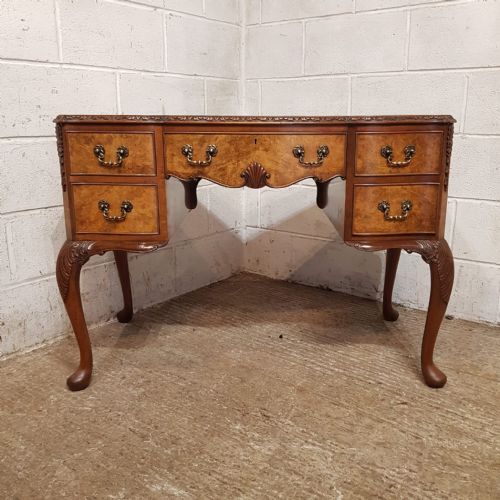
Makers built these pieces primarily using solid mahogany and walnut frameworks, often applying burr walnut or satinwood veneers to create rich, figured surface patterns across the curved drawer fronts. Timber selection was critical, as shaping a serpentine curve required stable wood that could be planed and joined without warping along the undulating grain.
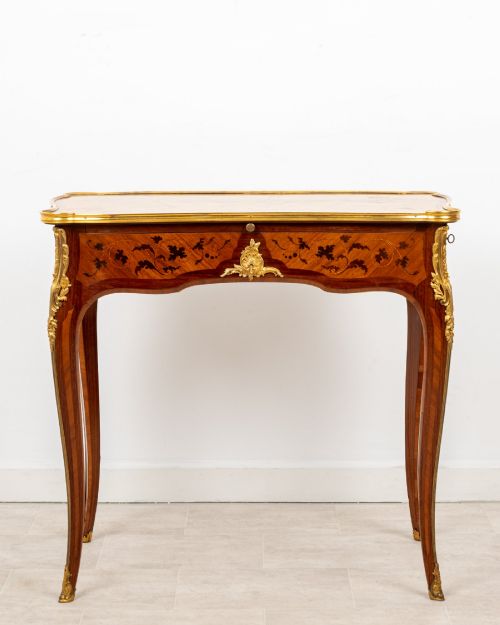
Surface decoration frequently included fine brass handles, escutcheons, and leather writing inserts tooled with gilt borders. French examples incorporated marquetry and intricate parquetry in kingwood, whilst English cabinet-makers relied on crisp mahogany mouldings and kneehole configurations to define the structure.
Materials recorded across the archive include mahogany, burr walnut, satinwood, kingwood, brass, and leather.
Distinctions in standard and execution
Quality separates pieces by the precision of the curved drawer fronts and the fluency of the timber figure matched across the undulating facade. Superior examples display seamless grain alignment and finely dovetailed drawer construction that follows the complex geometry without stiffness.
The integration of secondary woods, the crispness of brass hardware, and the subtlety of marquetry or inlay separate standard utility pieces from high-end cabinet work. Finer desks maintain balanced proportions and careful detailing in the kneehole recesses and corner mouldings.
Durand·Maple and Co·Druce and Co London
The Serpentine Front Writing Table Glossary
- Serpentine
- A furniture front characterised by a convex central section between two concave ends. This undulating shape requires advanced woodworking skill to execute cleanly.
- Bureau Plat
- A French free-standing writing table, typically fitted with drawers and often associated with Louis XV styling. These desks are finished on all sides for placement in the centre of a room.
- Kneehole Desk
- A desk or table featuring a central recess for the user's legs, flanked by pedestals or banks of small drawers. This form became popular during the Georgian period.
- Marquetry
- Decorative veneer patterns formed by fitting together small pieces of different coloured woods or exotic materials. It creates pictorial or geometric designs on tabletops and drawer fronts.
- Lowboy
- A small dressing or writing table with one or more rows of drawers beneath the top. They typically stand on slender cabriole or straight legs.
Serpentine Front Writing Table: Frequently Asked Questions
What is a serpentine front writing table?
A serpentine front writing table is a desk or table featuring a bowed front edge with alternating convex and concave curves. They were designed to provide a functional writing surface while introducing a sophisticated silhouette to a study or parlour.
These pieces range from compact Georgian side tables to large Edwardian kneehole desks, constructed from timbers such as mahogany and burr walnut.
How do I date a serpentine writing desk?
Dating relies on examining the timber species, construction methods, and stylistic revival influences present in the piece. Georgian and eighteenth-century examples feature solid mahogany timbers and hand-cut dovetails, whereas later pieces often showcase Edwardian or 1920s interpretations.
Hardware styles, secondary woods, and veneer techniques also provide reliable indicators of whether a piece originates from the eighteenth, nineteenth, or early twentieth century.
Where should I place a bureau plat?
A bureau plat is traditionally finished on all sides, making it well-suited for placement in the centre of a room rather than against a wall. This allows the French Louis XV styling and marquetry details to be appreciated from any angle.
In modern interiors, they function effectively as freestanding writing desks or statement console tables in spacious rooms.
What is the difference between a side table and a writing table?
A side table primarily serves a decorative or serving purpose, though some Georgian examples include integrated writing and dressing fitments. A writing table is specifically built with a height and knee clearance designed for seated desk work.
Many pieces in this category overlap in form, functioning equally well as narrow desks or console tables depending on the interior setting.