
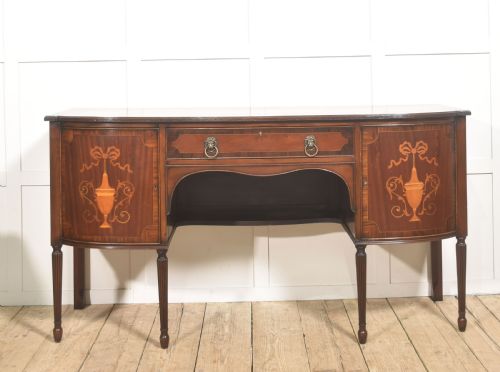


Serpentine Front Credenza
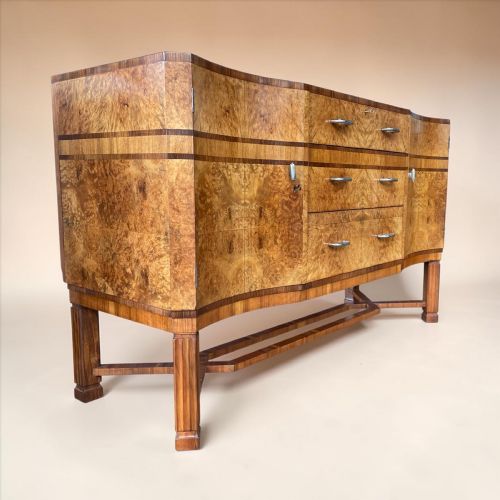
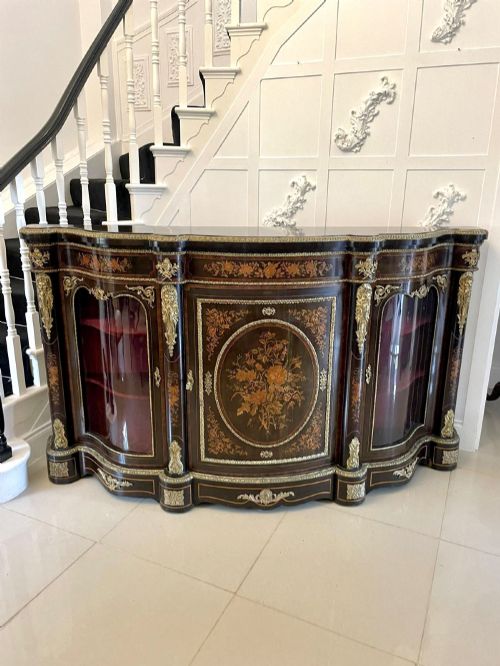
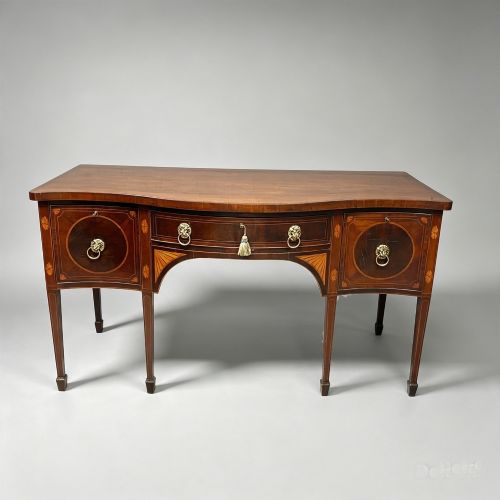
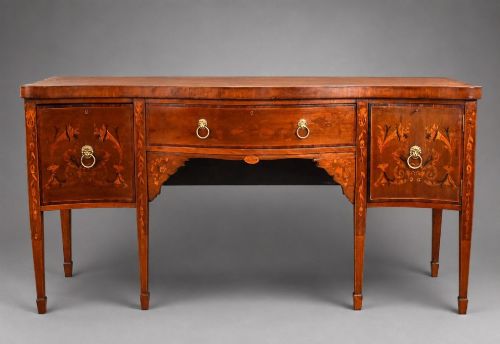
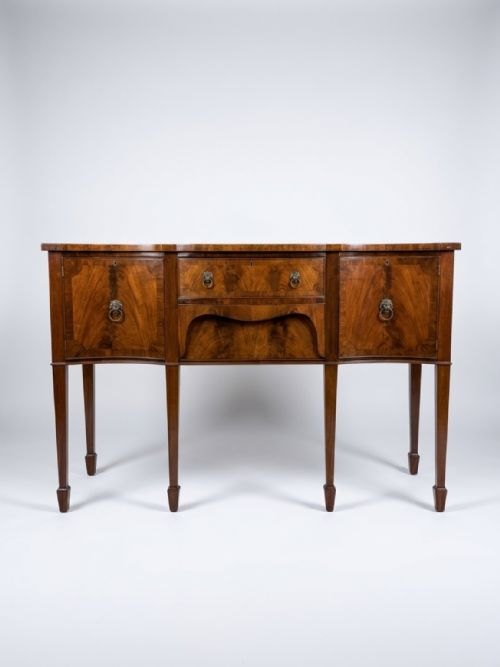
A serpentine front credenza brings an undulating silhouette to a room, offering refined timberwork and ample interior storage for a dining space or parlour.
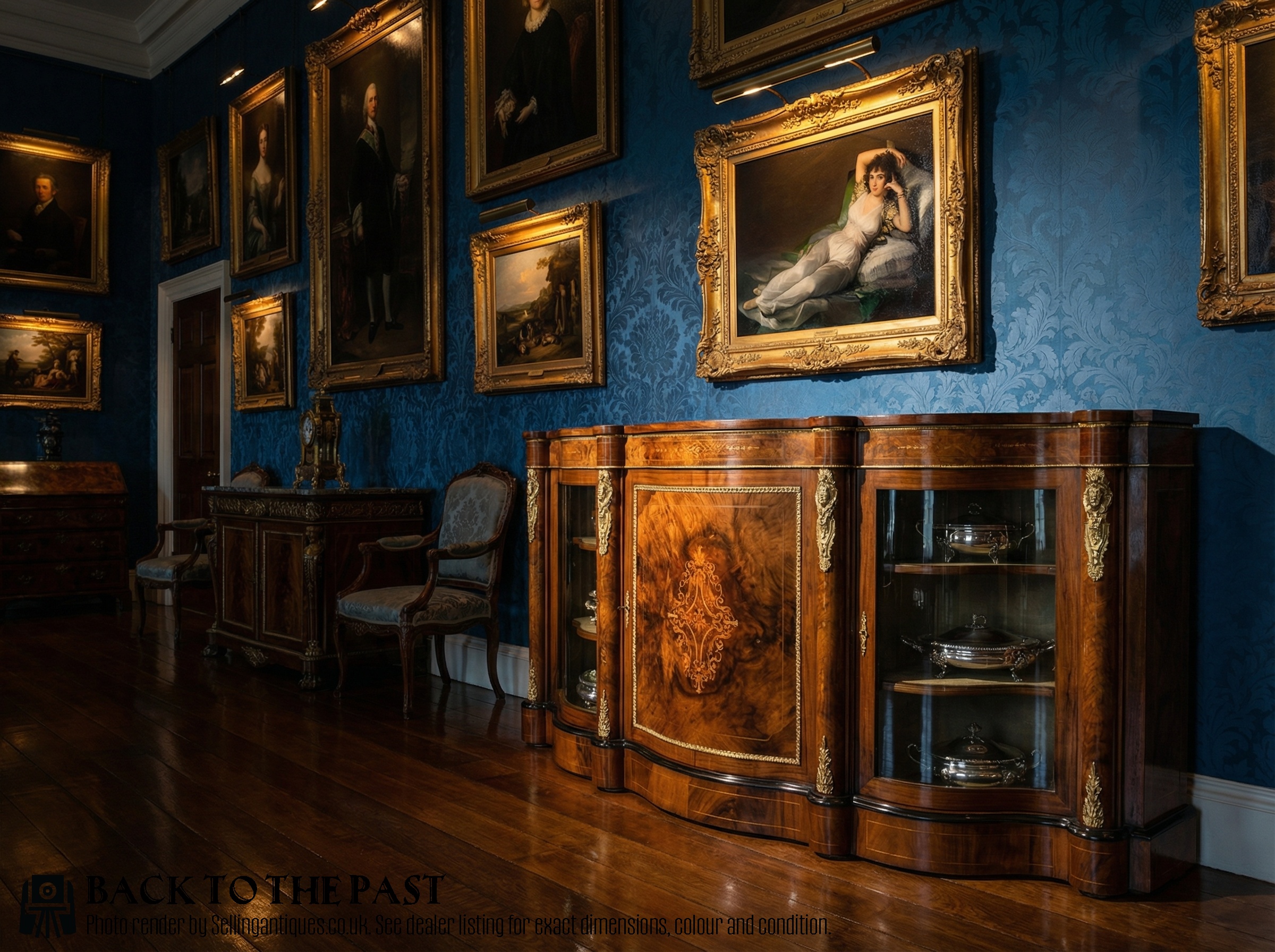
Serpentine Front Credenza
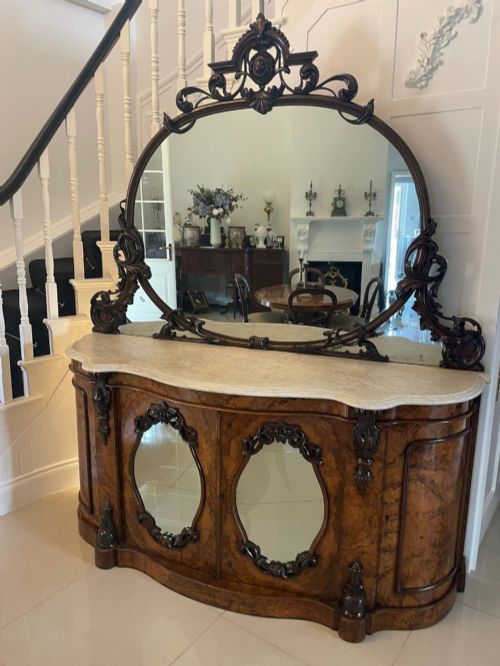
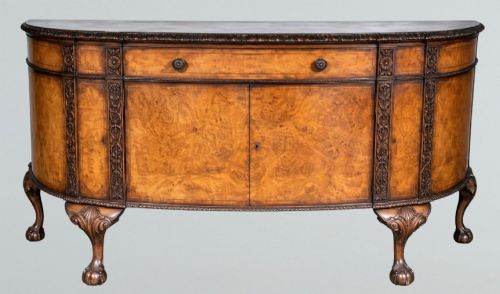
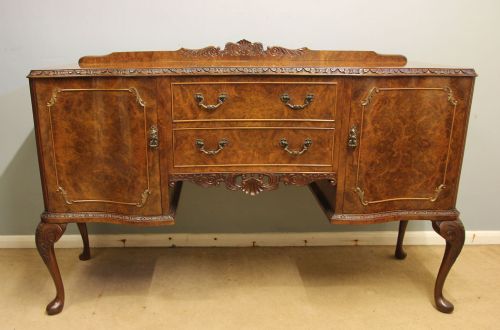
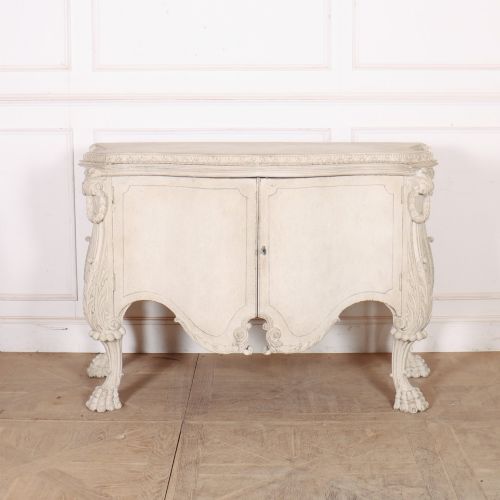
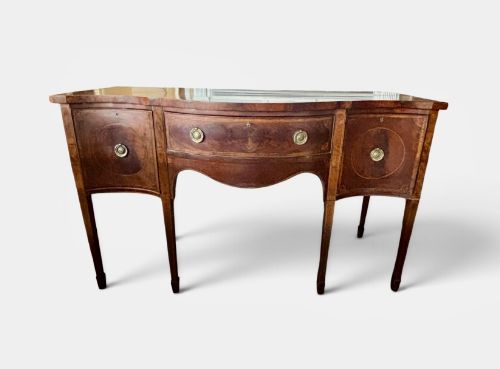
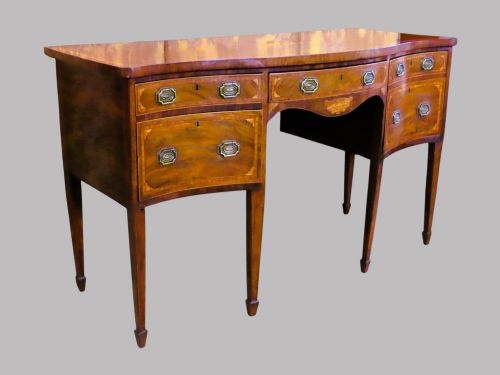
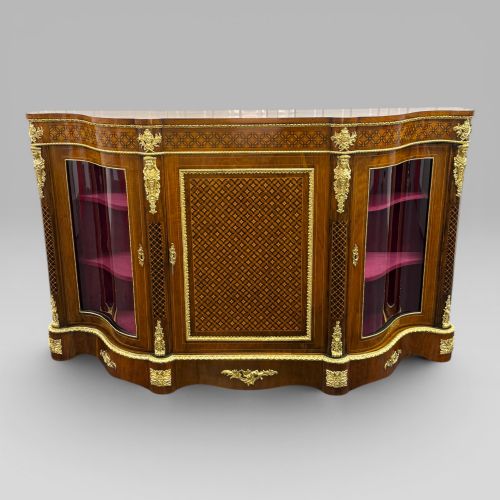
When you search for a serpentine front credenza, you encounter substantial dining furniture and display cabinets defined by an undulating, S-curve front. These pieces serve as both decorative focal points and functional storage units in traditional reception rooms.
How they were made
Cabinetmakers constructed these curving carcasses by carefully shaping solid timber and applying finely figured veneers such as burr walnut or mahogany to curved panel substrates. The complex geometry required precise hand-sawing and jointing to ensure the doors and drawers followed the undulating contour without binding.
Surface enrichment relied on contrasting inlay, floral marquetry, and cast brass or ormolu mounts fixed along the friezes and pilasters. Interior compartments often utilised secondary timbers like oak or pine for drawer linings, whilst polished marble tops appeared on specific Victorian iterations.
Serpentine Front Credenza Retail Price Guide 2026
Typical asking prices for serpentine front credenza among the pieces listed under this phrase on Sellingantiques today, from the lower quarter to the upper quarter. They describe what is for sale here now, not the wider market.
Listings feature mahogany, burr walnut, rosewood and satinwood, spanning the Georgian, Victorian and Edwardian periods.
What varies in quality
The caliber of a serpentine front credenza rests primarily in the fluency of its curved timber line and the symmetry of its veneering. Superior examples display continuous, book-matched grain patterns that sweep naturally across the undulating drawers and doors.
Subtlety of hand-carving and the crispness of marquetry details distinguish exhibition-grade pieces from standard workshop output. Furthermore, the weight and precision of cast brass or ormolu mounts indicate the original investment in the piece's manufacture.
Maison Gagneau·Epstein
The Serpentine Front Credenza Glossary
- Serpentine
- A curved architectural line that sweeps outward in the centre and inward at the sides, or vice versa, creating an S-shape across the front of the furniture.
- Credenza
- A low cabinet or sideboard designed for storage and display, often featuring central cupboards flanked by curved glass or timber side doors.
- Marquetry
- Decorative veneer patterns formed by fitting together small pieces of tinted wood, shell or ivory to create pictorial or floral designs on the surface.
- Ormolu
- Gilt bronze mounts cast and chased by hand, applied to the corners, feet and friezes of Victorian and Continental furniture for ornamentation.
- Burr walnut
- Timber taken from the gnarled growths of walnut trees, prized by cabinetmakers for its swirling, highly figured grain patterns.
Serpentine Front Credenza: Frequently Asked Questions
How do I spot a Georgian serpentine credenza?
Georgian examples generally rely on solid mahogany or fine veneers without the heavy gilt ormolu mounts seen on later Victorian pieces. Look for clean architectural lines, restrained brass hardware, and hand-cut dovetails within the drawer construction.
The proportions tend to be robust yet elegant, often standing on bracket feet or tapered legs rather than the plinth bases common in the mid-nineteenth century.
Where should I place a serpentine credenza?
These cabinets suit dining rooms, grand hallways or spacious living areas where their curved silhouette can be appreciated from multiple angles. Because the front undulates outward, ensure there is sufficient floor clearance to walk past the piece comfortably.
They work effectively against long, flat walls where the sweeping curves provide a striking visual contrast to straight architectural lines.
Are marble tops original on these credenzas?
Marble tops appear frequently on Victorian burr walnut iterations, particularly those designed as side cabinets or credenzas for drawing rooms. They provide a durable, cooling surface that contrasts with the warm tones of the figured timber below.
When inspecting a marble top, check that the stone follows the precise S-curve of the wooden carcass beneath without excessive overhang or gaps.
How do I care for burr walnut veneer?
Burr walnut veneer requires stable indoor humidity and protection from direct sunlight to prevent the thin decorative wood from drying out or splitting. Dust the surface regularly with a soft, dry cloth and avoid silicone-based polishes that can build up over time.
Applying a traditional beeswax occasionally helps nourish the timber and maintain a soft, natural sheen across the undulating grain.