
Serpentine Dresser Drawers
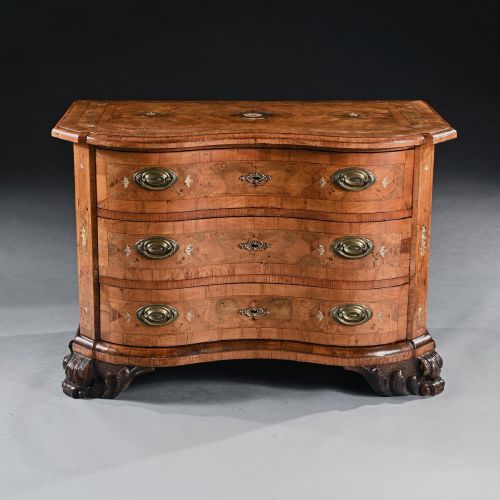
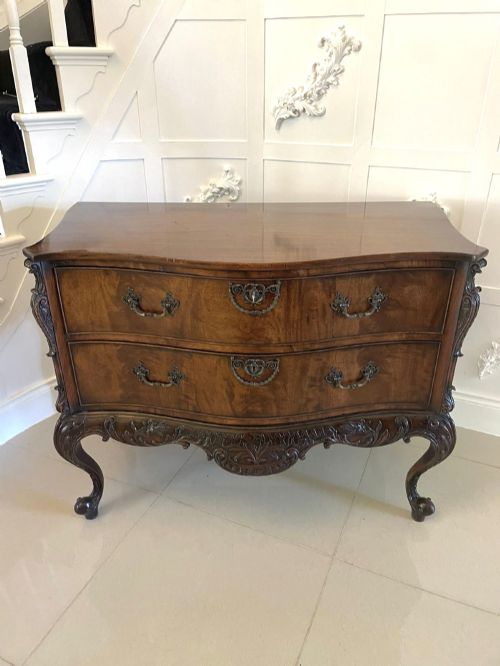
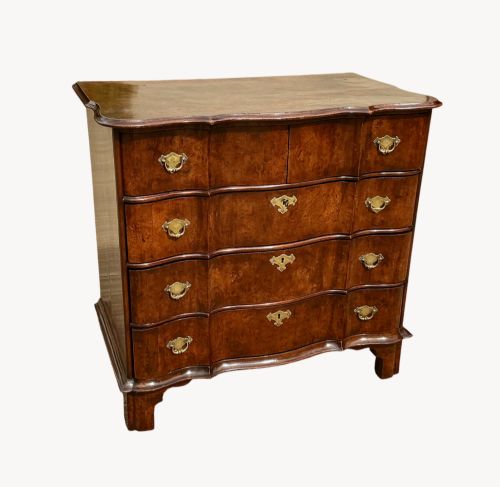
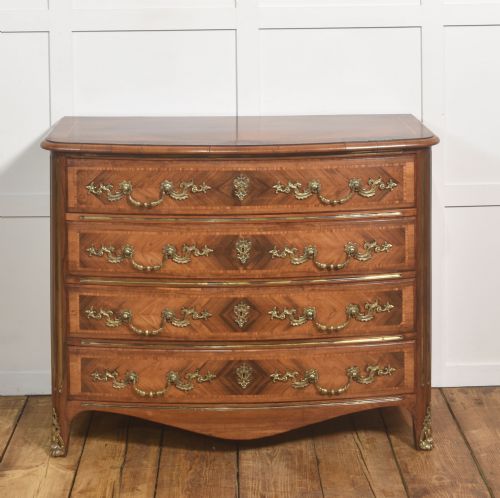
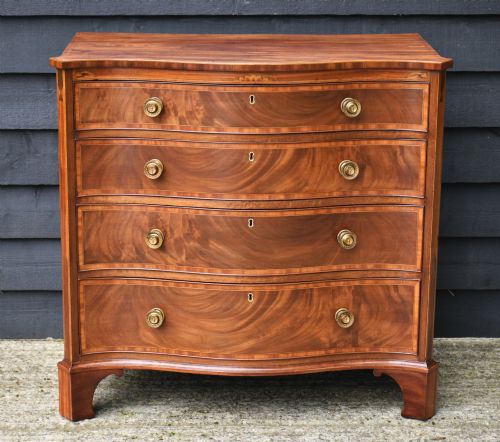
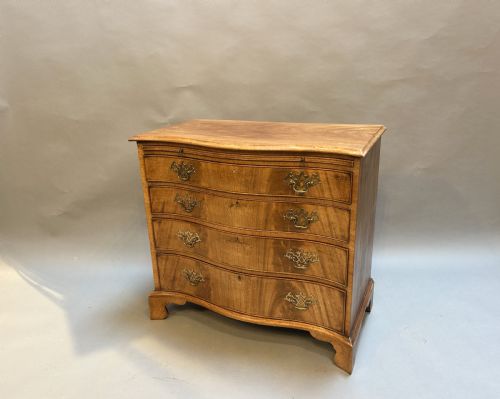
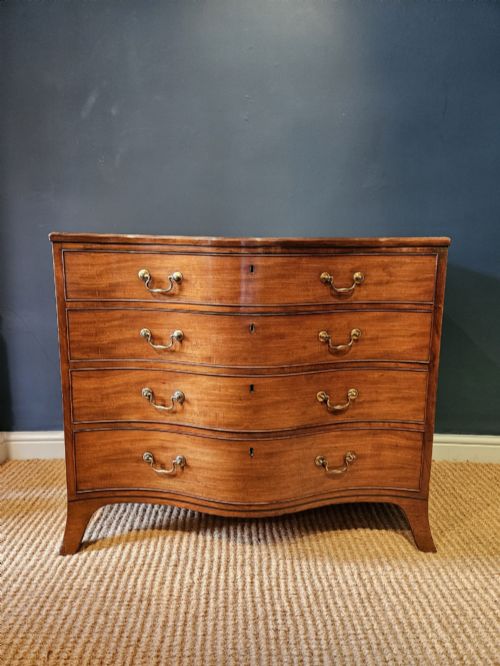
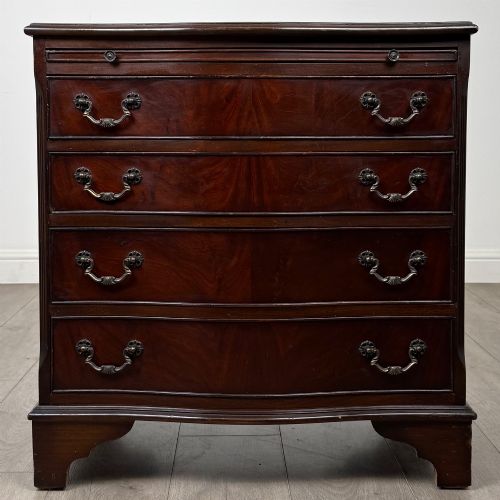
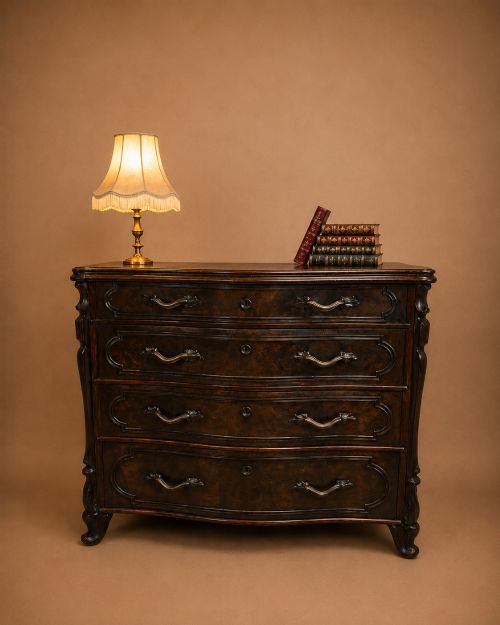
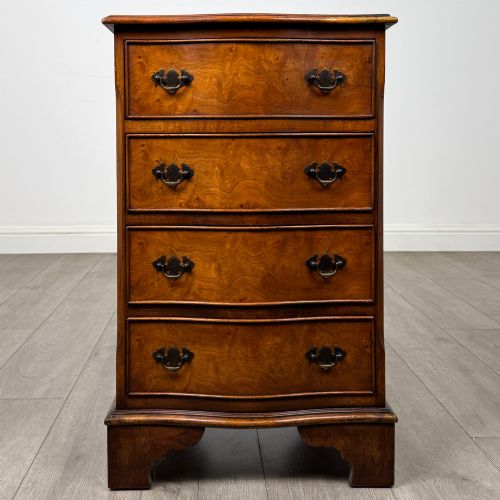
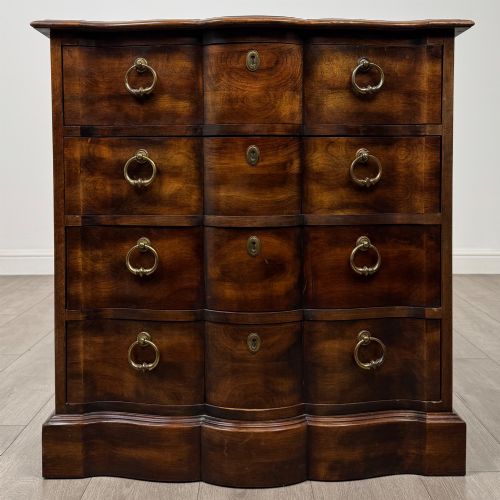
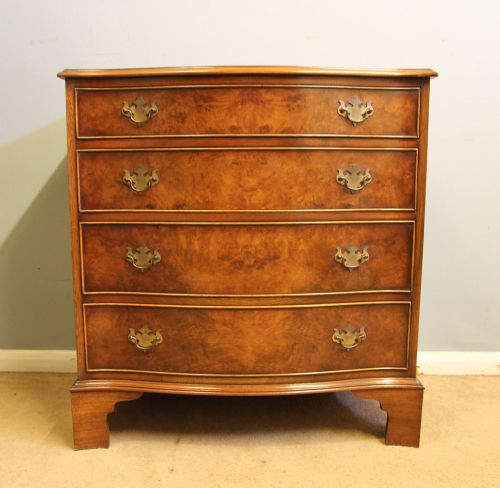
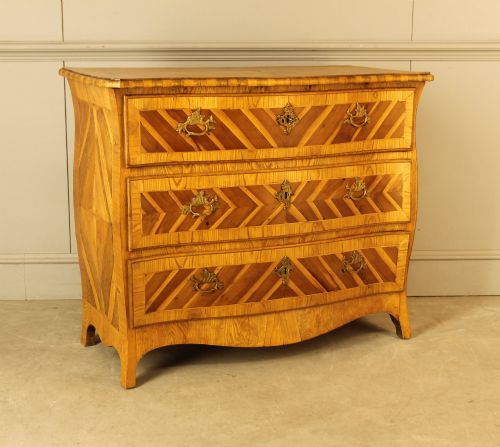
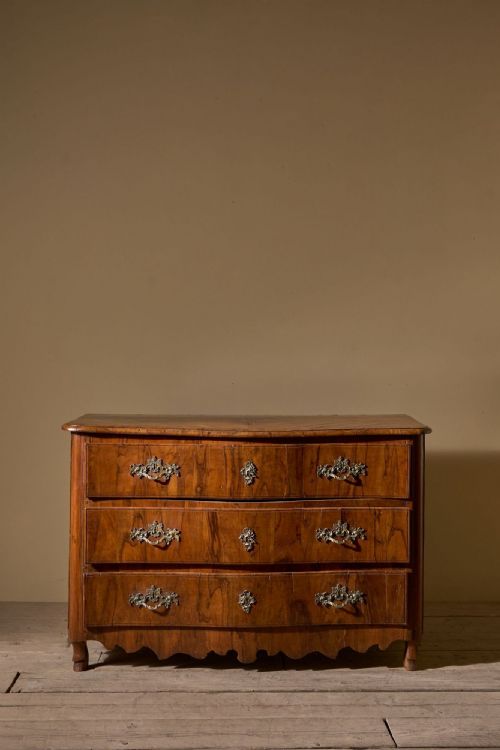
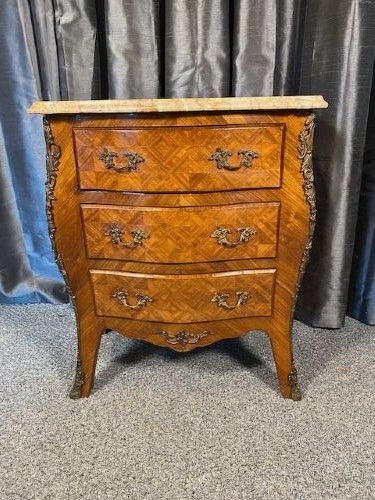
These serpentine dresser drawers bring together curving fronts and rich cabinet timbers from Georgian workshops and continental rooms.
Serpentine Dresser Drawers
Serpentine dresser drawers present an undulating front that curves gently outward at the centre and inward toward the edges, creating a rhythmic profile across the drawer fronts. When looking for serpentine dresser drawers, collectors encounter notable Georgian mahogany examples alongside continental commodes from the eighteenth century.
The form appears in several distinct regional styles, ranging from English George III chests to Dutch walnut pieces and French commodes. Makers constructed these storage items with multiple graduating drawers, occasionally incorporating fitted writing slides or marble tops.
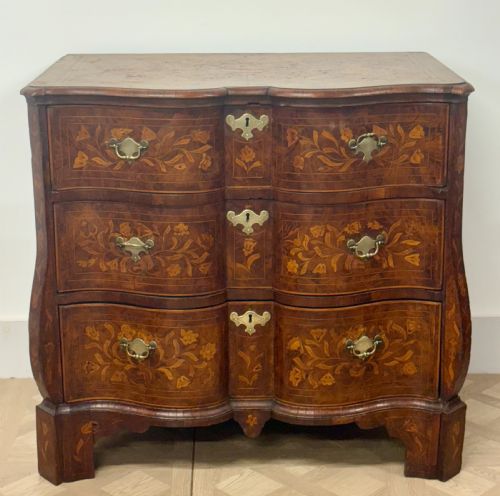
Examples span several centuries, with eighteenth-century pieces showing detailed marquetry and nineteenth-century revivals offering figured veneers. The selection balances robust English proportions with ornate continental forms.
Materials and construction
Cabinetmakers built these serpentine fronts from dense hardwoods including mahogany, walnut, and burr elm, often applying figured veneers over sturdy oak carcases. Marquetry details incorporating ivory, pewter, and satinwood decorate continental pieces.
Craftsmen shaped the undulating drawer fronts by cutting solid timber or bending laminated core boards to achieve the characteristic curve. Original brass handles and escutcheons complete the structure.
Listings feature walnut, mahogany, and satinwood alongside marble and brass elements.
Differentiating quality levels
The standard of execution in serpentine dresser drawers depends upon the precision of the curving drawer fronts and the match of the timber grain. Superior examples display continuous, symmetrical grain patterns across the drawers and tightly fitted joints.
The presence of original hardware, secondary timbers, and untouched surface patination elevates a piece. Elaborate marquetry work and intact marble tops distinguish continental commodes of the highest order.
The Serpentine Dresser Drawers Glossary
- Serpentine
- A furniture front characterised by a double-concave curve flanking a central convex projection. This profile demands advanced woodworking skill to execute properly.
- Commode
- A low chest of drawers or cabinet originating in France during the eighteenth century. These pieces often feature decorative veneers and marble tops.
- Marquetry
- The art of applying pieces of veneer to a structure to form decorative patterns and pictures. Craftsmen utilise woods, ivory, and metal.
- Bombe
- A swelling, rounded commode profile that curves outward on the front and sides. This bulging form typifies continental Rococo furniture.
- Escutcheon
- A protective plate surrounding a keyhole. These metal fittings often match the drawer handles.
Serpentine Dresser Drawers: Frequently Asked Questions
What is a serpentine chest?
A serpentine chest is a storage unit featuring a distinct undulating front with alternating concave and convex curves.
This sophisticated shaping appears primarily on eighteenth-century and revival drawer chests.
How do I date these drawers?
Dating relies on timber selection, construction methods, and hardware styles across periods like the Georgian era.
Eighteenth-century examples often use solid mahogany or walnut with hand-cut dovetails, while later revivals show different secondary woods.
Where were these chests made?
These pieces originated in English workshops, French provinces, and German or Dutch cabinet-making centres.
Continental pieces frequently incorporate marble tops and elaborate marquetry.
How do I care for timber?
Maintain antique timber by keeping pieces away from direct heat sources and sudden humidity changes.
Apply a light microcrystalline wax occasionally to protect the polished surface without building up residue.