
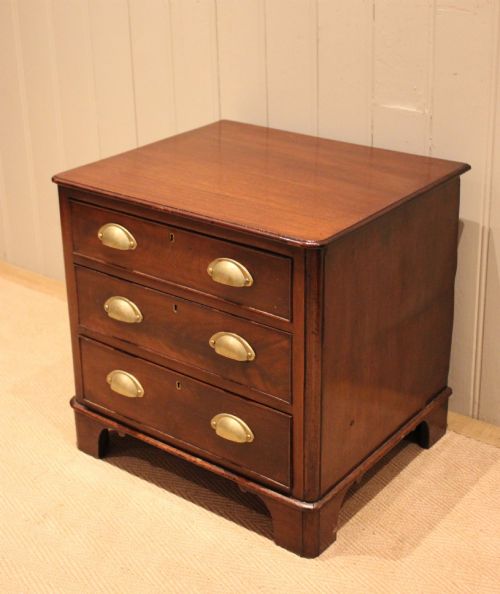
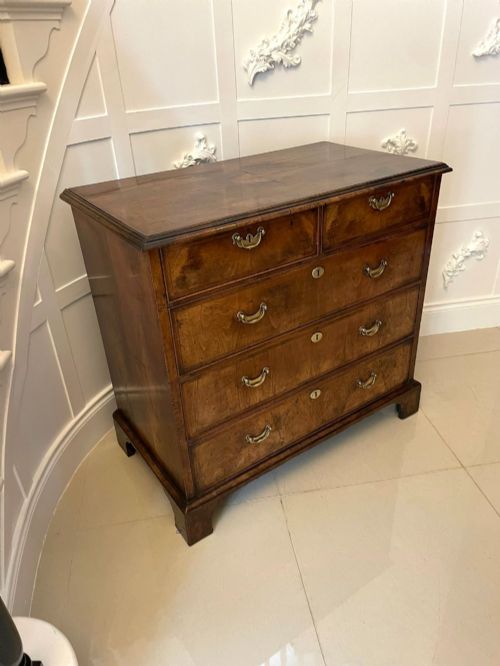
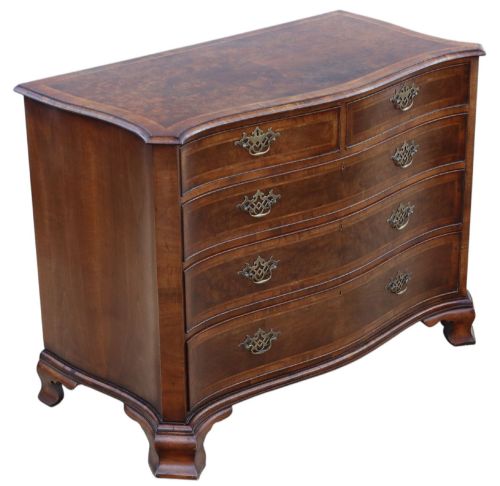
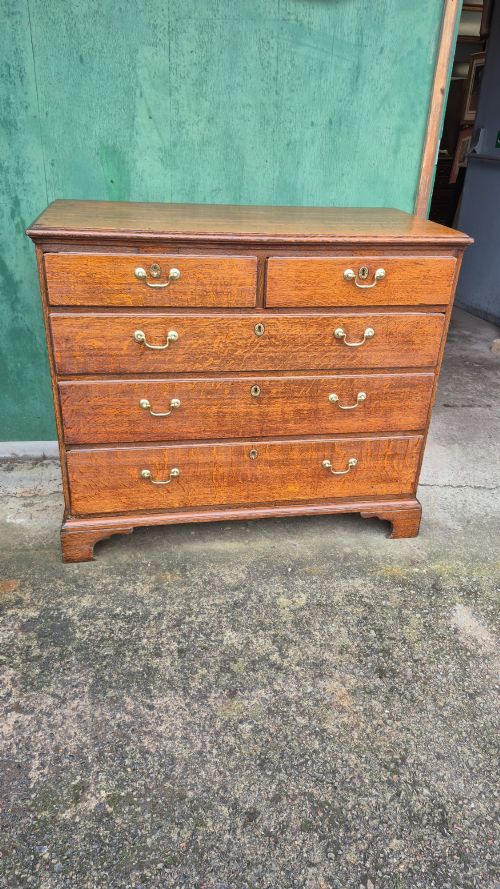

Bracket Foot Chest of Drawers
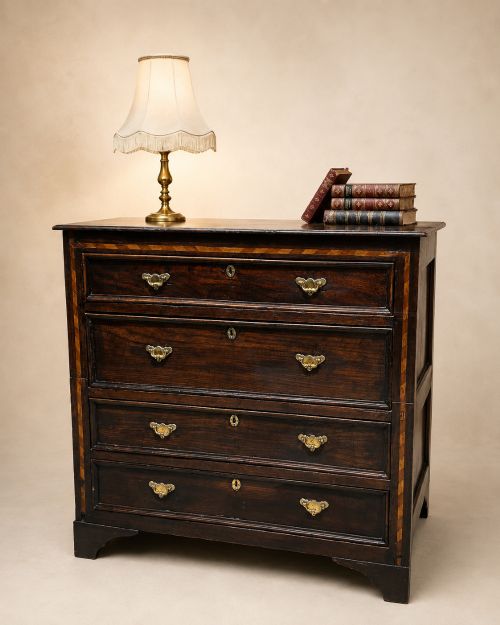
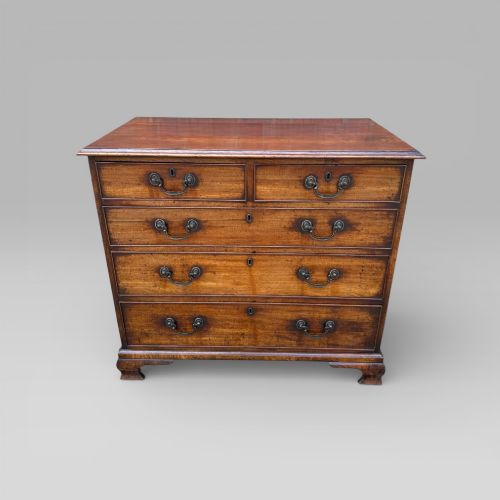
A bracket foot chest of drawers is a substantial timber storage piece raised on shaped wooden feet, prized for its classic proportions and enduring utility.
Bracket Foot Chest of Drawers
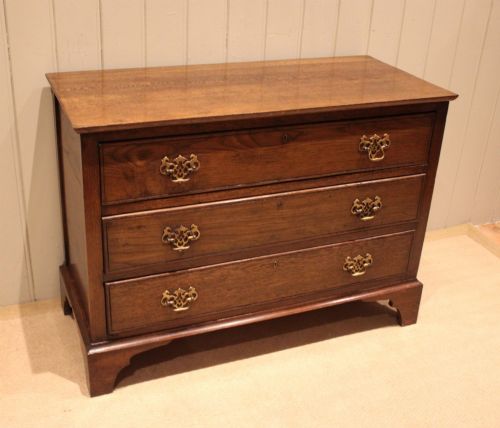
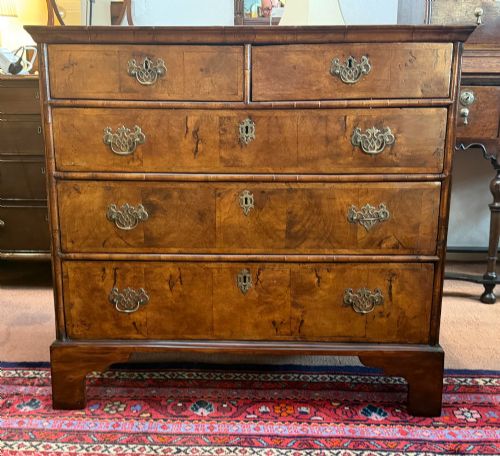
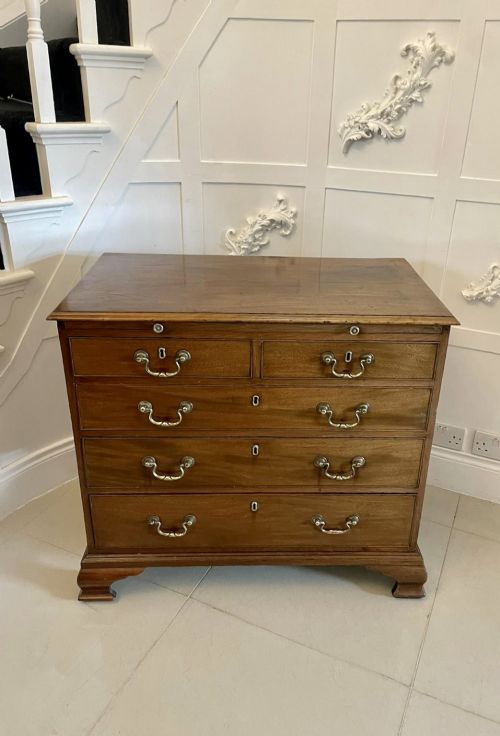
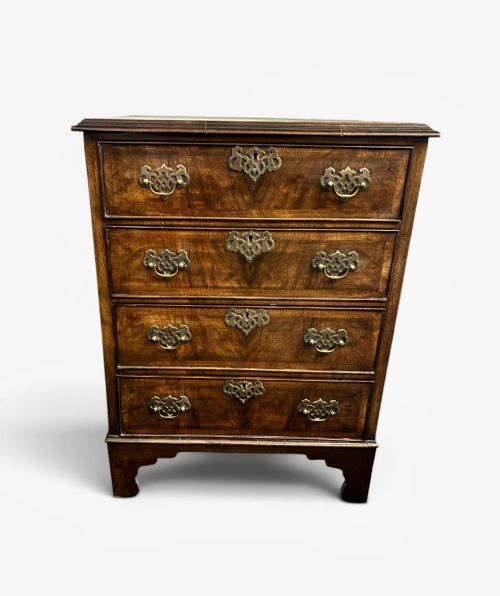
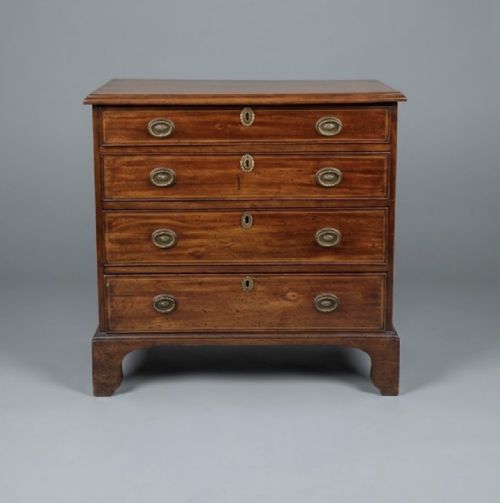
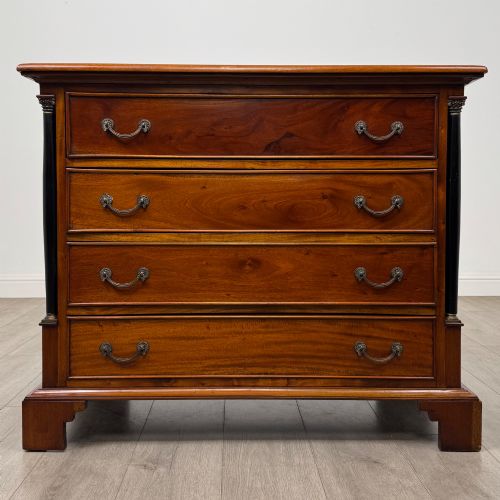
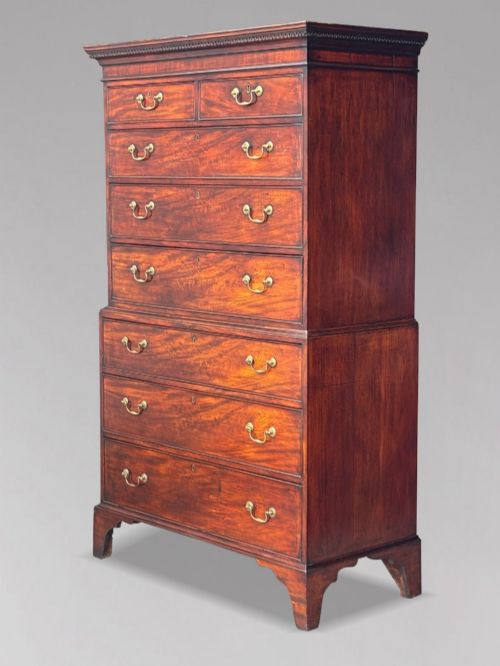
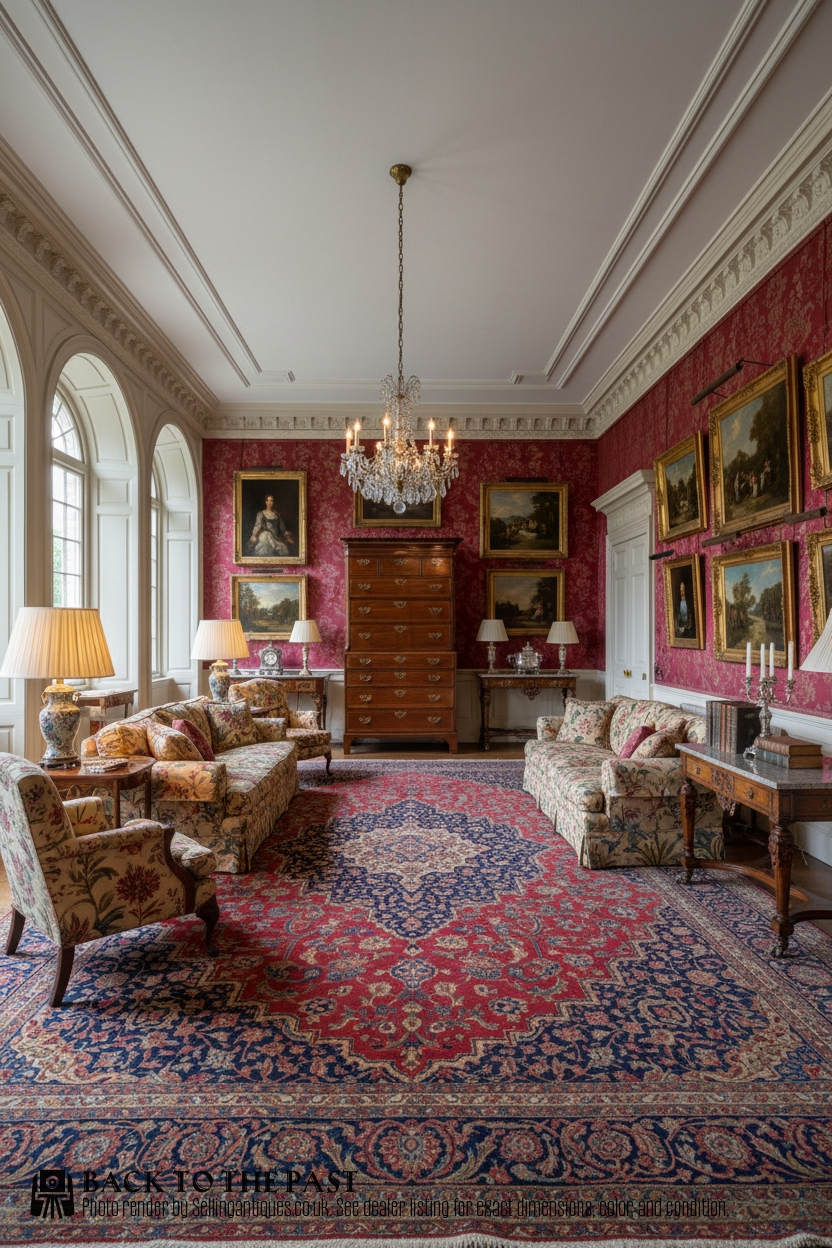
A bracket foot chest of drawers stands as a cornerstone of traditional British furniture, taking various forms from compact bachelor chests to towering chests on chests. The pieces recorded here span several centuries, with prominent representation from the Georgian and 18th century periods alongside later Victorian and Edwardian interpretations.
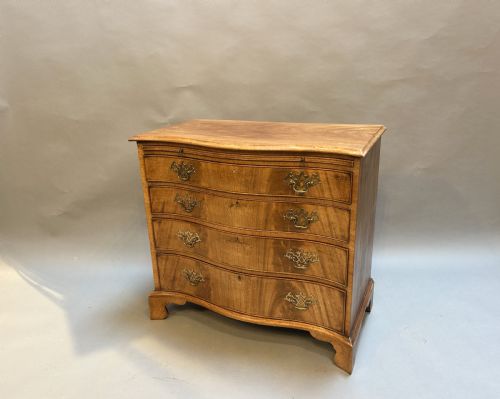
Makers constructed these storage items in configurations ranging from simple small four-drawer models to serpentine commodes and pieces fitted with pull-out brushing slides. Oak and mahogany dominate the offerings, supported by walnut, burr walnut, fruitwood inlay, and painted finishes.
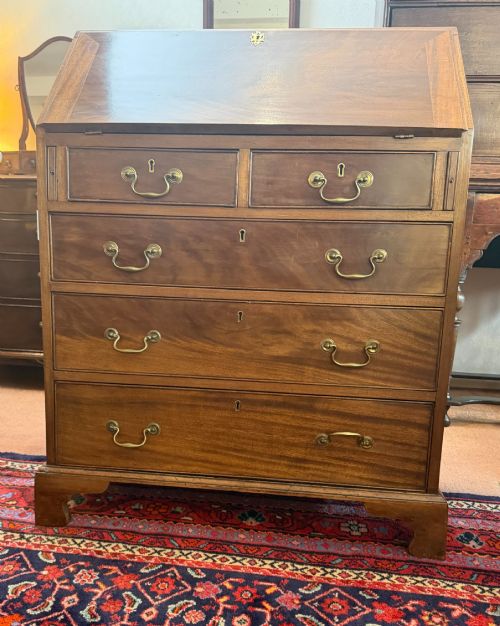
The version most commonly encountered on this page is the classic mahogany or oak chest dating from the Georgian era, often featuring multiple graduated drawers and original brass hardware. Alongside these, buyers find related forms such as desks, bureaux, and bedside tables sharing the characteristic bracket feet.
Materials and Technique
Cabinetmakers relied on dense hardwoods such as mahogany, oak, and walnut to build carcases that would endure centuries of daily use. They often selected figured veneers, burr walnut, and fruitwood inlay to decorate drawer fronts and top surfaces, adding visual depth through careful grain matching.
Construction techniques involved traditional joinery to house the drawers securely within the main frame, paired with brass handles and escutcheons fixed to the drawer faces. The characteristic bracket feet were typically mitred at the corners and applied directly to the base of the cabinet to elevate the timber off cold floors.
Listings feature mahogany, oak, and walnut timber across periods ranging from the 17th century to the Edwardian era.
Judging Quality
The distinction between standard examples and the finest pieces rests upon the choice of timber and the precision of the cabinetwork. Superior specimens display highly figured walnut or richly grained mahogany combined with meticulous crossbanding and intact original brass furniture.
Proportion and the handling of secondary woods also dictate the standing of a piece, where restrained decoration and harmonious drawer arrangements elevate a chest above utilitarian alternatives. The integrity of the bracket feet and the crispness of the mouldings further separate accomplished workshop output from simpler regional production.
J Moorcroft
The Bracket Foot Chest of Drawers Glossary
- Bracket foot
- A corner foot shaped like a bracket, supporting the base of a cabinet or chest with a mitred corner joint. This form provides a neat transition between the vertical sides of the furniture and the floor.
- Brushing slide
- A pull-out shelf located beneath the top surface of a chest or bureau, historically used for writing or brushing clothes. It slides flush into the carcase when not in use.
- Chest on chest
- A tall storage unit comprising one chest stacked directly upon a larger lower chest, often featuring numerous graduated drawers. This form maximises vertical storage capacity within a room.
- Serpentine
- A furniture front or outline curved in a wave pattern, convex at the centre and concave at the ends. It requires advanced woodworking skill to shape accurately.
- Crossbanding
- A narrow strip of veneer applied to the border of a larger surface with the grain running at right angles to the centre. This technique creates a neat decorative frame around drawer fronts and tabletops.
Bracket Foot Chest of Drawers: Frequently Asked Questions
How were these chests used historically?
Historically, these chests served as the primary storage furniture for clothing and personal valuables in bedrooms and dressing rooms. Specific variants included brushing slides for writing or grooming tasks, while larger models accommodated extensive wardrobes.
Their robust construction ensured they remained central to domestic life across generations. Today, they continue to function as practical bedroom or hallway storage while adding historical character to an interior.
How do I live with antique chests?
Living with these chests involves placing them away from direct heat sources and strong sunlight to protect the timber and veneers. Regular dusting with a dry cloth keeps the surface maintained without heavy polishing.
Their versatile proportions allow them to fit easily into modern living spaces, serving as bedside tables, hallway storage, or bedroom chests. The deep drawers accommodate modern garments while preserving traditional aesthetic appeal.
How do I tell periods apart?
Distinguishing periods relies on observing changes in timber choice, hardware styles, and overall architectural proportions. Early 18th century pieces often utilise solid oak or walnut with simple bracket feet, whereas later Georgian examples favour rich mahogany and refined cockbeaded drawer edges.
Edwardian and 20th century revivals borrow these earlier forms but can be identified by internal construction methods and secondary woods. Comparing handles, escutcheons, and carcase depth helps clarify the manufacturing era.