

Serpentine Credenza Cabinet
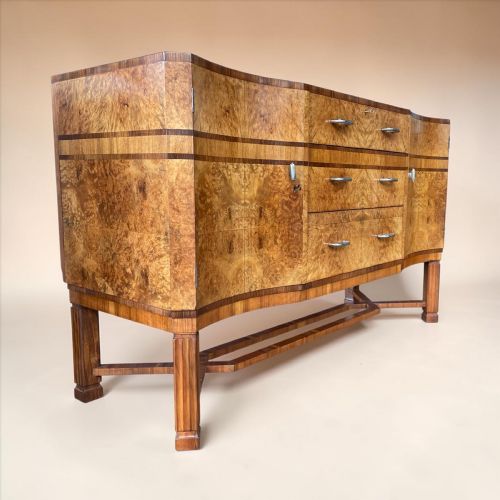
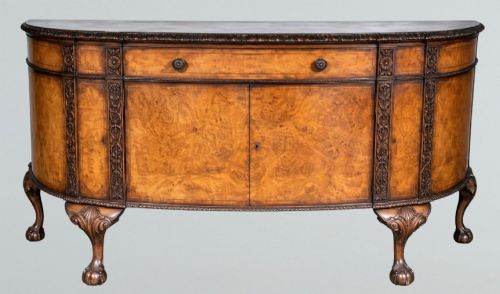
A serpentine credenza cabinet is a curving statement piece for the principal room, combining display and storage in burr walnut or mahogany.
Serpentine Credenza Cabinet
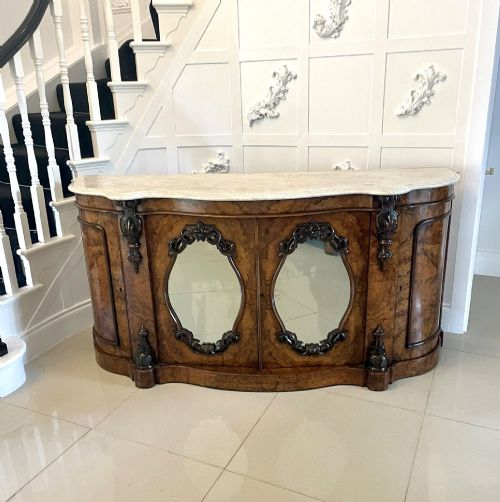
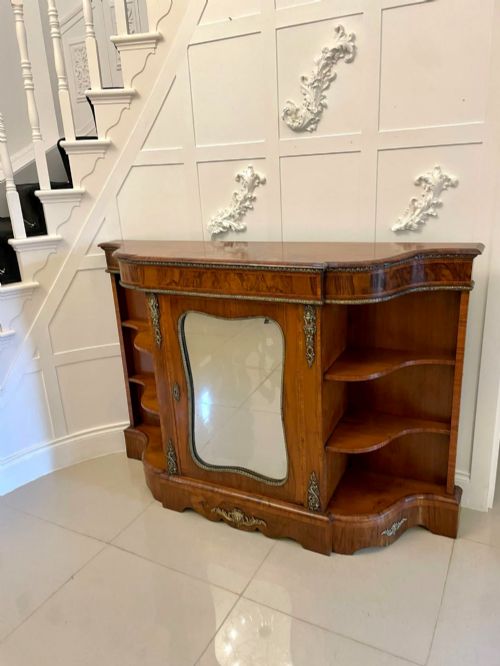
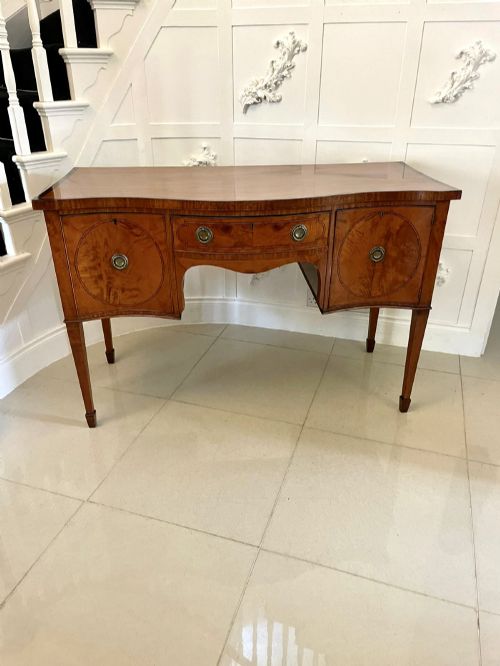
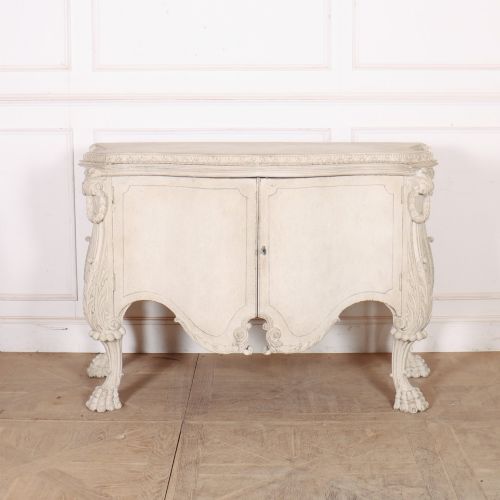
A serpentine credenza cabinet brings a distinctive undulating front to formal interiors, often functioning as a low sideboard or display cabinet. These pieces bridge the gap between traditional storage and decorative presentation.
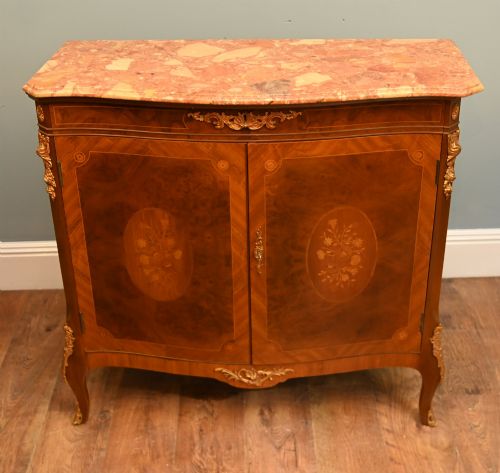
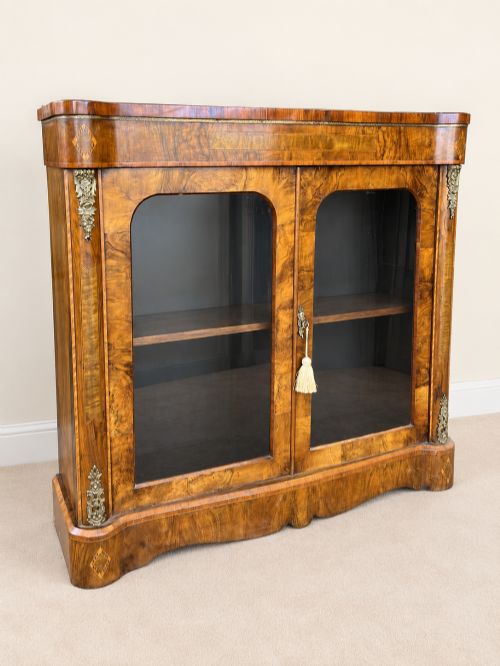
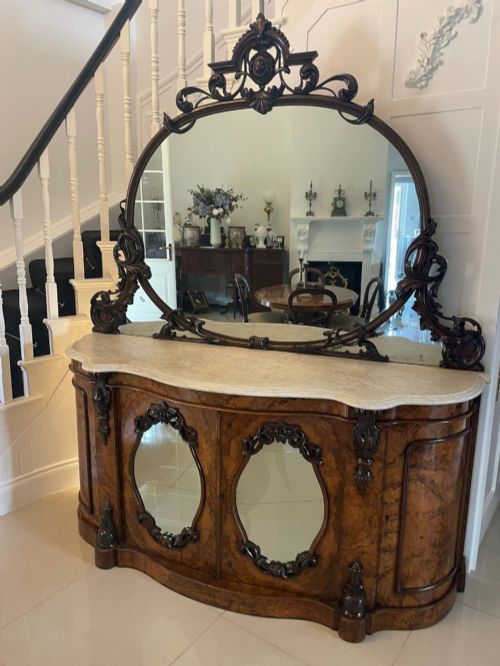
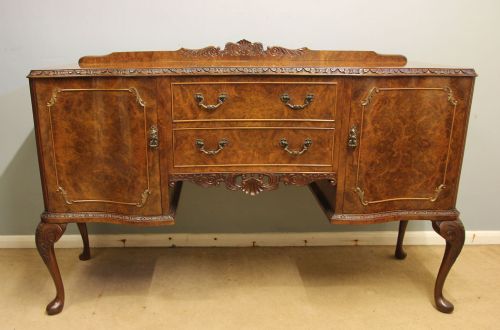
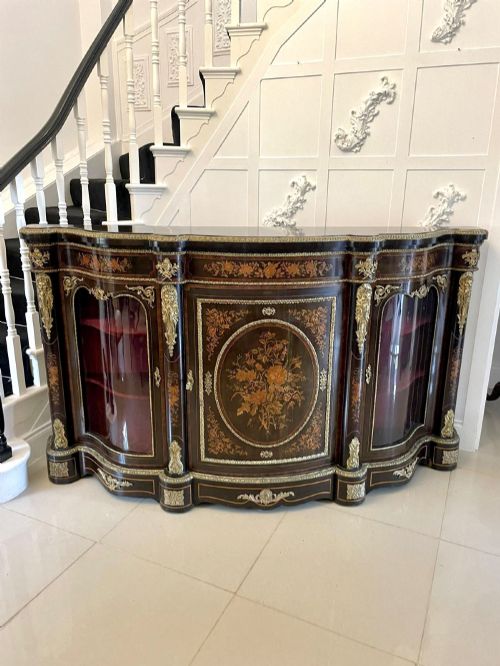
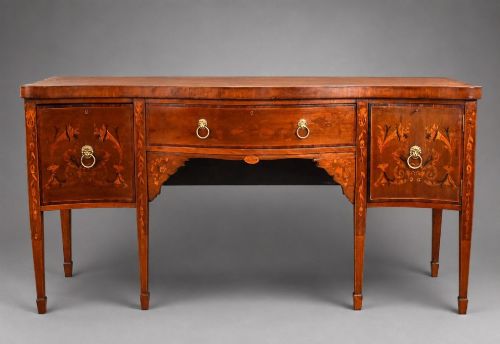
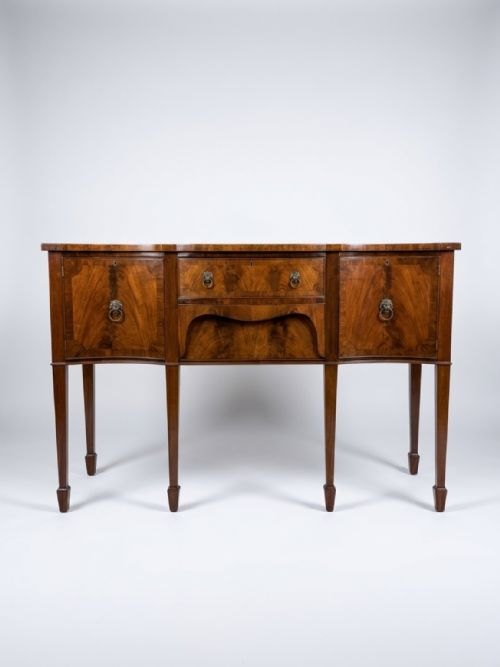
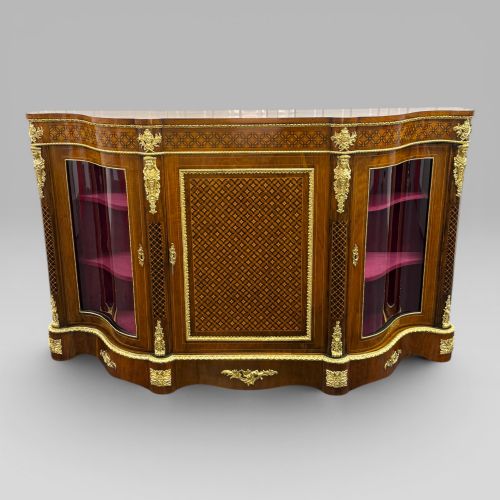
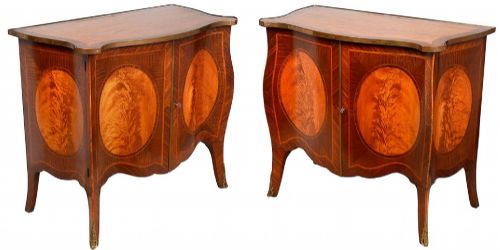
Victorian examples in burr walnut dominate the selection, frequently paired with marquetry inlay and ormolu mounts. Alongside these, buyers encounter Georgian and later revival forms in mahogany and satinwood.
How they were made
Cabinet makers utilised figured burr walnut, mahogany and rosewood veneers laid over stable secondary timbers, following the subtle curves of the serpentine outline. Marquetry and delicate floral inlay decorate the primary surfaces of mid-nineteenth-century examples.
Gilded bronze ormolu mounts frame the doors and plinths, while inset white marble slabs top certain Victorian iterations. Glass panels feature on glazed display doors, protected by brass or bronze glazing bars.
Listings feature periods spanning from the eighteenth century through to the 1930s, with Victorian burr walnut examples predominating.
What varies in quality
The sophistication of the timber figure and the precision of the marquetry dictate the upper tiers of the range. Master workshops employed intricate hand-cut veneers that flow seamlessly across the undulating curves.
Mounting hardware also marks the distinction between standard production and exhibition grade work. Crisp, fire-gilded ormolu and heavy cast brass details signal superior original execution.
Maison Gagneau·Pauly et Cie
The Serpentine Credenza Cabinet Glossary
- Serpentine
- A front outline shaped in a continuous curve, convex in the centre and concave at the ends, requiring advanced cabinet-making skill. This contour defines the primary silhouette of the furniture group.
- Credenza
- A low cabinet traditionally used for serving or displaying valuables, evolving through the nineteenth century into an elaborate reception room centrepiece. It often incorporates central cupboards flanked by curved glass doors.
- Marquetry
- The art of applying pieces of veneer to a structure to form decorative patterns and pictorial designs. Craftsmen select varied timber tones to create naturalistic floral motifs.
- Ormolu
- Gilded bronze mounts applied to furniture edges and panels for decorative enrichment. The technique involves treating bronze with a gold amalgam and firing.
- Burr walnut
- Timber taken from the wart-like growths on walnut trees, yielding complex swirling grain patterns. It forms the primary decorative surface on Victorian examples.
Serpentine Credenza Cabinet: Frequently Asked Questions
Where should a serpentine credenza cabinet go?
These cabinets suit large reception rooms, dining rooms or wide hallways where the curved front can be viewed without obstruction. Their low profile makes them ideal for positioning beneath large mirrors or artworks.
Sufficient clearance allows the doors to open fully, particularly on models with curved side compartments. Placing the piece away from direct heat sources protects the timber veneers and prevents warping.
What is the difference between a credenza and a sideboard?
A credenza is traditionally a lower, more decorative cabinet designed for display and formal entertaining, often featuring glazed side sections. Sideboards tend to focus more on utilitarian dining storage with cutlery drawers and deep cupboards.
Over time, makers and retailers used the terms interchangeably, particularly for pieces sharing the serpentine footprint and nineteenth-century revival styles.
How do I care for burr walnut and ormolu?
Maintain burr walnut surfaces with a clean, dry microfibre cloth and occasional applications of traditional beeswax to nourish the timber. Avoid silicone-based polishes that degrade antique finishes.
Ormolu mounts require gentle dusting with a soft brush rather than metal cleaners, which strip the original fire-gilding. Keeping the cabinet away from direct sunlight preserves both the bronze finish and the rich tones of the walnut veneer.