


Sepia Watercolour Sketch
A sepia watercolour sketch brings tonal depth and monochrome subtlety to your walls through pigment and wash.
Sepia Watercolour Sketch
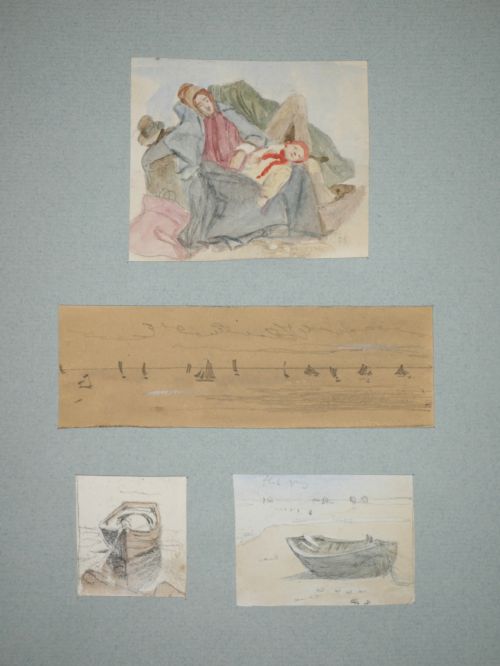
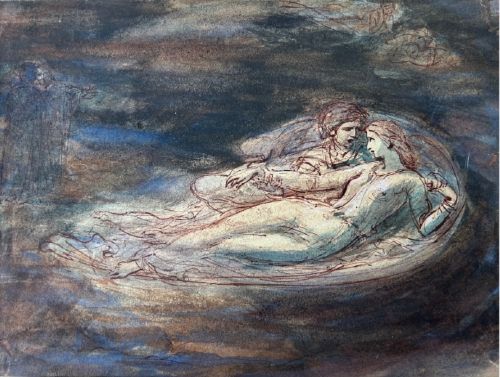
A sepia watercolour sketch offers a monochromatic or restrained palette that highlights draftsmanship and atmospheric wash over bright colour. You will encounter works spanning from the Georgian and Regency periods through to the mid-twentieth century.
The subjects range from maritime scenes and architectural townscapes to literary illustrations and botanical studies. Framed artwork on paper dominates the selection, often bearing historical attribution or signatures from known hands.
Materials and technique
Artists utilise paper as the primary support, applying watercolours alongside ink, pencil, and graphite to build form. Pen and wash techniques allow creators to establish sharp outlines before softening shadows with diluted pigment.
Framing typically incorporates wood and glass to protect the fragile works on paper from atmospheric damage. Giltwood surrounds occasionally appear on higher-status pieces from the Victorian era.
A solitary nineteenth-century artist recorded the weather with such enthusiasm that even the clouds appear to have signed the register.
Quality and execution
The confidence of the initial pencil or ink underdrawing dictates the overall strength of the piece. Masterly handling of tone creates depth without relying on a full spectrum of colour.
Provenance and documentation elevate certain works, particularly when linked to documented artists or specific topographical locations. The condition of the paper and the stability of the pigment also influence the standing of an individual drawing.
James Smetham·William Frederick Settle·J W Hogley·Thomas Rowlandson·Hercules Brabazon Brabazon·Pio Panfili·Tom Dudley·Dame Laura Knight·Fred Lawson·Thomas Lound
The Sepia Watercolour Sketch Glossary
- Sepia
- A brown pigment traditionally derived from the ink sac of the cuttlefish. It creates warm, monochromatic tones favoured for tonal sketches.
- Wash
- A semi-transparent layer of diluted watercolour or ink applied across paper. This technique establishes smooth skies or deep shadows.
- Gouache
- An opaque watercolour paint containing a binding agent such as gum arabic and an inert white pigment. Artists use it to add highlights over transparent washes.
- Monochrome
- A colour scheme based on variations in a single hue or shade, such as brown or black. These works rely on contrast rather than colour variety.
Sepia Watercolour Sketch: Frequently Asked Questions
How do I hang a watercolour sketch safely?
Keep works on paper away from direct sunlight to prevent the sepia tones and pigments from fading over time. Utilise museum glass where possible to filter out ultraviolet rays.
Ensure the hanging wall is free from dampness, which can cause foxing spots and mould to develop on the paper surface.
What is the difference between ink and wash?
Ink refers to the sharp, linear marks applied with a pen to define the primary outlines and architectural details. It provides the structural skeleton of the drawing.
Wash involves fluid, diluted pigment brushed across the paper to create shadows, atmosphere, and tonal depth. The two techniques work together to build the complete image.
Are these sketches original artworks?
The selection consists entirely of original hand-drawn and painted works rather than mass-produced reproductions. Each piece represents a unique act of creation by the artist.
Signatures, inscriptions, and paper characteristics help confirm the individual, unrepeated nature of every drawing.
How can I tell the period of a sketch?
Examine the framing, paper watermark, and style of clothing or architecture depicted within the scene. Nineteenth-century works often display specific Victorian mount styles and handwriting.
Comparing the handling of the subject to documented works by artists from the same era offers further chronological clarity.